
Pruning tomato plants redirects energy to fruit production, improves airflow, and prevents disease This guide shows you exactly when and how to prune for maximum yields.
Why Pruning Increases Tomato Yields
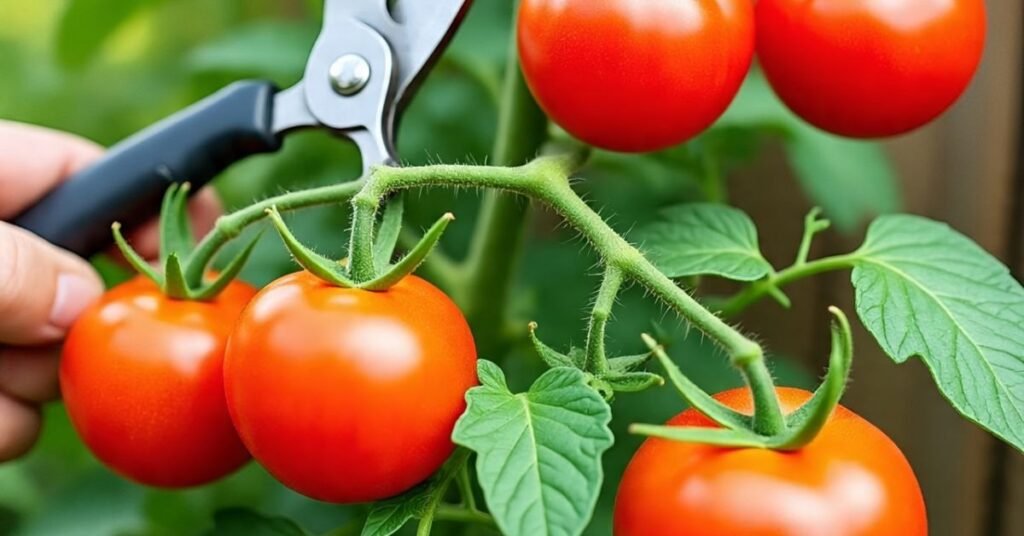
Pruning removes energy-draining shoots and overcrowded foliage, allowing plants to focus on fruit production. The three main benefits are:
⦁ Better airflow reduces humidity and prevents fungal diseases like blight
⦁ More sunlight reaches fruit clusters, improving photosynthesis and ripening
⦁ Concentrated nutrients produce larger, higher-quality tomatoes
Determinate vs. Indeterminate: Pruning Strategy Comparison
Different tomato types require different pruning approaches. Here’s how to identify and prune each:
| Type | Determinate (Bush) | Indeterminate (Vining) |
| Growth Pattern | Stops at fixed height (3-4 feet) | Grows continuously all season (6+ feet) |
| Fruiting | All fruit ripens within 2-3 weeks | Produces fruit continuously until frost |
| Pruning Approach | MINIMAL – Only remove diseased/damaged leaves | AGGRESSIVE – Remove suckers every 1-2 weeks |
| What to Remove | Yellow/diseased leaves, overcrowded branches | All suckers, lower leaves, excessive side branches |
| Over-Pruning Risk | HIGH – Reduces total yield significantly | LOW – Excessive foliage is the bigger problem |
How to Prune Tomato Plants: Step-by-Step

Follow these steps for healthy, productive plants:
- Inspect the plant – Identify the main stem and locate suckers (shoots growing between the main stem and branches).
- Remove suckers early – Pinch or cut suckers when they’re 2-4 inches long using sanitized pruning shears.
- Trim lower leaves – Remove leaves touching the soil to prevent fungal disease. Clear the bottom 6-12 inches of the stem.
- Remove diseased foliage – Cut away any yellowing, spotted, or wilted leaves to prevent disease spread.
- Thin dense areas – Remove leaves that block sunlight from fruit clusters or prevent air circulation.
- Step back and assess – The plant should look open and well-ventilated, not overcrowded.
- Dispose of cuttings – Throw away diseased material. Healthy suckers can be propagated (see propagation section).
Understanding Tomato Suckers
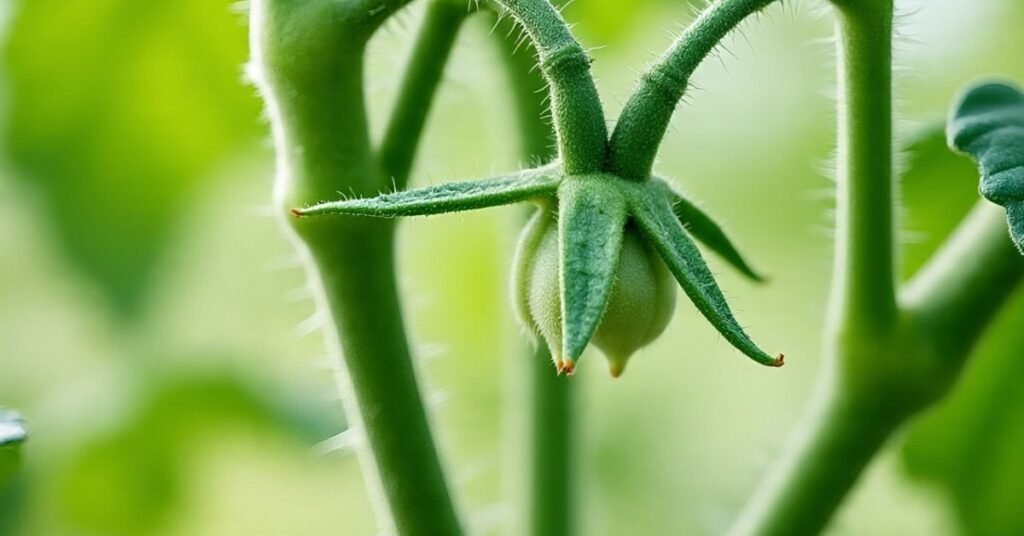
Suckers are shoots that emerge in the axil the V-shaped junction between the main stem and a branch. They can grow into full branches with leaves and fruit, but they drain energy from the plant’s primary fruit production.
When to Remove Suckers:
⦁ Indeterminate varieties – Remove all suckers regularly throughout the season
⦁ Determinate varieties – Leave most suckers alone; only remove if diseased or severely overcrowding
⦁ Best timing – Early morning when plants are hydrated, while suckers are small (2-4 inches)
Essential Pruning Tools
| Tool | Purpose | Priority |
| Pruning shears | Clean cuts on stems and suckers. Must be sharp to prevent tearing. | ESSENTIAL |
| Gardening gloves | Protect hands from scratches and sticky tomato sap. | Recommended |
| Rubbing alcohol | Clean tools between plants to prevent disease spread. | ESSENTIAL |
| Collection bucket | Hold cuttings for disposal or propagation. | Helpful |
When to Prune Tomato Plants
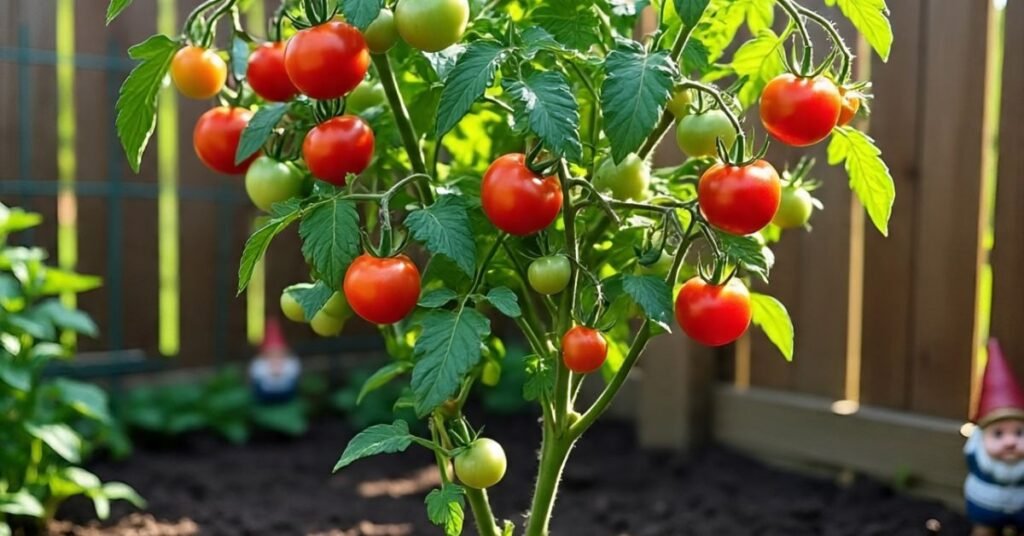
Timing affects plant recovery and yield. Follow these guidelines:
By Growth Stage:
⦁ Seedlings (2-3 weeks old) – Remove only weak or damaged leaves
⦁ Vegetative growth (4-8 weeks) – Begin removing suckers weekly; establish main structure
⦁ Flowering/fruiting – Continue regular sucker removal; prune to direct energy to fruit
⦁ Late season – Reduce pruning; remove only diseased material
Best Time of Day: Early morning when plants are hydrated. Avoid extreme heat or drought periods.
5 Pruning Mistakes That Reduce Yields
- Over-pruning determinate varieties – These bush types need foliage to produce fruit. Excessive cutting drastically reduces harvest.
- Waiting too long to remove suckers – Large suckers are harder to remove and cause more stress to the plant.
- Using dirty or dull tools – This spreads disease and tears stems, making plants vulnerable to infection.
- Pruning during heat or drought – Stressed plants recover poorly. Always prune when plants are well-watered.
- Ignoring lower leaves touching soil – These are disease entry points. Always keep the bottom 6-12 inches clear.
How to Grow New Plants From Prunings

Healthy suckers can become new plants for free:
- Choose a healthy, 4-6 inch sucker with several leaf nodes
- Remove lower leaves to prevent rot
- Place in water or moist soil in indirect sunlight
- Change water every 2-3 days (if using water method)
- Transplant once roots are 1-2 inches long (typically 1-2 weeks)
This works best with indeterminate varieties and can extend your growing season or replace failed plants.
Quick Pruning Tips
⦁ Prune gradually, not all at once, to minimize plant stress
⦁ Use stakes or cages to support plants and prevent branch breakage
⦁ Cut close to the main stem without damaging it
⦁ Check plants weekly for new suckers, especially during rapid growth
⦁ Combine pruning with proper watering and fertilization for best results
Final Thoughts
Effective tomato pruning is about strategic removal, not aggressive cutting. By understanding your plant type, removing suckers at the right time, and maintaining good airflow, you’ll produce larger tomatoes, healthier plants, and more abundant harvests. Start with the basics remove suckers, clear lower leaves, and prune gradually and your plants will reward you all season long.
FAQS
Q1.What is the best time of day to prune tomato plants?
Morning is ideal. Plants are fully hydrated overnight, allowing them to recover throughout the day. Avoid pruning during midday heat or drought, which stresses plants and slows healing.
Q2.How often should I prune tomato plants?
Indeterminate varieties need pruning every 1-2 weeks during active growth. Determinate varieties require only occasional light pruning to remove diseased or damaged leaves.
Q3.Can I prune tomato plants too much?
Yes. Over-pruning, especially on determinate varieties, reduces fruit production and exposes plants to sunburn. Focus on removing only unnecessary growth suckers, diseased leaves, and overcrowded branches.
Q4.What are tomato suckers?
Suckers are shoots that grow in the axil between the main stem and branches. On indeterminate varieties, remove them regularly. On determinate types, leave most suckers alone unless diseased.
Q5.Can I propagate new tomato plants from prunings?
Yes. Healthy 4-6 inch suckers can be rooted in water or soil. Remove lower leaves, place in bright indirect light, and transplant once roots develop in 1-2 weeks.
Q6.When is it too late to prune tomato plants?
Late-season pruning (during heavy fruiting) can reduce yields by removing foliage needed for photosynthesis. Prune primarily in early to mid-season. Late in the season, only remove diseased material.

Jack Rivers is the founder of Plantsopedia, dedicated to making plant care simple, science-backed, and accessible for everyone. With a deep interest in botanical care and plant psychology, he specializes in rare tropical species and organic growth techniques, helping enthusiasts understand the soil, light, and biology behind every thriving plant. When he’s not experimenting with new propagation methods, Jack is busy turning complex horticultural science into practical, everyday advice for home gardeners