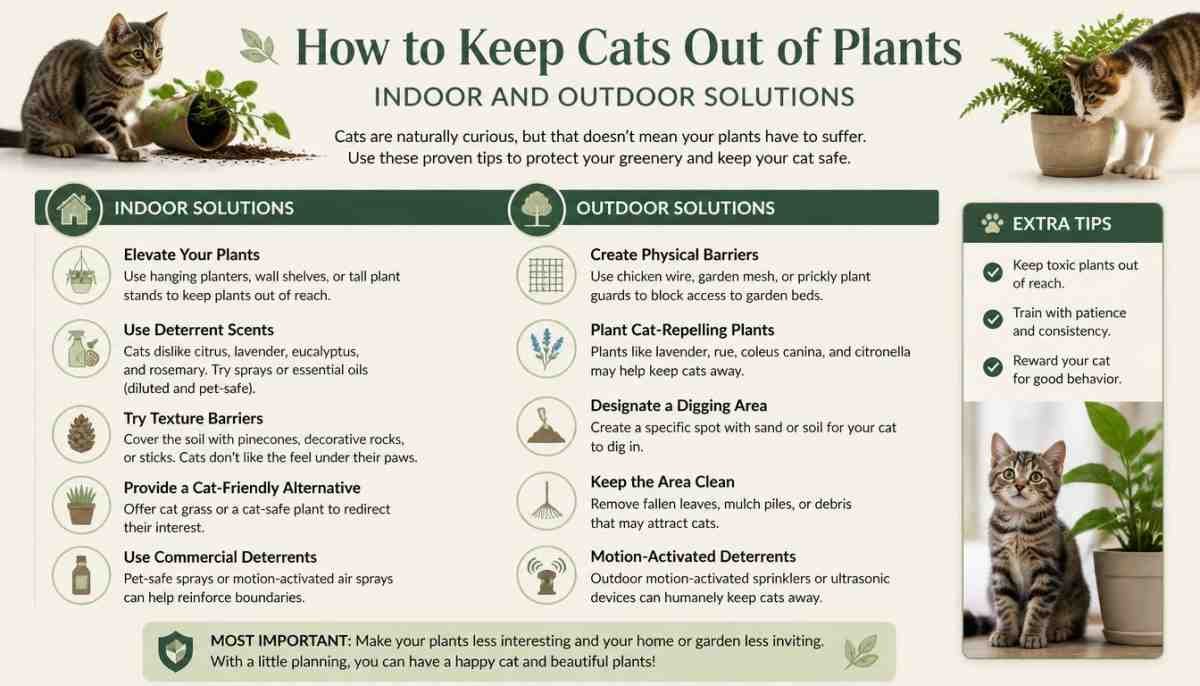
If your cat treats every houseplant like a personal jungle gym or your garden bed like a litter box, you’re far from alone. Cats are naturally drawn to soil, greenery, and anything with leaves to bat at, which makes plants one of the most common battlegrounds between pet owners and their curious cats.
The good news is you don’t have to choose between keeping plants and keeping your cat happy. A mix of the right placement, scents, and a few small changes can protect your plants without any stress for your cat.
Why Cats Are Drawn to Plants in the First Place
Understanding the pull helps explain why some solutions work better than others. Soft, loose soil looks and feels a lot like a litter box to a cat, which is exactly why garden beds and potted plants often become an unwanted bathroom spot.
Beyond that, cats are simply curious. Swaying leaves, trailing vines, and anything that moves in a breeze look like toys, not decor. Some cats also chew on plants out of boredom or because they’re instinctively drawn to nibbling on greenery, even if the plant itself doesn’t taste like much.
Keep Your Indoor Plants Out of Reach
For houseplants, the single most effective fix is simply putting them somewhere your cat can’t easily get to. Hanging planters, wall-mounted shelves, and tall plant stands all work well, especially for plants with trailing vines that cats find hard to resist.
Avoid placing plants on windowsills or surfaces your cat already claims as a favorite spot. If a cat already treats a windowsill as home base, a plant sitting there is basically an invitation. For larger floor plants that are harder to move out of reach, a tall, heavy pot placed in a corner away from regular foot traffic tends to get far less attention than one sitting in an open, high-traffic area.
If you’re working on building out a full indoor plant collection while keeping your cat in mind, our indoor plant care guides cover placement and care tips for popular houseplants, many of which pair well with these cat-proofing strategies.
Scents Cats Hate (Natural Deterrent Sprays)

Cats have a much stronger sense of smell than we do, which makes scent one of the easiest tools for keeping them away from plants without any physical barriers.
Citrus is one of the most reliable options. A light spray of diluted lemon or orange juice on leaves, or scattering citrus peels around the base of outdoor plants, tends to keep most cats at a distance. Coffee grounds sprinkled lightly around outdoor soil work similarly, though it’s worth using them sparingly since too much can shift your soil’s acidity.
A simple homemade spray using diluted essential oils like lavender, lemongrass, or peppermint can also help, misted lightly onto leaves or nearby soil rather than directly soaking the plant.
Physical Barriers That Actually Work
Sometimes scent alone isn’t enough, especially for a particularly determined cat. Physical barriers tend to work more reliably since they remove the appeal of the soil itself.
For outdoor beds, pushing pine cones, small decorative rocks, or even large pebbles into the top layer of soil makes it uncomfortable for a cat to dig or walk through. Chicken wire or mesh laid flat over the soil, with holes cut for your plants to grow through, is another effective option that most cats won’t bother fighting through.
Indoors, a layer of decorative stones on top of a potted plant’s soil serves the same purpose, discouraging digging while also looking intentional rather than like an obvious deterrent.
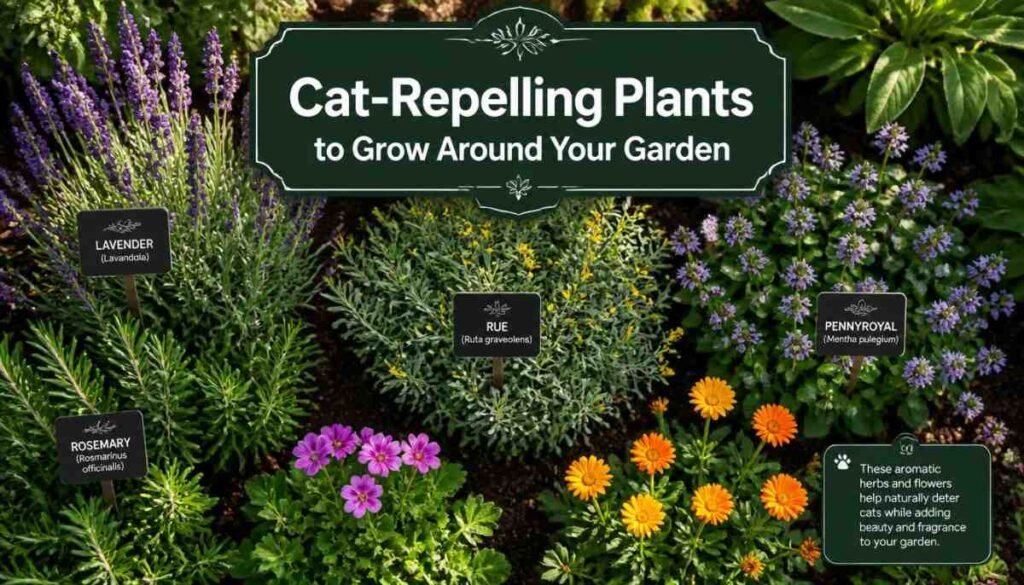
Cat-Repelling Plants to Grow Around Your Garden
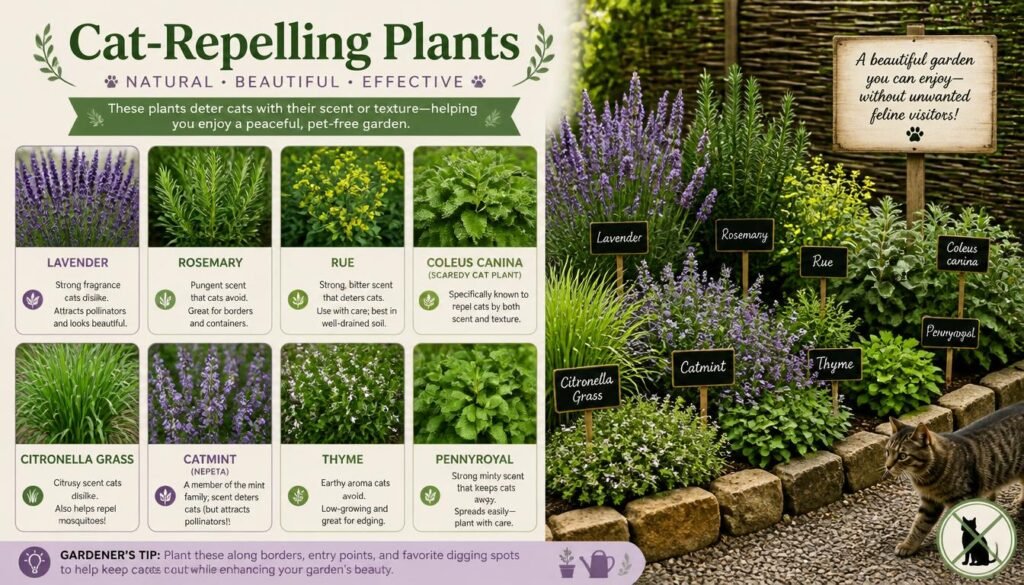
Interplanting a few cat-repelling species around your garden bed can add a natural layer of protection without any sprays or barriers at all.
Lavender, rosemary, and lemon thyme all have strong scents that most cats tend to avoid, and they’re pleasant enough for humans that they blend right into a garden without looking out of place. Curry plant and rue are also known for their strong smell, though it’s worth noting that rue can be mildly toxic if a cat or person ingests a large amount, so it’s better suited to garden borders than anywhere pets might chew on it directly.
Give Your Cat a Better Option
Sometimes the easiest fix isn’t about keeping cats away from one spot, but giving them somewhere better to go instead. A small sandbox tucked into a corner of the garden can redirect digging behavior away from your flower beds, especially once a cat gets used to using it.
Indoors, a dedicated patch of cat grass or a small pot of catnip gives your cat something safe to nibble and interact with, which often reduces their interest in your other houseplants simply because their curiosity has somewhere else to go.
Important Safety Warning: What NOT to Use
Not every popular deterrent is actually safe, and this is worth taking seriously before trying anything new. Mothballs are commonly suggested online as a cat repellent, but they’re genuinely toxic to cats, dogs, and humans, and should never be used in a garden or home.
Many essential oils carry real risks too. Oils like tea tree, citrus, and eucalyptus can cause skin irritation or respiratory issues if a cat comes into direct contact with them or inhales concentrated amounts. If you choose to use essential oils as a deterrent, keep the dilution light, apply them to soil or the edges of pots rather than directly on leaves your cat might rub against, and watch for any signs of irritation. If your cat does react to an essential oil or any other product, it’s worth contacting the Pet Poison Helpline or your vet right away.
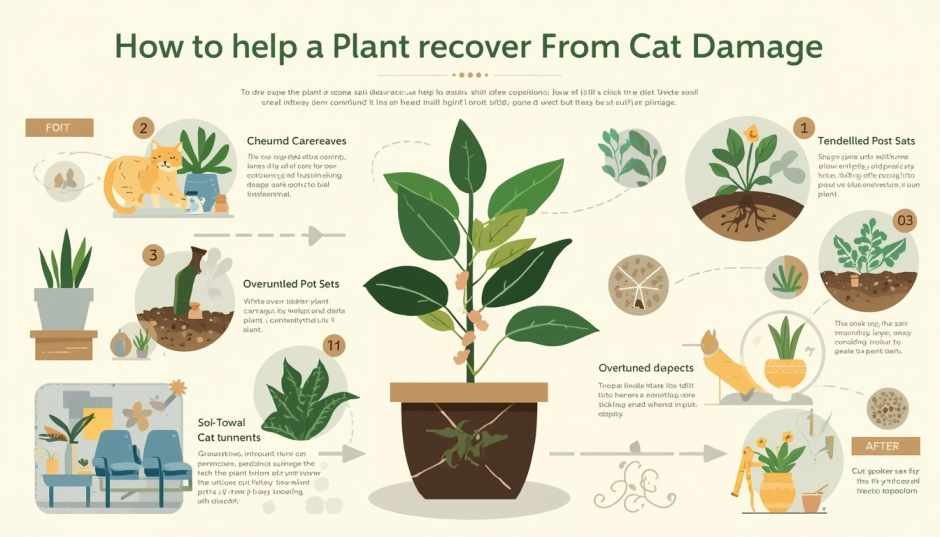
How to Help a Plant Recover From Cat Damage
If your cat already got to a plant before you set up any of these deterrents, don’t panic, most plants can bounce back with a little care. Skip fertilizing right after damage occurs, since a stressed plant can’t absorb nutrients well and it may do more harm than good.
FAQs
What is the easiest way to keep cats out of plants?
The easiest method is to make the soil less appealing by covering it with decorative stones, pinecones, or protective mesh. You can also place plants where your cat cannot easily reach them.
What smells do cats hate around plants?
Cats commonly dislike strong scents such as citrus, peppermint, lemongrass, and lavender. Safe, mild deterrents can help discourage cats from getting too close to plants.
How do I stop my cat from digging in houseplants?
Cover the soil with large decorative stones, pinecones, or a layer of mesh that prevents digging. Giving your cat cat grass can also redirect the behavior.
Are there plants that naturally keep cats away?
Some strongly scented plants, including lavender, rosemary, lemon thyme,

Jack Rivers is the founder of Plantsopedia, dedicated to making plant care simple, science-backed, and accessible for everyone. With a deep interest in botanical care and plant psychology, he specializes in rare tropical species and organic growth techniques, helping enthusiasts understand the soil, light, and biology behind every thriving plant. When he’s not experimenting with new propagation methods, Jack is busy turning complex horticultural science into practical, everyday advice for home gardeners