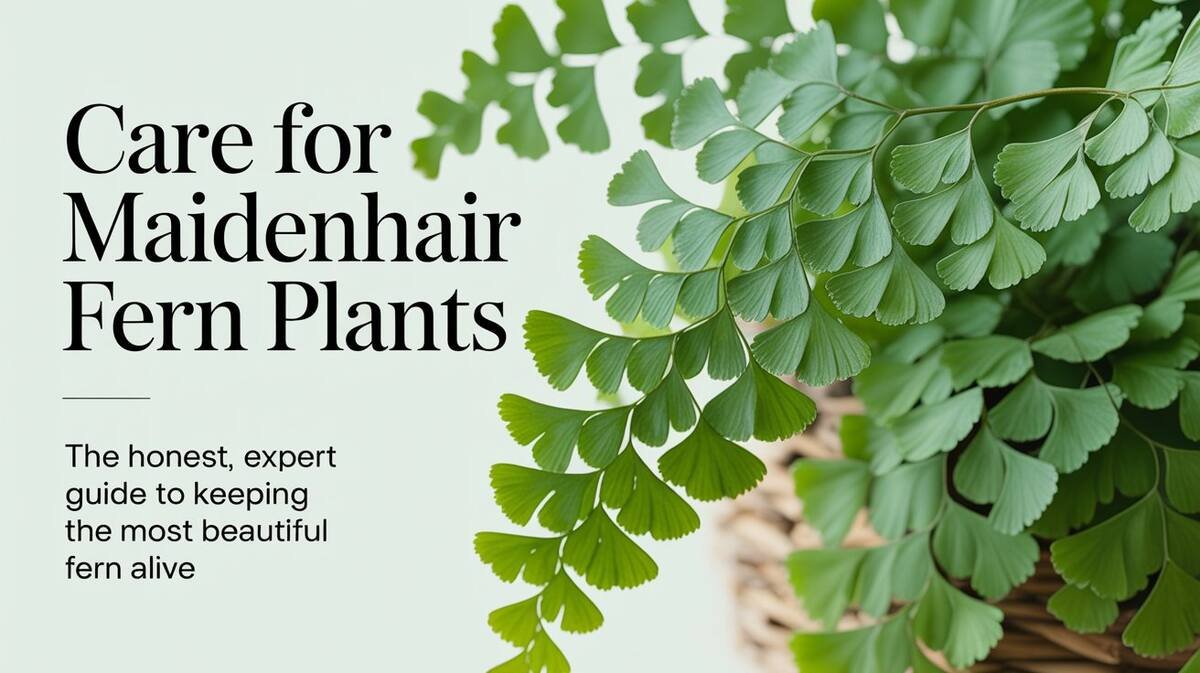
The maidenhair fern is one of the most stunning houseplants you can own — and one of the most misunderstood. Its delicate, fan-shaped leaves on jet-black stems look almost too beautiful to be real. But here’s the truth: most people kill it because nobody told them what it actually needs.
It’s not a forgiving plant. It reacts fast to dry soil, low humidity, and wrong light. But get those three things right and it thrives consistently, beautifully, and with less drama than you’d expect. This guide gives you everything you need to care for maidenhair fern plants the right way, from the basics of watering and light to fixing brown fronds and reviving a struggling plant.
What Is a Maidenhair Fern?
The maidenhair fern belongs to the genus Adiantum a group of roughly 250 fern species found across tropical and subtropical regions worldwide. Its botanical name comes from the Greek word adiantos, meaning unwetted, because water rolls straight off its leaves rather than being absorbed a curious trait for a plant that craves constant humidity.
In the wild, maidenhair ferns grow on forest floors and in rocky crevices beside waterfalls constantly bathed in moisture, sheltered from harsh sun by the canopy above. No dry spells. No direct light. and no temperature swings. The closer you recreate those conditions indoors, the better your plant will do.
As a houseplant, the most widely sold variety is Adiantum raddianum, also called the Delta maidenhair fern. It grows to roughly 12 to 24 inches tall and wide, with arching fronds made up of dozens of bright green, fan-shaped leaflets on near-black stems one of the most distinctive silhouettes of any indoor plant.
| Care Factor | Details |
|---|---|
| Botanical Name | Adiantum raddianum (and related species) |
| Light | Bright indirect light — no direct sun, ever |
| Watering | Keep soil consistently moist — never dry, never waterlogged |
| Humidity | 50% or higher — this is critical |
| Temperature | 65°F to 75°F (18°C to 24°C) — no cold drafts |
| Soil | Rich, light, moisture-retentive but well-draining mix |
| Fertilizer | Every 2 to 4 weeks during growing season, diluted to quarter strength |
| Toxicity | Non-toxic to pets and humans |
Are Maidenhair Ferns Easy to Care For?
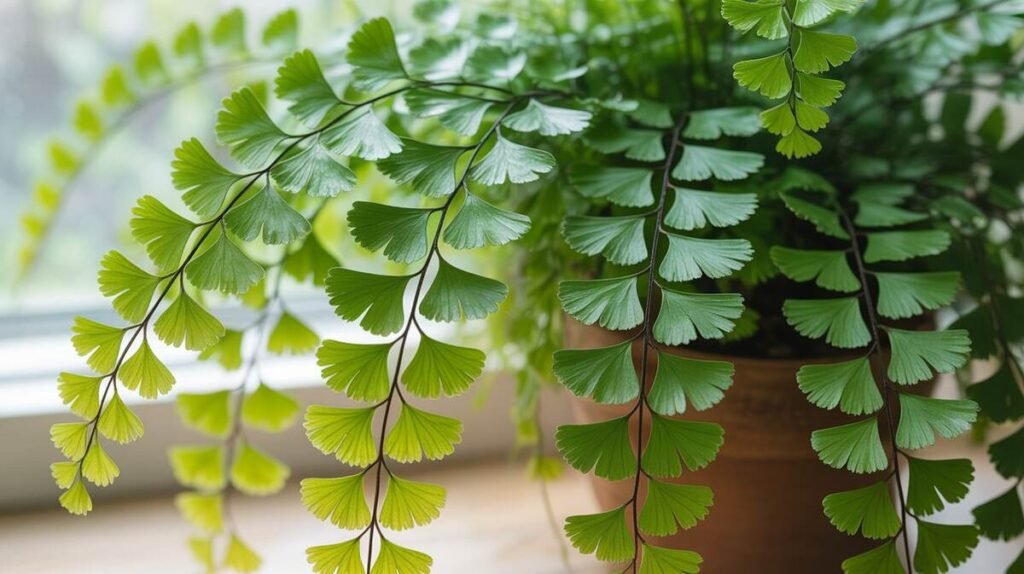
Honestly, no not compared to most popular houseplants. The maidenhair fern has a reputation for being demanding, and that reputation is earned. It will not tolerate neglect the way a pothos or snake plant will.
It reacts quickly and visibly to anything it doesn’t like dry air, inconsistent watering, a cold draft, a move to a different spot and those reactions usually show up as brown, crispy fronds within days.
That said, difficult is really just another word for specific. The maidenhair fern doesn’t need magic or expertise. It needs consistent moisture, high humidity, and the right light. Get those three things right and you’ll rarely have a problem. The people who struggle with this plant are almost always either underwatering it, keeping it somewhere too dry, or giving it too much direct sun.
Also Read : Spider Mites on Indoor Plants Healthy Plant Guide
Types of Maidenhair Fern
All maidenhair ferns share the same fundamental care requirements, but the varieties differ in size, leaf shape, and visual texture. Here are the ones you’re most likely to encounter.
Adiantum raddianum Delta Maidenhair Fern
The most widely sold variety for indoor growing. Compact, bushy, and relatively adaptable compared to other species. If you’re buying a maidenhair fern at a garden centre, this is almost certainly what you’re getting.
Adiantum pedatum Northern Maidenhair Fern
Native to North America. Larger and more cold-tolerant than tropical varieties. The fronds spread horizontally in a distinctive fan shape. Better suited to shaded outdoor gardens in temperate climates than to indoor pots.
Adiantum peruvianum Silver Dollar Maidenhair Fern
Features unusually large, almost circular leaflets that give it a bolder, more dramatic appearance than the typical delicate frond structure. A showstopper when healthy.
Adiantum tenerum Brittle Maidenhair Fern
Extremely fine, lacy fronds with a soft, almost translucent texture. One of the most delicate-looking varieties and one that particularly needs high humidity even more so than the others.
Adiantum hispidulum Rough Maidenhair Fern
Slightly more robust than most, with fronds that have a subtly rougher texture. Tolerates a wider range of conditions, making it a reasonable starting point for anyone new to this genus.
How to Care for Maidenhair Fern Plants Indoors
Everything about caring for a maidenhair fern comes back to one idea recreate the forest floor. Consistent moisture, filtered light, warm humid air, and stable temperatures. Here’s exactly how to do that across every care area.
Watering The Most Critical Part
The soil must never dry out not even once. The moment it goes from moist to partially dry, every frond can turn brown and crispy within 24 to 48 hours. Check the soil daily by pressing a finger into the top inch. The moment it starts losing moisture, water immediately and thoroughly until it drains from the bottom. Remove any standing water from the saucer within 30 minutes roots sitting in water leads to rot just as quickly as dry soil kills the fronds. Use room-temperature water and, if you’re on tap water, let it sit overnight first. Chlorine and fluoride in fresh tap water are a common cause of tip browning in sensitive ferns.
How Often Should You Water a Maidenhair Fern?
There’s no fixed answer it changes with the season, your home’s temperature, and the humidity around the plant. In warm summer months, you might need to water every day or every other day. In a cooler winter environment, every 3 to 4 days may be enough. Don’t rely on a schedule. Feel the soil and respond to what you find that’s the only watering method that reliably works with this plant.
Light Requirements
Maidenhair ferns evolved under tree canopies they’re built for bright, filtered, indirect light and nothing stronger. A spot near a north or east-facing window is ideal, where light is consistent but never direct.
If you only have a south or west-facing window, a sheer curtain between the glass and the plant is non-negotiable unfiltered afternoon sun will scorch the fronds within hours.
If fronds are turning pale or developing dark scorch marks, the plant is getting too much light and if new growth is small and weak or the plant is visibly leaning toward the window, it needs more.
Humidity The Make-or-Break Factor
Maidenhair ferns need humidity of 50% or above the average heated home sits at 30 to 40%, which is too dry for long-term success. A bathroom with natural light is the best spot, as daily shower steam recreates their natural habitat almost perfectly.
Outside the bathroom, a pebble tray, a nearby humidifier, or grouping the plant with other moisture-loving plants all help. Misting alone isn’t enough use it alongside one of the other methods.
Best Soil for Maidenhair Ferns
You need a mix that holds consistent moisture without ever becoming waterlogged. A peat-free multi-purpose compost blended with a small amount of perlite and coir hits that balance well rich and slightly spongy, like a forest floor.
Avoid heavy potting soils that compact and stay soggy around the roots, and avoid cactus mix entirely it drains too fast and the soil will dry out between waterings. A slightly acidic pH of 6.0 to 7.0 is ideal, which most good quality houseplant compost naturally provides.
Temperature
Maidenhair ferns prefer stable warmth between 65°F and 75°F (18°C to 24°C), with nights no lower than 60°F (15°C). They’re more temperature-sensitive than they look even a few hours outside their comfort zone can trigger frond drop or browning.
Keep them away from cold drafts near windows and exterior doors, and equally away from radiators and heating vents, which create hot, dry air that drops humidity and stresses the leaves at the same time.
Never let the temperature fall below 50°F (10°C) cold damage shows as sudden, widespread frond collapse and is difficult to reverse.
Fertilizing
Maidenhair ferns are moderate feeders, but the key word here is diluted. Overfeeding burns the roots and causes the exact leaf browning you’re trying to prevent. Feed every 2 to 4 weeks from March through September using a balanced liquid houseplant fertilizer diluted to quarter strength. If your plant is in a peat-based mix, feed every 2 weeks peat depletes nutrients faster than soil-based compost.
Stop completely in autumn and winter when the plant is barely growing. Always water first before feeding applying fertilizer to dry soil risks root burn and does more harm than good.
Where to Put a Maidenhair Fern Indoors
Location matters more with this plant than almost any other houseplant. Get the spot right and half the care routine takes care of itself.
Best Spots
- Bathroom with a window daily shower steam creates natural humidity with indirect light. The gold standard location for this plant.
- Kitchen near an east-facing window cooking and running taps add humidity naturally. Soft morning light, no harsh afternoon sun.
- Terrarium self-sustaining humidity with minimal effort. Perfect if you find the plant too demanding in open air.
Spots to Avoid
Near radiators or air vents warm, dry air causes browning almost immediately. Keep it well away from both.
South-facing windowsills too much direct light and heat. Fronds will scorch even through a sheer curtain.
Potting and Repotting Maidenhair Ferns
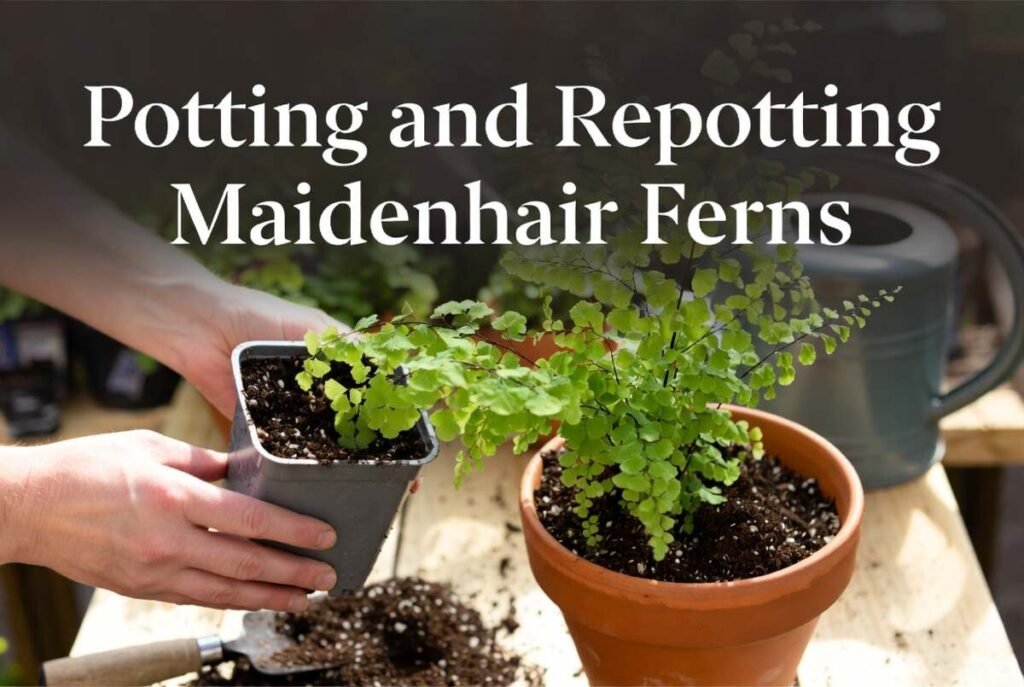
Repotting a maidenhair fern is straightforward once you know two things when to do it and how deep to go. Get those right and your plant settles into its new home quickly without any stress or setbacks. Here’s everything you need to know.
Understanding the Rhizome
Maidenhair ferns grow from rhizomes underground stems from which both roots and new fronds emerge. This is important to understand before you repot, because burying the rhizome too deep is one of the most common mistakes people make. Always plant at the same depth as before, with just the roots below soil level and the rhizome sitting at or just above the surface.
When to Repot
Repot in early spring every 2 years, or when roots start pushing out of the drainage holes. Spring is the best time because the plant is entering its active growing season and will establish quickly in fresh compost.
Choosing the Right Pot
Choose a pot only 1 to 2 inches larger than the current one. Going too big creates excess soil that retains moisture the roots can’t absorb which raises the risk of rot. A plastic pot with drainage holes is a good choice because plastic holds moisture slightly better than terracotta, which can wick the consistent dampness right out of the soil.
After Repotting
Water thoroughly once settled, then hold off fertilizing for 4 to 6 weeks. Fresh compost provides enough nutrients on its own and the roots need time to establish without the added stress of chemical feeding.
How to Propagate a Maidenhair Fern
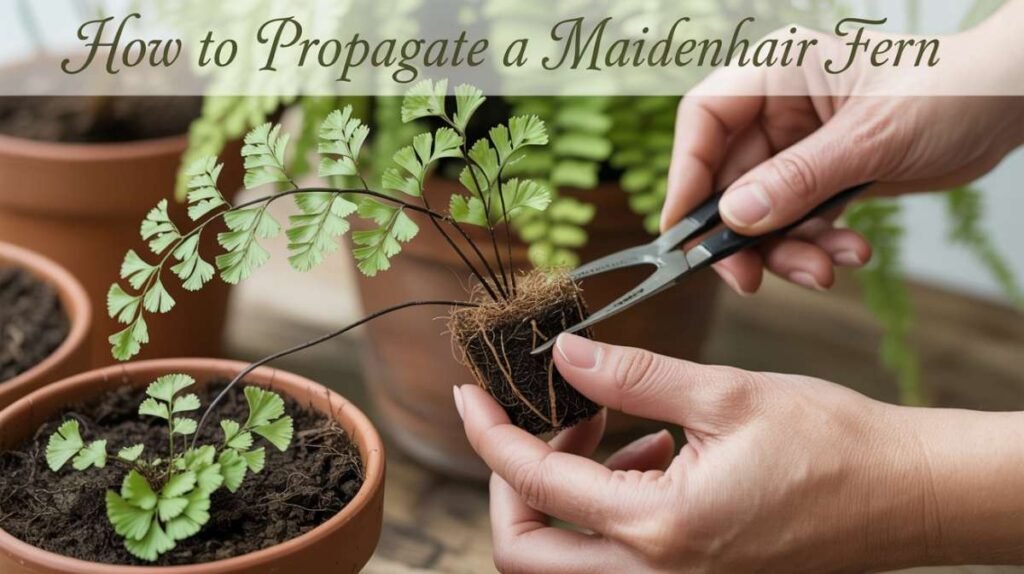
Division is the most reliable method and the most practical for home growers. The best time is early spring when you repot. Remove the plant from its pot, shake off old compost, and look at the rhizome structure. You’ll find natural sections clusters of fronds each attached to a rhizome segment with its own roots. Pull or cut these apart gently, making sure each section has healthy roots and at least a few fronds attached.
Pot each division into fresh moist compost, place in a warm humid spot with indirect light, and keep the soil consistently moist. New frond growth within 3 to 6 weeks means the division has taken.
Spore propagation is technically possible but extremely slow and demanding stick with division for practical results.
Pruning Maidenhair Ferns
Individual fronds naturally die after around 6 months. When a frond turns fully brown and dry, cut it cleanly at the base with sharp scissors. This removes dead material and directs the plant’s energy toward fresh new growth.
A few brown fronds at the base are completely normal just old growth completing its natural cycle. It’s only worth investigating further if the browning is sudden, widespread, or affecting fronds at all stages simultaneously.
Why Is My Maidenhair Fern Turning Brown?
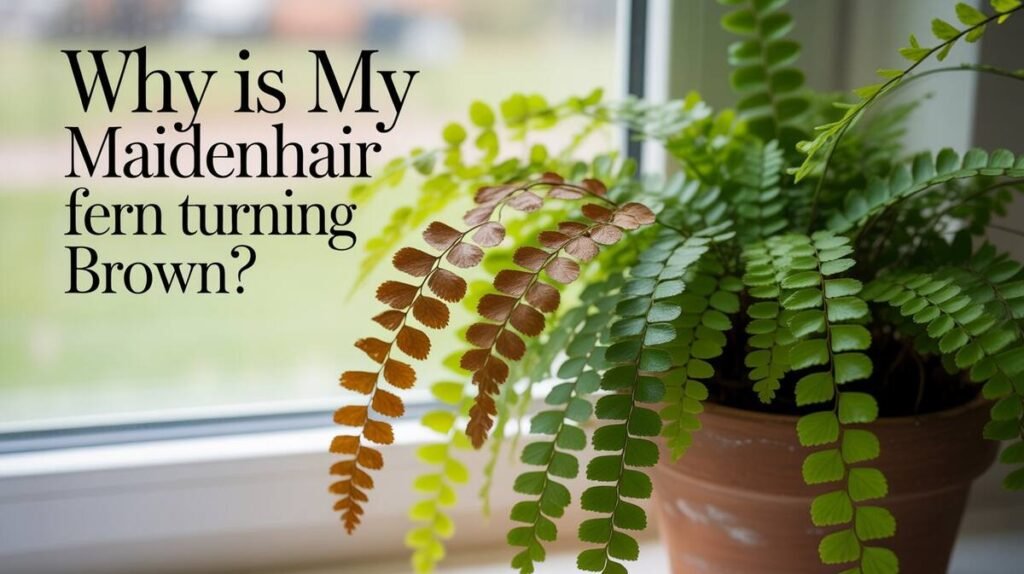
The most common problem and the most common question. Brown fronds have several possible causes and the solution depends on which one you’re dealing with.
Brown, Crispy Fronds All Over the Plant
Almost always caused by the soil drying out, even briefly, or by humidity that is too low. Check the soil first if it’s dry, water immediately and thoroughly. If the soil is moist but the air is dry, the issue is humidity. Move the plant to the bathroom, set up a pebble tray, or run a humidifier nearby.
Brown Tips Only
Brown tips creeping inward from the leaf edges are typically a humidity issue rather than a watering one. Occasionally, fluoride in tap water causes the same pattern switch to filtered or rainwater for a few weeks to test whether that’s the cause.
Dark Brown Scorch Marks
Sun damage direct sunlight hitting the delicate fronds causes immediate, irreversible scorch marks. Move the plant further from the window or add a sheer curtain to filter the light.
Brown Fronds at the Base Only
Completely normal. These are the plant’s oldest fronds naturally completing their lifespan. Cut them away at the base and move on if the rest of the plant looks healthy, there’s nothing to worry about.
Common Pests
Maidenhair ferns are relatively pest-resistant, but three pests are worth knowing.
- Spider mites. Thrive in dry conditions another reason humidity matters so much. Look for fine webbing and tiny dots on leaf undersides. Treat by raising humidity, washing the plant down with water, and applying insecticidal soap if needed.
- Scale insects. Small brown bumps on stems. Remove manually with a cotton swab dipped in rubbing alcohol, then treat with neem oil.
- Mealybugs. White, cottony clusters in leaf joints. Remove manually, then apply neem oil. Catch them early they spread quickly if left unchecked.
Is the Maidenhair Fern Right for You?
If you can tick the following boxes, the maidenhair fern is absolutely achievable for you.
- You have a bright bathroom or a spot near an east-facing window without direct sun
- You can check soil moisture and water every 1 to 2 days in warm months
- You can provide humidity above 50% through bathroom placement, a pebble tray, or a humidifier
- You can keep the plant in a stable, draft-free spot between 65°F and 75°F year-round
- You don’t travel frequently or leave the plant unattended for long stretches
If those conditions aren’t quite there yet, start with a Boston fern or rabbit’s foot fern and return to the maidenhair when you’re ready. There’s no shame in that this plant is worth waiting for.
Final Thoughts
The maidenhair fern is the plant that rewards patience, consistency, and genuine attention and it repays all of that with some of the most extraordinary foliage you’ll find in any houseplant collection. Those whisper-thin black stems, those bright green fan-shaped leaflets that move at the faintest breath of air there’s genuinely nothing else like it indoors.
Keep the soil moist, keep the humidity high, keep the light indirect, and keep the temperature stable. Do those four things consistently and you’ll have a plant that grows, thrives, and stops people in their tracks every time they walk into the room.
It’s not the easiest plant. But it might just be the most worth it.
Frequently Asked Questions
Are maidenhair ferns easy to care for?
Not particularly they need consistently moist soil, high humidity, and indirect light. Once you meet those three conditions consistently, they become much more manageable than their reputation suggests.
How often should I water my maidenhair fern?
Check the soil daily and water the moment it begins losing moisture. In summer that could mean every 1 to 2 days. In cooler months, every 3 to 4 days. Never rely on a fixed schedule feel the soil and respond to what you find.
How much light does a maidenhair fern need?
Bright, indirect light with zero direct sun. A north or east-facing window is ideal. Direct sunlight will scorch the fronds within hours it’s not recoverable.
Why are maidenhair fern leaves falling off?
Sudden, widespread frond drop is almost always a stress response to a sudden change — moving the plant to a new spot, a cold draft, a temperature drop, or a sharp drop in humidity. Remove the cause, cut back fallen fronds, maintain consistent moisture, and wait. New growth usually emerges within 2 to 4 weeks once the plant stabilises.
Where is the best place to put a maidenhair fern indoors?
A bathroom with a window is the single best spot in most homes steam provides natural humidity and light is indirect. A kitchen near an east-facing window is also excellent. Avoid south-facing windowsills, radiators, and air vents entirely.
Is a maidenhair fern toxic to cats or dogs?
No it’s non-toxic to cats, dogs, and humans. One of the safer fern choices for a home with pets, which is genuinely rare among popular decorative houseplants.

Jack Rivers is the founder of Plantsopedia, dedicated to making plant care simple, science-backed, and accessible for everyone. With a deep interest in botanical care and plant psychology, he specializes in rare tropical species and organic growth techniques, helping enthusiasts understand the soil, light, and biology behind every thriving plant. When he’s not experimenting with new propagation methods, Jack is busy turning complex horticultural science into practical, everyday advice for home gardeners
mzpsjqqqoprrexxfemrfmvmdgolwgo