
Introduction
Watermelon Plant are large, sprawling vines that belong to the gourd family. They are famous for their massive, refreshing fruits that have a thick green rind and sweet, watery flesh. Growing them is a rewarding way to bring a taste of summer right into your own backyard.
Have you ever bitten into a store-bought watermelon only to find it bland or grainy? Nothing compares to the explosion of flavor from a melon ripened under the sun in your own garden. If you have some extra space and a love for sweet treats, you can easily turn a few seeds into a backyard treasure chest of juicy fruit.
To get the best results, these plants need plenty of heat, consistent water, and rich soil. They are heavy feeders that love to soak up the sun for at least eight hours a day. With the right care and a little patience, you’ll be harvesting heavy, vine-ripened melons in no time.
Watermelon Plant Growing Basics for Beginners
Growing watermelons starts with picking a sunny spot with lots of room to spread out. These plants love warm soil and plenty of direct sunlight to develop their sugar. You should wait until the frost is completely gone before putting seeds in the ground. Give them rich, well-draining soil so their roots stay healthy and strong.
Water is the secret ingredient for a juicy harvest. You need to keep the soil moist but not soggy, especially while the fruit is growing. Adding a layer of mulch helps keep the moisture in and prevents weeds from taking over. If you stay consistent with watering and feeding, your tiny vines will quickly turn into a garden full of big, sweet melons.
Best Climate & Season for Watermelon Plant Growth
Watermelons are true sun-seekers that thrive in long, hot summers. They need warm air and even warmer soil to grow big and sweet. Most varieties take about 80 to 100 days to reach full size. If you live in a cooler area, it is best to start your seeds indoors or use black plastic to heat up the garden bed before planting.
Timing is everything when it comes to a successful harvest. You should wait to plant until the danger of frost has passed and the soil feels warm to the touch. These plants do best when the days are bright and the nights stay mild. If the weather stays consistent, your vines will grow fast and produce the best fruit.
- Ideal Temperature: They love daytime heat between 70°F and 90°F.
- Sunlight: Aim for at least 8 to 10 hours of full sun every day.
- Planting Window: Late spring or early summer is usually the perfect time.
- Soil Temp: The ground should be at least 65°F before seeds go in.
Ideal Soil Mix for a Healthy Watermelon Plant
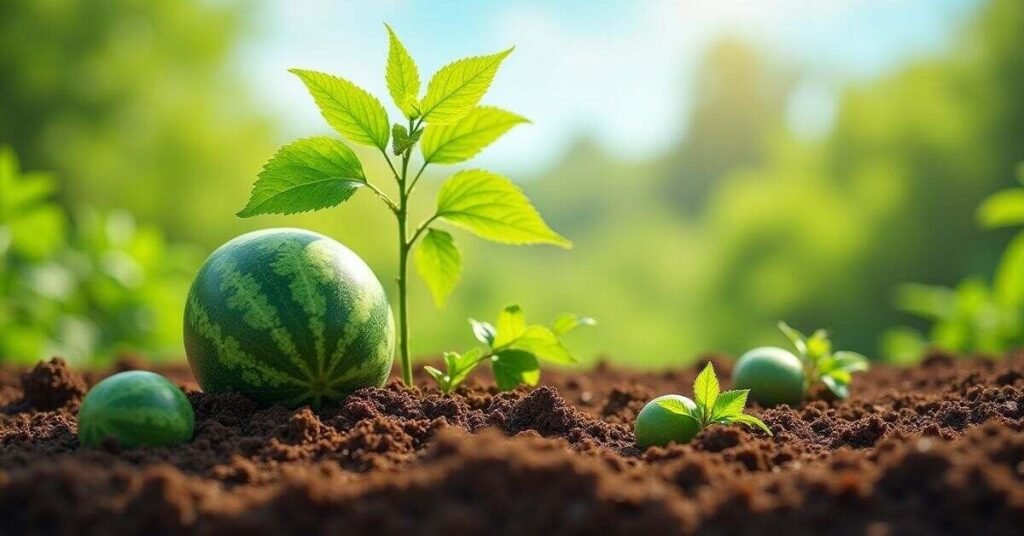
The right soil acts like a cozy home for your watermelon roots. These plants prefer loose, sandy loam that allows water to drain away quickly. If the soil is too heavy or stays like wet clay, the roots might struggle to breathe or even rot. Mixing in plenty of aged compost or well-rotted manure gives the vines a massive boost of energy right from the start.
Healthy watermelons also need soil that is slightly acidic to neutral. You want a mix that holds onto just enough moisture without becoming a swamp. Before planting, it is a great idea to dig deep and fluff up the earth so the roots can spread out easily. When the soil is rich and airy, your plants will grow much faster and produce bigger, heavier fruits.
How to Plant Watermelon Seeds Step-by-Step
Starting your watermelon patch is easy if you follow a few simple steps. First, find a spot with plenty of room because these vines love to wander. You should create small mounds of soil, often called hills, spaced several feet apart. This helps with drainage and keeps the roots warm. Planting in groups ensures that at least a few strong vines will take over your garden.
Once your mounds are ready, it is time to get the seeds in the ground. Use your finger to make a small hole and drop the seeds in gently. Cover them up and give them a good drink of water right away. If you keep the soil warm and moist, you will see tiny green sprouts popping up in just a few days.
- Create Mounds: Space your soil hills about 4 to 6 feet apart.
- Sow Seeds: Plant 3 or 4 seeds in each mound about 1 inch deep.
- Water Well: Give the soil a gentle soak immediately after planting.
- Thin the Sprouts: Once they are a few inches tall, keep only the two strongest plants in each hill.
Watermelon Plant Watering & Sunlight Needs
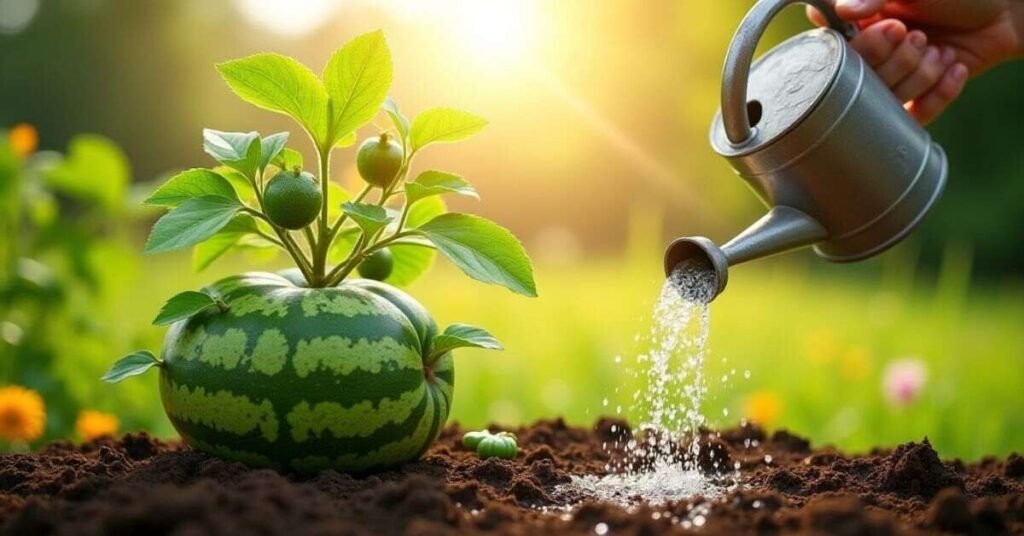
Watermelons are like little sponges that need a lot of hydration to create those juicy centers. You should water them deeply at the base of the plant once or twice a week. It is best to soak the soil early in the morning so the leaves have time to dry in the sun. Try to keep the moisture steady because jumping from bone-dry to soaking wet can cause the fruit to crack open.
Sunlight is the engine that drives your plant to produce sugar. These vines are not shy about the heat and need a spot that is not blocked by trees or tall buildings. The more light they get, the faster the fruit will grow and the sweeter it will taste. If your garden gets plenty of bright rays, your watermelons will stay healthy and vibrant all season long.
- Daily Sunlight: Your plants need a minimum of 8 to 10 hours of full sun.
- Watering Depth: Aim to soak the soil at least 6 inches deep each time.
- Mulching: Add straw or bark around the base to keep the soil damp and cool.
- Fruit Ripening: Slowly reduce watering a week before harvest to concentrate the sugars.
Common Watermelon Plant Problems & Easy Fixes
The best gardeners sometimes encounter hiccups. You might notice yellow leaves, wilting vines, or tiny bugs crawling on your plants. Most of these issues happen because of too much water or pesky garden visitors like aphids. If you catch these problems early, it is usually very easy to fix them and save your fruit.
The best way to keep your plants healthy is to check on them every morning. Look under the leaves for any spots or small insects. If you see white powdery dust on the leaves, your plant might need better air circulation. Quick action with some organic spray or a simple change in your watering routine can keep your watermelon patch thriving until harvest day.
| Problem | What it Looks Like | Simple Fix |
| Powdery Mildew | White, flour-like spots on leaves | Improve airflow and use an organic fungicide. |
| Aphids | Tiny green or black bugs on stems | Make sure the plant is well watered with a strong stream. |
| Cucumber Beetles | Striped or spotted yellow beetles | Pick them off by hand or use neem oil. |
| Blossom End Rot | Dark, leathery spots on the bottom of fruit | Add calcium to the soil and water consistently. |
| Wilting Leaves | Leaves look limp even after watering | Check for vine borers or improve soil drainage. |
| Yellow Leaves | Leaves turn pale or yellow | Feed the plant with a balanced fertilizer. |
| Cracked Fruit | Deep splits in the watermelon skin | Maintain a steady watering schedule; avoid soaking. |
Fertilizer Tips for Faster Watermelon Plant Growth
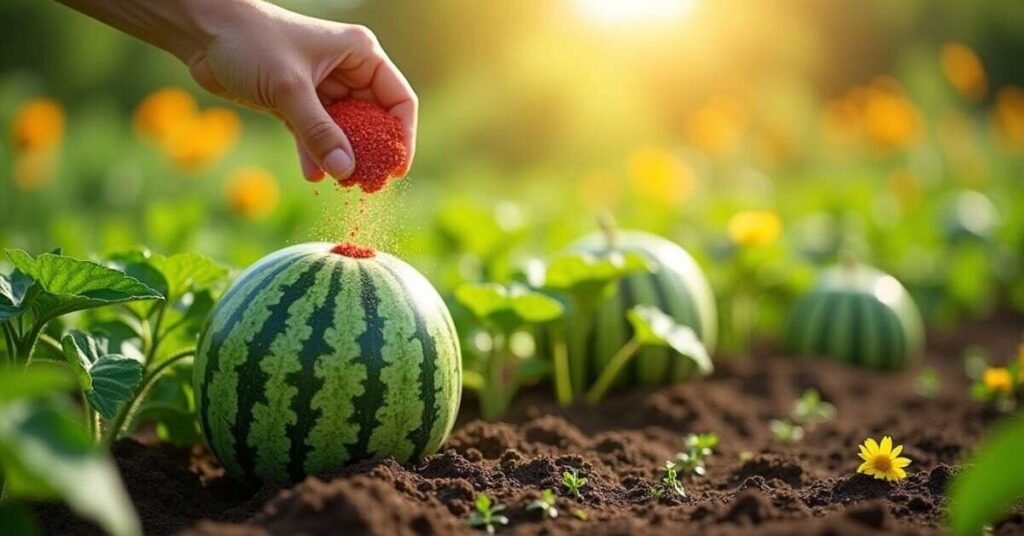
Watermelons are very hungry plants that need plenty of fuel to grow large fruits. When you first plant them, they love nitrogen to help their green vines and leaves spread across the garden. Once the first flowers appear, it is time to switch your focus to phosphorus and potassium. These nutrients help the plant shift its energy from growing leaves to making sweet, heavy melons.
You should feed your plants every few weeks to keep them strong and healthy. Using organic compost or a balanced liquid food works wonders for the soil. Just be careful not to overdo it, as too much fertilizer can actually hurt the roots. A steady supply of nutrients ensures your vines stay vibrant and your fruit grows as fast as possible.
- Early Growth: Use a nitrogen-rich fertilizer to help the vines get a strong start.
- Flowering Stage: Switch to a mix higher in phosphorus to encourage more blooms.
- Application Tip: Always water your plants before and after adding fertilizer to avoid root burn.
- Natural Boost: Mix aged manure into the soil for a slow-release energy source.
Watermelon Plant Growth Stages Explained Simply
Watching a tiny seed turn into a giant watermelon is like magic. It all starts underground where the seed wakes up and sends out its first little root. Soon, a green sprout pops through the dirt to find the sun. As the days pass, the plant grows long vines that crawl across the garden to find more space.
Once the vines are strong, beautiful yellow flowers begin to bloom. These flowers need help from bees to turn into actual fruit. You will soon see tiny green balls forming where the flowers used to be. These little melons grow bigger every day until they are heavy, striped, and ready for your summer table.
- Germination: The seed sprouts and grows its first set of leaves.
- Vining: The plant sends out long runners to cover the ground.
- Flowering: Bright yellow male and female flowers appear on the vine.
- Fruit Set: Bees pollinate the flowers and tiny melons start to grow.
- Ripening: The fruit reaches its full size and develops its sweet sugar.
Mistakes to Avoid When Growing

Even if you have a green thumb, it is easy to make a few wrong turns with watermelons. One big mistake is planting them too early while the ground is still chilly. These plants hate cold feet and will simply stop growing if the soil isn’t warm enough. Another common slip-up is crowding them too close together. They need lots of elbow room to breathe and spread their vines, or they might end up with diseases.
Watering the leaves instead of the base of the plant is another thing to watch out for. When the leaves stay wet, it invites mold and fungus to move in and ruin your hard work. You should also avoid skipping the fertilizer once the fruit starts to grow. If the plant runs out of food, the melons might end up small and tasteless. Keeping an eye on these simple details will help you avoid a garden disaster.
- Crowding Plants: Never plant them too close; give each mound plenty of space.
- Cold Soil: Avoid planting until the ground is warm and the frost is long gone.
- Wet Leaves: Always water at the dirt level to keep the foliage dry and healthy.
- Over-Watering at the End: Don’t keep the soil soaking wet right before harvest or the fruit might split.
- Ignoring Bees: Avoid using harsh sprays that might scare away the bees needed for pollination.
When & How to Harvest Watermelon Plant Fruits
Knowing exactly when to pick your watermelon is the key to that perfect crunch. You should look at the curly tendril closest to where the fruit meets the vine. When that small green sprout turns brown and dries up, it is a great sign that the melon is ripe. You can also flip the fruit over to check the belly. A ripe watermelon will have a creamy yellow spot on the bottom instead of a bright white one.
Once you are sure it is ready, use a sharp pair of garden shears or a knife to cut the stem. Avoid pulling or twisting the fruit, as this can damage the vine and hurt other melons still growing. Leave about an inch of stem attached to the fruit to help it stay fresh longer. After you bring it inside, give it a quick rinse and get ready to enjoy the sweetest reward of your garden.
Conclusion
Growing your own watermelons is a fun and tasty journey that any gardener can enjoy. It takes a bit of patience and some warm sunshine, but the results are worth every bit of effort. When you finally slice into a melon from your own backyard, the sweet flavor will be better than anything from a store.
Remember to keep your plants well-fed and give them plenty of room to spread out. If you follow these simple steps, you will have a garden full of heavy, juicy fruits all summer long. Gardening is all about learning as you go, so grab some seeds and start your watermelon patch today.
FAQs
Q1. How long does it take for a watermelon to grow from a seed?
Most varieties take about 80 to 100 days to reach full maturity and be ready for harvest.
Q2. How often should I water my watermelon plants?
Give them a deep soak once or twice a week to keep the soil consistently moist but not soggy.
Q3. Do watermelons need a lot of sun?
Yes, they need at least 8 to 10 hours of direct sunlight every day to grow big and sweet.
Q4. Can I grow watermelons in large pots or containers?
You can grow smaller “bush” varieties in large pots as long as they have plenty of sun and water.
Q5. How do I know if my watermelon is sweet?
A ripe, sweet melon usually has a dull skin and a creamy yellow spot on the bottom where it touched the ground.