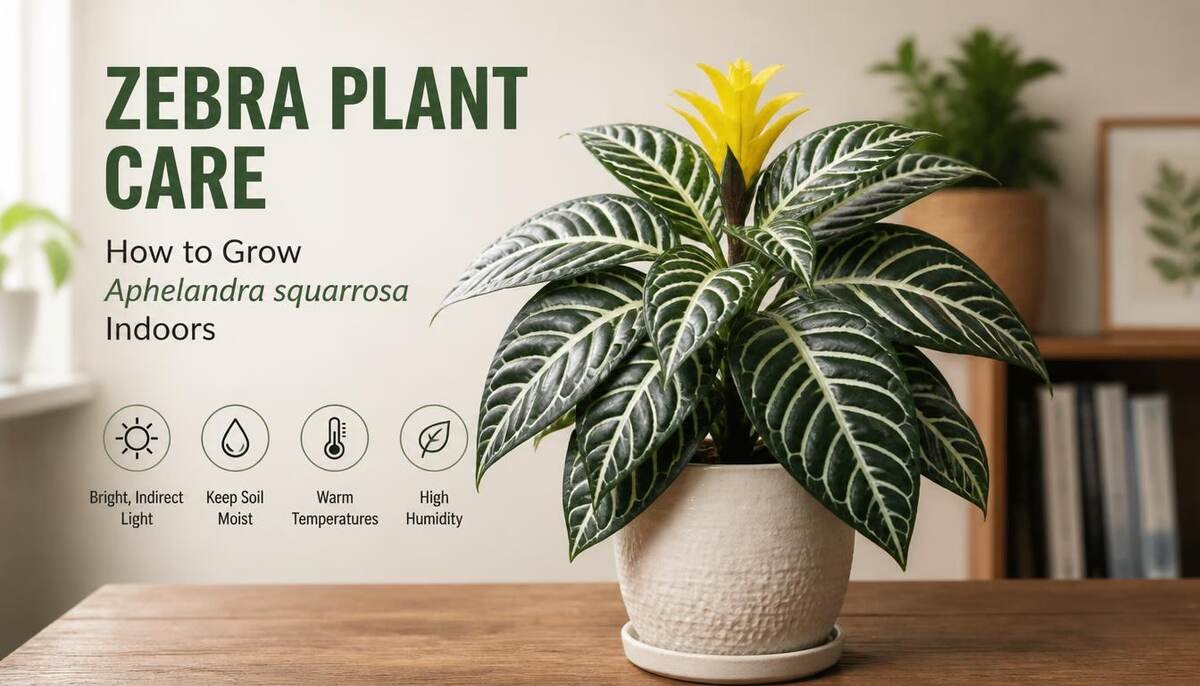
Zebra plant care is all about finding the right balance of light, moisture, warmth, and humidity. With its dark green leaves, bold white veins, and striking yellow flower spikes, Aphelandra squarrosa can make a beautiful houseplant but it can be a little particular about its growing conditions.
The good news is that once you understand what it needs, caring for a zebra plant becomes much easier. Here’s how to keep yours healthy, encourage flowering, and fix common problems.
Zebra Plant Care at a Glance
| Care Need | Best Condition |
|---|---|
| Light | Bright, indirect light |
| Water | Keep soil consistently moist |
| Humidity | High humidity |
| Temperature | Warm and stable |
| Soil | Rich, loose, well-draining |
| Fertilizer | Regular feeding during active growth |
| Difficulty | Moderate |
| Common Problems | Brown tips, drooping, yellow leaves, root rot |
What Is a Zebra Plant?
The zebra plant, Aphelandra squarrosa, is a tropical plant native to Brazil. It gets its common name from the distinctive white veins running across its dark green leaves.
It is sometimes confused with other plants called zebra plants, including zebra haworthia and zebra prayer plant. For this guide, zebra plant means Aphelandra squarrosa.
Because it comes from a warm, humid environment, it generally does best indoors when you recreate those conditions.
Zebra Plant Varieties Worth Knowing
Most zebra plants sold at nurseries are the standard Aphelandra squarrosa, but a few cultivars are worth knowing if you’re shopping around. ‘Dania’ is probably the most common named variety, it stays noticeably more compact than the straight species and tends to have brighter, more defined white veining, which makes it a better fit for smaller spaces or tabletop displays. Some growers also come across ‘Louisae’, an older cultivar with slightly broader leaves. None of these need different care from each other, the growing requirements stay the same across varieties, it’s really just a difference in size and leaf pattern.
Zebra Plant vs. Zebra Haworthia vs. Zebra Prayer Plant
The shared nickname causes more mix-ups than people expect, so it’s worth knowing what actually separates these three at a glance.
Aphelandra squarrosa, the true zebra plant, is a tropical foliage plant with broad, glossy dark-green leaves and bold white veins. It needs consistent moisture and high humidity, and it’s the plant this guide covers.
By contrast, zebra haworthia is a small succulent with thick, pointed leaves covered in raised white bumps and stripes. It wants the opposite care entirely, infrequent watering and gritty, fast-draining soil.
As for the zebra prayer plant (Ctenanthe or Calathea varieties), its patterned leaves fold upward at night, a behavior called nyctinasty. While it does share the tropical, humidity-loving care profile of the true zebra plant, its leaf pattern and growth habit look distinctly different up close.Zebra haworthia is a s
If a plant labeled “zebra plant” is thick and succulent-like, it’s not Aphelandra, and it won’t want the moist soil this guide describes.
| Zebra Plant | Zebra Haworthia | Zebra Prayer Plant | |
|---|---|---|---|
| Type | Tropical foliage plant | Succulent | Tropical foliage plant |
| Leaves | Broad, glossy, white veins | Thick, pointed, bumpy stripes | Patterned, folds at night |
| Water Needs | Consistently moist | Infrequent, dry between waterings | Consistently moist |
| Soil | Rich, well-draining | Gritty, fast-draining | Rich, well-draining |
Styling a Zebra Plant in Your Home
Beyond the care routine, a zebra plant’s bold striped foliage makes it a genuinely striking decor piece if it’s placed with a bit of intention. A simple, unglazed terracotta or matte ceramic pot lets the leaf pattern stay the visual focus rather than competing with a busy container. Since it needs bright, indirect light anyway, a spot near an east-facing window often works for both its care needs and as a natural, sunlit accent point in a living room or reading nook. Grouping it with one or two other broad-leafed tropical plants at varying heights plays up its texture without needing any additional decor.
How to Care for a Zebra Plant Indoors
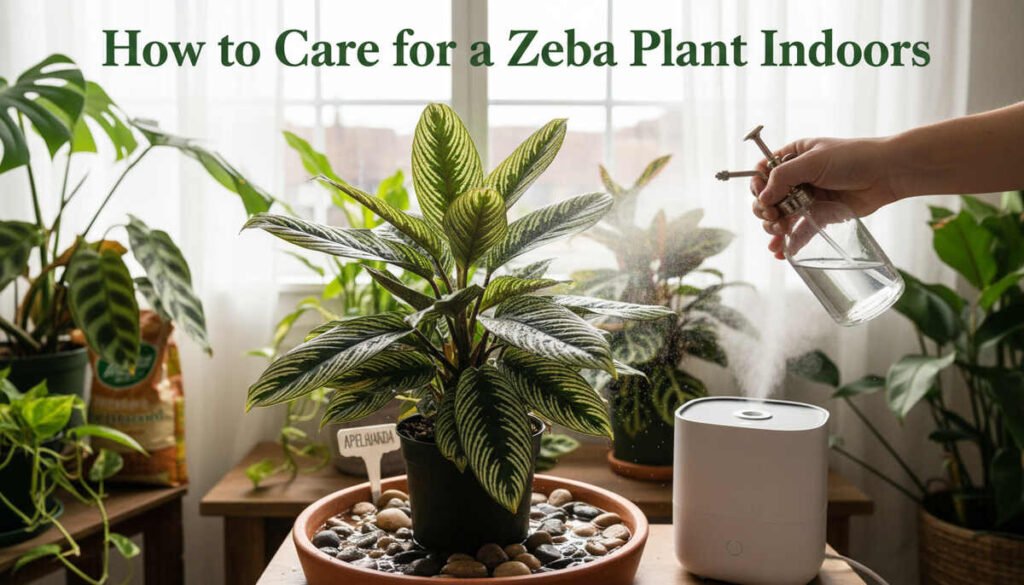
The most important part of zebra plant care is consistency. It doesn’t like being completely dried out one week and heavily watered the next.
Give It Bright, Indirect Light
Place your zebra plant somewhere with plenty of bright, filtered light.
A spot near an east- or west-facing window can work well, especially when the plant is protected from intense direct afternoon sun.
Too much direct sunlight can scorch the leaves, while very low light can lead to weak growth and make flowering less likely.
If natural light is limited, a suitable grow light can help provide additional illumination.
Keep the Soil Consistently Moist
Zebra plants prefer soil that stays evenly moist but not waterlogged.
Check the soil regularly with your finger. If the surface is beginning to dry, it’s usually time to check whether the plant needs watering.
When watering, soak the soil thoroughly until excess water drains from the bottom of the pot. Then empty any water sitting in the saucer.
Avoid keeping the roots constantly submerged because soggy soil can contribute to root problems.
Maintain High Humidity
Dry indoor air is one of the most common challenges for zebra plants.
Higher humidity can help prevent crispy brown leaf edges and create conditions closer to the plant’s natural tropical environment.
You can increase humidity with:
- A room humidifier
- A pebble tray
- Grouping plants together
- Keeping the plant away from dry heating or cooling vents
A humidifier is generally the most reliable option when your indoor air is consistently dry.
Keep Temperatures Warm
Zebra plants prefer warm, stable conditions.
Keep the plant away from cold drafts, chilly windows during winter, air-conditioning vents, and sudden temperature changes.
Avoid exposing it to temperatures below about 55°F (13°C), with warmer conditions generally preferred for active growth.
Use Well-Draining Soil
The ideal soil should hold enough moisture for the plant without staying saturated.
A quality indoor potting mix amended with material that improves drainage can work well.
Most importantly, use a pot with drainage holes. Even moisture-loving plants need excess water to escape.
Fertilize During Active Growth
During spring and summer, a balanced liquid houseplant fertilizer diluted according to the product directions can support healthy growth.
Avoid overfertilizing. Too much fertilizer can damage roots and contribute to leaf problems.
Reduce or pause feeding when growth naturally slows during the cooler, darker months.
How Often Should You Water a Zebra Plant?
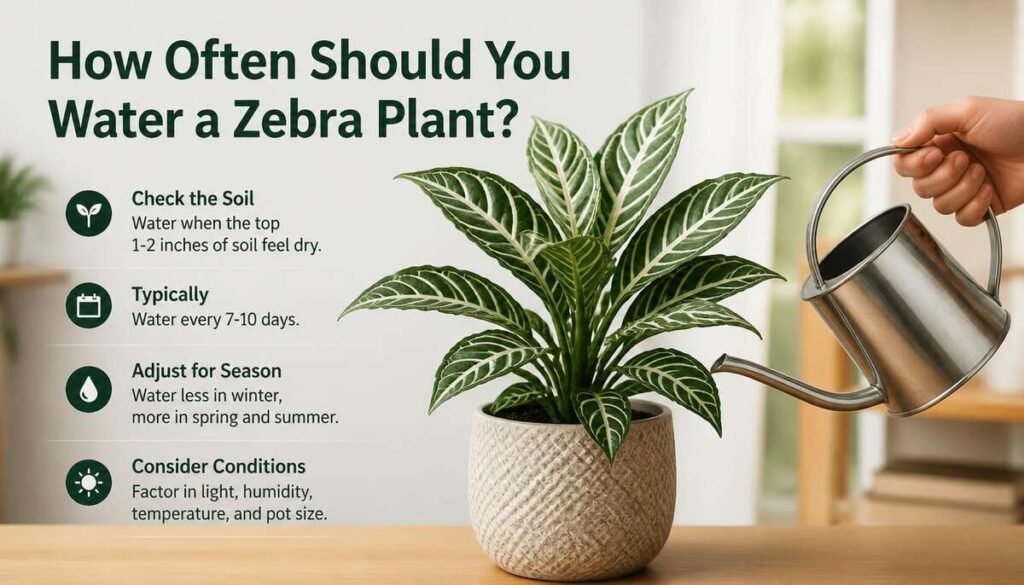
There isn’t one exact watering schedule that works for every zebra plant.
The right frequency depends on:
- Temperature
- Humidity
- Light
- Pot size
- Soil mixture
- Plant size
- Season
Instead of watering strictly by the calendar, check the soil regularly.
The goal is consistently moist soil without standing water.
If the leaves are drooping and the soil is very dry, the plant may need water. If the soil stays wet for a long time and the leaves begin turning yellow or the stems look unhealthy, overwatering may be the problem.
How to Make a Zebra Plant Bloom
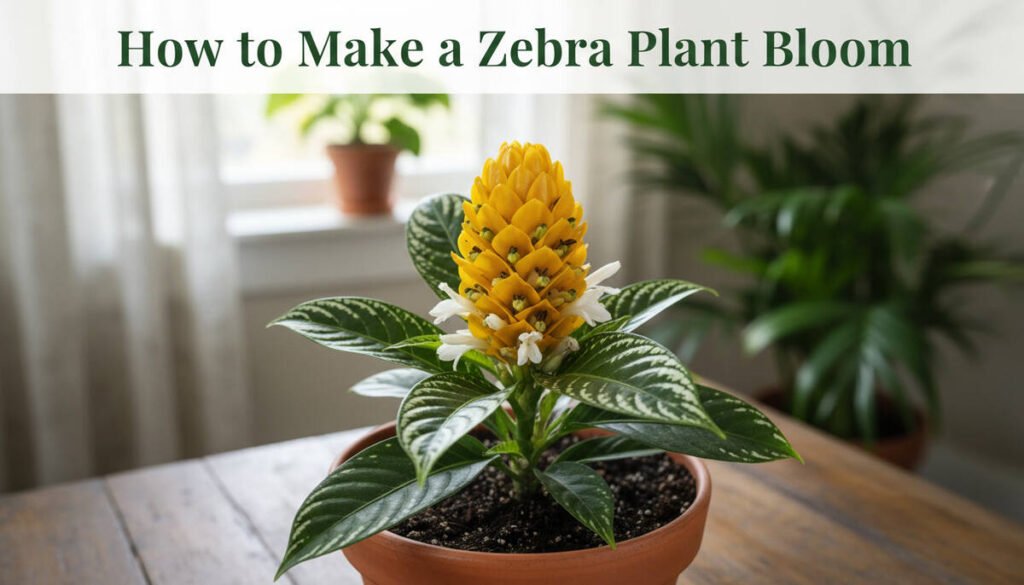
The yellow flower spikes are one of the most attractive features of a mature zebra plant.
Good flowering starts with healthy overall growth.
Provide:
- Bright, indirect light
- Consistent moisture
- Warm temperatures
- High humidity
- Appropriate nutrition during active growth
Don’t move the plant around constantly in search of better light. A stable environment can make care easier.
After flowering finishes, remove the spent flower spike and tidy the plant. Pruning can also help maintain a compact shape.
Zebra Plant Pruning and Repotting
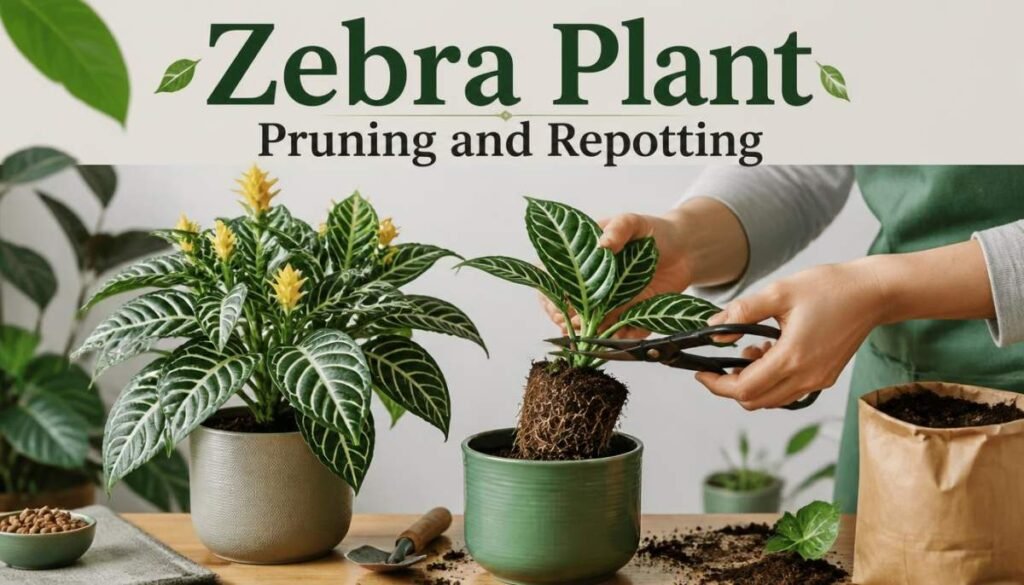
When to Prune
Pruning is most useful after flowering or when the plant becomes leggy.
Remove dead or damaged leaves with clean scissors. You can also trim overly long stems to encourage a fuller appearance.
Avoid removing large amounts of healthy growth at once.
When to Repot
Zebra plants don’t necessarily need frequent repotting.
Consider repotting when:
- Roots are becoming crowded
- Water runs through the pot unusually quickly
- The plant has outgrown its container
- The soil has broken down significantly
Move it into a slightly larger pot with fresh, well-draining soil rather than jumping to a very large container.
How to Propagate a Zebra Plant
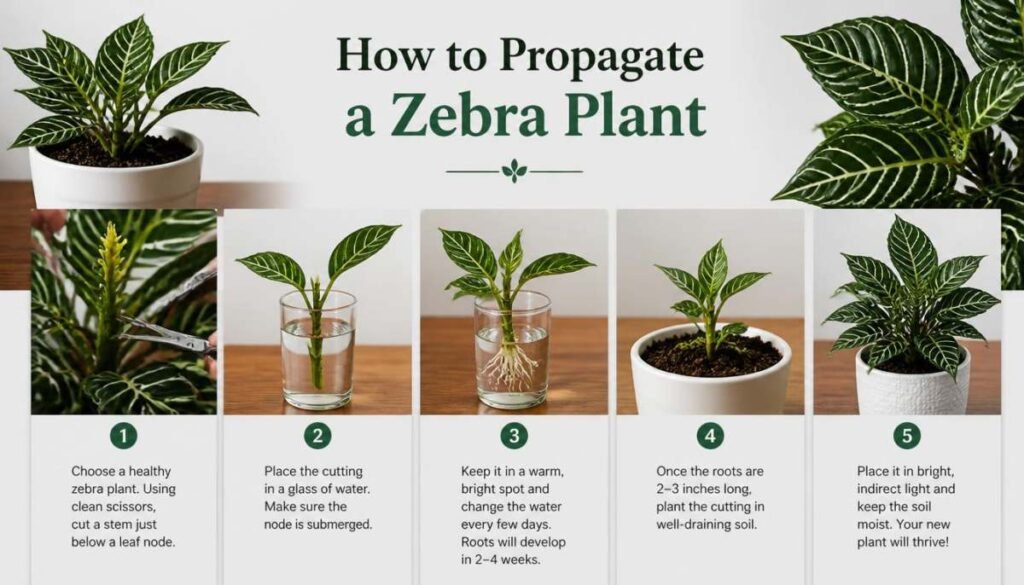
Zebra plants can be propagated from stem cuttings.
Choose a healthy stem and take a cutting with several leaves. Remove the lower leaves and place the cutting in an appropriate propagation medium.
Warm temperatures, humidity, and indirect light can encourage rooting.
Propagation is especially useful when you want to create a new plant from a healthy parent plant.
Common Zebra Plant Problems and How to Fix Them
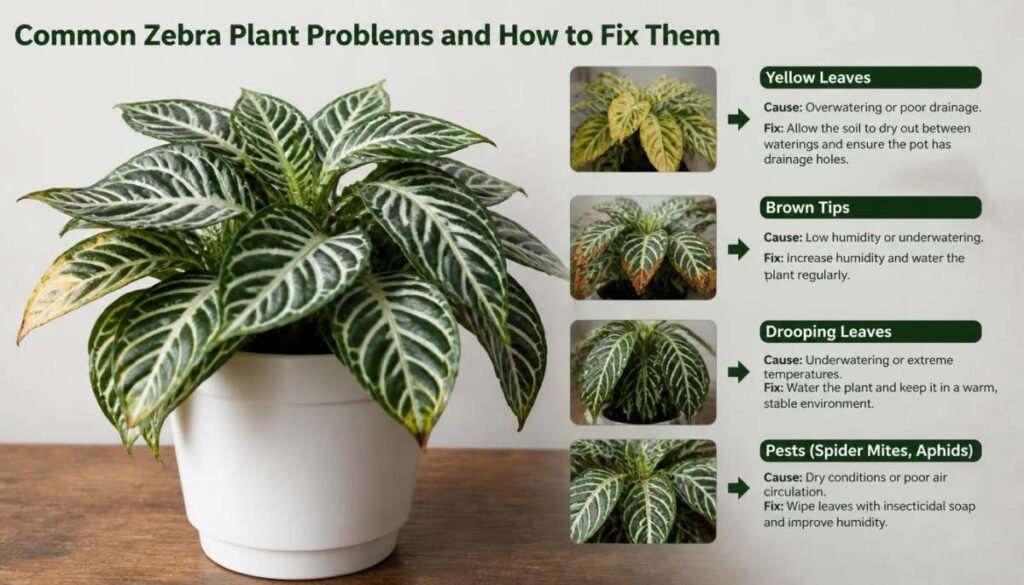
Understanding the symptoms is one of the most useful parts of zebra plant care.
Why Are Zebra Plant Leaves Turning Brown?
Brown or crispy leaf edges can have several causes.
Common possibilities include:
- Low humidity
- Inconsistent watering
- Excessive direct sunlight
- Dry soil
- Mineral buildup
- Temperature stress
Start by checking the plant’s light, soil moisture, humidity, and location rather than immediately assuming it needs more water.
Why Are Zebra Plant Leaves Turning Yellow?
Yellow leaves can occur for several reasons, but consistently wet soil is an important one to investigate.
Check that:
- The pot has drainage holes
- Excess water can escape
- The soil isn’t remaining saturated
- The roots aren’t showing signs of rot
Older leaves can also naturally yellow and fall as the plant grows.
Why Is My Zebra Plant Drooping?
Drooping may happen when the plant is thirsty, stressed by temperature changes, exposed to unsuitable light, or experiencing root problems.
Check the soil first.
If it is very dry, provide a thorough watering. If the soil is already wet, don’t add more water until you’ve determined why the plant isn’t using moisture normally.
Why Are Leaves Falling Off?
Sudden leaf drop can indicate environmental stress.
Look at recent changes in:
- Watering
- Temperature
- Humidity
- Light
- Location
Cold drafts and dramatic changes in growing conditions can be particularly stressful for tropical houseplants.
Why Is My Zebra Plant Not Blooming?
A zebra plant may fail to bloom because it isn’t receiving enough bright indirect light or isn’t getting the consistent conditions it needs for healthy growth.
Avoid expecting flowers from a plant that is already struggling with watering, humidity, or light problems.
Focus on overall plant health first.
What If the Roots Are Rotting?
Root rot is usually associated with excessively wet conditions and poor drainage.
If you suspect root rot, remove the plant from its pot and inspect the roots. Healthy roots should not be mushy or severely discolored.
Remove damaged roots with clean tools and repot the remaining healthy root system into fresh, well-draining soil.
Zebra Plant Pests
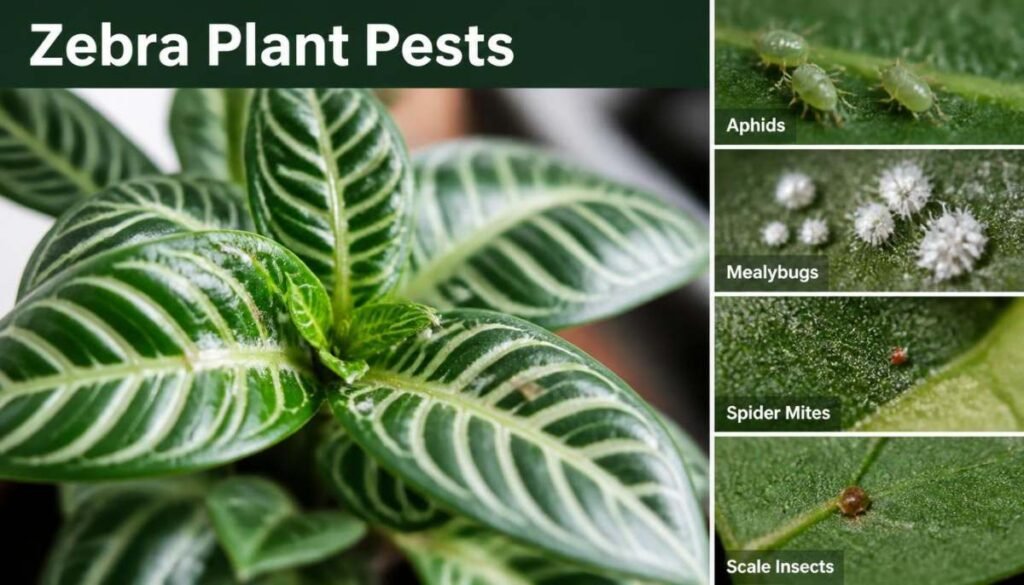
Zebra plants can occasionally attract common houseplant pests.
Watch for:
- Spider mites
- Mealybugs
- Scale
- Aphids
Inspect the undersides of leaves and around stems regularly. Catching an infestation early is much easier than dealing with a heavily affected plant.
If you find pests, isolate the plant from nearby houseplants and choose a treatment appropriate for the pest and your growing situation.
How Long Do Zebra Plants Live?
There isn’t a single guaranteed lifespan for every zebra plant.
Indoor plants can remain healthy for years when their growing conditions are consistently suitable. However, zebra plants can be more demanding than many common low-maintenance houseplants.
Good light, appropriate watering, high humidity, healthy roots, and regular maintenance all improve the chances of keeping the plant healthy over the long term.
Propagation can also give you a way to continue growing new plants from healthy material.
Is the Zebra Plant Safe for Pets?

Aphelandra squarrosa, commonly known as the saffron spike or zebra plant, is listed by the ASPCA as non-toxic to dogs, cats, and horses.
That doesn’t mean pets should be encouraged to chew on houseplants, but it can provide reassurance for households with curious cats or dogs.
Are Zebra Plants Hard to Care For?
Zebra plants are moderately difficult rather than completely beginner-proof.
They are not necessarily difficult when their basic requirements are met, but they can react quickly to dry air, inconsistent watering, poor drainage, or unsuitable light.
If you’re new to houseplants, focus on four things first:
- Give it bright indirect light.
- Keep the soil evenly moist.
- Maintain good humidity.
- Avoid temperature extremes.
Once those conditions are stable, the rest of the care routine becomes much easier.
Final Thoughts
Good zebra plant care doesn’t require constantly fussing over your plant. It requires creating a stable environment and paying attention to what the leaves and soil are telling you.
Give Aphelandra squarrosa bright indirect light, keep its soil consistently moist without making it soggy, provide plenty of humidity, and protect it from cold drafts and harsh sunlight.
Once you get those basics right, you’ll have a much better chance of enjoying its bold striped foliage and beautiful yellow flower spikes for years to come.
Frequently Asked Questions About Zebra Plant Care
How do you take care of a zebra plant indoors?
Give it bright, indirect light, consistently moist but well-draining soil, high humidity, warm temperatures, and regular feeding during active growth. Avoid direct hot sunlight and waterlogged soil.
How often should I water a zebra plant?
Water when the soil begins to dry rather than following a fixed weekly schedule. Your plant may need water more frequently in warm, bright conditions and less often during cooler, darker periods.
Do zebra plants need direct sunlight?
No. Zebra plants generally prefer bright, indirect light. Strong direct sunlight can scorch their leaves.
Does a zebra plant need high humidity?
Yes. Because it is a tropical plant, zebra plant generally performs best in humid conditions. A humidifier can be particularly helpful when indoor air is dry.
Why are my zebra plant leaves turning brown?
Brown or crispy leaves can result from low humidity, dry soil, direct sunlight, inconsistent watering, mineral buildup, or temperature stress. Check all of these conditions before changing your watering routine.
Why is my zebra plant drooping?
Check the soil first. Very dry soil can cause wilting, while constantly wet soil can indicate a root problem. Also consider recent changes in temperature, light, or humidity.

Jack Rivers is the founder of Plantsopedia, dedicated to making plant care simple, science-backed, and accessible for everyone. With a deep interest in botanical care and plant psychology, he specializes in rare tropical species and organic growth techniques, helping enthusiasts understand the soil, light, and biology behind every thriving plant. When he’s not experimenting with new propagation methods, Jack is busy turning complex horticultural science into practical, everyday advice for home gardeners