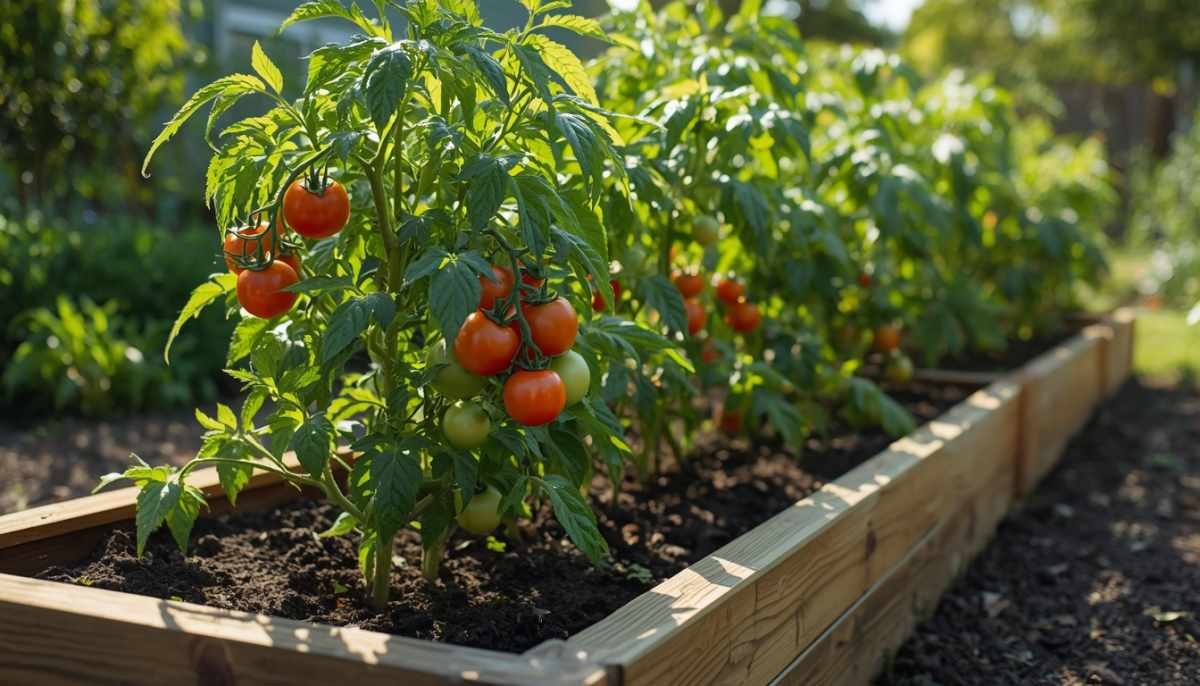
Choosing the wrong tomato plant can turn a raised bed into a crowded tangle of vines. The right variety, however, can give you sweet cherry tomatoes, juicy slices for sandwiches, or plenty of fruit for homemade sauce without wasting valuable garden space.
The best tomato plants for raised beds depend on your available space, preferred tomato type, growing season, and willingness to support larger plants. Compact varieties can make gardening easier in smaller beds, while vigorous vining tomatoes can deliver extended harvests when you give them enough room.
Whether you are planting your first raised bed or planning another productive summer garden, these 10 tomato varieties offer different advantages for home growers across the United States.
Which Tomato Plants Are Best for Raised Beds?
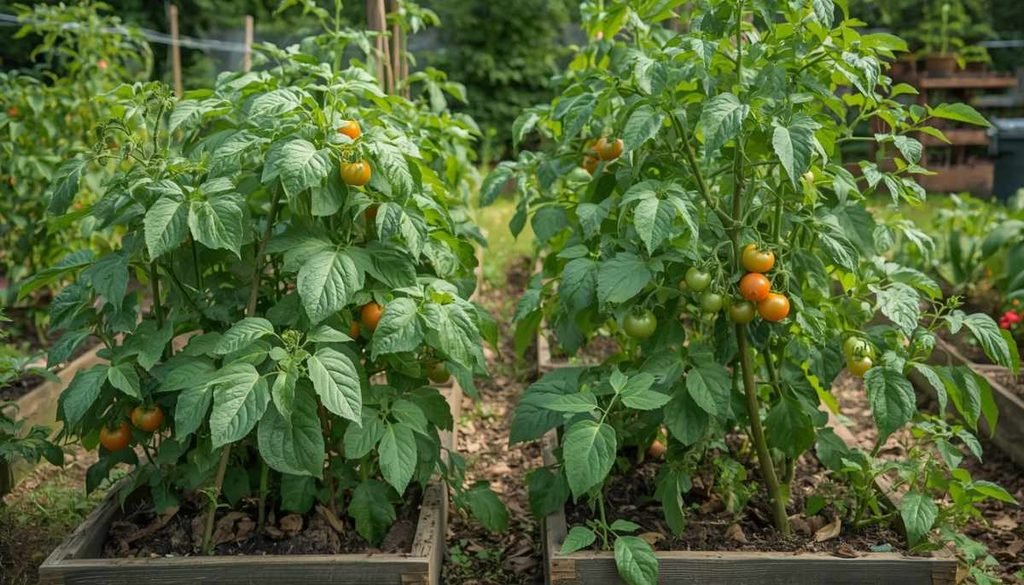
The most suitable tomato plant is one that fits your raised bed rather than simply producing the biggest fruit. Before buying seeds or seedlings, consider the plant’s mature size, growth habit, harvest pattern, and intended use.
Determinate tomatoes generally grow to a more limited size and produce much of their crop over a shorter period. Indeterminate tomatoes continue growing and producing fruit throughout the season when conditions remain suitable. Dwarf varieties offer another option for gardeners working with particularly limited space.
According to Iowa State University Extension’s tomato cultivar guide, these growth habits affect how gardeners should choose and manage their plants.
Here are four factors worth checking before making your selection:
- Available space: Compact plants can be easier to manage in small beds, while larger varieties need room and sturdy support.
- Tomato type: Cherry, slicing, and paste tomatoes serve different kitchen needs.
- Growing season: Early-maturing varieties may be useful in areas with shorter summers.
- Disease resistance: Cultivars with appropriate resistance can help reduce problems common in your region.
A raised bed does not automatically require dwarf or bush tomatoes. With thoughtful spacing and suitable supports, you can grow larger varieties successfully too.
10 Best Tomato Varieties for Raised Beds
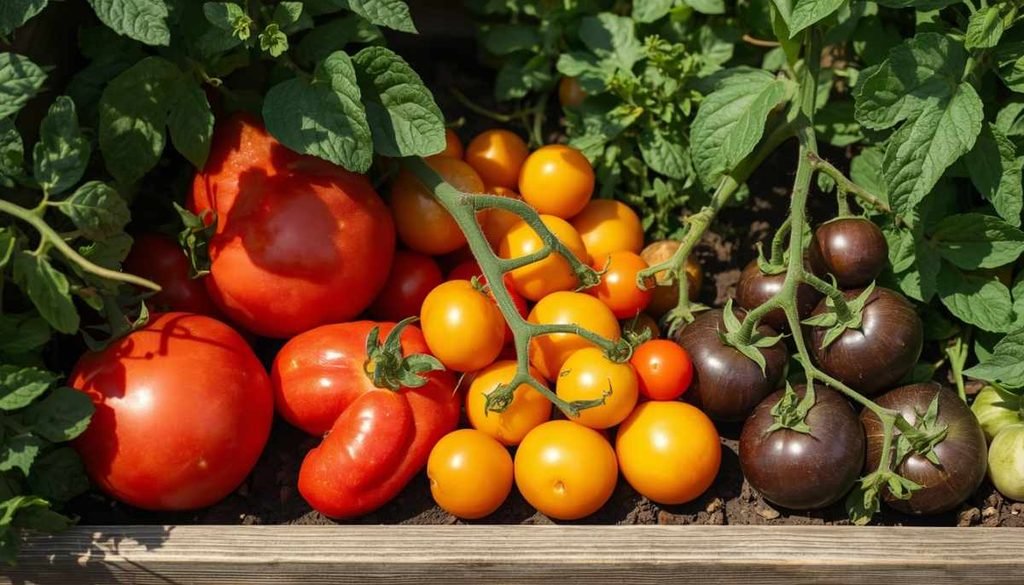
These varieties cover different growing situations, from compact gardens to raised beds with enough space for taller plants. Their suitability depends on the specific cultivar, local conditions, and how you plan to manage the plants.
1. Patio: A Compact Choice for Small Spaces
Best for: Small raised beds and gardeners who want a manageable plant.
Patio tomatoes are worth considering when space is your biggest limitation. The name is associated with compact tomato cultivars that are also popular for container gardening.
Their smaller growth habit can make them easier to fit into a carefully planned garden than vigorous, sprawling vines. They also suit gardeners who prefer a plant that does not require extensive training.
Before planting, check the mature size of the particular Patio cultivar you buy. Some varieties sold under similar names can differ in growth and fruit characteristics.
Growing tip: Leave enough room around the plant for airflow and watering. Compact does not mean that a tomato plant can thrive when crowded against neighboring plants.
2. Celebrity: A Versatile Tomato for Everyday Meals
Best for: Fresh slices, salads, and general kitchen use.
Celebrity is a popular hybrid tomato cultivar that produces medium to large red fruits. Iowa State University Extension lists Celebrity among its recommended determinate cultivars for home gardens.
Its relatively controlled growth habit can make it useful for raised beds where gardeners want a productive slicing tomato without managing a particularly sprawling vine.
Celebrity is also worth considering if you want a general-purpose tomato rather than a variety selected for only one use. However, its mature size and support needs still matter when you plan the bed.
Growing tip: Check the seed packet for the exact cultivar’s growth habit and disease-resistance information. Use the recommended spacing rather than assuming every plant sold as a bush tomato needs the same room.
3. Early Girl: For Gardeners Who Want an Earlier Harvest
Best for: Gardeners trying to harvest tomatoes earlier in the season.
Waiting for the first ripe tomato can feel like the longest part of summer gardening. Early Girl is widely known as an early-producing slicing tomato, making it worth considering when an earlier harvest is a priority.
One important detail is that standard Early Girl and Bush Early Girl are not interchangeable. Standard Early Girl is commonly grown as an indeterminate vine, while Bush Early Girl is a more compact option. Always check the variety description before purchasing.
Standard Early Girl can work in a raised bed when you provide sufficient space and a sturdy cage or trellis. It is not necessarily the easiest choice for a very small bed.
Growing tip: Compare the days-to-maturity information on the seed packet with your local growing season. These estimates vary by cultivar and growing conditions.
4. Roma VF: For Homemade Sauce and Canning
Best for: Tomato sauce, paste, and preserving.
If your summer harvest usually ends up in jars or cooking pots, Roma VF deserves a place on your shortlist. Roma-type tomatoes have relatively thick flesh and fewer seed cavities than many juicy slicing varieties, which makes them useful for sauces and other cooked preparations.
Roma VF is listed by Iowa State University Extension as a determinate paste-type cultivar. Its more limited growth habit can simplify planning in a raised bed compared with a vigorous indeterminate vine.
The letters in cultivar names can also matter. In Roma VF, the VF designation refers to resistance to particular races of Fusarium and Verticillium wilts. Resistance does not mean a plant is immune to every disease.
Growing tip: Check which diseases affect tomatoes in your area and compare those concerns with the resistance information on the seed packet.
5. Silvery Fir Tree: An Early, Compact Option
Best for: Gardeners who want an early tomato in a relatively small space.
Silvery Fir Tree offers something different from the typical tomato plant. Its distinctive, finely divided foliage gives it a noticeably different appearance, and the cultivar is known for its compact growth and early production.
Iowa State University Extension includes Silvery Fir Tree among its popular heirloom cultivars and describes it as determinate, compact, and early.
That combination can be appealing when you want to grow tomatoes without dedicating a large section of your raised bed to a sprawling plant. Its unusual foliage also makes it interesting for gardeners who enjoy growing less conventional varieties.
Growing tip: Give the plant sufficient sunlight and avoid crowding it. Its compact habit helps with space planning, but good growing conditions still matter.
6. Bush Early Girl: For a Bush-Type Slicing Tomato
Best for: Gardeners who want an earlier slicing tomato with a more compact habit.
Bush Early Girl is worth comparing with standard Early Girl if you prefer a plant that stays more manageable. The bush-type growth habit can make it easier to incorporate into a raised-bed layout.
It produces slicing tomatoes suitable for sandwiches, salads, and everyday cooking. This gives you a practical option if you want fresh tomatoes without growing only small cherry varieties.
Even a bush-type plant can become fairly substantial, so check the cultivar’s mature dimensions before deciding how many to plant.
Growing tip: Plan the bed around the plant’s expected width, not just the size of the seedling you bring home. Young tomatoes often look small enough to fit almost anywhere.
7. Sungold: For Sweet Cherry Tomatoes
Best for: Snacking, salads, and frequent picking.
Sungold is known for its small, orange-gold cherry tomatoes and sweet flavor. It is an appealing choice for gardeners who enjoy eating tomatoes straight from the plant rather than saving the entire harvest for cooking.
Unlike compact bush varieties, Sungold grows as an indeterminate vine. That means it can continue growing and producing fruit over an extended period when temperatures and growing conditions remain favorable.
This makes Sungold useful in a raised bed with room for a tall cage or trellis. Its vigorous growth also means you should avoid treating it as a miniature tomato just because its fruits are small.
Growing tip: Install the support when planting or soon afterward. Adding a cage after a large vine has spread can disturb roots and damage branches.
8. Supersweet 100: For Abundant Cherry Tomato Picking
Best for: Gardeners who enjoy harvesting small tomatoes regularly.
Supersweet 100 is another indeterminate cherry tomato variety to consider. Its small red fruits make it useful for snacks, salads, lunchboxes, and quick additions to meals.
A cherry tomato plant can be a productive choice, but the small fruit size does not mean the plant itself stays small. Supersweet 100 can grow vigorously and benefits from reliable support.
For a raised bed, the main question is whether you have enough vertical space and room around the plant. If you do, an indeterminate cherry tomato can provide a long picking period instead of concentrating most of its harvest into a short window.
Growing tip: Harvest ripe fruits regularly and keep the plant supported as its stems and fruit clusters become heavier.
9. Cherokee Purple: For Distinctive Heirloom Flavor
Best for: Fresh slices and gardeners interested in heirloom tomatoes.
Cherokee Purple is an heirloom slicing tomato recognized for its dusky purple-red coloring and rich, distinctive flavor. It is often chosen by gardeners who value unusual tomato varieties as much as appearance and taste.
Its growth habit is important when deciding whether to grow it in a raised bed. Cherokee Purple is indeterminate, so it needs sufficient room and a sturdy support system.
This variety can be a rewarding option when you have a larger raised bed or want to dedicate space to a flavorful heirloom. However, heirloom status alone does not guarantee better yield or disease resistance.
Growing tip: Select a site with plenty of direct sunlight and check local recommendations for common tomato diseases. Good airflow and appropriate watering help support healthy growth.
10. Brandywine: For Large Heirloom Tomatoes
Best for: Large fresh slices and gardeners who enjoy traditional heirloom varieties.
Brandywine is famous among tomato enthusiasts for its large fruits and traditional heirloom appeal. Its substantial tomatoes are well suited to thick slices for sandwiches, burgers, and summer salads.
The trade-off is space. Brandywine is an indeterminate variety, and its large fruit can put considerable weight on branches. It is generally better suited to a raised bed where you can provide room, support, and regular attention.
Brandywine may not be the most convenient choice for a very small bed, particularly if you want to grow several other vegetables alongside it. However, it can make sense when large, flavorful tomatoes are your main priority.
Growing tip: Use a sturdy cage or trellis and monitor branches as fruit develops. Check the cultivar’s maturity information before planting if your local growing season is short.
Best Tomato Plants for Different Raised-Bed Sizes
The size of your raised bed changes which varieties are practical. Rather than choosing plants solely by their fruit size, consider how much room their mature stems, foliage, and roots will need.
Small Raised Beds
Compact and dwarf cultivars are useful starting points when your bed has limited growing space. Patio and Silvery Fir Tree are options worth researching, along with other varieties specifically described as dwarf or bush types.
Avoid squeezing too many plants into a small bed. Overcrowding can reduce airflow, make watering harder, and limit access for harvesting.
Medium Raised Beds
A medium-sized bed may offer room for a compact tomato or a carefully positioned supported vine, depending on its dimensions and the other crops you plan to grow.
Celebrity and Bush Early Girl may be useful candidates to compare. Standard Early Girl or a cherry tomato vine may also work when you can provide adequate spacing and support.
Large Raised Beds
Larger beds give you more flexibility. You may be able to grow an indeterminate variety such as Sungold, Supersweet 100, Cherokee Purple, or Brandywine while leaving room for other crops.
Still, a large bed does not eliminate the need to plan. Tall plants can shade nearby vegetables, and vigorous vines can spread beyond their allotted area if you do not train them.
Determinate vs. Indeterminate Tomatoes for Raised Beds
Understanding these two growth habits makes variety selection much easier.
| Feature | Determinate tomatoes | Indeterminate tomatoes |
| Growth pattern | Grow to a more limited size | Continue growing and producing fruit |
| Harvest | Often concentrated over a shorter period | Often extends over a longer period |
| Space planning | Can be easier in limited beds | Need space for continued vine growth |
| Support | Depends on cultivar and fruit load | Usually benefits from sturdy support |
| Examples | Celebrity, Roma VF | Sungold, Cherokee Purple |
These are general patterns rather than absolute rules. Individual cultivars differ, and dwarf varieties have their own growth characteristics. For a detailed explanation, consult Iowa State University Extension’s guide to tomato cultivars.
When Determinate Tomatoes Make More Sense
Determinate tomatoes are useful when you want a more limited plant size and a relatively concentrated harvest. They can be especially practical for gardeners who want to preserve a large batch of tomatoes at once.
Celebrity and Roma VF are examples to consider, although you should still check the specific cultivar’s mature size and support requirements.
When Indeterminate Tomatoes Are Worth Growing
Indeterminate varieties are a good option if you want to pick fresh tomatoes over an extended season. They can grow well in raised beds when you have sufficient space, good support, and a suitable growing environment.
Sungold and Cherokee Purple illustrate how different types of tomatoes can fit this category despite having very different fruit characteristics.
Where Dwarf Tomato Varieties Fit In
Dwarf tomatoes are particularly useful when you want to grow tomatoes in a small footprint. Their growth habits can make them easier to manage than large vining plants.
However, not every dwarf cultivar produces tiny fruit, and not every compact plant has the same harvest pattern. Read the variety description rather than relying on the word dwarf alone.
How Many Tomato Plants Can You Grow in a Raised Bed?
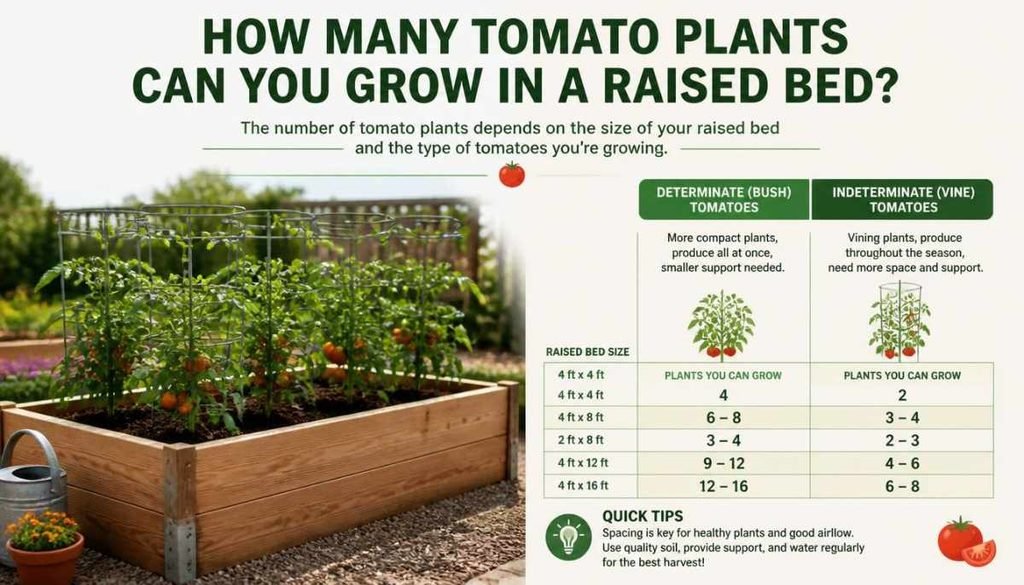
The number of tomato plants you can grow depends on bed dimensions, cultivar size, spacing, and the support system you plan to use. There is no single plant count that works for every raised bed.
A 4×4-foot bed, for example, offers 16 square feet of growing area. That sounds generous until you account for mature foliage, cages, access paths, and the space needed by other crops.
For planning purposes:
- Measure the actual planting area before buying seedlings.
- Check the recommended spacing for each cultivar.
- Allow more room for vigorous indeterminate varieties.
- Consider whether cages or trellises will shade neighboring plants.
- Leave enough access to water, inspect, and harvest the plants comfortably.
If you want several varieties, choose a manageable combination rather than filling every available space. One compact plant and one well-supported vine may be more practical than crowding multiple large tomatoes together.
Using Cages, Stakes, or Trellises
Tomato supports help keep plants upright and make fruit easier to reach. The best option depends on the cultivar’s size and growth habit.
Cages can suit many home-garden tomatoes, while stakes and trellises can help direct vining plants vertically. Install supports early so you do not need to push them through a dense root system later.
How to Choose Tomato Varieties for Your US Climate
The United States includes a wide range of growing conditions, so a variety that performs well in one region may not be the most practical choice elsewhere.
Short Growing Seasons
In northern areas with relatively short summers, compare days to maturity and local frost dates. Earlier cultivars may offer a better chance of harvesting ripe tomatoes before cold weather returns.
Remember that days-to-maturity figures are estimates. Temperatures, sunlight, transplant size, and growing conditions can affect actual harvest timing.
Hot and Humid Regions
Gardeners in warm, humid regions should pay attention to disease resistance and local cultivar recommendations. A variety that performs well in a dry climate may face different disease pressure in a humid summer.
Look for resistance information on seed packets and consult your state university’s Extension service for recommendations relevant to your region.
Warm, Long-Season Regions
Gardeners with long growing seasons may have more flexibility to grow indeterminate varieties that continue producing fruit for an extended period.
These plants still need suitable spacing, regular watering, and reliable support. Long summers do not remove the need to select cultivars that suit your local conditions.
Tips for Growing Healthy Tomatoes in Raised Beds
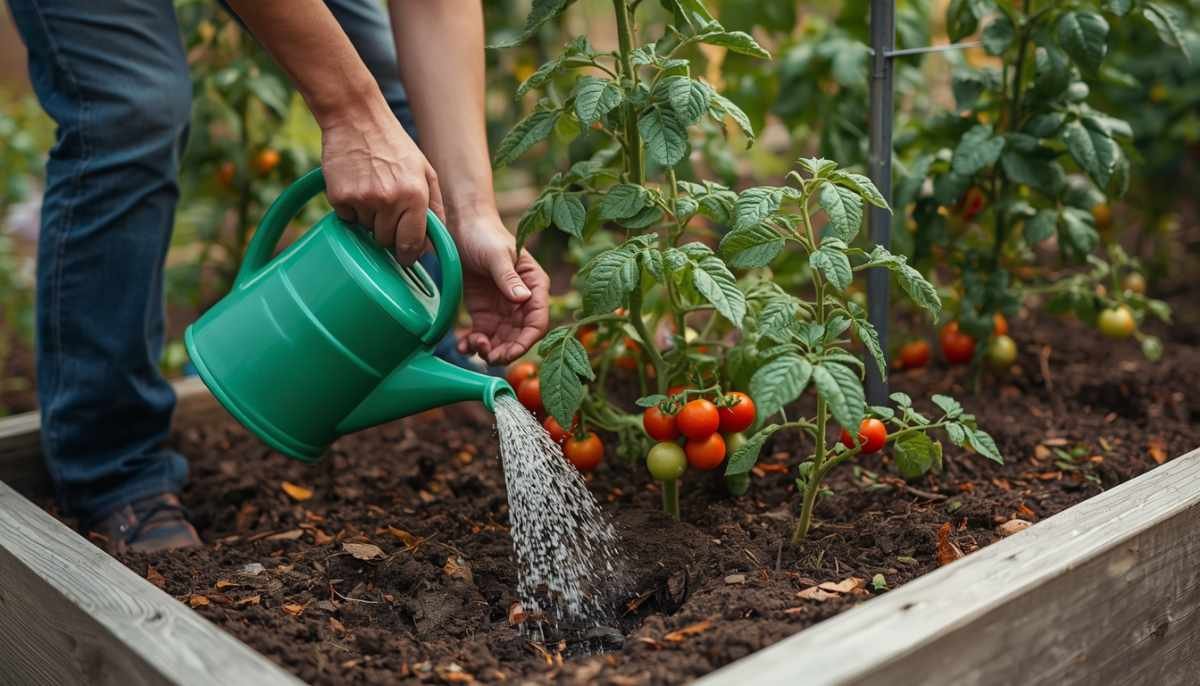
Even a suitable variety needs the right growing conditions. A few basic practices can help you make better use of your raised bed.
Give Tomatoes Plenty of Sunlight
Choose a location that receives at least six to eight hours of direct sunlight when possible. Insufficient light can limit growth and fruit production.
Observe how nearby buildings, fences, and taller plants affect sunlight throughout the day before deciding where to place your bed.
Use Well-Drained Soil
Tomatoes need soil that retains enough moisture for their roots while allowing excess water to drain away. A raised bed filled with suitable soil can help you manage these conditions more easily.
Avoid assuming that more fertilizer always produces more fruit. Start with suitable soil and use fertilizer according to the product directions and your plants’ needs.
Water Consistently
Tomatoes benefit from consistent soil moisture, especially during hot weather and fruit development. Raised beds can dry out more quickly than expected, depending on their depth, soil composition, exposure, and local weather.
Water near the base of the plant and check soil moisture before watering again. For more detailed guidance, see Plantsopedia’s guide to watering tomato plants.
Maintain Airflow and Monitor for Problems
Crowded foliage can make it harder for leaves to dry after rain or watering. Appropriate spacing, careful support, and regular plant inspections help you notice problems early.
Check leaves and stems for unusual discoloration, spots, wilting, or pest activity. If symptoms appear, compare them with reliable plant-disease guidance before deciding how to respond.
For a complete overview of planting and care, you can also read Plantsopedia’s beginner’s guide to growing tomato plants.
Frequently Asked Questions
What Is the Easiest Tomato to Grow in a Raised Bed?
A compact or determinate variety can be a convenient starting point because it may be easier to fit into a limited space. Patio and Celebrity are options worth considering, but the best choice depends on your local growing conditions and the cultivar’s actual size.
Are Determinate Tomatoes Better for Raised Beds?
Not necessarily. Determinate tomatoes can be easier to manage in smaller beds, while indeterminate tomatoes can work well when you have enough room and sturdy supports. Choose according to the bed’s dimensions and your preferred harvest pattern.
Can You Grow Beefsteak Tomatoes in Raised Beds?
Yes. Beefsteak tomatoes can grow in raised beds if you provide adequate root space, sunlight, spacing, and support. Larger varieties such as Brandywine are better suited to beds where their mature growth will not crowd neighboring plants.
What Tomatoes Grow Well in a 4×4 Raised Bed?
Compact cultivars are worth considering for a 4×4-foot bed because they can be easier to arrange within limited space. The number of plants depends on their mature size, spacing, support system, and whether you want to grow other vegetables in the same bed.
Which Tomato Varieties Are Best for Small Raised Beds?
Patio and Silvery Fir Tree are useful starting points for gardeners looking for compact options. Check the exact cultivar’s growth habit and mature dimensions before planting, since variety names and plant characteristics can differ.
Conclusion
The best tomato plants for raised beds are the varieties that match your space, growing conditions, and kitchen needs. Patio and Silvery Fir Tree are worth considering for compact growing, Celebrity and Roma VF offer different practical uses, and Sungold, Cherokee Purple, and Brandywine provide options for gardeners who have room to support larger plants.
Before choosing, compare mature plant size, growth habit, harvest timing, and disease resistance. Give each plant enough room, maintain consistent soil moisture, and install suitable supports early.
With a little planning, your raised bed can produce the tomatoes you enjoy most without becoming an overcrowded garden.

Jack Rivers is the founder of Plantsopedia, dedicated to making plant care simple, science-backed, and accessible for everyone. With a deep interest in botanical care and plant psychology, he specializes in rare tropical species and organic growth techniques, helping enthusiasts understand the soil, light, and biology behind every thriving plant. When he’s not experimenting with new propagation methods, Jack is busy turning complex horticultural science into practical, everyday advice for home gardeners