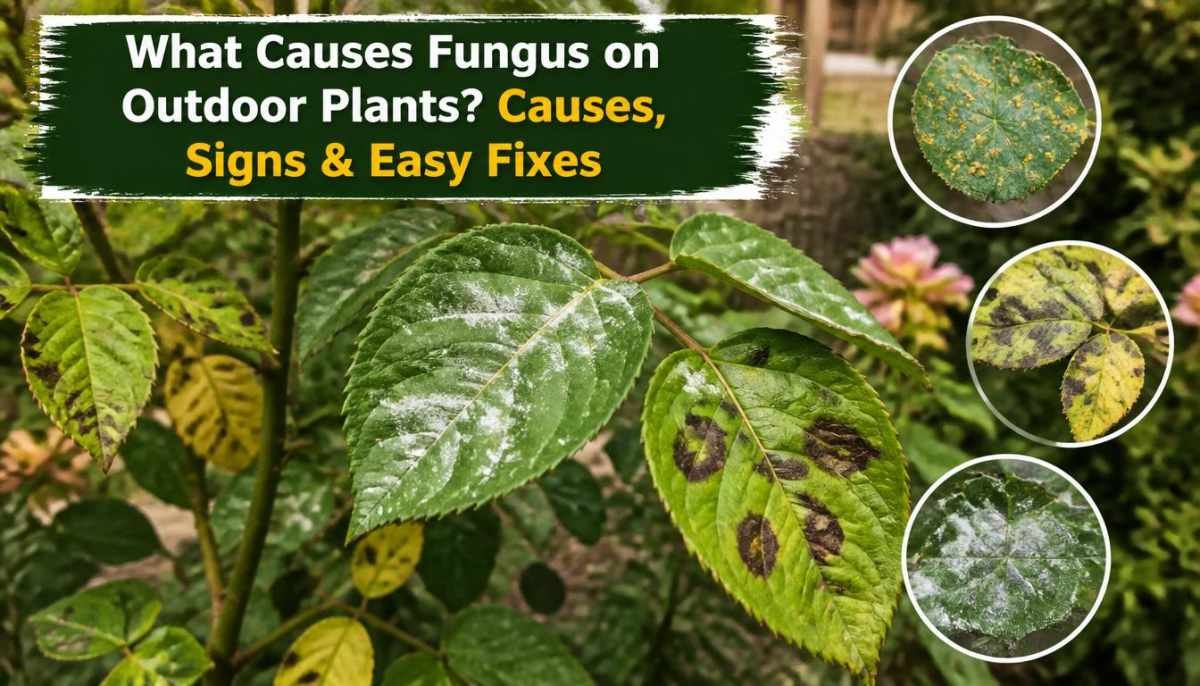
Have you noticed white powder, dark spots, fuzzy patches, or unusual growth on your outdoor plants? Plant fungus can appear quickly, especially when the weather is damp or the garden has limited airflow.
So, what causes fungus on outdoor plants? The most common causes include excess moisture, wet leaves, poor air circulation, overwatering, poor drainage, crowded plants, and infected plant debris. Fungal spores are naturally present outdoors, but certain conditions allow them to grow and spread.
The good news is that many fungal problems can be reduced by changing watering habits, improving airflow, removing infected material, and keeping plants healthy.
What Causes Fungus on Outdoor Plants?
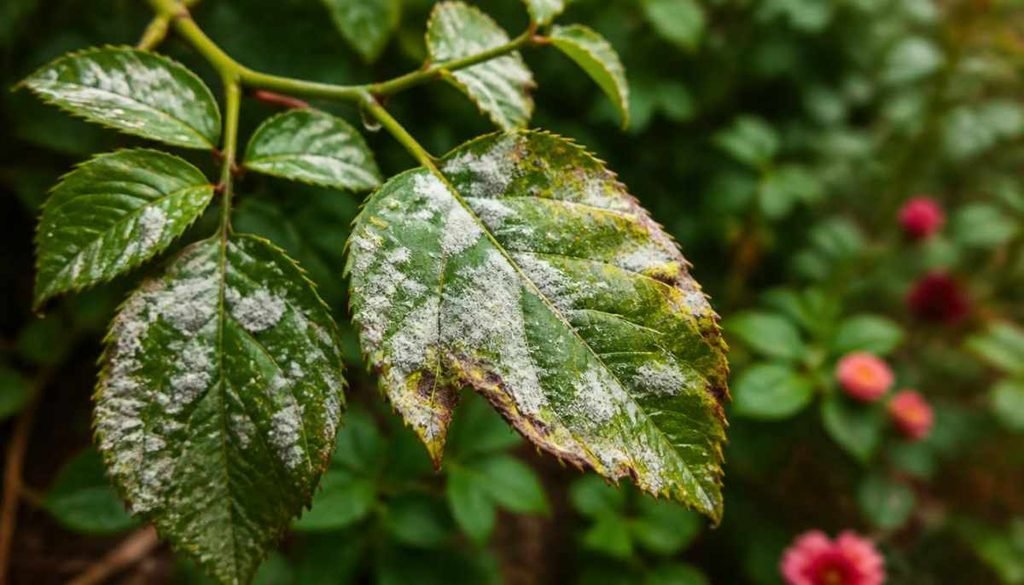
Fungal growth usually develops when moisture and environmental conditions create a suitable place for spores to grow. Several factors can work together to increase the risk.
Too Much Moisture
Excess moisture is one of the most common factors behind fungal diseases.
Frequent rain, excessive irrigation, or soil that stays wet for long periods can create favorable conditions for fungal growth. The goal isn’t to keep plants completely dry, but to avoid unnecessary or prolonged moisture.
Wet Leaves That Stay Damp
Leaves that remain wet for several hours can create conditions that favor certain fungal diseases.
Overhead watering, heavy rainfall, and watering late in the day can leave foliage damp for longer. Watering near the base of the plant can help keep the leaves drier.
Poor Air Circulation
When plants are packed closely together, humid air can become trapped between leaves and stems.
Poor airflow slows evaporation and keeps the plant’s foliage damp. Pruning excessive growth and giving plants enough room can help improve circulation.
Overwatering and Poor Drainage
Overwatering can become a problem when soil remains saturated instead of draining properly.
Constantly wet soil can weaken roots and contribute to root-related diseases. Container plants should have functioning drainage holes, while garden beds should allow excess water to move away from the root zone.
Crowded Plants
Plants that grow too close together often develop dense foliage with little space for air movement.
As plants mature, the problem can become more noticeable. Follow the recommended spacing for each plant and consider its mature size when planning your garden.
Shady and Humid Conditions
Some fungal diseases become more common when foliage and soil remain damp for extended periods.
A shaded location with poor airflow can take longer to dry after rain or watering. However, not every fungal disease requires shade, so the specific symptoms still matter.
Infected Plant Debris
Fallen leaves, dead stems, and other infected material can contribute to recurring plant disease.
Leaving affected debris around the plant can give pathogens an opportunity to remain in the growing area. Remove visibly diseased material and dispose of it appropriately.
Fungal Spores Spreading Through Wind and Water
Fungal spores can naturally move through the environment.
Wind can carry spores from infected plants, while rain and overhead irrigation can splash them onto nearby foliage. This is one reason a fungal problem can sometimes spread from one plant to another.
Contaminated Gardening Tools
Pruning shears and other gardening tools can transfer pathogens between plants.
If you’ve cut diseased leaves or stems, clean your tools before using them on healthy plants.
What Does Fungus Look Like on Outdoor Plants?
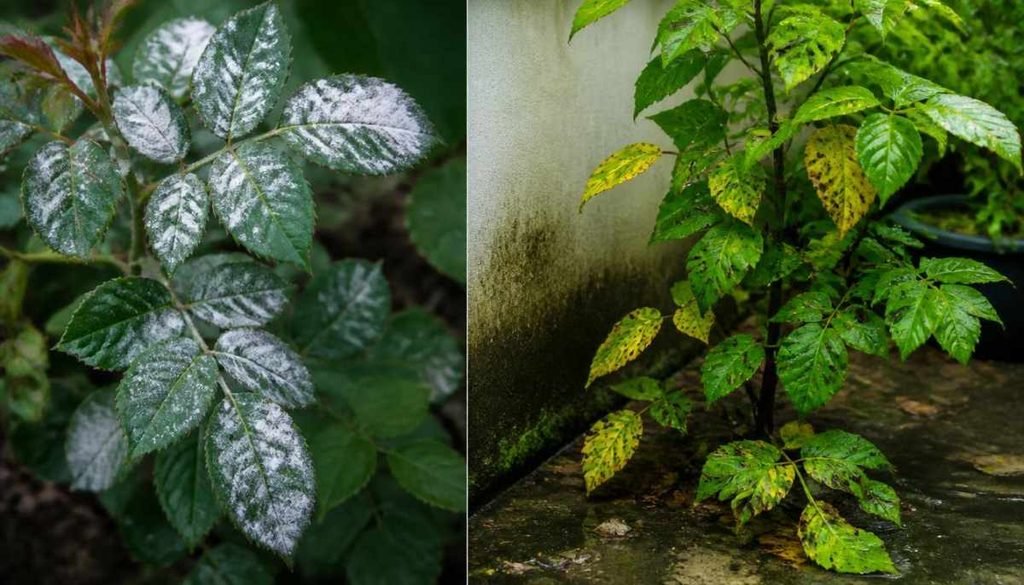
Outdoor plant fungus can look different depending on the disease and the plant affected. Recognizing the symptoms can help you investigate the problem before it spreads.
Powdery White Growth on Leaves
A white or gray powder-like coating on leaves is commonly associated with powdery mildew.
It can begin as small patches and gradually cover larger areas of foliage.
Black or Brown Spots
Dark spots on leaves can occur with several fungal diseases.
Pay attention to whether the spots are circular, irregular, spreading, surrounded by yellow tissue, or appearing on multiple leaves.
Yellowing Leaves With Dark Spots
Some fungal diseases cause yellow areas to develop around darker lesions.
If several leaves show similar symptoms, inspect both the plant and its growing conditions.
Orange or Rust-Colored Patches
Orange, brown, or rust-colored patches can occur with rust diseases.
These symptoms are often particularly noticeable on the underside of leaves.
Gray or Fuzzy Growth
Gray, fuzzy, or mold-like growth can develop on damaged or continuously damp plant tissue.
This is more likely when moisture remains high and airflow is limited.
Wilting and Root Problems
Not all fungal diseases appear on leaves.
Some affect roots or the plant’s internal tissues, resulting in wilting, yellowing, weak growth, or general decline.
If a plant keeps wilting even though the soil is already wet, check the roots and drainage instead of simply adding more water.
Common Fungal Diseases That Affect Outdoor Plants
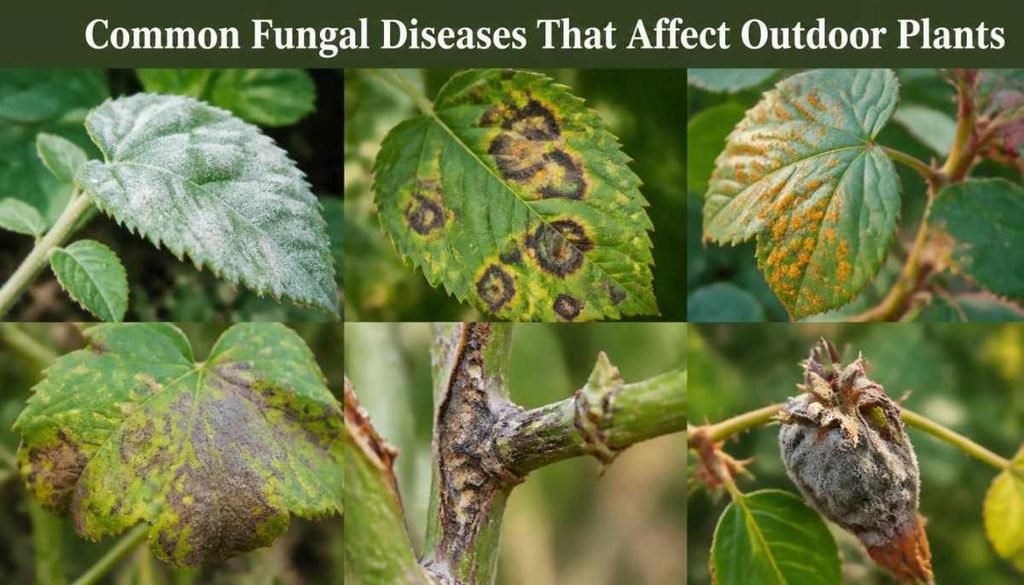
Different fungal diseases can produce similar-looking symptoms, so identifying the specific problem is useful before choosing a treatment.
Powdery Mildew
Powdery mildew typically appears as white or gray powder on leaves and stems.
It can spread across foliage and become more noticeable as the infection develops.
Black Spot
Black spot produces dark spots on leaves and is particularly common on roses.
Affected foliage can eventually turn yellow and drop. Good airflow, proper watering, garden hygiene, and removal of affected leaves can help reduce favorable conditions.
Downy Mildew
Downy mildew can cause pale, yellow, or irregular patches on leaves and may produce growth on the underside.
Despite the similar name, downy mildew and powdery mildew are different diseases.
Rust
Rust diseases can produce orange, yellow, brown, or rust-colored marks on plant leaves.
Different types of rust affect different plants, so the host plant and symptoms should both be considered.
Leaf Spot
Leaf spot describes a broad group of diseases that produce spots or lesions on foliage.
Not every leaf spot has the same cause, which is why treating every spot with the same product isn’t always effective.
Blight
Blight can cause browning, dark lesions, wilting, and rapid damage to plant tissue.
Different blights affect different crops and ornamental plants.
Anthracnose
Anthracnose can create dark or sunken lesions on leaves, stems, fruit, or other plant parts.
It can become more troublesome during periods of favorable moisture.
Root Rot
Root rot affects the roots rather than simply appearing on the surface of leaves.
Poor drainage and consistently wet soil can create conditions that allow root diseases to develop.
Wilt Diseases
Some fungal pathogens interfere with the plant’s internal water-conducting tissues.
The plant may wilt, yellow, grow poorly, or gradually decline even when the soil appears moist.
How Does Fungus Spread From One Plant to Another?
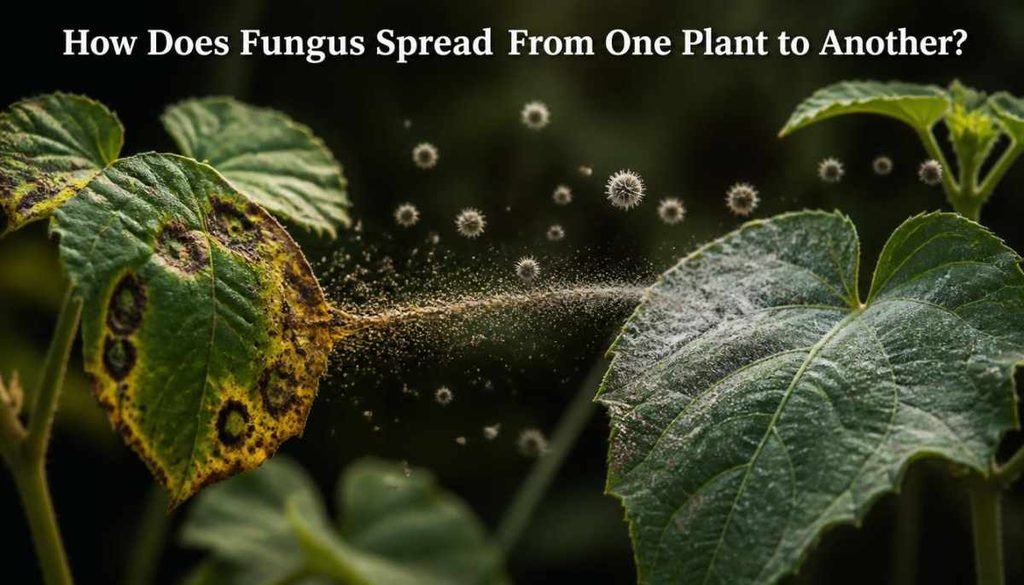
Knowing how fungal diseases spread can make prevention much easier.
Wind
Wind can carry microscopic spores from infected plants to healthy foliage.
This is one reason heavily infected plant material shouldn’t simply be left in the garden.
Rain and Splashing Water
Rain and overhead irrigation can move spores from infected leaves to other parts of the plant or nearby plants.
Reducing unnecessary splashing can help limit this route of spread.
Infected Leaves and Plant Debris
Diseased leaves left around plants can contribute to recurring problems.
Removing infected debris helps keep the growing area cleaner.
Gardening Tools
Tools used on diseased plants can carry pathogens to healthy plants.
Clean pruning shears and other tools after working with infected plant material.
Hands and Gardening Equipment
Contaminated gloves, hands, clothing, or equipment can sometimes transfer infected material.
Good garden hygiene is particularly useful when dealing with a disease that is spreading quickly.
Contaminated Soil and Plant Material
Some plant pathogens can survive in soil or infected plant material.
Be cautious when moving soil, roots, cuttings, or plants from an affected area to another part of the garden.
How to Prevent Fungus on Outdoor Plants
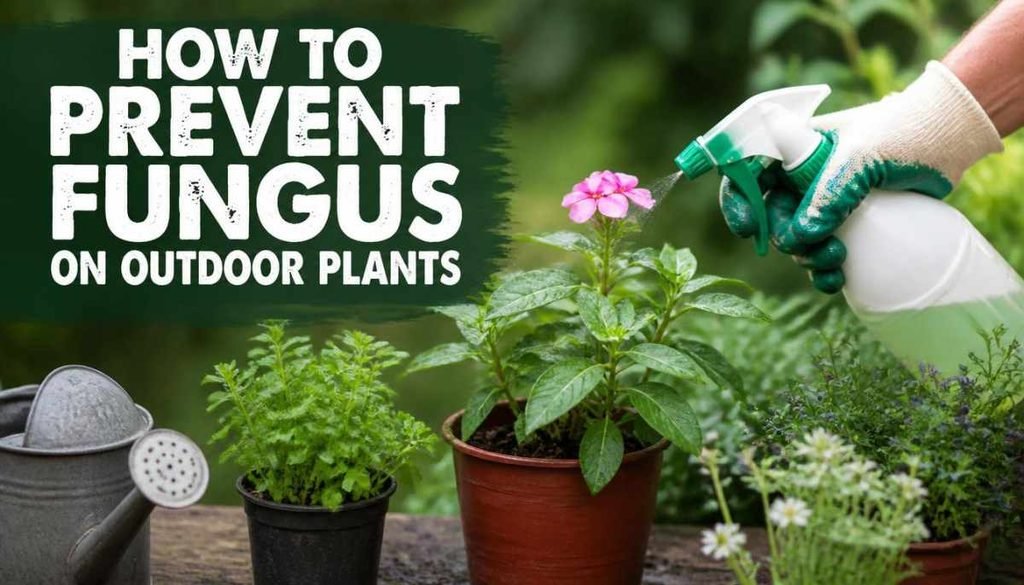
Prevention is often easier than dealing with a recurring fungal problem.
Water the Soil Instead of the Leaves
Direct water toward the soil around the plant rather than repeatedly spraying the foliage.
Drip irrigation and soaker hoses can help deliver water closer to the root zone while keeping leaves relatively dry.
Water Early in the Day
Morning watering gives excess moisture more time to evaporate.
If foliage gets wet, it has a better chance to dry before nighttime.
Give Plants Enough Space
Avoid placing plants closer together than recommended.
Good spacing allows air to move between leaves and reduces trapped humidity.
Improve Air Circulation
Prune overly dense growth when appropriate to allow more air to move through the plant.
Don’t remove healthy foliage unnecessarily. The goal is to reduce excessive density without stressing the plant.
Prune Dense Growth
Thick areas of foliage can trap moisture.
Careful pruning can improve ventilation and help damp areas dry more quickly.
Remove Fallen Leaves and Debris
Regularly clear fallen leaves and other plant debris, particularly around plants already showing signs of disease.
Diseased material shouldn’t simply be left beside the affected plant.
Clean Gardening Tools
Clean pruning shears after cutting infected tissue.
This small habit can help reduce accidental transmission between plants.
Avoid Overwatering
Don’t water plants simply because it’s part of your daily routine.
Check the soil and consider the plant’s individual water requirements before adding more moisture.
Improve Soil Drainage
If water remains around the roots for a long time after watering or rain, investigate the drainage.
For container plants, make sure drainage holes aren’t blocked. Garden beds may need improvements if the soil stays saturated.
Choose Disease-Resistant Plants
When available, disease-resistant varieties can be helpful if a particular fungal problem repeatedly affects your garden.
Choose varieties that are also suitable for your local growing conditions.
How to Get Rid of Fungus on Outdoor Plants
Once fungus appears, treatment should focus on both the visible symptoms and the conditions that allowed the problem to develop.
Remove Badly Infected Leaves
If only a small number of leaves are affected, removing them can reduce infected material on the plant.
Use clean tools and avoid leaving the removed foliage next to the plant.
Improve Airflow Around the Plant
If dense growth is trapping humidity, carefully prune the plant to improve circulation.
Avoid removing large amounts of healthy foliage at once.
Correct the Watering Routine
If the soil remains wet for too long, reduce unnecessary watering and address the drainage problem.
Remember that wilting doesn’t always mean a plant needs more water.
Keep Foliage Dry
Where possible, water around the root zone rather than repeatedly wetting the leaves.
Keeping foliage dry can reduce favorable conditions for several fungal diseases.
Improve Drainage
Check containers for blocked drainage holes.
For garden beds, look for compacted soil, low areas where water collects, or other drainage problems.
Use an Appropriate Fungicide When Needed
Fungicides can be useful for certain fungal diseases, but there isn’t one product that works for every problem.
Choose a product labeled for the specific plant and disease whenever possible.
Follow the Product Label
Always follow the product’s directions for application rate, timing, protective equipment, and other safety instructions.
Using more product than recommended doesn’t necessarily provide better control.
Treat the Underlying Cause
Removing visible fungus won’t solve the problem if the environmental conditions remain unchanged.
If wet foliage, poor drainage, or overcrowding is encouraging the disease, correct that issue alongside any treatment.
Can Plants Recover From Fungus?
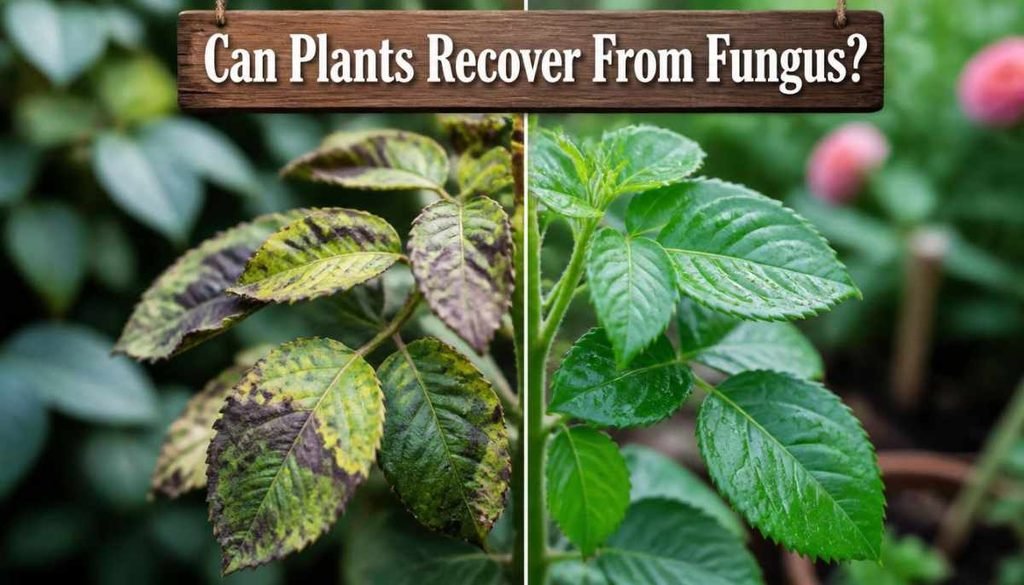
Many plants can continue producing healthy growth after a fungal problem is brought under control.
Recovery depends on the plant, the disease, how much damage has occurred, and whether the underlying conditions can be corrected.
When a Plant Can Recover
Plants have a better chance of recovery when the disease is identified early and enough healthy tissue remains.
Focus on improving growing conditions while managing the affected areas.
Signs the Plant Is Improving
New healthy leaves and stronger growth are encouraging signs.
Don’t expect severely damaged leaves to return to their original appearance. Instead, watch the new growth for improvement.
When Severe Damage Is Difficult to Reverse
A plant with extensive root damage or widespread disease may struggle to recover.
In these cases, treatment can be more difficult, especially if the growing conditions cannot be improved.
When to Remove the Entire Plant
If a plant is severely infected and continues spreading disease to nearby plants, removal may sometimes be appropriate.
This decision depends on the disease, plant, and risk to surrounding vegetation.
Common Mistakes That Make Plant Fungus Worse
Watering Plants From Above Every Day
Frequent overhead watering can keep leaves wet and increase moisture around the plant.
Keeping Plants Too Close Together
Crowded plants have less airflow and can trap humidity between their leaves.
Leaving Infected Leaves on the Soil
Diseased leaves can remain a source of infection when they’re left around the base of the plant.
Overwatering After Seeing Wilting
Wilting doesn’t always indicate dry soil.
Check the soil first. If it’s already saturated, adding more water can make the problem worse.
Reusing Dirty Gardening Tools
Using contaminated tools on healthy plants can transfer pathogens.
Clean tools after working with diseased material.
Treating Every Leaf Spot the Same Way
Not every brown or black spot has the same cause.
Correct identification can help prevent unnecessary or ineffective treatments.
Ignoring Poor Drainage
A plant growing in constantly wet soil may continue experiencing problems even after visible symptoms are treated.
Applying Fungicide Without Identifying the Problem
Fungicide isn’t a universal answer for every plant disease.
Identify the likely cause and select a product appropriate for the specific problem and plant.
FAQs About Fungus on Outdoor Plants
What causes fungus on outdoor plants?
Common causes and contributing conditions include excess moisture, prolonged leaf wetness, poor air circulation, overcrowding, overwatering, poor drainage, infected plant debris, and fungal spores spreading through wind or water.
How do you get rid of fungus on outdoor plants?
Identify the likely disease, remove severely affected material when appropriate, improve airflow, correct watering and drainage problems, keep foliage dry, and use a suitable fungicide when necessary.
What absolutely kills fungus on plants?
There isn’t one treatment that kills every type of plant fungus. Different diseases require different management approaches, so identifying the problem first is important.
Can plants recover from fungus?
Yes. Many plants can recover or continue producing healthy growth when the disease is controlled and the conditions encouraging it are corrected.
How do you stop fungus from growing on plants?
Avoid prolonged moisture, water at the soil level, improve airflow, provide adequate spacing, remove infected debris, maintain good drainage, and keep gardening tools clean.
Keep Your Outdoor Plants Healthier
Fungus on outdoor plants is often a sign that moisture, airflow, drainage, or plant hygiene needs attention. Instead of focusing only on the visible spots or powder, look at the conditions surrounding the plant.
Water at the soil level, avoid unnecessary moisture, give plants enough space, clean your gardening tools, remove infected debris, and address drainage problems early. With these simple habits, you can make your garden less welcoming to fungal diseases and give your plants better conditions for healthy growth.

Jack Rivers is the founder of Plantsopedia, dedicated to making plant care simple, science-backed, and accessible for everyone. With a deep interest in botanical care and plant psychology, he specializes in rare tropical species and organic growth techniques, helping enthusiasts understand the soil, light, and biology behind every thriving plant. When he’s not experimenting with new propagation methods, Jack is busy turning complex horticultural science into practical, everyday advice for home gardeners