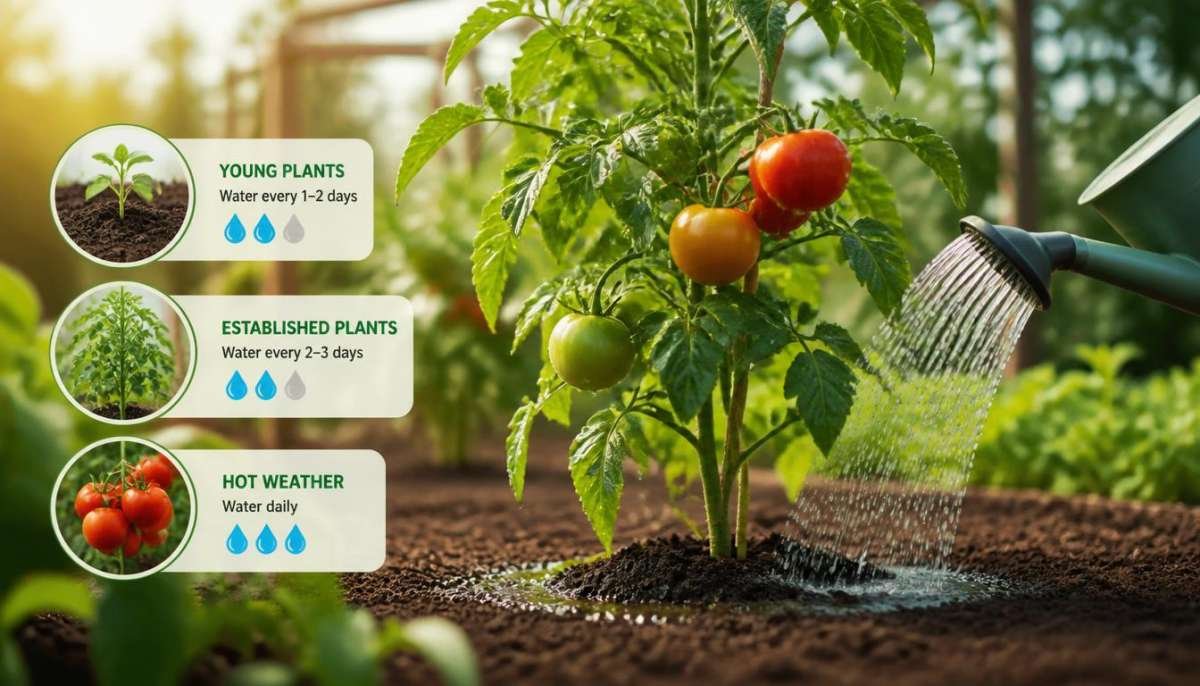
Knowing how often to water tomato plants is one of the most important parts of growing healthy tomatoes. Too little water can leave plants stressed and fruit underdeveloped, while too much can create soggy soil and root problems.
There is no single watering schedule that works for every tomato plant. A tomato growing in a small pot may need water every day, while an established plant in the ground may need watering only a few times a week. Weather, soil type, plant size, and rainfall all make a difference.
The easiest way to get it right is to use a general watering guideline and then check the soil before watering.
How Often Should You Water Tomato Plants?
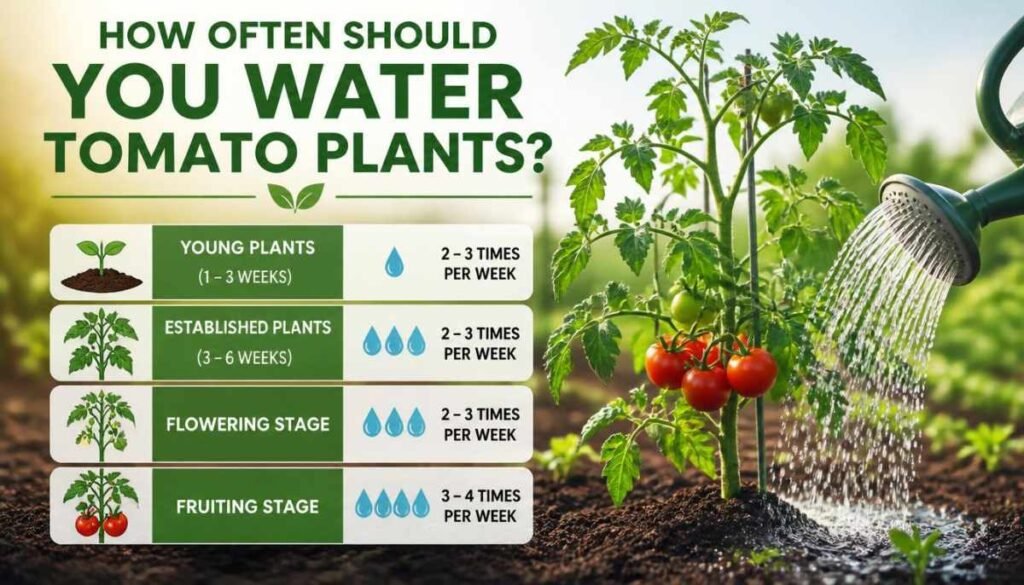
Established tomato plants generally need around 1 to 1.5 inches of water per week, including rainfall. This amount is a useful starting point, but your plants may need more during hot, dry weather or less when regular rain keeps the soil moist.
Instead of following a strict calendar, check the soil around the roots. If the soil is becoming dry a couple of inches below the surface, it is usually time to water deeply.
Watering Frequency Depends on Growing Conditions
Tomatoes growing in the ground usually hold moisture longer than tomatoes growing in containers. Raised beds can also dry out at different rates depending on their depth and soil mixture.
During cool or rainy weather, you may water less often. During hot and windy conditions, you may need to check your plants every day.
A Simple Rule for Beginners
If you’re unsure, stick with this basic approach:
Check the soil, water deeply when it starts drying, and avoid keeping it constantly wet.
This is much more reliable than watering automatically every morning or evening.
How Do You Know When a Tomato Plant Needs Water?
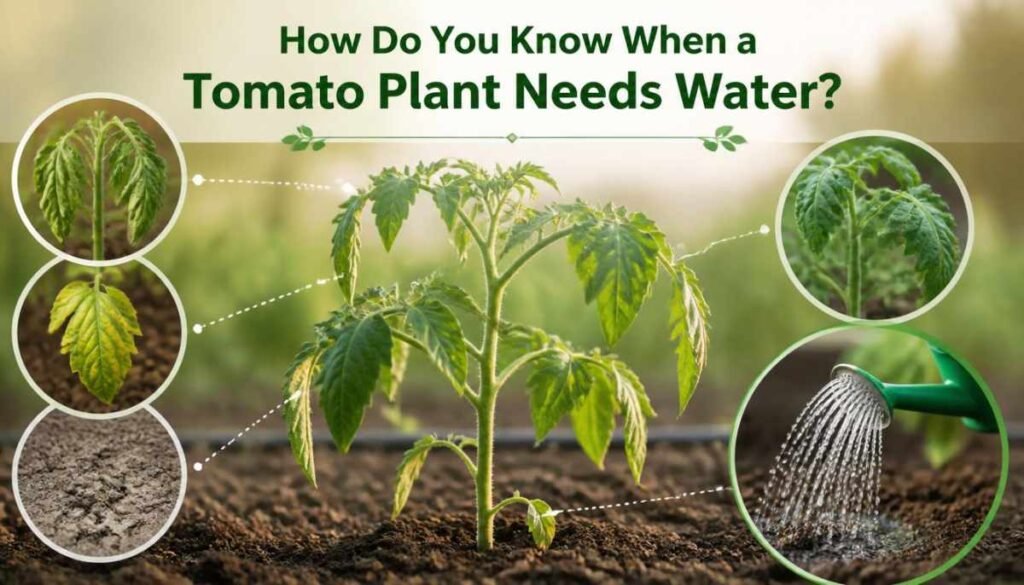
Your tomato plant can show signs of water stress, but you should not wait for severe wilting before checking the soil. Leaves may droop temporarily during a very hot afternoon even when there is still enough moisture around the roots.
The soil gives you a much better indication of whether your plant actually needs another drink.
Check the Soil Before Watering
Push your finger about 2 inches into the soil near the plant.
If the soil feels moist, you can usually wait. If it feels noticeably dry, water the plant thoroughly so moisture reaches deeper into the root zone.
For larger plants, checking slightly deeper can also help because the surface may look dry while deeper soil is still moist.
Look for Signs of Water Stress
A tomato plant that genuinely needs water may show several symptoms.
You might notice:
- Drooping leaves
- Limp stems
- Dry soil
- Slow growth
- Dropping flowers
- Small or poorly developing fruit
- Leaves curling during prolonged heat
One sign by itself does not always mean the plant needs water. Always check the soil before increasing your watering.
How Often to Water Tomatoes at Different Growth Stages
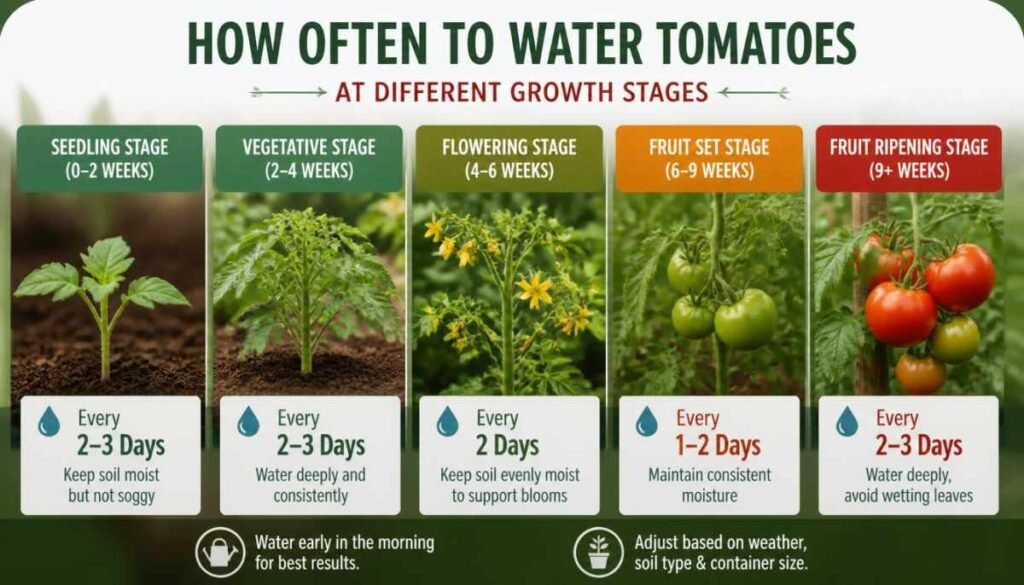
Tomato plants do not have the same water requirements throughout their entire growing season. Seedlings have small root systems, newly transplanted plants are still establishing themselves, and mature plants need enough moisture to support leaves, flowers, and fruit.
Adjusting your watering as the plant develops can help prevent both drought stress and overwatering.
Tomato Seedlings
Young tomato seedlings have shallow and relatively small root systems, so their soil can dry out quickly.
Keep the growing medium consistently moist but never waterlogged. Check seedlings frequently, especially if they are growing in small pots or trays.
Avoid completely soaking a tiny seedling every time you water. The goal is to provide enough moisture for healthy root development without leaving the growing medium saturated.
Newly Transplanted Tomato Plants
Newly transplanted tomatoes need extra attention during their first week or two in the garden.
Water thoroughly after transplanting so the soil settles around the roots. Continue checking the soil frequently while the plant begins developing new roots.
Hot weather can make this period more challenging because newly transplanted plants have not yet developed a large root system.
Mature Tomato Plants
Once a tomato plant is well established, it can usually handle deeper watering better.
Rather than giving the plant a small amount of water every day, water deeply when the soil begins to dry. This encourages moisture to reach farther into the root zone.
The exact frequency depends on rainfall, soil, temperature, and the size of the plant.
Flowering and Fruiting Tomatoes
Water becomes particularly important when tomatoes are flowering and developing fruit.
Large changes between very dry and very wet soil can stress the plant and contribute to problems such as fruit cracking and blossom-end rot.
Try to keep moisture relatively consistent during this stage. Regular soil checks can help you avoid allowing the plant to become extremely dry.
How Often to Water Tomato Plants in Containers
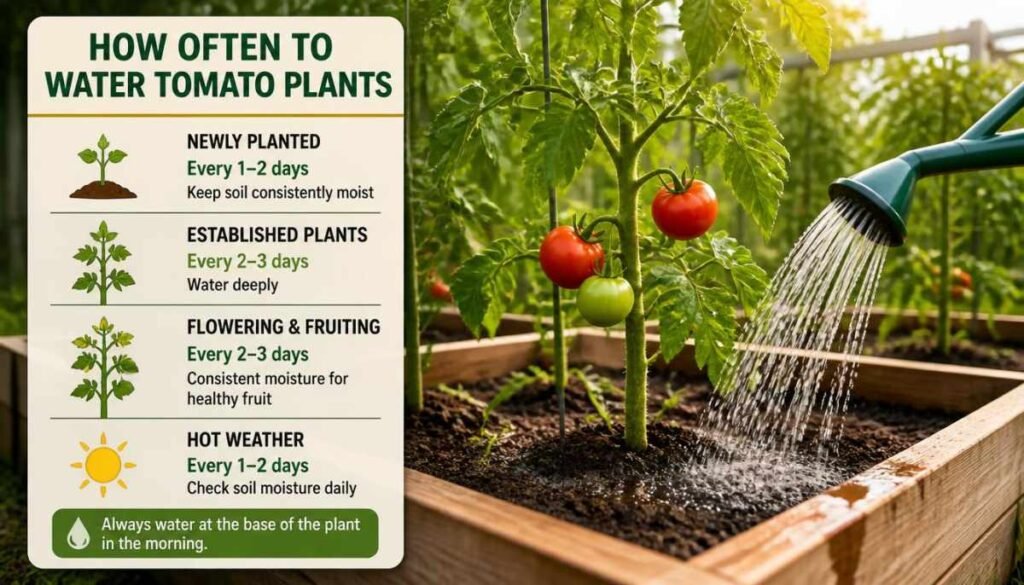
Container tomatoes usually need more frequent watering than tomatoes planted in the ground. A pot contains a limited amount of soil, so moisture can disappear quickly during warm and sunny weather.
The smaller the container, the faster it may dry out.
Check Container Tomatoes Daily
During warm weather, make it a habit to check your potted tomatoes every day.
Do not automatically water just because the calendar says it is time. Feel the soil first and check below the surface.
When the soil has become dry, water slowly and thoroughly until excess water begins draining from the bottom of the container.
Why Containers Dry Out Faster
Container soil is exposed to more air and often more direct heat around the sides of the pot. A small amount of soil also cannot store as much moisture as a deep garden bed.
This is why a tomato that is perfectly fine with watering every few days in the ground may need daily attention in a container.
Using a sufficiently large container and good drainage can make moisture management easier.
How Often to Water Tomatoes in Raised Beds
Raised beds can provide excellent growing conditions for tomatoes, but their watering needs depend on the depth and composition of the soil.
A deep raised bed can hold a useful amount of moisture, while a shallow bed may dry out much faster during hot weather.
Check Moisture Below the Surface
Do not judge the entire bed by looking at the top layer of soil. The surface may appear dry while the root zone remains moist.
Use your finger or a small trowel to check several inches down. If the deeper soil is still moist, give the plant more time before watering again.
Water Deeply Instead of Shallowly
When your raised bed does need water, apply it slowly enough that moisture moves deeper into the soil.
Frequent shallow watering can encourage roots to remain close to the surface. Deeper watering helps moisture reach the area where established tomato roots are actively growing.
How Often to Water Tomatoes in the Ground
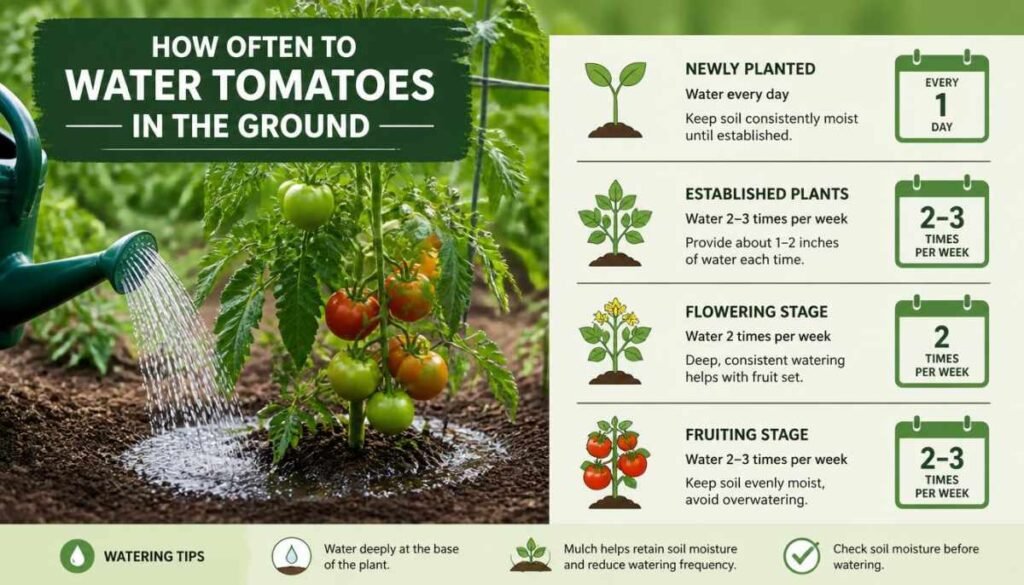
Tomatoes growing directly in garden soil often have more room for their roots to access moisture. This can reduce how frequently you need to water compared with container plants.
However, the soil itself makes a big difference.
Consider Your Soil Type
Sandy soil drains quickly and may require more frequent watering. Clay-heavy soil can retain water for longer, so watering too frequently may create overly wet conditions.
If you’re unsure about your soil, dig down several inches and examine how it feels rather than relying only on the surface.
Rainfall Counts as Water
You do not need to add your normal irrigation on top of every rainy day.
After rainfall, check the soil before watering again. If the root zone is already moist, allow the plant to use that available water.
This can prevent accidental overwatering during wet periods.
Does Hot Weather Change How Often You Water?
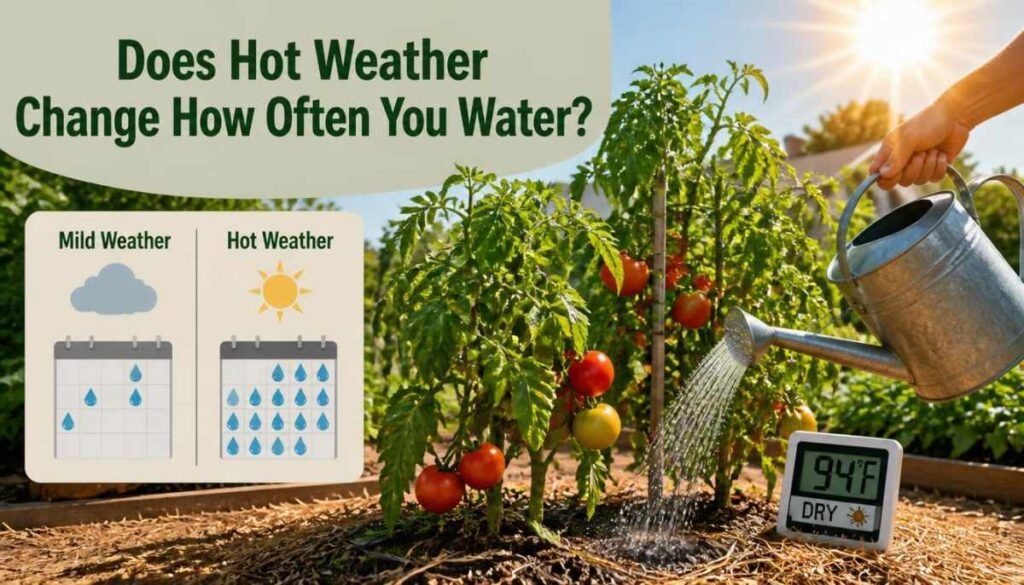
Hot weather can significantly increase how quickly tomato plants lose water. Strong sunlight, high temperatures, and dry winds can all cause the soil to dry faster.
During heat waves, your normal watering routine may no longer be enough.
Check Plants More Frequently
When temperatures rise, check the soil more often rather than automatically doubling the amount of water.
A plant that normally needs water every few days may require much more frequent watering during a prolonged hot and dry period.
Container tomatoes usually need the closest attention because their soil can dry rapidly.
Protect the Soil With Mulch
Mulch can help slow moisture loss from the soil.
Apply a layer of organic mulch around the tomato plant, leaving some space around the main stem. Mulch can also help moderate soil temperature and reduce rapid moisture changes.
What Is the Best Time to Water Tomato Plants?
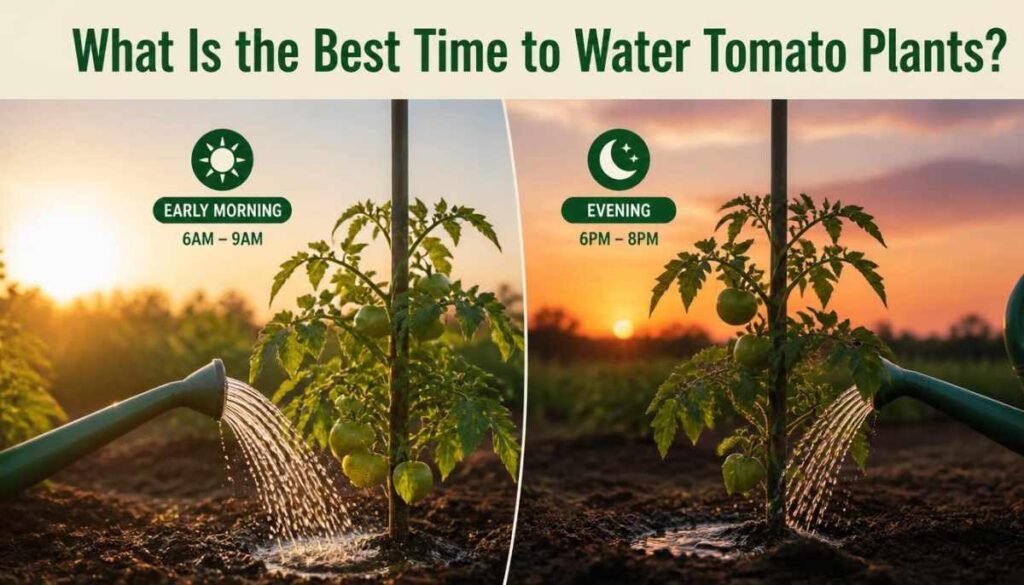
Morning is generally the best time to water tomato plants.
Morning watering gives moisture time to reach the root zone before the hottest part of the day. It also allows any water that reaches the foliage to dry more quickly.
However, the most important thing is to water properly when the plant needs it rather than allowing it to become severely dry while waiting for a specific time.
Why Morning Watering Works Well
Early watering gives the plant access to moisture during the day’s growing period.
It also reduces the amount of time leaves remain wet compared with watering late in the evening.
Avoid Wetting the Foliage
Whenever possible, direct water toward the soil rather than spraying the entire plant.
Keeping leaves relatively dry can help reduce conditions that favor some common tomato diseases, especially when airflow is limited.
How to Water Tomato Plants the Right Way
Correct watering is not just about how often you water. How you apply the water matters too.
The goal is to move enough moisture into the root zone without causing runoff, erosion, or constantly wet soil.
Water Deeply
Give the water enough time to move down into the soil instead of stopping after the surface becomes wet.
Deep watering is particularly important for established tomato plants because their roots extend farther below the surface.
Water at the Base
Aim your watering can or hose toward the soil around the plant.
Avoid unnecessarily spraying the leaves, flowers, and fruit. Direct watering also helps ensure more of the water reaches the roots where the plant needs it.
Water Slowly
If water immediately runs away from the plant, you’re probably applying it too quickly.
Slow watering gives the soil more time to absorb moisture. This is particularly useful when soil has become very dry or compacted.
Use Drip Irrigation or a Soaker Hose
Drip irrigation and soaker hoses can make tomato watering easier and more consistent.
They deliver water close to the root zone and reduce the need to spray the entire plant. These systems can be especially useful when growing several tomato plants.
Can You Water Tomato Plants Too Much?
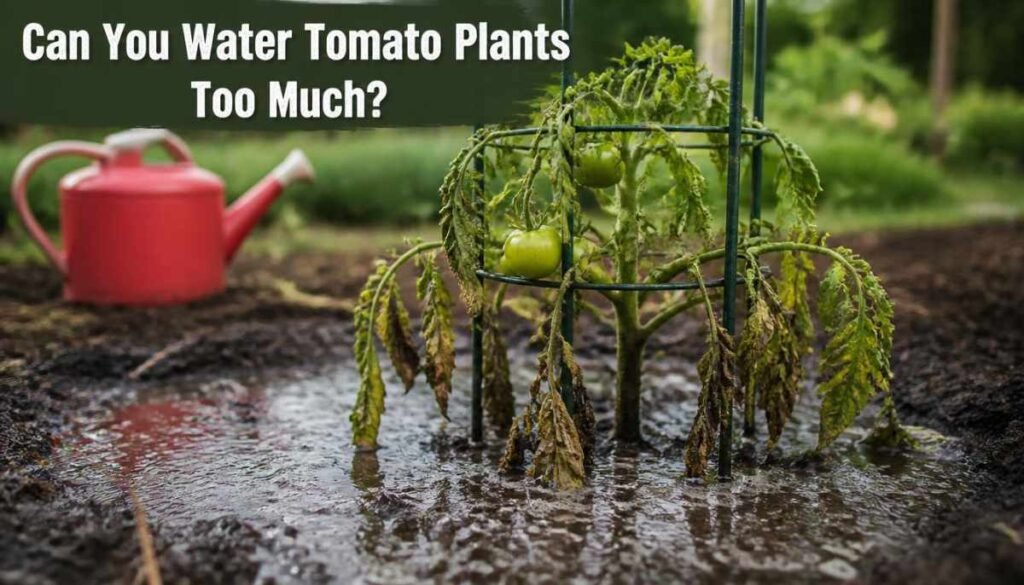
Yes, and overwatering is one of the most common tomato-growing mistakes.
Tomato roots need both water and oxygen. When soil stays saturated for too long, there may not be enough air around the roots for healthy growth.
Signs of Overwatering
Watch for:
- Constantly wet soil
- Yellowing leaves
- Weak growth
- Poor drainage
- Soft or unhealthy roots
- Persistent fungal or disease problems
If the soil remains wet for several days, stop watering and investigate the drainage before adding more water.
Improve Drainage if Needed
If water regularly collects around your tomato plants, the problem may not be your watering schedule alone.
Heavy soil, compacted ground, or containers without proper drainage can all prevent excess water from leaving the root zone.
What Happens If Tomato Plants Don’t Get Enough Water?
Tomatoes need a steady supply of moisture to support leaves, flowers, stems, and developing fruit.
When plants repeatedly become too dry, they can experience stress and may produce smaller fruit or fewer flowers.
Common Signs of Underwatering
Look for:
- Wilting leaves
- Dry soil
- Leaf curling
- Drooping stems
- Flower drop
- Slow growth
- Poor fruit development
Remember that temporary afternoon wilting during extreme heat does not always mean the plant is dehydrated.
Check the soil before watering again.
Does Watering Affect Blossom-End Rot?
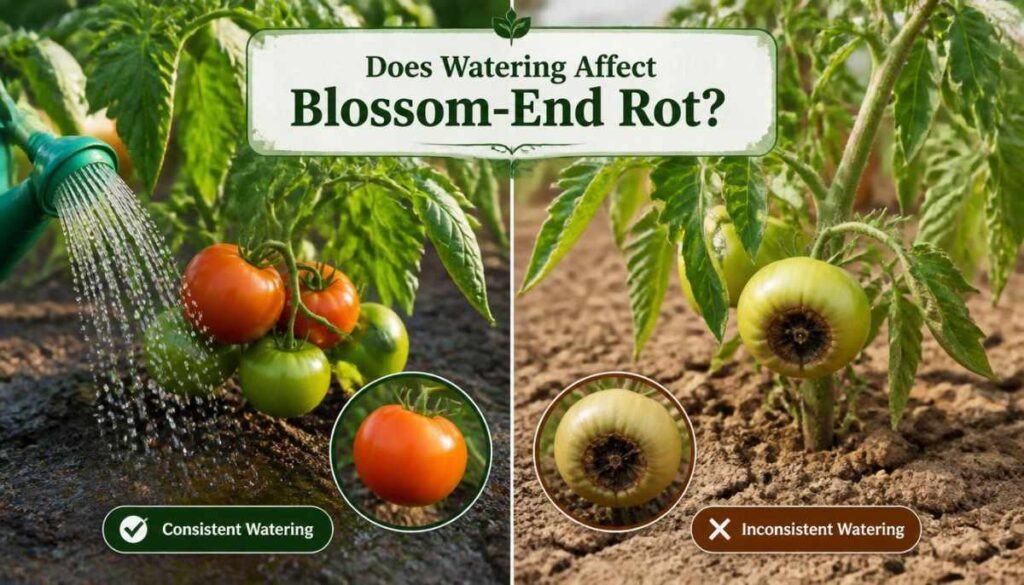
Watering consistency can play an important role in blossom-end rot.
The problem appears as a dark, sunken patch on the bottom of developing tomatoes. It is associated with problems moving calcium into the developing fruit, and inconsistent moisture can make the problem worse.
Keep Soil Moisture Consistent
Allowing the soil to become extremely dry and then soaking it heavily creates large moisture swings.
Instead, try to keep the root zone reasonably and consistently moist throughout flowering and fruit development.
Can Inconsistent Watering Cause Tomatoes to Crack?
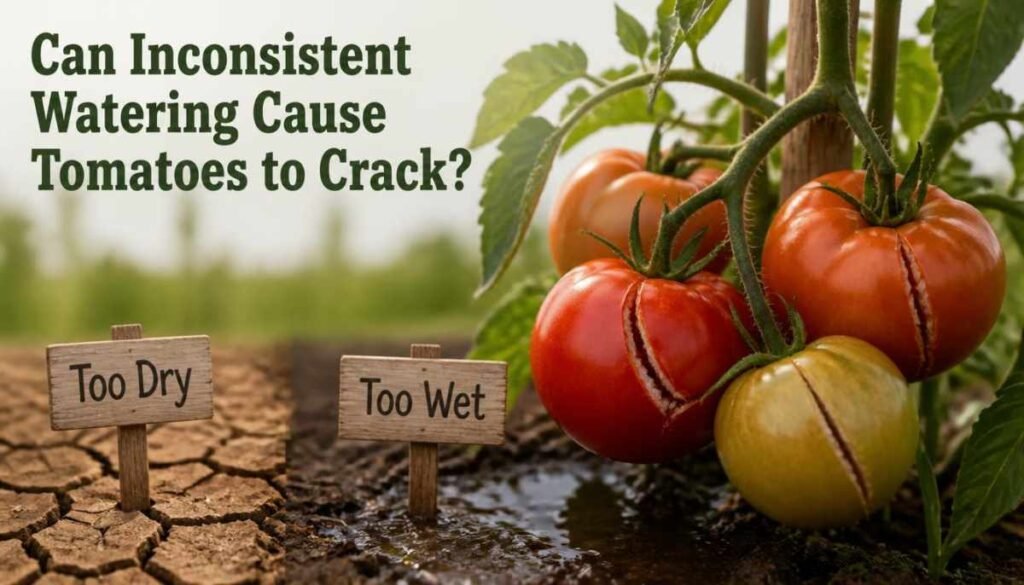
Yes. Sudden changes in water availability can contribute to cracking.
For example, a tomato plant may experience several dry days and then receive heavy irrigation or rainfall. The fruit can absorb water quickly and expand faster than its skin can accommodate.
Prevent Large Moisture Swings
You cannot control every rainfall event, but you can make irrigation more consistent.
Mulching the soil and checking moisture regularly can help reduce extreme changes between very dry and very wet conditions.
How Mulch Helps Tomato Plants
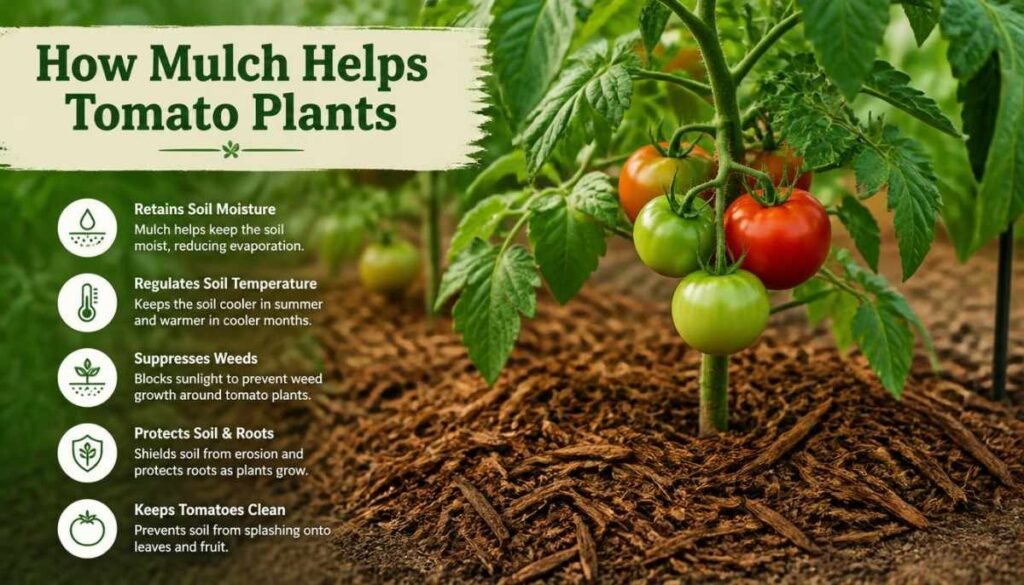
Mulch is a simple addition that can make tomato watering easier.
A layer of organic mulch helps slow evaporation from the soil and keeps moisture more stable. It can also reduce temperature swings around the roots.
How Much Mulch Should You Use?
A 2 to 3-inch layer is generally enough for many garden situations.
Straw, shredded leaves, compost, and other suitable organic materials can work well.
Keep the mulch slightly away from the main tomato stem to avoid creating an overly damp area directly against it.
Common Tomato Watering Mistakes
A few simple mistakes can make tomato watering much harder than it needs to be.
Following a Rigid Schedule
Watering on fixed days ignores changing weather.
Rain, heat, wind, and humidity can all affect how quickly soil dries.
Giving Tiny Amounts of Water
A quick splash may only wet the surface.
When the plant needs water, give it enough time to reach the deeper root zone.
Watering a Wilted Plant Without Checking Soil
Wilting can happen because of heat as well as drought.
Always check the soil before adding more water.
Ignoring Rain
Rainfall can provide a significant amount of moisture.
Check the soil after rain rather than automatically following your usual irrigation schedule.
Forgetting Container Tomatoes
Potted tomatoes can dry much faster than plants growing in the ground.
Check containers regularly, especially during hot and windy weather.
Quick Tomato Watering Guide
| Tomato situation | General watering approach |
|---|---|
| Seedlings | Keep soil evenly moist and check frequently |
| Newly transplanted | Water thoroughly and monitor closely while roots establish |
| Mature plants in ground | Water deeply when the root zone begins drying |
| Raised beds | Check deeper soil and water when needed |
| Container tomatoes | Check daily during warm weather |
| Hot, dry weather | Check moisture more frequently |
| Flowering and fruiting | Keep soil moisture consistent |
| After heavy rain | Check soil before watering |
| Very wet soil | Wait for excess moisture to drain |
Frequently Asked Questions
Are You Supposed to Water Tomato Plants Every Day?
No, not always. Established tomatoes in the ground may not need daily watering during normal weather.
However, container tomatoes and plants growing through very hot, dry conditions may need water every day.
Can You Water Tomato Plants Too Much?
Yes. Constantly saturated soil can create root problems and interfere with healthy growth.
Always check the soil before watering again.
Do Tomato Plants Need Full Sun?
Tomatoes generally perform best with plenty of direct sunlight. Aim for at least six hours of direct sun each day, with more light often beneficial when other growing conditions are suitable.
How Long Can Tomato Plants Go Without Being Watered?
There is no universal number of days.
A mature tomato in deep, moist soil can tolerate dry conditions longer than a small plant growing in a container. Hot temperatures and fruit production can also increase water demand.
How Much Water Do Tomato Plants Need Per Week?
A useful starting point is around 1 to 1.5 inches of water per week, including rainfall.
Adjust this according to soil, temperature, rainfall, and the growing location.
Should I Water Tomatoes in the Morning or Evening?
Morning is generally preferred because the plant has access to moisture throughout the day and foliage has more opportunity to dry.
How Often Should I Water Tomatoes in Pots?
Check them daily during warm weather. Depending on the pot size, temperature, and soil, some container tomatoes may need water every day.
Why Are My Tomato Leaves Wilting After Watering?
If the soil is already moist, temporary afternoon wilting may be caused by heat rather than a lack of water.
Check the soil before watering again.
Should You Water Tomatoes When Fruit Is Forming?
Yes. Consistent moisture is particularly important while tomatoes are developing fruit.
Avoid allowing the soil to become extremely dry and then giving the plant a very large amount of water.
How Do I Know If Tomato Soil Is Too Wet?
Dig several inches into the soil and check its condition.
If the soil remains very wet for an extended period, especially when the plant shows yellowing or weak growth, drainage or watering frequency may need attention.
Let the Soil Set the Schedule
The answer to how often to water tomato plants is not simply once a day or three times a week.
Your tomato plant’s needs change with its age, growing location, soil, weather, and stage of fruit production. Instead of following a rigid schedule, make the soil your guide.
Check the root zone regularly, water deeply when it starts drying, and try to keep moisture reasonably consistent. With this simple approach, you can give your tomatoes the moisture they need without constantly worrying about whether you are watering too much or too little.

Jack Rivers is the founder of Plantsopedia, dedicated to making plant care simple, science-backed, and accessible for everyone. With a deep interest in botanical care and plant psychology, he specializes in rare tropical species and organic growth techniques, helping enthusiasts understand the soil, light, and biology behind every thriving plant. When he’s not experimenting with new propagation methods, Jack is busy turning complex horticultural science into practical, everyday advice for home gardeners