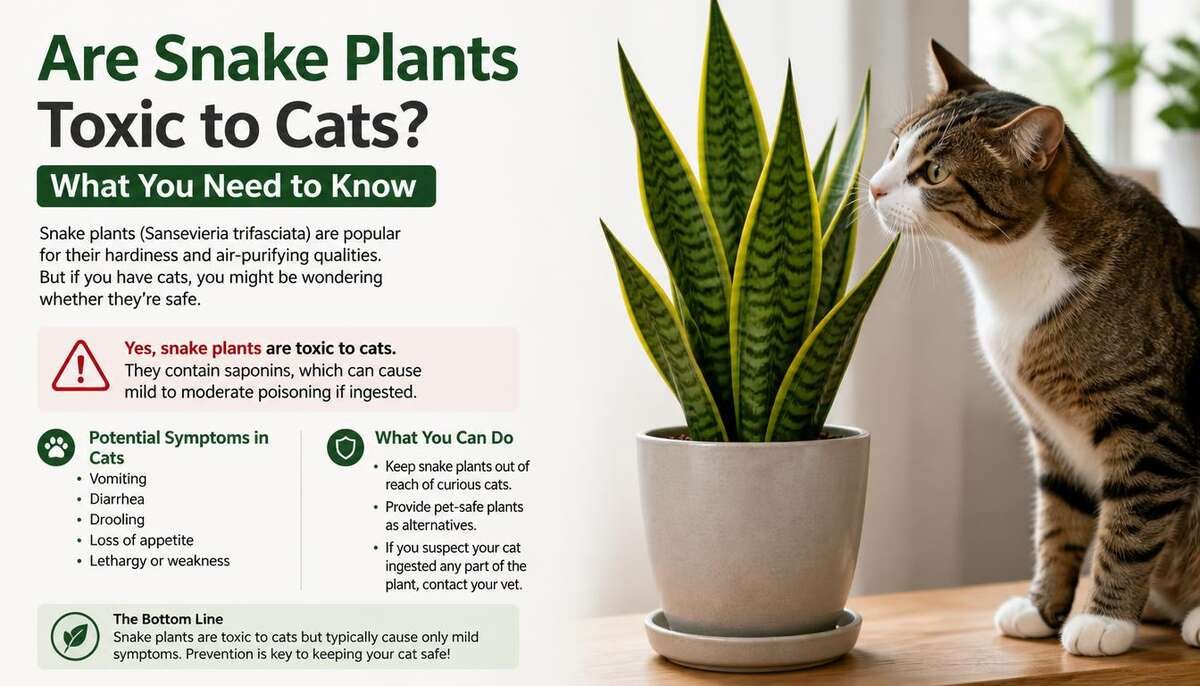
Yes, snake plants are toxic to cats. Every part of the plant contains a compound called saponin, which can irritate a cat’s mouth and digestive system if chewed or swallowed. The good news is that most cases are mild, and knowing what to watch for makes a real difference if your cat ever takes a bite.
If you already own a snake plant and share your home with a curious cat, or you’re thinking about bringing one home, this guide covers exactly what makes them risky, what symptoms actually look like, how to tell if your cat has been nibbling, and what to do if it happens.
Why Snake Plants Are Toxic to Cats
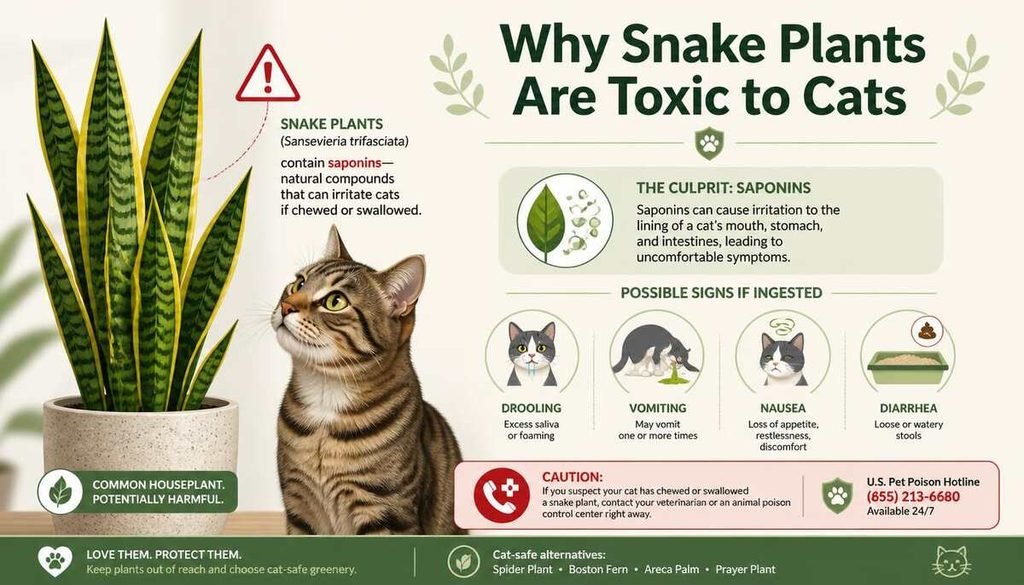
Snake plants contain saponins throughout their leaves, a natural defense compound the plant produces to protect itself from insects, fungi, and general damage in the wild. It’s an effective survival trait for the plant, helping it stay hardy in tough growing conditions, but it doesn’t sit well with a cat’s digestive system.
When a cat bites into a leaf, the saponins get released almost immediately and start irritating the mouth and gastrointestinal tract. This is different from a plant that’s outright poisonous in the sense of shutting down organs or causing organ failure. Saponin toxicity works more like an irritant reaction, uncomfortable, sometimes messy, and occasionally scary to witness, but rarely life threatening on its own.
It’s also worth knowing that the entire plant carries this compound, not just the leaves. Even the roots and any broken plant material sitting in soil can pose a similar risk if your cat digs around the pot rather than chewing the visible leaves directly.
Symptoms of Snake Plant Poisoning in Cats
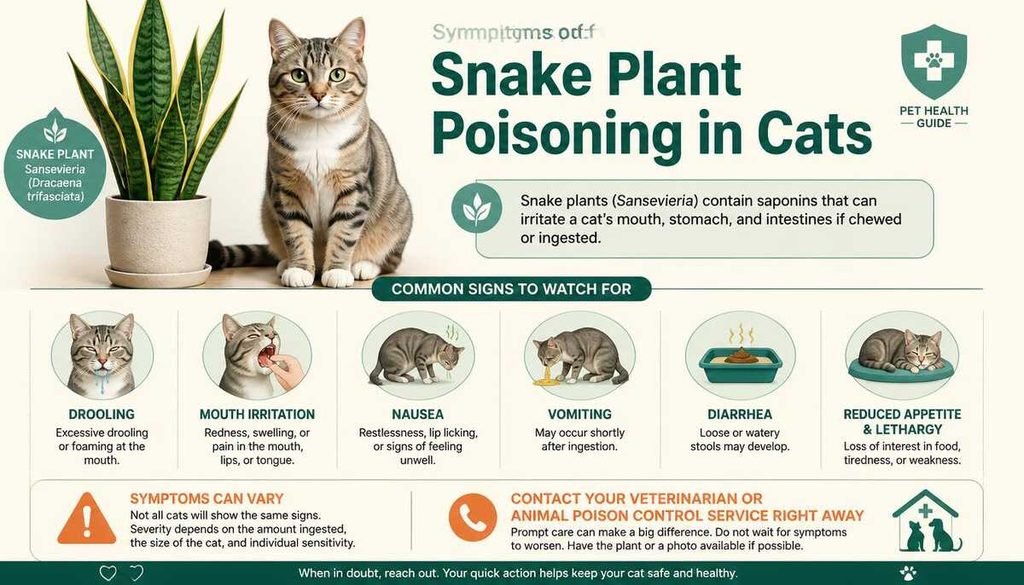
Most symptoms show up fairly quickly after a cat chews on a snake plant leaf, usually within a couple of hours.
Drooling and pawing at the mouth are often the first signs, since the saponins irritate oral tissue right away. You might notice your cat licking their lips repeatedly or rubbing their face against furniture, almost as if trying to get rid of an unpleasant taste.
Vomiting and diarrhea tend to follow as the toxin moves further through the digestive system. Some cats also show a noticeable drop in appetite, seem quieter than usual, or retreat to a hiding spot, which is a fairly typical response cats have when they’re not feeling well.
In cats that ate a larger amount, abdominal discomfort, visible swelling around the mouth, or more prolonged vomiting can show up too. Every cat reacts a little differently depending on how much they ingested, their size, and their individual sensitivity, so symptoms genuinely range from barely noticeable to fairly uncomfortable for a day or two.
Is My Cat’s Life in Danger From Snake Plant Poisoning?
This is usually the first question that comes to mind the moment you realize your cat has been chewing on a snake plant, and it’s a fair one to ask. The reassuring answer is that snake plant toxicity is rarely life threatening on its own.
Compared to genuinely dangerous plants like lilies, which can cause fatal kidney failure in cats even from small amounts of pollen, snake plants sit in a much lower risk category. Most healthy adult cats recover fully within a day or two with basic supportive care, and severe complications are uncommon.
That said, “rarely dangerous” isn’t the same as “never worth worrying about.” Kittens, senior cats, and cats with existing health conditions like kidney or digestive issues can be more sensitive to the effects, and repeated vomiting or diarrhea can lead to dehydration if it goes on too long without treatment. The safest approach is treating any ingestion seriously enough to monitor closely and call your vet, without assuming the worst outcome is likely.
What to Do If Your Cat Eats a Snake Plant
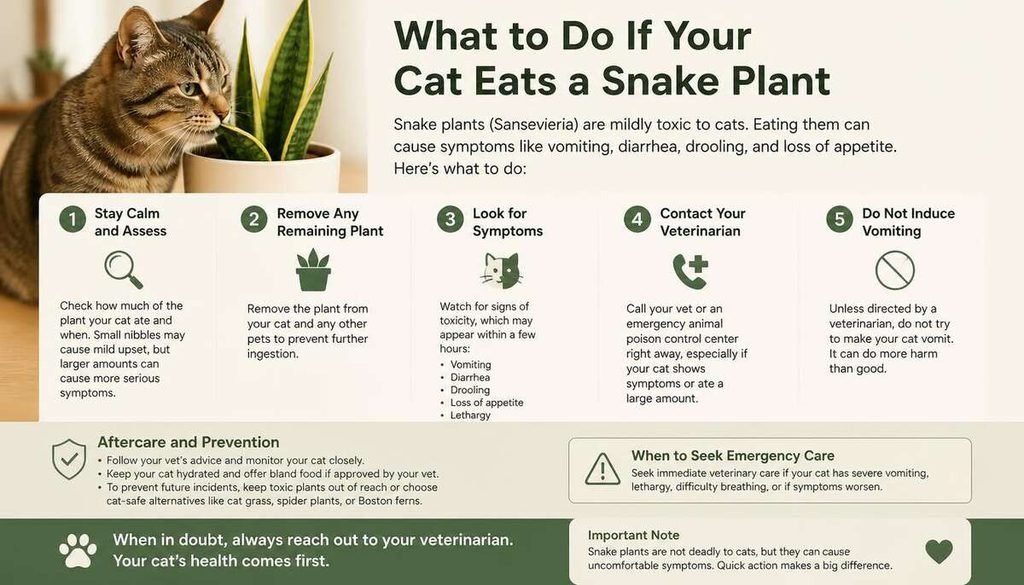
If you catch your cat chewing on a snake plant, or you notice any of the symptoms above and suspect they got into one, the first step is removing access to the plant right away so they can’t keep eating it. Move the plant out of reach entirely rather than just relocating it to another low table your cat can still jump onto.
Check your cat’s mouth gently if they’ll allow it, since drooling and pawing often point to oral irritation that’s worth noting when you speak to a vet. From there, it’s worth calling your vet or a pet poison helpline to explain what happened, roughly how much they may have eaten, and how long ago it occurred. Most vets can advise you over the phone on whether home monitoring is enough or whether your cat needs to come in for an exam.
Don’t try to induce vomiting on your own unless a vet specifically tells you to, since doing so incorrectly can sometimes cause more harm than the original plant exposure did. In most mild cases, symptoms resolve within a day or two with basic supportive care at home, rest, access to fresh water, and a bland diet if appetite is affected, but it’s always worth having a professional weigh in rather than guessing your way through it.
How Severe Is Snake Plant Toxicity?
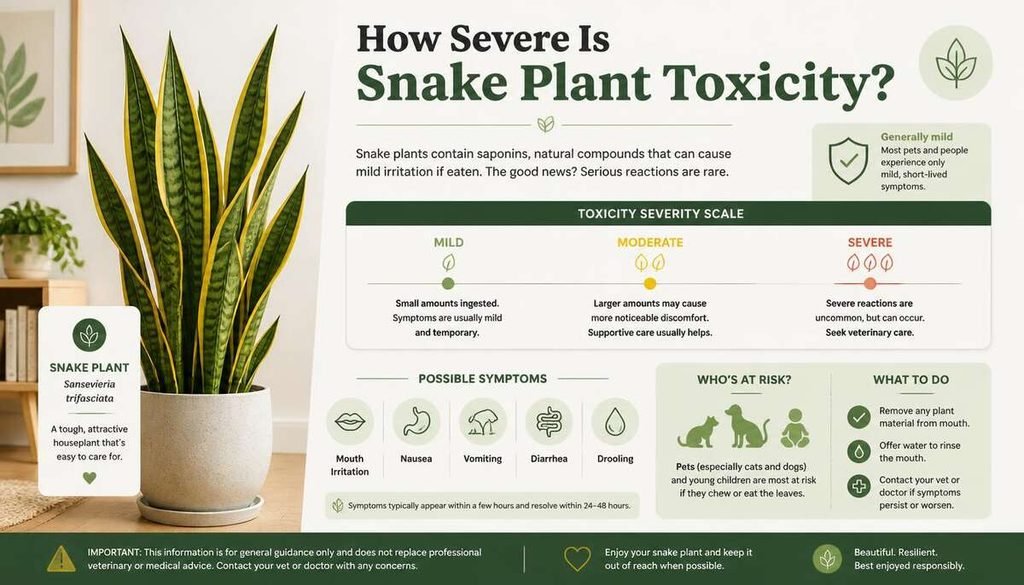
For most cats, snake plant toxicity falls into the mild to moderate range. A small nibble might cause a bit of drooling and nothing more, while eating a larger portion of a leaf can lead to more noticeable vomiting and diarrhea that lasts a day or so.
Severe reactions are uncommon but not impossible, especially in kittens, older cats, or cats with existing health conditions. This is really the main reason it’s worth taking any ingestion seriously rather than assuming it will pass on its own, even though snake plants aren’t considered among the most dangerous houseplants a cat could get into.
Real Signs Your Cat Was Actually Chewing on the Plant
Sometimes you don’t catch your cat in the act, you just notice a plant looking worse for wear and wonder if your cat is the culprit. A few telltale clues can help confirm what actually happened.
Look closely at the leaves themselves. Snake plant leaves that have been chewed usually show ragged, uneven edges rather than a clean cut, since cat teeth tend to tear rather than slice. You might also spot small bite marks or missing chunks near the tips, which are often the first part a curious cat investigates.
Beyond the plant, check the surrounding area for small bits of chewed leaf material on the floor or in your cat’s usual resting spots, since cats will often carry a piece away rather than eating everything right where they bit it off. If your cat suddenly seems less interested in a plant they used to ignore, or you notice soil disturbed around the base of the pot, that’s often a sign they’ve been investigating more than just the leaves.
How to Keep Your Cat Safe Around Snake Plants
The simplest fix is placement. Keeping snake plants somewhere your cat genuinely can’t reach, a high shelf, a closed room, or a hanging planter, removes the temptation entirely rather than relying on your cat to just leave it alone out of good judgment.
Cats are drawn to movement and texture, and the long, upright leaves of a snake plant can look a lot like a toy to a bored or curious cat. If your cat has already shown interest in your other plants before, it’s worth assuming a snake plant will get the same treatment unless it’s genuinely out of reach. For more ways to redirect that curiosity toward safer outlets, our guide on how to keep cats out of plants covers deterrent methods that work well for snake plants and other houseplants alike.
Cat-Safe Alternatives to Snake Plants
If you’d rather skip the risk altogether, there are plenty of attractive houseplants that pose no threat to cats. The prayer plant is one solid option, since it’s non-toxic to pets, adapts well to a range of indoor light conditions, and brings genuine visual interest with its patterned, moving leaves that fold up at night. You can read more in our prayer plant care guide if you want something equally striking but completely pet-safe.
Spider plants and Boston ferns are two other reliable, widely available options that tend to do well even for less experienced plant owners. None of these require you to sacrifice style for safety, they just shift the risk out of the equation entirely, letting your cat explore without any real consequence if curiosity gets the better of them.
FAQs
Is a Small Bite of Snake Plant Dangerous for My Cat?
Usually, a small nibble is unlikely to cause severe problems, but snake plants can still cause symptoms such as drooling, vomiting, diarrhea, or mouth irritation. Keep an eye on your cat and contact your vet if symptoms become severe or do not improve.
How Long Do Snake Plant Poisoning Symptoms Last?
Mild symptoms may improve within 24 to 48 hours, depending on how much plant material the cat consumed. Persistent vomiting, diarrhea, or unusual lethargy should be discussed with a veterinarian.
Are Snake Plants More Dangerous to Cats Than Dogs?
Snake plants can affect both cats and dogs because they contain saponins. The symptoms can include digestive upset, drooling, and mouth irritation. The level of risk depends on the amount eaten and the individual animal.
Can I Keep a Snake Plant If I Have a Cat?
Yes, but keep the plant somewhere your cat cannot reach it. A closed room, secure high location, or another genuinely inaccessible spot can help prevent your cat from chewing the leaves.
What Should I Do If My Cat Shows Severe Symptoms?
If your cat is vomiting repeatedly, extremely lethargic, having difficulty swallowing or breathing, or showing significant swelling around the mouth or throat, contact your veterinarian or an emergency animal clinic promptly.

Jack Rivers is the founder of Plantsopedia, dedicated to making plant care simple, science-backed, and accessible for everyone. With a deep interest in botanical care and plant psychology, he specializes in rare tropical species and organic growth techniques, helping enthusiasts understand the soil, light, and biology behind every thriving plant. When he’s not experimenting with new propagation methods, Jack is busy turning complex horticultural science into practical, everyday advice for home gardeners