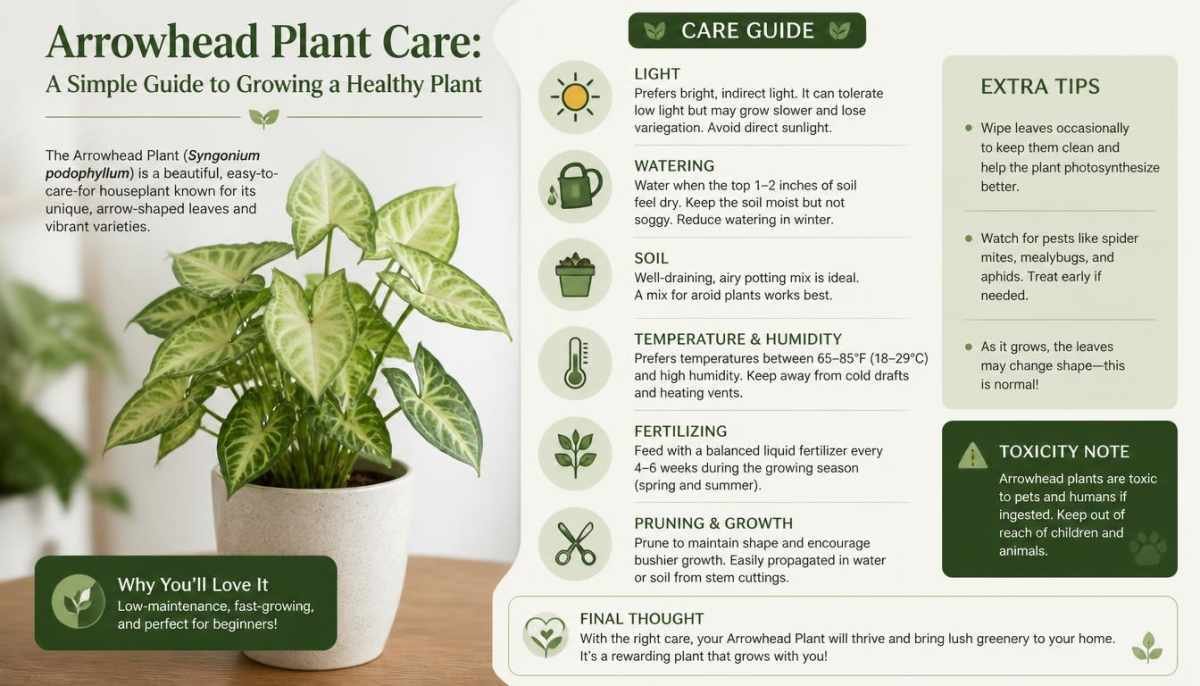
An arrowhead plant is one of those houseplants that can look impressive without needing constant attention. With its attractive arrow-shaped leaves and flexible growth habit, it can be a great choice for beginners and experienced plant owners alike.
The good news is that arrowhead plant care is fairly simple once you understand the basics. Give it suitable indirect light, water it according to the soil’s condition, and provide a comfortable indoor environment.
Here’s everything you need to know to help your plant grow well.
What Is an Arrowhead Plant?
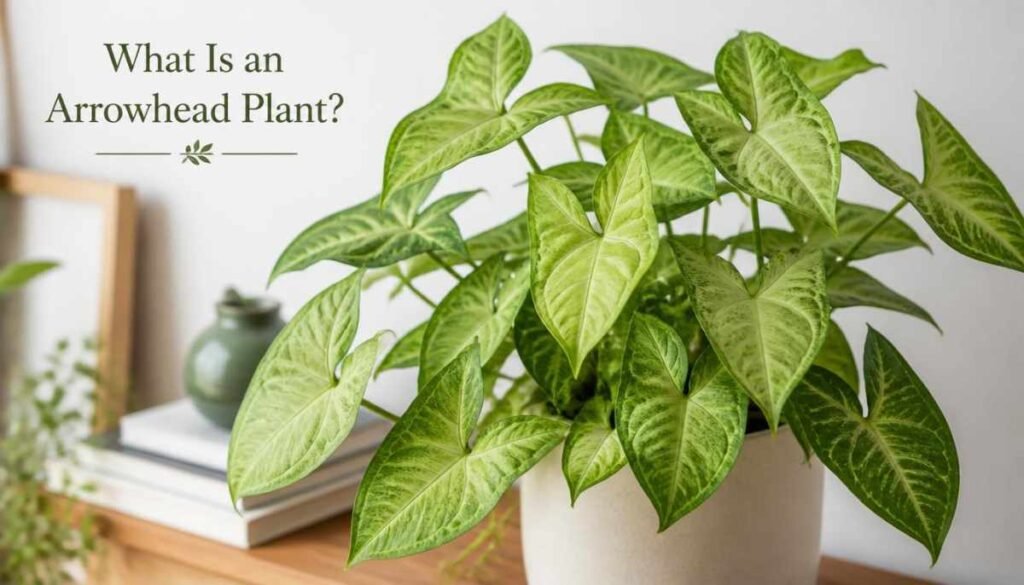
The arrowhead plant, also known as Syngonium podophyllum, is a popular tropical houseplant known for its distinctive arrow-shaped leaves.
Young plants often have a compact, bushy appearance. As they mature, however, they can develop longer stems and take on a more trailing or climbing habit. This is one reason arrowhead plants are so versatile as houseplants.
They come in different leaf colors and patterns, including:
- Green
- White and green
- Pink
- Cream
- Variegated varieties
Different varieties may look different, but their basic care needs are generally similar.
Arrowhead Plant Light Requirements
Arrowhead plants grow best in bright, indirect light.
A spot near a bright window where the plant receives plenty of light without sitting in harsh direct sunlight usually works well. Green varieties can tolerate somewhat lower light, while variegated varieties generally need brighter filtered light to maintain their color.
Too much direct sun can cause problems such as:
- Scorched leaves
- Faded leaf color
- Bleached-looking foliage
- Brown or dry areas
Very low light may also slow down growth and affect the plant’s appearance.
The easiest approach is simple: give your plant good light, but protect it from strong, direct sun.
And also Read : Low Light Outdoor Plants: The Best Shade-Loving Plants for Pots, Patios and Gardens
How Often Should You Water an Arrowhead Plant?
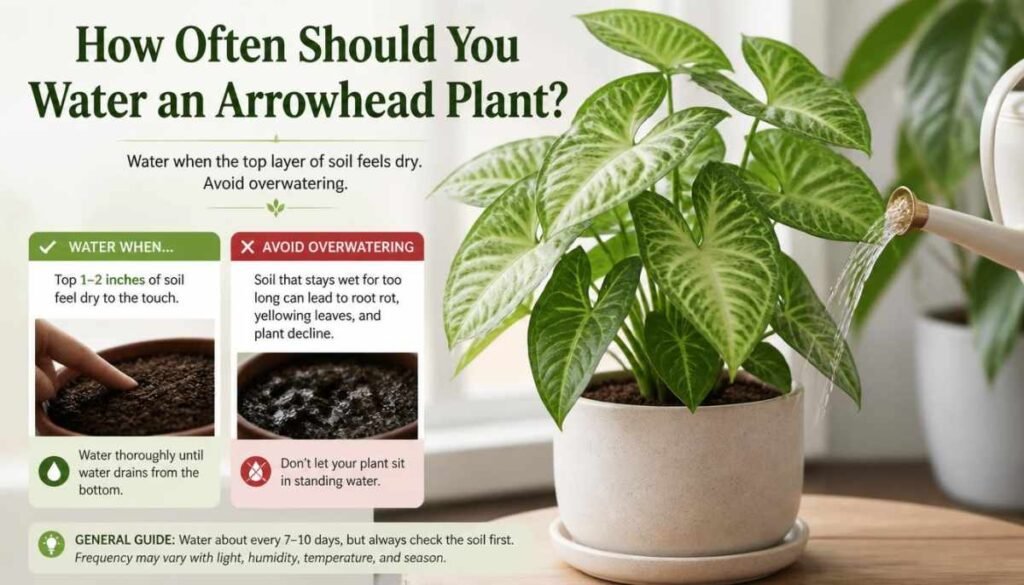
One of the most important parts of arrowhead plant care is getting the watering right.
Water your plant when the top inch or two of soil feels dry. During active growth, arrowhead plants generally prefer moisture without sitting in soggy soil, while watering can be reduced when growth slows in winter.
A simple watering routine looks like this:
- Check the top of the soil.
- If it still feels wet, wait a little longer.
- If the upper layer feels dry, water thoroughly.
- Make sure excess water can drain away.
The biggest mistake is watering on a strict schedule without checking the soil first. Your plant may need more or less water depending on the temperature, light, pot size, and time of year.
The Best Soil for an Arrowhead Plant
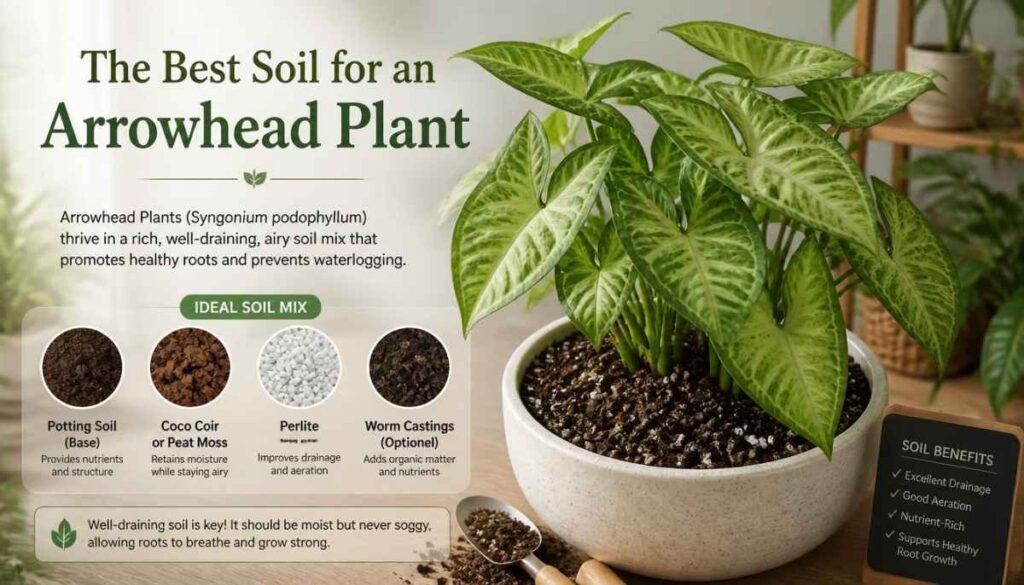
Arrowhead plants need a well-draining potting mix.
The soil should hold some moisture without staying soggy for too long. Adding materials such as perlite can help improve drainage and keep the root area from remaining overly wet.
Avoid heavy soil that stays wet for long periods.
A pot with drainage holes is also important. Even a good potting mix can create problems if excess water has nowhere to go.
Temperature and Humidity Needs
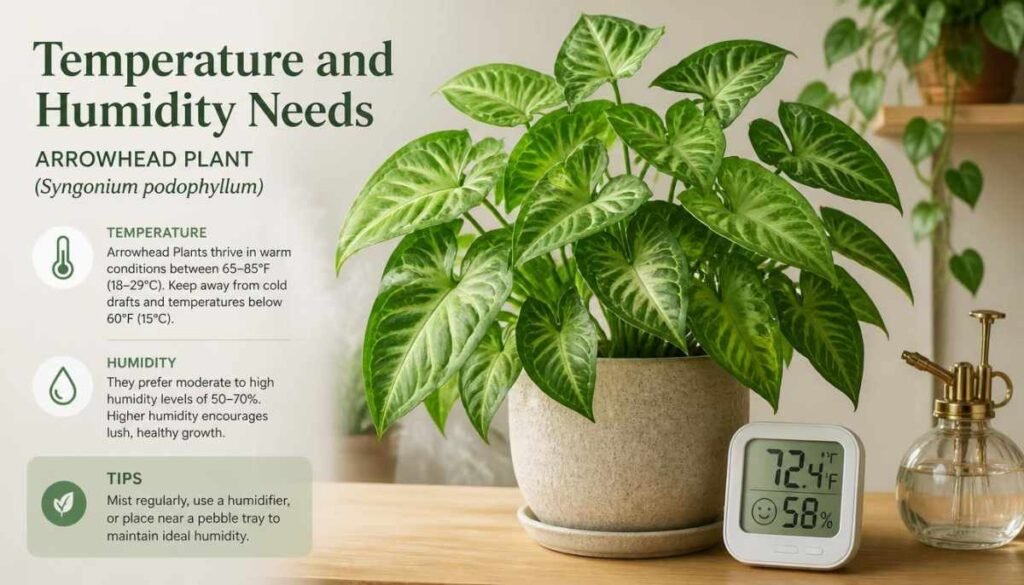
Arrowhead plants generally do well in normal indoor temperatures.
They prefer a warm, stable environment and should be protected from cold drafts and sudden temperature changes. Humidity is also helpful because of their tropical origins, although they can adapt to typical indoor conditions.
Try to keep your plant away from:
- Cold drafts
- Sudden temperature changes
- Extremely cold windows
- Strong heating vents
- Air-conditioning drafts
If your home is especially dry, giving the plant a slightly more humid environment may help it look its best.
How to Make an Arrowhead Plant Grow Fuller
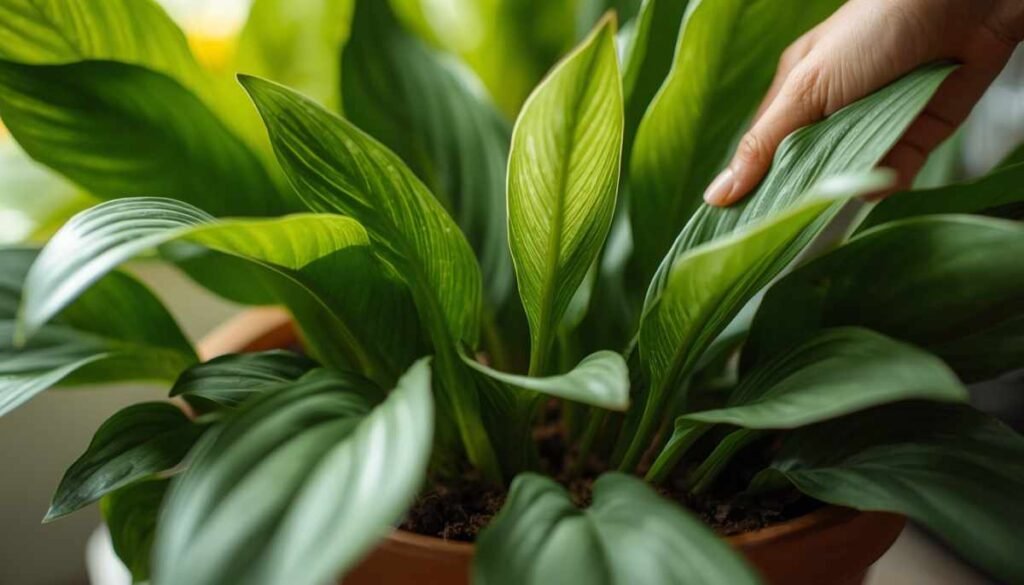
Arrowhead plants can become long and trailing as they mature.
If you prefer a fuller, bushier plant, regular pruning can help. Pinching back or trimming growing stems encourages branching and can prevent the plant from becoming too leggy.
You can also remove growth that looks:
- Leggy
- Damaged
- Weak
- Unhealthy
Regular light pruning can help keep the plant looking neat and compact.
How to Use and Display an Arrowhead Plant
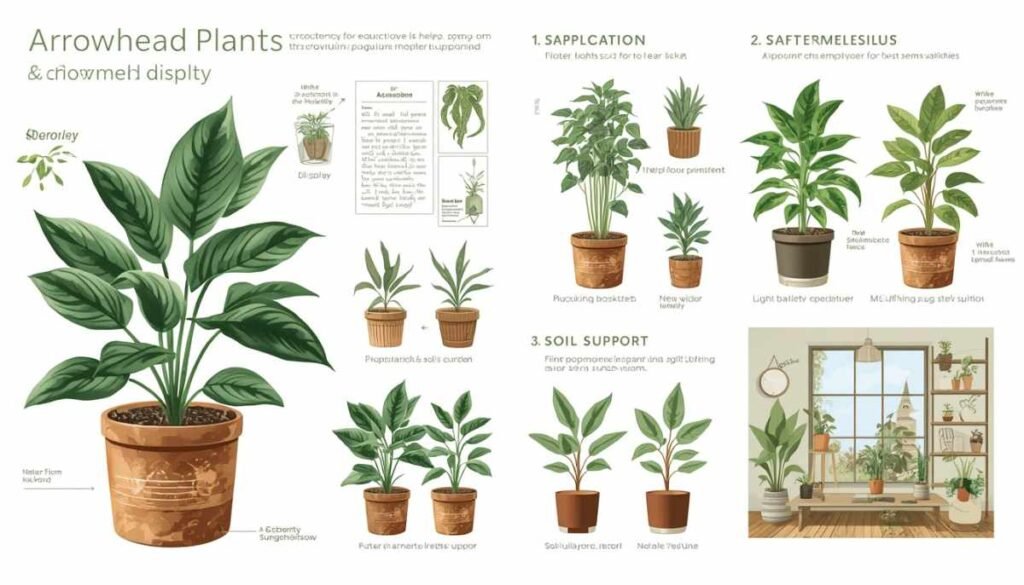
Arrowhead plants are surprisingly flexible when it comes to displaying them. A young, compact plant can look great on a tabletop, shelf, desk, or in a dish garden, while a mature plant can become a beautiful trailing or climbing feature.
You can place it in a hanging basket and let the stems cascade down, or give it a moss pole, trellis, bamboo support, or similar structure if you prefer a climbing look. Arrowhead plants naturally develop a more vine-like habit as they mature, so the way you display your plant can change as it grows.
If you want to keep your plant compact, regular pruning can help. If you want to encourage it to climb, provide support and allow the longer stems to grow upward.
Should You Fertilize an Arrowhead Plant?
Arrowhead plants can benefit from feeding during their active growing period.
Spring and summer are generally when the plant is growing more actively, so this is when it is most likely to benefit from additional nutrients. The RHS recommends feeding actively growing plants with a balanced liquid fertilizer and watering more sparingly during winter.
However, more fertilizer does not always mean better growth. Overfeeding can create problems, so follow the instructions for the specific fertilizer you use.
During slower growth periods, especially in winter, the plant may need less feeding.
Common Arrowhead Plant Problems
Even an easy-care houseplant can occasionally show signs that something is wrong.
Yellow Leaves
Yellow leaves can sometimes be connected to watering problems.
Check the soil before adding more water. If it stays constantly wet, your plant may be getting more moisture than it needs.
Brown Leaf Edges
Brown edges can appear when the plant is dealing with dry conditions, inconsistent watering, or environmental stress.
Look at the plant’s light, watering routine, and general growing environment to identify what may be causing the problem.
Leggy Growth
Long stems with lots of space between leaves can make an arrowhead plant look stretched out.
Improving the lighting and pruning overly long stems can help encourage a fuller appearance.
Faded Leaves
If the leaves lose their attractive color or patterns, check the lighting.
Variegated varieties may need brighter indirect light to maintain their distinctive appearance.
How to Repot an Arrowhead Plant
As your arrowhead plant grows, it may eventually need more space.
Consider repotting when:
- Roots are becoming crowded
- The plant dries out unusually quickly
- Growth seems restricted
- The plant has clearly outgrown its current pot
Choose a slightly larger pot rather than moving to a much larger container. Make sure the new pot has drainage holes and use fresh, well-draining potting mix.
After repotting, give the plant some time to settle into its new environment.
Is the Arrowhead Plant Toxic to Pets?
This is an important part of arrowhead plant care.
Syngonium podophyllum is considered harmful if eaten, so it should be kept away from pets and children who may chew the leaves. The plant can also irritate the skin or eyes when handled by sensitive individuals.
If you have curious pets, placing the plant in a hanging basket or another inaccessible location may be a safer option.
Quick Arrowhead Plant Care Tips
| Care Need | What to Do |
| Light | Provide bright, indirect light |
| Water | Water when the top layer of soil feels dry |
| Soil | Use a well-draining potting mix |
| Temperature | Keep in a warm, stable indoor environment |
| Humidity | Prefers humidity but can adapt to many homes |
| Pruning | Trim growth for a fuller, bushier shape |
| Display | Grow on a shelf, tabletop, hanging basket, or climbing support |
| Safety | Keep away from pets and children if ingestion is a concern |
Frequently Asked Questions About Arrowhead Plant Care
How often should I water an arrowhead plant?
Water when the top inch or two of the soil feels dry. Avoid keeping the soil constantly wet.
Does an arrowhead plant need direct sunlight?
No. Arrowhead plants generally do best in bright, indirect light. Strong direct sunlight can scorch or fade the leaves.
Why is my arrowhead plant becoming leggy?
Leggy growth can happen as the plant naturally develops a more vining habit. Pruning can help encourage a fuller appearance, and suitable lighting is also important.
Can an arrowhead plant survive in low light?
Darker green varieties can tolerate lower-light conditions better than some variegated types. However, bright indirect light is generally better for healthy growth and strong leaf color.
How do I make my arrowhead plant bushier?
Regularly pinch back or prune new growth. This encourages the plant to branch and can help it maintain a fuller shape.
Can an arrowhead plant climb?
Yes. As arrowhead plants mature, they can develop a climbing or trailing habit. You can provide a moss pole, trellis, or another suitable support if you want the plant to grow upward.
Keep It Simple and Your Arrowhead Plant Will Thank You
The best thing about arrowhead plant care is that you don’t need a complicated routine.
Give your plant bright indirect light, check the soil before watering, use well-draining soil, and protect it from extreme environmental changes. You can prune it for a compact shape, let it trail from a hanging basket, or train it to climb as it matures.
Instead of trying to do everything perfectly, pay attention to your plant. Its leaves and growth can often tell you when something needs to change. Once you find a routine that works in your home, your arrowhead plant can become an easy and attractive part of your indoor space.

Jack Rivers is the founder of Plantsopedia, dedicated to making plant care simple, science-backed, and accessible for everyone. With a deep interest in botanical care and plant psychology, he specializes in rare tropical species and organic growth techniques, helping enthusiasts understand the soil, light, and biology behind every thriving plant. When he’s not experimenting with new propagation methods, Jack is busy turning complex horticultural science into practical, everyday advice for home gardeners