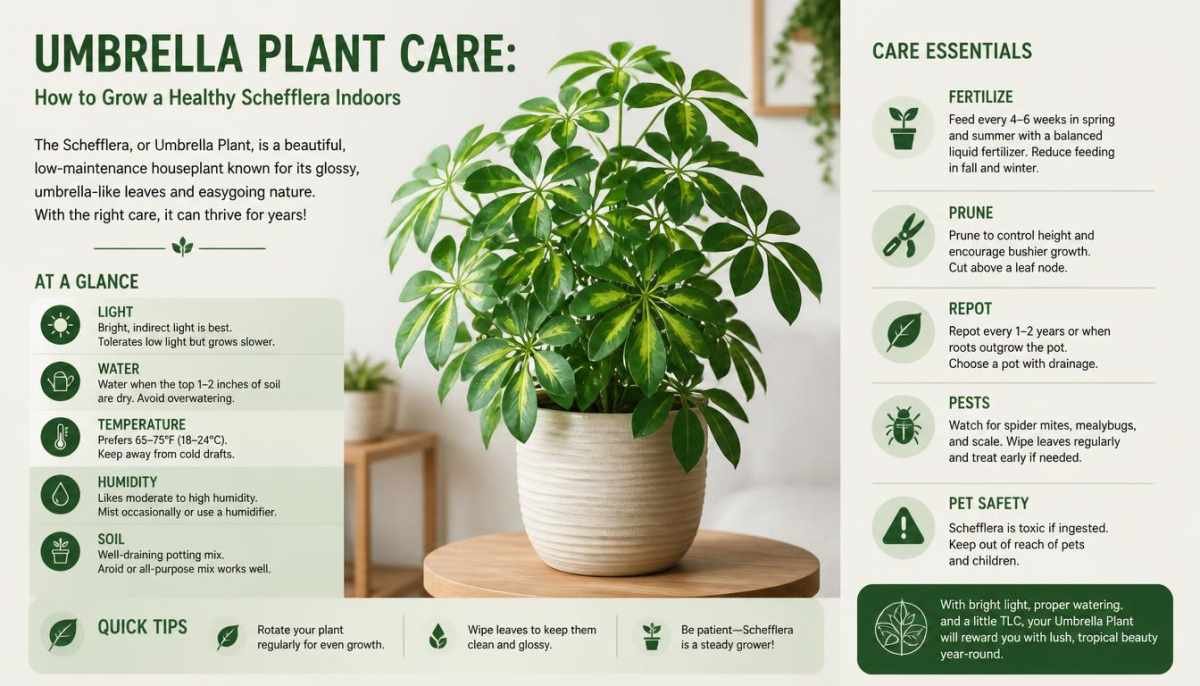
Caring for an umbrella plant, also known as Schefflera, is relatively easy when you provide the right balance of light, water, warmth, and drainage. The biggest mistake is usually keeping the soil too wet. Give your plant bright, indirect light, allow the soil to dry between waterings, and keep it away from cold drafts for healthy growth.
Whether you have a dwarf, mini, or variegated umbrella plant, the basic care requirements are similar. With a little regular attention, Schefflera can become a lush and attractive indoor plant.
Umbrella Plant Care at a Glance
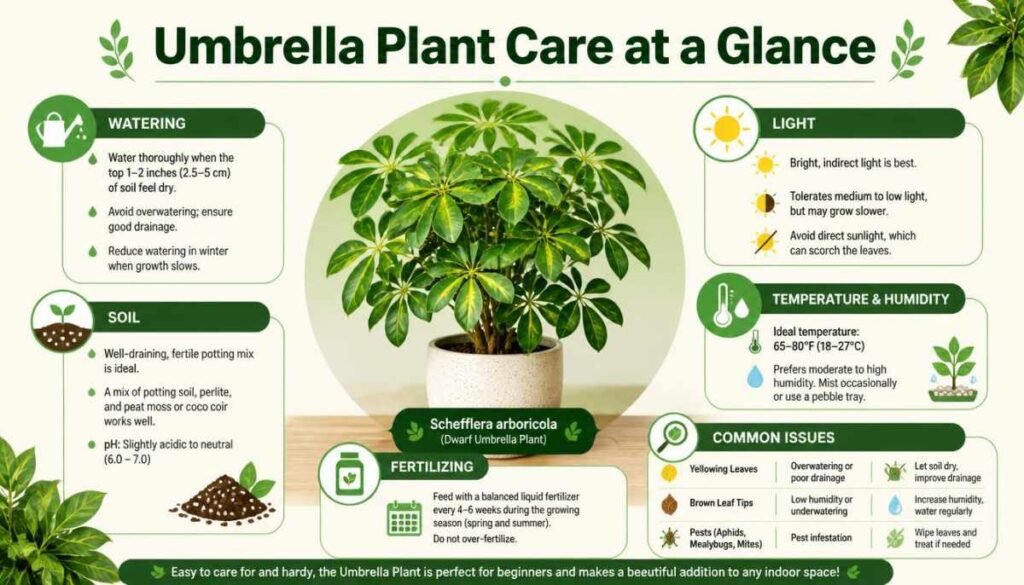
| Care Need | Best Conditions |
| Light | Bright, indirect light |
| Water | Allow the soil to dry between waterings |
| Soil | Well-draining potting mix |
| Temperature | Warm, stable indoor conditions |
| Humidity | Average to moderately humid conditions |
| Fertilizer | Balanced fertilizer during active growth |
| Pruning | Trim leggy or damaged growth as needed |
| Repotting | When root-bound or roughly every 2–3 years |
| Common Problems | Yellow leaves, leaf drop, brown tips, pests |
What Is an Umbrella Plant?
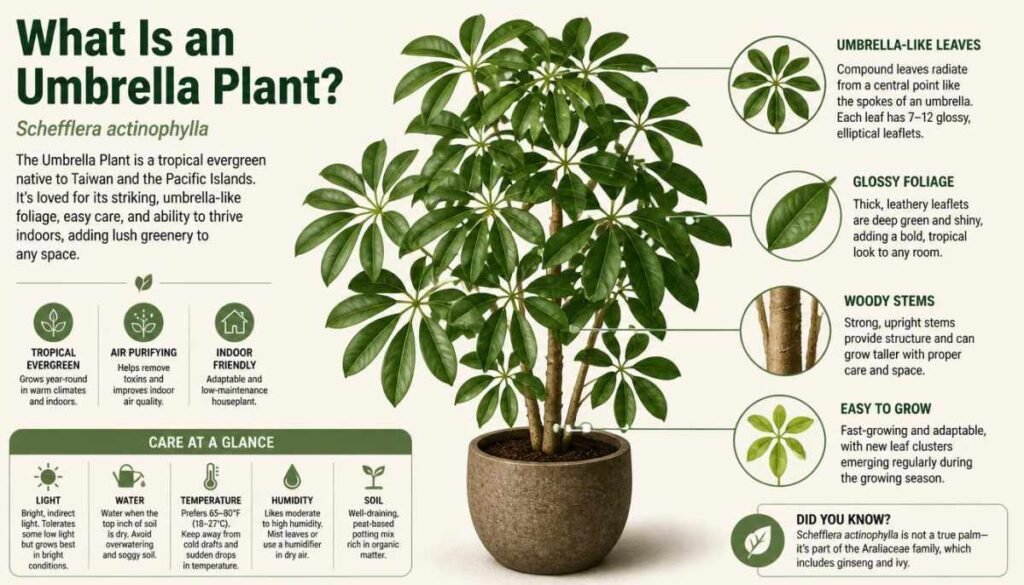
The umbrella plant is a common name for Schefflera, a group of tropical and subtropical evergreen plants grown both indoors and outdoors in suitable climates. One of the most popular houseplant varieties is Schefflera arboricola, often called the dwarf umbrella tree.
Its attractive leaves grow in clusters that resemble the shape of an umbrella, giving the plant its familiar name. Some varieties have green foliage, while variegated types feature cream or yellow markings.
Dwarf and Mini Umbrella Plants
Dwarf and mini umbrella plants are popular for indoor growing because they are generally more compact than larger Schefflera varieties. They still need bright indirect light, careful watering, good drainage, and warm conditions.
How to Care for an Umbrella Plant
Give Your Umbrella Plant Bright, Indirect Light
Light is one of the most important parts of umbrella plant care. Place your Schefflera in a bright area where it receives plenty of indirect sunlight. An east- or west-facing window can work well, while strong afternoon sunlight through a south-facing window may need to be filtered with a sheer curtain.
Too much intense direct sunlight can scorch the foliage, while too little light can cause weak, stretched growth. If your plant starts becoming tall and sparse or leans strongly toward a nearby window, move it gradually to a brighter location.
The Royal Horticultural Society recommends bright indirect light for Schefflera arboricola.
Also read : How to Grow a Tomato Plant: A Complete Beginner’s 2026 complete Guide
Can an Umbrella Plant Grow in Low Light?
An umbrella plant can tolerate lower light for a period of time, but it usually grows better with brighter indirect light. Low light can lead to slower growth, fewer leaves, and long, stretched stems.
If your Schefflera is becoming leggy, check its light before changing its watering or fertilizer routine. Moving it closer to a bright window, while avoiding harsh direct sun, can make a significant difference.
How Often Should You Water an Umbrella Plant?
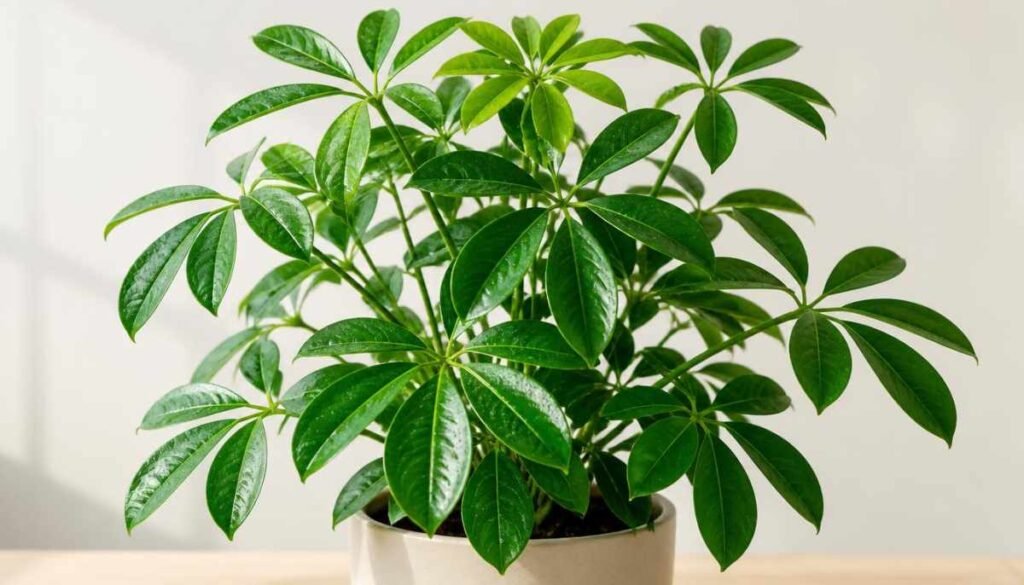
Watering is one of the most important parts of caring for an umbrella plant. Instead of watering on a fixed schedule, check the soil first and allow the upper portion to dry before watering again.
When the soil has dried sufficiently, water the plant thoroughly until excess water drains from the bottom of the pot. Empty any standing water from a saucer so the roots are not left sitting in water.
How frequently your plant needs water depends on the amount of light it receives, the temperature, pot size, soil, humidity, and time of year. A plant in a warm, bright room may need water more often than one growing in a cool, darker space.
Avoid Overwatering
Overwatering is a common cause of umbrella plant problems. When soil remains wet for too long, the roots can struggle and become vulnerable to root problems.
If your plant develops yellow leaves, starts dropping leaves, or the soil stays wet for an unusually long time, check its watering routine and drainage before adding more water.
A pot with drainage holes is essential.
Choose Well-Draining Soil
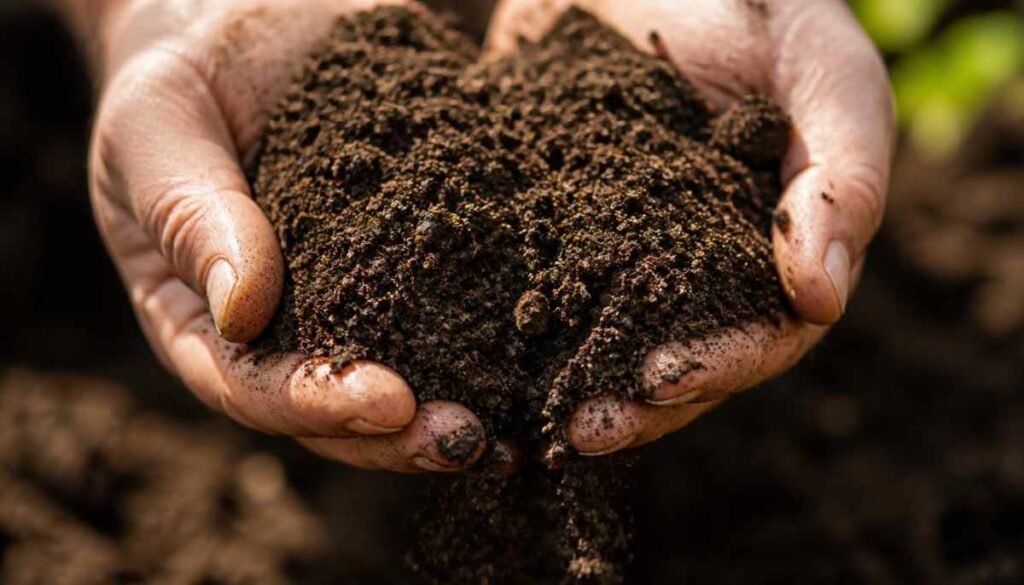
Umbrella plants do best in soil that provides moisture without remaining waterlogged. A quality houseplant potting mix with good drainage is a practical choice for indoor Schefflera.
The container should also have drainage holes so excess water can escape. Avoid allowing the plant to sit in standing water after watering.
Good drainage is especially important if your home has cooler conditions or lower light because the soil may dry more slowly.
Keep Your Umbrella Plant Warm.
Schefflera prefers warm, stable conditions and does not respond well to prolonged cold or sudden temperature changes.
Keep your plant away from cold drafts, frequently opened exterior doors, very cold windows, and strong air-conditioning airflow. It is also best to avoid placing it directly beside a heating vent, where hot, dry air can stress the foliage.
The Royal Horticultural Society describes Schefflera arboricola as a tender plant suitable for protected conditions.
Does an Umbrella Plant Need High Humidity?
Umbrella plants appreciate reasonable humidity, but extremely high humidity is not usually necessary for a healthy indoor plant.
If the air in your home becomes particularly dry, especially during periods of heating, you can increase humidity by using a humidifier or grouping plants together.
Keep your Schefflera away from strong heating and cooling airflow, which can create very dry conditions around the leaves.
Fertilizing an Umbrella Plant
Feed your umbrella plant during periods of active growth with a balanced liquid houseplant fertilizer according to the product instructions. Regular feeding can support healthy foliage and new growth when the plant has sufficient light and suitable growing conditions.
Avoid using more fertilizer than recommended. Excess fertilizer can build up in the soil and damage the roots.
When growth slows during autumn and winter, reduce feeding rather than maintaining the same routine used during the growing season.
How to Repot an Umbrella Plant
An umbrella plant does not need to be repotted every year. Consider repotting when roots have filled the container, growth has slowed without another obvious cause, or water is passing through the pot unusually quickly.
Choose a new pot only slightly larger than the current container and use fresh, well-draining potting mix. Make sure the new pot has drainage holes.
A dramatically oversized container can hold excess moisture around the roots, so avoid moving a small plant into a very large pot.
How to Propagate an Umbrella Plant
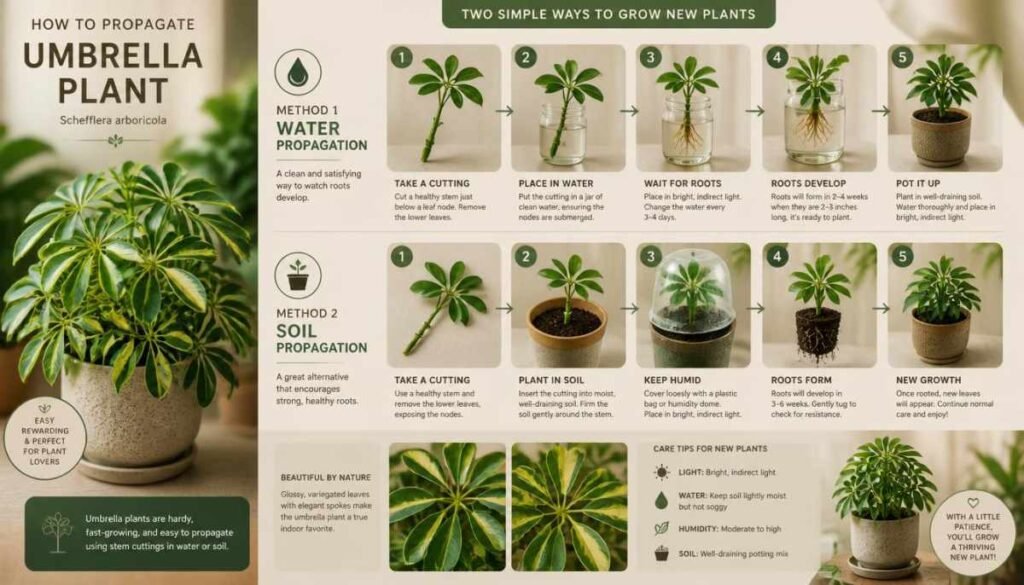
Umbrella plants can be propagated from healthy stem cuttings, making propagation a useful way to grow a new Schefflera from an established plant. Choose a healthy stem and make a clean cut just below a suitable leaf node. Remove the lower leaves and place the cutting in water or a lightly moist, well-draining propagation medium.
Keep the cutting somewhere warm with bright, indirect light while it develops roots. The goal is to provide consistent moisture without leaving the cutting in overly wet conditions.
Propagating Schefflera From Stem Cuttings
To propagate Schefflera from a stem cutting, select healthy, non-damaged growth and use clean, sharp scissors or pruning shears to make the cut. Remove the lower leaves so they do not remain submerged or buried in the propagation medium.
For soil propagation, place the lower portion of the stem into a lightly moist, well-draining propagation mix. Keep it warm and provide bright, indirect light while roots develop.
Once the cutting has established a healthy root system and begins producing new growth, it can be transferred into a regular houseplant container.
Propagating in Water vs. Soil
Both water and soil can be used to propagate Schefflera. Water propagation allows you to watch the roots develop, while soil propagation allows the cutting to establish directly in the medium where it will continue growing.
If propagating in water, keep the lower part of the stem submerged while keeping the leaves above the water. Refresh the water regularly. If using soil, maintain light moisture without keeping the medium saturated.
Either approach can work when the cutting receives suitable warmth, light, and moisture.
Common Umbrella Plant Problems
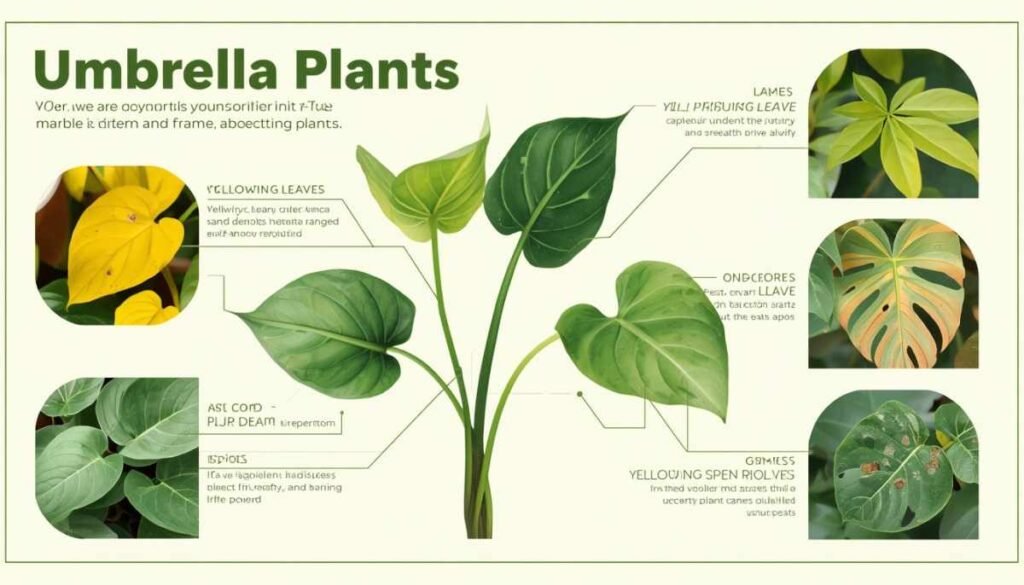
Why Are My Umbrella Plant Leaves Turning Yellow?
Yellow leaves can have several causes, but watering problems are one of the first things to investigate. Check whether the soil is staying wet for too long and whether the container drains properly.
Low light can also contribute to poor plant health. Look at the entire growing environment rather than assuming that every yellow leaf has the same cause.
Why Is My Umbrella Plant Dropping Leaves?
Leaf drop can occur when a Schefflera experiences stress. Overwatering, underwatering, cold drafts, sudden changes in light, relocation, or poor root health can all contribute.
Think about what changed around the time the leaf drop began. Checking the soil moisture and temperature is a good place to start.
Why Are the Leaf Tips Turning Brown?
Brown leaf tips can develop when conditions are too dry or watering is inconsistent. Check the soil before watering and make sure the plant is not positioned directly beside a heating or cooling vent.
If the soil is consistently too dry, adjust your watering routine rather than simply increasing humidity.
Why Is My Umbrella Plant Getting Leggy?
Leggy growth is often associated with insufficient light. When a Schefflera does not receive enough useful light, it may stretch toward the nearest source.
Move it gradually toward a brighter location with indirect light and prune excessively long stems to improve its shape.
Why Is My Umbrella Plant Not Growing?
Slow growth does not always indicate a serious problem. Low light, winter conditions, recent repotting, poor root health, or inadequate nutrition can all affect growth.
Before adding extra fertilizer, check that the plant has enough light and that its roots are not staying excessively wet.
Why Is My Variegated Umbrella Plant Losing Its Color?
Variegated umbrella plants need suitable light to maintain strong, attractive growth. If the plant is producing weaker growth or appears to be losing some of its variegated appearance, reassess its light conditions.
Give it bright, indirect light while protecting the foliage from harsh sunlight.
Umbrella Plant Pests
Umbrella plants can occasionally attract common houseplant pests, including spider mites, mealybugs, and scale insects.
Spider mites may cause speckled foliage or fine webbing, while mealybugs can appear as small white, cotton-like clusters. Scale insects often look like small bumps attached to leaves or stems.
Inspect your plant regularly, especially around leaf joints and new growth. Finding pests early generally makes them easier to manage.
Umbrella Plant Care in Winter
Winter changes the care routine for many indoor umbrella plants because growth often slows and the soil may take longer to dry.
Check the soil before watering rather than following your summer schedule. If the soil remains damp for longer, allow more time between waterings.
Keep the plant away from cold drafts and very cold windows while still giving it as much suitable indirect light as possible. Reduce fertilizer while growth is slow and avoid making unnecessary changes to its environment.
The main winter mistake is often watering as frequently as you would during the warmer, brighter growing season.
Is an Umbrella Plant Safe for Pets?
Looking for pet-safe house plants? Let’s talk about are umbrella plants safe for pets and what you need to do if your pet is exposed.
Umbrella plants are super popular houseplants. They have a tree shape and tropical leaves in clusters of 8, making them a beautiful addition to any houseplant collection.
The umbrella plant is also known as:
- Octopus tree
- Starleaf
- Australian ivy palm
- Schefflera
- Parasol plant
If you have any of these plants and have pets, you need to keep reading! It’s important that you are aware of the toxicity of umbrella plants to pets.
Source
Frequently Asked Questions About Umbrella Plant Care
How often should I water an umbrella plant?
Water when the soil has dried sufficiently rather than following a strict calendar. How often this happens depends on light, temperature, humidity, pot size, soil, and season.
Does an umbrella plant need direct sunlight?
No. Bright, indirect light is generally a better choice for indoor Schefflera. Strong direct sunlight, particularly intense afternoon sun, can scorch the foliage.
Can an umbrella plant grow in low light?
It can tolerate lower light, but growth is generally better in bright indirect light. Low light can cause slower, weaker, and more stretched growth.
Why is my umbrella plant losing leaves?
Check watering, light, temperature, and recent environmental changes. Overwatering, cold conditions, and sudden changes can all stress the plant and contribute to leaf drop.
How do I make my umbrella plant bushier?
Give it sufficient bright, indirect light and prune excessively long stems. Good lighting helps prevent new growth from becoming stretched and sparse.

Jack Rivers is the founder of Plantsopedia, dedicated to making plant care simple, science-backed, and accessible for everyone. With a deep interest in botanical care and plant psychology, he specializes in rare tropical species and organic growth techniques, helping enthusiasts understand the soil, light, and biology behind every thriving plant. When he’s not experimenting with new propagation methods, Jack is busy turning complex horticultural science into practical, everyday advice for home gardeners