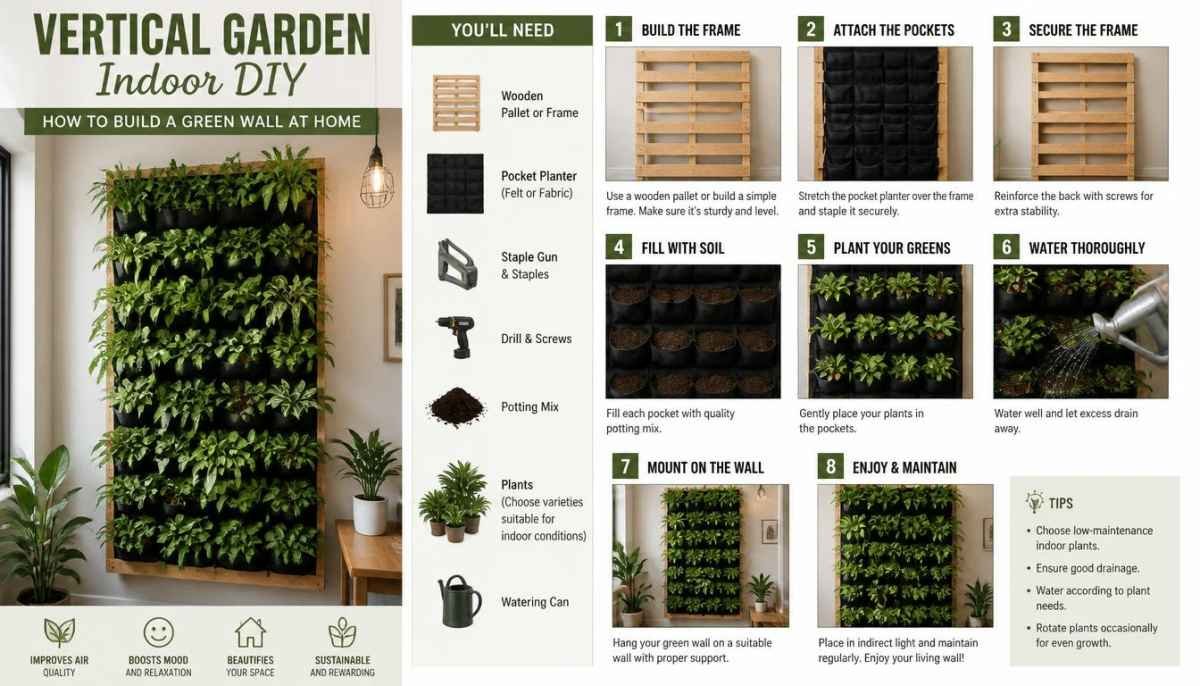
A vertical garden indoor DIY project is a simple way to bring more greenery into your home without giving up valuable floor space. Instead of spreading plants across tables, windowsills, and shelves, you can use a wall, frame, ladder, or narrow plant stand to grow upward.
The best part is that you do not need a complicated living-wall system to get started. A few sturdy shelves, hanging planters, or a simple wooden frame can create a beautiful indoor garden.
Before you start drilling holes or buying plants, though, think about light, drainage, weight, and maintenance. These four things will determine whether your vertical garden stays attractive or becomes difficult to manage.
What Is an Indoor Vertical Garden?
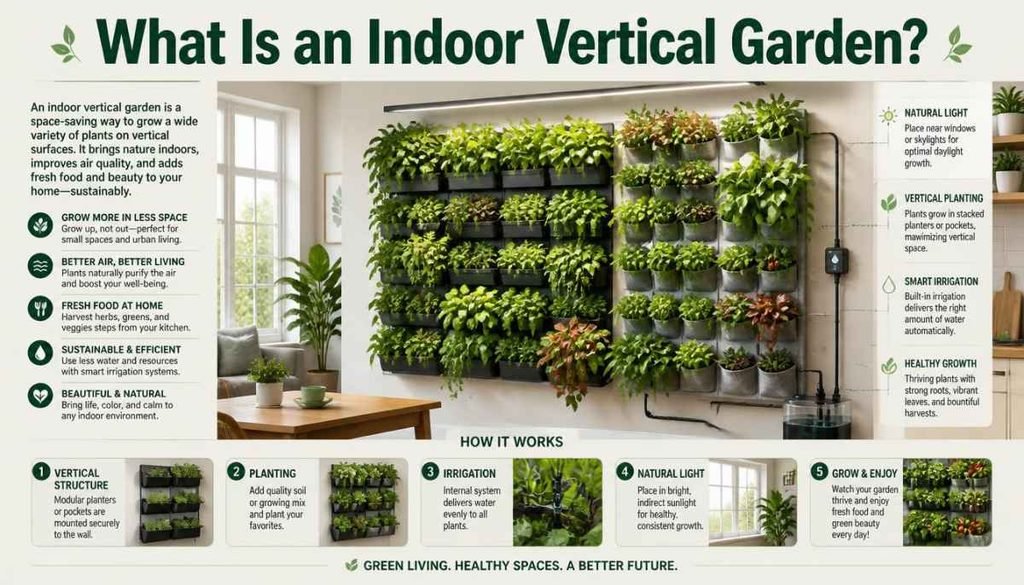
An indoor vertical garden is a plant arrangement that uses vertical space instead of placing plants across the floor or traditional horizontal surfaces.
It can be as simple as several pots mounted on a wall or as elaborate as a complete living wall with built-in irrigation.
For a DIY project, you have plenty of options. You can use wooden shelves, hanging pockets, a ladder-style plant stand, a pegboard, or a freestanding frame.
The important thing is that the structure is stable and gives every plant enough space, light, and drainage.
Why Try a DIY Vertical Garden Indoors?
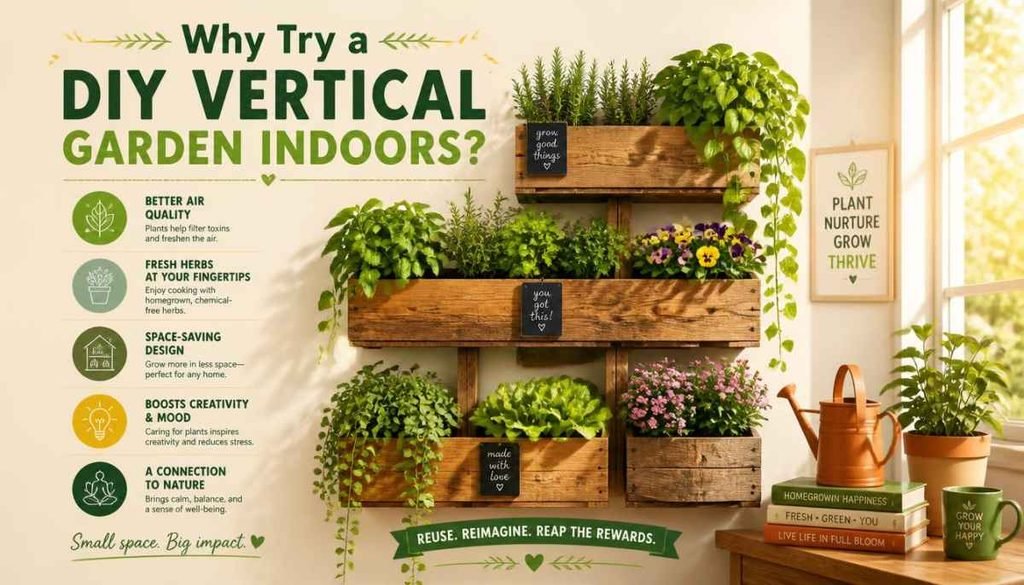
A vertical garden can solve several common problems for indoor plant lovers, especially when floor space is limited.
Save Floor Space
Small apartments and compact rooms often have plenty of unused wall space.
Moving plants upward lets you create a larger collection without filling every available surface with pots.
Turn an Empty Wall Into a Plant Display
An empty wall can become a natural focal point with the right combination of plants and planters.
Trailing plants can soften the edges, while upright plants can create structure in the center.
Grow Herbs and Small Plants
A bright kitchen wall can work well for a small vertical herb garden.
You can grow compact herbs such as basil, thyme, parsley, or mint when the location receives enough light and the containers provide proper drainage.
Create a Natural Focal Point
A well-arranged plant wall can add texture and color to a living room, bedroom, home office, or entryway.
You also have more freedom to match the frame and planters with your existing decor.
Choose the Right Spot Before You Build
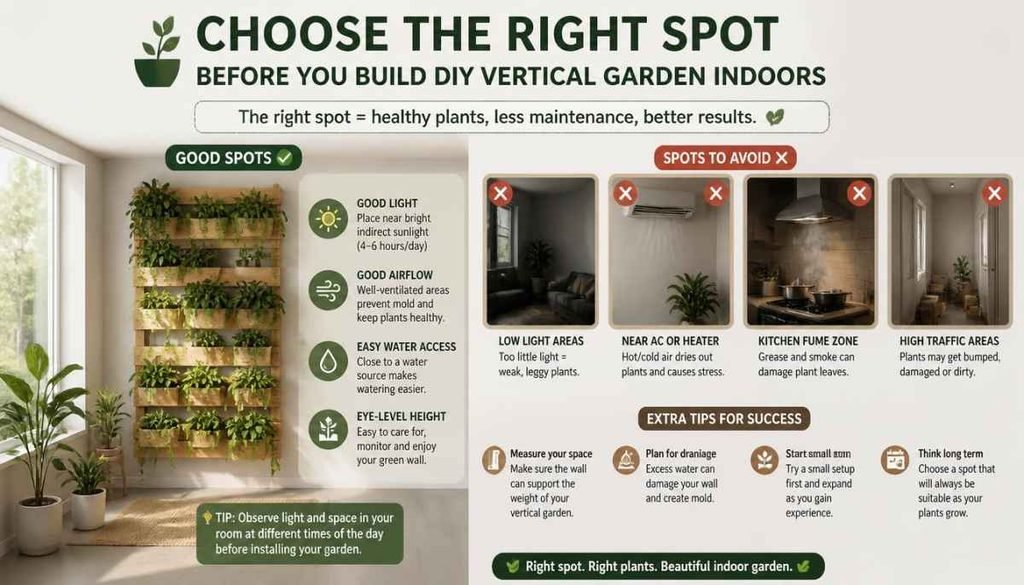
The location of your vertical garden matters more than the frame itself.
A beautiful setup will not stay healthy if the plants receive unsuitable light or if watering constantly creates problems for the wall.
Check Natural Light
Watch the area throughout the day before installing anything.
A bright window may provide enough light for many houseplants, while a darker corner may require plants that tolerate lower light or supplemental grow lighting.
Do not choose your plants first and hope the location works afterward. Start with the light you actually have.
Think About Water and Drainage
Water is one of the biggest considerations for an indoor vertical garden.
Every planter should have a sensible way to handle excess water. If water can drip directly onto your floor, furniture, or wall, the design needs to be changed before you add plants.
Removable pots placed inside decorative containers can make watering much easier.
Consider Wall Strength
Wet soil, pots, plants, and water can make a vertical garden considerably heavier than it looks.
For a wall-mounted design, use appropriate hardware for your wall type and secure heavy structures properly. If you are renting or do not want to drill into the wall, choose a freestanding design instead.
Keep Plants Easy to Reach
Do not put every plant at a height that requires a stool just to water it.
You should be able to reach each plant comfortably for watering, pruning, cleaning, and checking for pests.
Pick the Best DIY Vertical Garden Style
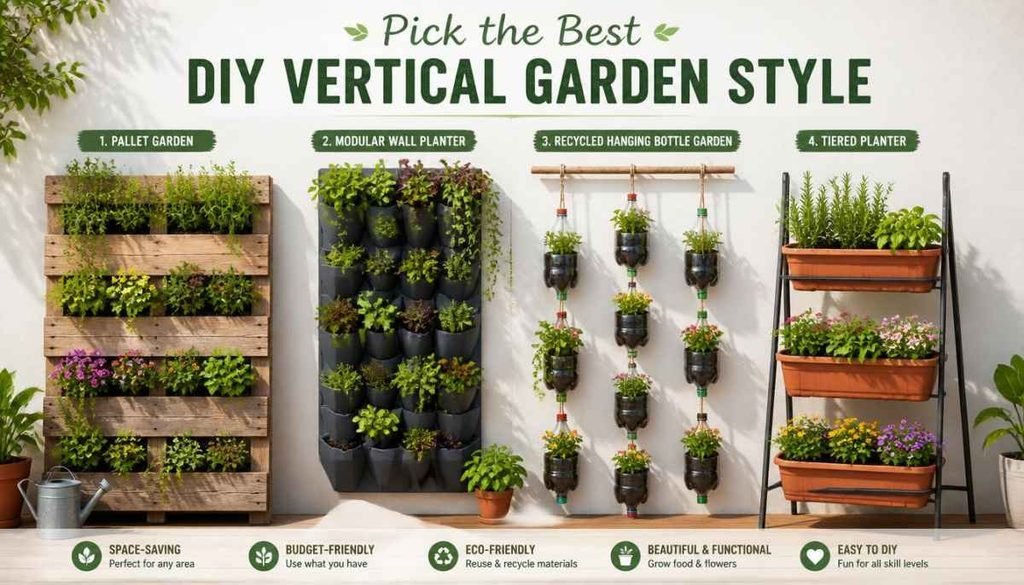
There is no single design that works for every room. Choose a structure based on your available space, wall type, plants, and DIY experience.
Wooden Shelf Garden
Wooden shelves are one of the easiest options for beginners.
You can install two or more narrow shelves vertically and place individual pots on them. This also makes it easy to remove plants when they need watering or extra sunlight.
Hanging Pocket Garden
Fabric or pocket planters create a softer look and work well for lightweight plants.
They are particularly useful when you want to cover a section of wall without building a large wooden structure.
Ladder Plant Stand
A small wooden ladder can become a simple freestanding vertical garden.
Place smaller plants on the upper levels and larger pots toward the bottom. Because it does not need to be attached directly to a wall, it can also be useful for renters.
Wall-Mounted Planter Frame
A framed planter arrangement can create a more finished, decorative appearance.
Use a strong frame and secure each planter properly. Keep the overall weight in mind once the soil becomes wet.
Freestanding Vertical Garden
A freestanding plant stand is a practical choice if you do not want to drill into your wall.
It can also be moved closer to a window when plants need more light.
Best Plants for an Indoor Vertical Garden
Choosing plants according to your indoor conditions is more important than choosing them simply because they look good together.
Some plants prefer bright light, while others can tolerate lower-light rooms.
Pothos
Pothos is a popular choice for vertical displays because its trailing stems naturally grow downward.
Place it near the edge of a shelf or planter so the vines can create a cascading effect.
Philodendron
Many philodendrons work beautifully in indoor plant displays.
Their foliage adds plenty of texture, and trailing varieties are especially useful around the edges of a vertical arrangement.
Spider Plant
Spider plants are compact enough for many shelves and hanging planters.
Their arching leaves also add movement to an otherwise structured arrangement.
Snake Plant
Snake plants have an upright growth habit, making them useful for adding height and contrast.
They can also tolerate periods of drying better than plants that prefer consistently moist soil.
Ferns
Ferns can add a soft, lush appearance to a vertical garden.
They generally appreciate suitable humidity and moisture, so place them where you can monitor their growing conditions easily.
Peace Lily
Peace lilies can create a fuller appearance with their broad leaves and flowers.
They work best when their light and watering requirements are taken into account rather than being treated like low-maintenance plants.
Herbs for Bright Locations
If your vertical garden is close to a bright kitchen window, consider compact herbs.
Basil, thyme, parsley, and similar herbs can work well when they receive sufficient light and have containers with proper drainage.
Materials and Tools You’ll Need
Your exact materials will depend on the design you choose, but a simple shelf-style vertical garden may require:
- Wooden boards or shelves
- Plant pots
- Wall brackets or suitable hardware
- Measuring tape
- Pencil
- Drill
- Screws and appropriate anchors
- Sandpaper
- Potting mix
- Indoor plants
- Waterproof trays or saucers
For a freestanding design, you may not need wall anchors at all.
Before buying materials, measure the available area and decide how many plants you actually want to display.
How to Build a DIY Indoor Vertical Garden
Once you have chosen your location and design, the construction becomes much easier.
The following method works well for a simple shelf-style setup.
Step 1: Measure Your Space
Measure the height and width of the wall or area where you want the garden.
Leave enough space between shelves for the plants to grow. Also leave room around the arrangement so you can comfortably water and maintain everything.
Step 2: Choose and Prepare the Frame
Select shelves or a frame that can support the combined weight of the pots, soil, plants, and water.
Sand wooden surfaces if necessary and finish them with a suitable protective coating if the material will regularly be exposed to moisture.
Step 3: Add Planters or Shelves
Install your shelves or attach your planters according to the design.
Keep heavier pots lower when possible. This can make the arrangement easier to balance and visually grounded.
Step 4: Add Drainage Protection
Place trays or saucers beneath containers where appropriate.
For wall-mounted designs, think carefully about where excess water will go. Never assume that a decorative planter will automatically contain every drop of water.
Step 5: Secure the Structure
Check every bracket, screw, hook, and connection before adding plants.
Gently test the structure first. It should remain stable without wobbling or pulling away from the wall.
Step 6: Add Potting Mix
Use a suitable indoor potting mix for houseplants.
Avoid filling containers completely to the top. Leave some space so water does not immediately spill over the edge when you irrigate.
Step 7: Place Your Plants
Arrange plants according to their size, light requirements, and growth habit.
Put trailing plants where their vines have room to fall, and keep upright plants where their shape can add height.
Step 8: Check the Weight and Stability
Once the pots are filled and watered, check the structure again.
This is important because wet potting mix can be much heavier than dry material.
Step 9: Add Grow Lights if Needed
If your chosen location does not provide enough natural light, consider adding an appropriate LED grow light.
Position it according to the requirements of your plants rather than simply placing it as close as possible to the foliage.
How to Arrange Plants on a Vertical Garden
Good arrangement can make a small collection look much larger.
Think about height, texture, color, and growth habit instead of placing plants randomly.
Put Trailing Plants at the Edges
Pothos and trailing philodendrons can soften the edges of shelves and frames.
Allow their stems to hang naturally instead of forcing them into a specific shape.
Keep Taller Plants in the Middle
Upright plants can provide a visual anchor.
Place taller varieties toward the middle or lower portion of the display so they do not block smaller plants.
Group Plants With Similar Needs
This is one of the most useful rules for indoor plant arrangements.
Plants that require similar light and watering conditions are easier to care for when placed together.
Leave Enough Space for Growth
Do not arrange every pot so tightly that the leaves touch.
Plants grow, vines spread, and airflow becomes important. A little empty space can make the entire display look cleaner.
How to Water an Indoor Vertical Garden Without Making a Mess
Watering is where many indoor vertical gardens become inconvenient.
You want to give each plant enough moisture without creating puddles underneath the display.
Water According to Each Plant
Do not give every plant the same amount of water simply because they are on the same wall.
Check the soil of individual containers and water according to each plant’s needs.
Use Removable Pots
A removable-pot system is one of the easiest DIY solutions.
You can lift a plant out, take it to the sink, water it thoroughly, allow excess water to drain, and then return it to the display.
Catch Excess Water
Use saucers, trays, or other suitable drainage solutions beneath containers.
Make sure the water cannot reach the wall, furniture, or flooring.
Check for Leaks
After installing the garden, test your watering routine carefully.
Look behind and underneath the planters for moisture. Catching a small leak early is much easier than repairing water damage later.
Do Indoor Vertical Gardens Need Grow Lights?
Not always.
If your plants receive enough natural light from a suitable window, additional lighting may not be necessary.
However, a wall in a dark hallway, interior room, or shaded corner may not provide enough light for healthy growth.
When to Consider a Grow Light
Consider supplemental lighting if you notice:
- Leggy growth
- Pale leaves
- Slow growth
- Plants leaning strongly toward a window
- Loss of normal leaf color
Choose plants that match your available light first. Grow lights should support a good setup, not compensate for completely unsuitable conditions.
How to Keep Your Vertical Garden Healthy
Building the garden is only the beginning.
A little regular maintenance will keep the display attractive and help you notice problems before they spread.
Watering
Check each plant’s soil before watering.
Avoid treating the entire garden as one plant because different species can have very different moisture requirements.
Pruning
Trim dead, damaged, or excessively long growth when needed.
Regular pruning can also prevent trailing plants from taking over smaller plants nearby.
Fertilizing
Indoor plants may benefit from appropriate fertilizer during active growth.
Follow the fertilizer’s instructions rather than assuming that more will produce faster growth.
Pest Checks
Inspect leaves and stems regularly.
Catching pests early is much easier than dealing with an infestation across an entire vertical display.
Rotating Plants
If plants grow toward a nearby window, occasionally rotating them can help maintain a more balanced shape.
This is especially useful for plants that strongly respond to directional light.
Cleaning the Structure
Dust can collect on shelves, leaves, and decorative containers.
Wipe shelves and gently clean appropriate plant foliage when needed to keep the display fresh.
Common DIY Vertical Garden Mistakes to Avoid
A few planning mistakes can make an indoor vertical garden much harder to maintain.
Choosing Plants Before Checking Light
A plant that looks perfect online may struggle in your room.
Always check the available light first.
Mounting Too Much Weight
Remember that soil becomes heavier when wet.
Do not judge the strength of a shelf or wall attachment based only on the empty pots.
Forgetting Drainage
A beautiful planter without proper drainage can quickly become a maintenance problem.
Plan where excess water will go before installing the garden.
Watering Every Plant Equally
Different plants have different moisture needs.
Check individual pots instead of following one watering routine for the entire wall.
Using Tiny Containers for Large Plants
Small containers restrict root space and dry out quickly.
Match the pot size to the plant and allow room for healthy growth.
Blocking Access to Plants
If you cannot comfortably reach a plant, you will probably struggle to maintain it.
Keep watering and pruning access in mind when designing the layout.
Mounting Directly Against an Unprotected Wall
Water and humidity can create problems if the setup constantly stays damp.
Use appropriate protection and make sure the drainage system works before filling the garden with plants.
Easy Indoor Vertical Garden Ideas for Small Spaces
You do not need an entire wall to create a vertical garden.
Small Apartment
Use a narrow ladder stand or a slim shelving unit beside a bright window.
Kitchen
Create a compact herb garden using small removable pots.
Living Room
Use a wooden frame with trailing plants to create a decorative green focal point.
Bedroom
Choose a small collection of plants that suit the available light and keep the arrangement easy to maintain.
Home Office
A small plant shelf above or beside your desk can add greenery without taking up workspace.
Entryway
A narrow freestanding plant stand can transform an otherwise unused corner.
Frequently Asked Questions
What is the easiest indoor vertical garden to make?
A small shelf-based or freestanding vertical garden is usually one of the simplest options for beginners. You can use individual pots instead of building a complicated irrigation system.
What plants are best for an indoor vertical garden?
Pothos, philodendrons, spider plants, snake plants, and some ferns can work well indoors when their individual light and watering requirements are met.
Can I make a vertical garden without drilling into the wall?
Yes. A ladder plant stand, freestanding shelf, rolling plant rack, or other stable structure can give you a vertical display without permanently attaching anything to the wall.
How do you water an indoor vertical garden?
Check each pot individually and water according to the plant’s needs. Removable pots can make watering easier because you can take them to a sink and allow excess water to drain before returning them.
Do indoor vertical gardens need sunlight?
Plants need suitable light to grow, but the amount varies by species. A bright window may be enough for some plants, while darker spaces may require plants suited to lower light or supplemental grow lighting.
Do vertical gardens damage walls?
They can if they are poorly installed or water is allowed to reach the wall repeatedly. Proper mounting, drainage, waterproof protection, and regular checks can reduce these risks.
Can I grow herbs in an indoor vertical garden?
Yes, especially in a bright location. Herbs generally need more light than many decorative houseplants, so a sunny window or suitable grow light may be necessary.
Turn an Empty Wall Into a Living Garden
A vertical garden indoor DIY project does not have to involve complicated equipment or an expensive living-wall system.
Start with the space you have, check its lighting, choose plants that fit those conditions, and build a structure that can safely support them. Then make drainage and watering part of the design from the beginning.
Whether you choose a simple wooden shelf, a ladder stand, hanging pockets, or a full plant wall, the best indoor vertical garden is one that looks beautiful and remains easy to care for.

Jack Rivers is the founder of Plantsopedia, dedicated to making plant care simple, science-backed, and accessible for everyone. With a deep interest in botanical care and plant psychology, he specializes in rare tropical species and organic growth techniques, helping enthusiasts understand the soil, light, and biology behind every thriving plant. When he’s not experimenting with new propagation methods, Jack is busy turning complex horticultural science into practical, everyday advice for home gardeners