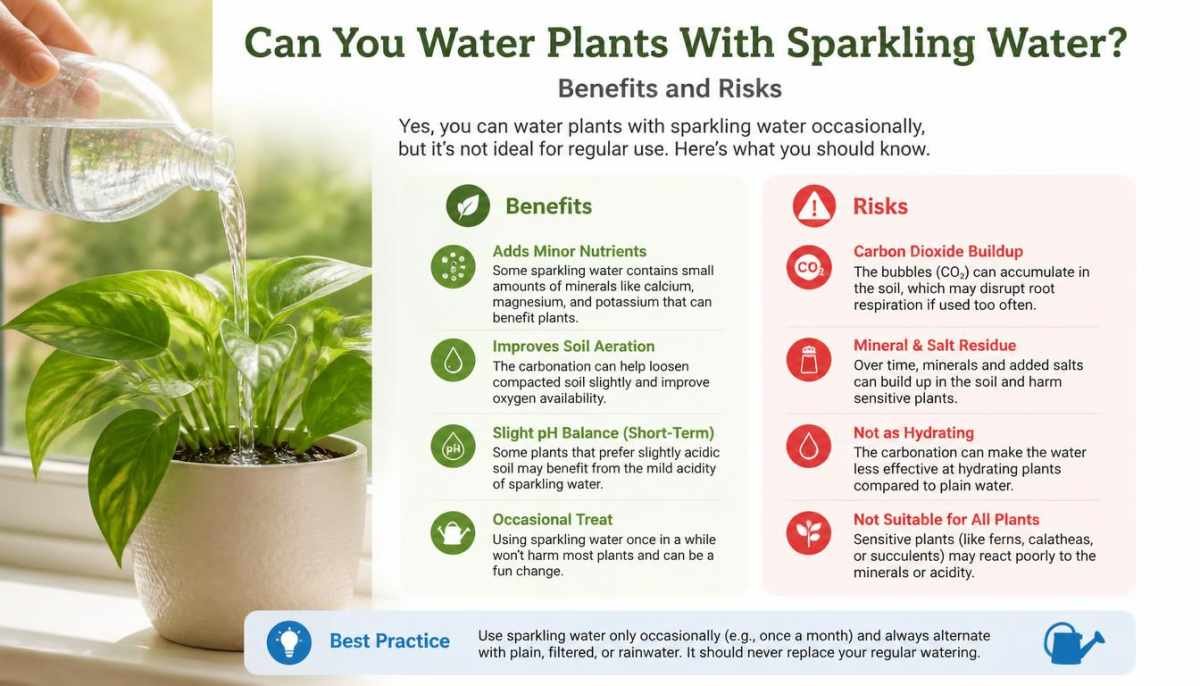
Have you ever wondered whether leftover sparkling water could help your houseplants grow? It might seem like a useful alternative to regular tap water, especially when you hear that carbon dioxide and minerals can benefit plants. But before pouring it into your favorite plant pot, there are a few things worth knowing.
Yes, you can water plants with sparkling water, provided it is plain, unsweetened, and free from added flavorings. However, that does not mean it is better than regular water. Any potential benefits depend on the water’s mineral content, the plant, and the growing conditions.
In this guide, you’ll learn how sparkling water affects plants, which types are suitable, what risks to avoid, and how to use it without harming your indoor or outdoor garden.
Can You Water Plants With Sparkling Water?
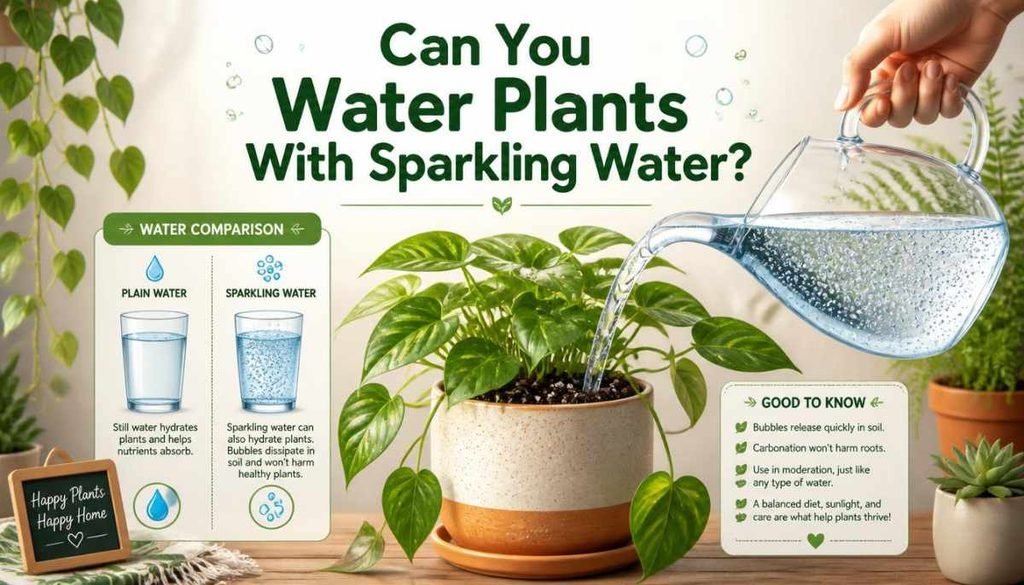
Yes, plain sparkling water can be used to water many plants occasionally. It contains dissolved carbon dioxide, which creates the bubbles, and some varieties also contain minerals such as calcium and magnesium.
However, the presence of carbon dioxide and minerals does not automatically make sparkling water a better choice for your plants. Most plants obtain the carbon dioxide they need for photosynthesis from the air through their leaves. The amount of carbon dioxide delivered through sparkling water is unlikely to provide a reliable substitute for good lighting, suitable soil, and proper watering.
Regular water remains the best everyday choice for most houseplants and garden plants. If you have leftover plain sparkling water, you can generally use it occasionally, provided its label does not show concerning levels of sodium or other additives.
Which Types of Sparkling Water Are Safe for Plants?
Not every fizzy drink is suitable for watering plants. Check the ingredients before using anything other than regular water.
- Plain sparkling water: Usually suitable for occasional use if it contains no added sugar, flavorings, or problematic levels of sodium.
- Plain seltzer water: Often a reasonable option when it contains only carbonated water.
- Mineral sparkling water: May contain calcium, magnesium, and other minerals, but its mineral content varies by brand.
- Club soda: Check the label carefully because some varieties contain added sodium or other ingredients.
- Flavored sparkling water: Avoid it if it contains added sugars, sweeteners, acids, or other ingredients that are not intended for plant watering.
- Sugary soda: Do not use it as a substitute for plant water because sugar and other additives can create problems in the growing medium.
When in doubt, use plain water. It is the simplest way to avoid introducing unnecessary substances into your plant’s soil.
Potential Benefits of Watering Plants With Sparkling Water
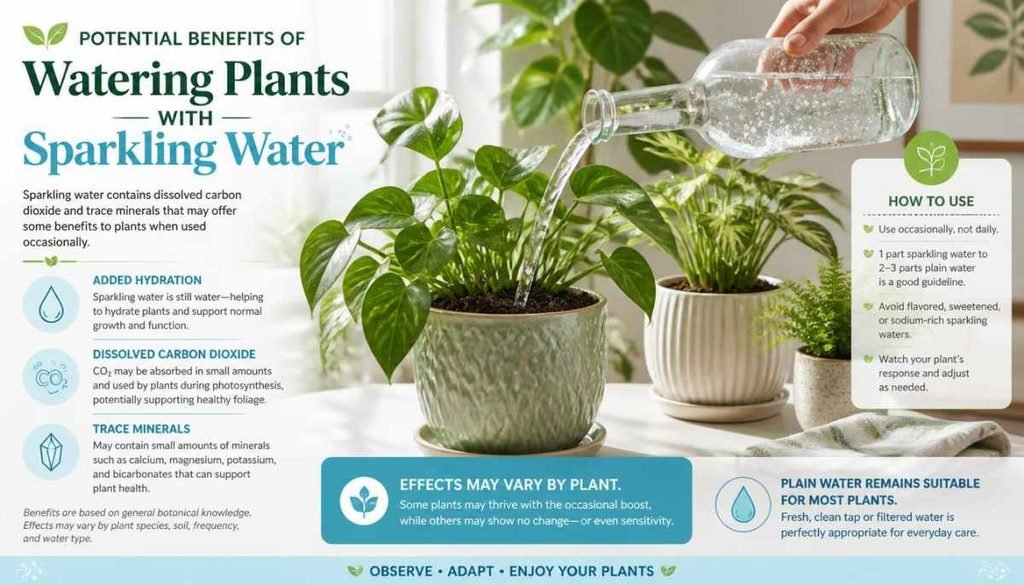
Sparkling water is sometimes promoted as a plant-growth booster. Although it contains dissolved carbon dioxide and may supply certain minerals, the practical benefits are not guaranteed.
1. It Contains Dissolved Carbon Dioxide
Sparkling water contains carbon dioxide gas dissolved under pressure. Because plants use carbon dioxide during photosynthesis, it is tempting to assume that watering them with carbonated water will help them grow faster.
However, photosynthesis primarily depends on plants absorbing carbon dioxide through their leaves. Carbon dioxide released into the soil from sparkling water does not necessarily translate into meaningful improvements in plant growth.
The effect depends on several factors, including the plant species, soil conditions, light, and how quickly the gas escapes from the water. You should not expect sparkling water to replace adequate sunlight or other essential growing conditions.
2. It May Supply Small Amounts of Minerals
Some sparkling mineral waters contain calcium, magnesium, potassium, or other dissolved minerals. Plants need certain minerals for healthy growth, but the amounts available in drinking water vary considerably.
Calcium contributes to cell structure, while magnesium is an essential component of chlorophyll. However, sparkling water should not be treated as a complete plant fertilizer.
If your plant needs additional nutrients, a suitable fertilizer used according to its label is generally a more reliable option than relying on the mineral content of bottled water.
3. It Is Slightly Acidic
Carbon dioxide dissolves in water and forms a weak acid, so plain sparkling water is often more acidic than still water. This change may temporarily affect the pH around a plant’s roots.
Some nutrients become more or less available depending on soil pH, but the result is not necessarily beneficial. The soil’s existing chemistry, buffering capacity, and the plant’s preferred pH all influence the outcome.
For most plants, there is no good reason to use sparkling water specifically to change soil acidity. If your plant has a pH-related growing problem, testing the soil and making an appropriate adjustment is a more dependable approach.
Risks of Watering Plants With Sparkling Water
Although plain sparkling water can be used occasionally, several factors may make certain products unsuitable for your plants.
1. Sodium Can Damage Plants
Sodium is one of the most important ingredients to check when choosing sparkling water for your garden.
Some mineral waters and club sodas contain sodium, and repeated use can cause salts to accumulate in the growing medium. Excessive sodium and salinity can interfere with water uptake, damage roots, and contribute to leaf browning or wilting.
Plants in containers can be particularly vulnerable because salts may accumulate when they are not adequately flushed from the potting mix.
Check the label before using sparkling water. If it contains added sodium or has a relatively high sodium content, choose another water source.
2. Sugar and Sweeteners Can Cause Problems
Sugary soft drinks are not suitable for watering plants. Their sugar content can encourage unwanted microbial activity, leave sticky residues, and attract insects or other pests.
Artificially sweetened drinks are also best avoided because their ingredients vary and they offer no dependable benefit to plants.
Even if a beverage looks clear and contains bubbles, that does not mean it is suitable for your garden. Use water without added sugars, syrups, or unnecessary ingredients.
3. Flavorings and Acids May Affect the Soil
Citrus-flavored sparkling water and other flavored drinks may contain added acids, flavorings, preservatives, or sweeteners.
These ingredients are not intended to support plant growth. Depending on their composition and how often they are used, they may affect soil conditions or contribute unwanted substances to the potting mix.
Plain, unflavored sparkling water is a safer choice if you want to try this watering method.
4. Excessive Acidity May Not Suit Every Plant
The acidity of sparkling water varies by product, and its effect on soil depends on the growing medium and watering frequency.
Some plants prefer slightly acidic soil, while others grow better in different pH conditions. Repeatedly adding acidic water without understanding your plant’s needs may be unhelpful, particularly if the soil already has a suitable pH.
Occasional use is different from making sparkling water your plant’s main water source. For routine care, use water appropriate for the plant and your local growing conditions.
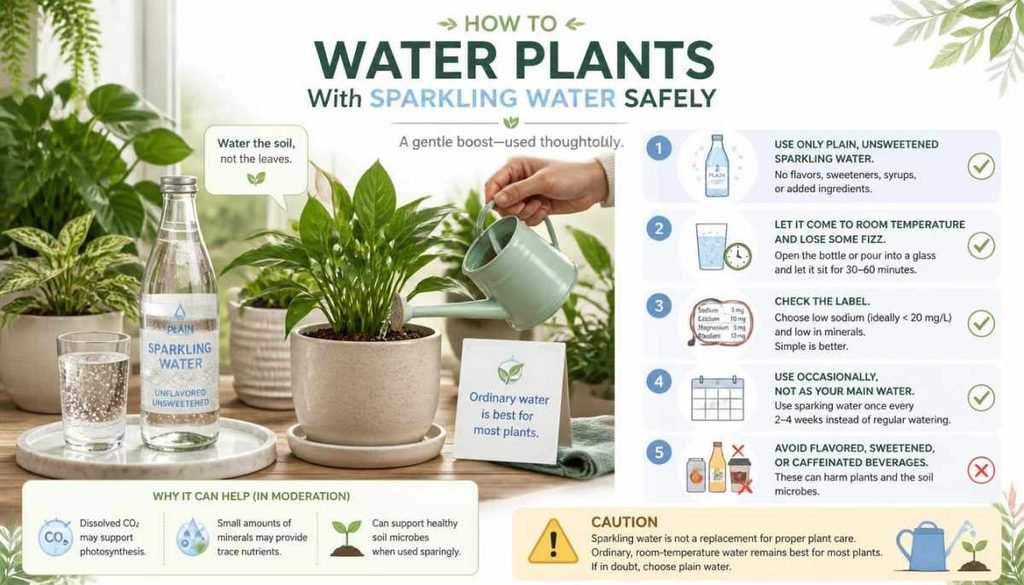
How to Water Plants With Sparkling Water Safely
If you have leftover plain sparkling water and want to use it on your plants, follow a few simple precautions.
Step 1: Check the Ingredients
Read the label before pouring anything into the soil. Look for plain carbonated water without sugar, sweeteners, flavorings, or added sodium.
If the product contains several ingredients or you are unsure about its mineral content, use regular water instead.
Step 2: Let the Bubbles Settle
Allow the sparkling water to sit until much of the carbonation has escaped. This is a sensible precaution that makes it easier to pour and handle.
However, letting the bubbles disappear does not remove sodium, added minerals, sweeteners, or other dissolved substances. You still need to check the ingredients.
Step 3: Water the Soil, Not the Leaves
Pour the water slowly onto the soil around the plant’s base, as you would with regular water. Avoid repeatedly soaking the leaves, especially if the plant is susceptible to leaf diseases or has delicate foliage.
Water according to the plant’s needs rather than following a fixed schedule. Some plants need the soil to dry slightly between waterings, while others prefer more consistent moisture.
Step 4: Use It Occasionally
Do not replace your plant’s regular water supply with sparkling water simply because it contains carbon dioxide.
Use it occasionally if it is plain and suitable, but rely on an appropriate water source for routine care. If you notice unusual leaf discoloration, wilting, or other changes after using it, stop and review your watering practices.
Step 5: Watch Your Plant’s Response
Different plants respond differently to their growing conditions. Pay attention to soil moisture, leaf color, new growth, and the condition of the roots if you suspect a problem.
Remember that changes in plant health can result from overwatering, poor drainage, inadequate light, pests, or nutrient deficiencies. Do not assume sparkling water is responsible for every change.
Can You Water Indoor Plants With Sparkling Water?
Yes, many indoor plants can tolerate occasional watering with suitable plain sparkling water. However, there is little reason to choose it over regular water for everyday houseplant care.
Container plants deserve particular attention because their roots have limited space and dissolved salts can build up in the potting mix.
For popular houseplants such as pothos, snake plants, spider plants, and peace lilies, focus on their individual watering needs, drainage, light requirements, and suitable growing medium. These factors are much more important than whether the water contains bubbles.
If you want to experiment, try a small amount on one established plant rather than changing the watering routine for your entire collection. Avoid experimenting with plants that are already stressed, recently repotted, or struggling with root problems.
Can You Use Sparkling Water for Outdoor Plants?
Plain sparkling water can also be used occasionally for suitable outdoor plants, but regular water is generally more practical.
Garden soil often contains a complex mix of minerals, organic matter, and microorganisms. The effect of a small amount of carbonated water on this environment is difficult to predict, and any potential benefit may be limited.
For outdoor plants, concentrate on maintaining suitable soil moisture, improving drainage, adding compost when appropriate, and applying fertilizer when needed.
If you have a large garden, using bottled sparkling water is also unlikely to be an economical watering strategy. Rainwater or another suitable regular water source is generally more practical.
Sparkling Water vs. Regular Water for Plants
Both can provide moisture, but they are not equally useful for everyday plant care.
| Feature | Plain Sparkling Water | Regular Water |
| Provides moisture | Yes | Yes |
| Contains dissolved carbon dioxide | Yes, while carbonated | Usually much less |
| May contain minerals | Depends on the product | Depends on the source |
| May contain added sodium | Some products do | Depends on the source |
| Suitable for routine watering | Usually unnecessary | Best general choice |
| Potential to improve plant growth | Benefits are uncertain | Supports growth when used appropriately |
The main difference is that sparkling water contains dissolved carbon dioxide and may contain varying amounts of minerals. These differences do not guarantee better growth.
For most gardeners, regular water combined with suitable light, soil, drainage, and nutrients is the more dependable approach.
Common Mistakes to Avoid
If you decide to use sparkling water on your plants, avoid these common mistakes:
- Using sugary soda: Sugar and other additives make soft drinks unsuitable for routine plant watering.
- Ignoring the sodium content: Repeatedly using sodium-rich water can damage plants and contribute to salt accumulation.
- Assuming bubbles mean better growth: Carbonation does not automatically improve photosynthesis or root health.
- Using it as fertilizer: Sparkling water does not provide a complete balance of nutrients for healthy plant growth.
- Changing your watering routine unnecessarily: Plants need an appropriate amount of moisture, not a special type of water.
- Using it on every plant without checking its needs: Plant species, soil conditions, and water quality all influence what is suitable.
Frequently Asked Questions
Can you water plants with sparkling water every day?
It is better not to use sparkling water as your everyday watering source. Plain sparkling water may be suitable occasionally, but regular water is generally more practical. Repeated use of products containing excess sodium or minerals can cause problems.
Does sparkling water help plants grow faster?
There is not enough reliable evidence to recommend sparkling water as a dependable way to speed up plant growth. Although it contains dissolved carbon dioxide and may contain minerals, healthy growth depends on suitable light, water, nutrients, and growing conditions.
Is sparkling water good for houseplants?
Plain, unsweetened sparkling water can be used occasionally on many houseplants, provided its mineral and sodium content is suitable. However, it offers no established advantage over regular water for most houseplants.
Can you water plants with flavored sparkling water?
It is best to avoid flavored sparkling water, particularly products containing added sugar, sweeteners, acids, or other additives. Plain water is a safer option.
Can you water plants with club soda?
Check the label first. Some club sodas contain added sodium or other ingredients that may be unsuitable for plants. Plain carbonated water without problematic additives is a better choice.
Should sparkling water be flat before watering plants?
Letting the bubbles settle is a reasonable precaution, but it does not make unsuitable water safe. Sodium, minerals, and other dissolved ingredients remain in the water after the carbonation escapes.
Is sparkling mineral water safe for all plants?
No single type of sparkling mineral water is ideal for every plant. Mineral content varies, and some products contain enough sodium or dissolved salts to be unsuitable for repeated use. Check the label and consider your plant’s needs.
Can sparkling water replace plant fertilizer?
No. Sparkling water does not reliably supply all the nutrients plants need. Use an appropriate fertilizer when necessary and follow the recommended application instructions.
Is Sparkling Water Worth Using on Your Plants?
So, can you water plants with sparkling water? Yes, provided it is plain and its ingredients are suitable. But it is better viewed as an occasional alternative than as a plant-growth trick.
The possible benefits of dissolved carbon dioxide and minerals are uncertain, while sodium and unnecessary additives can create real problems when used repeatedly. For everyday watering, choose a suitable regular water source and focus on the essentials: good drainage, appropriate light, healthy soil, and a watering routine that matches your plant’s needs.
If you have a little plain sparkling water left over, occasional use is generally reasonable for many plants. Just remember that healthy plant care depends far more on consistent growing conditions than on the bubbles in your water.

Jack Rivers is the founder of Plantsopedia, dedicated to making plant care simple, science-backed, and accessible for everyone. With a deep interest in botanical care and plant psychology, he specializes in rare tropical species and organic growth techniques, helping enthusiasts understand the soil, light, and biology behind every thriving plant. When he’s not experimenting with new propagation methods, Jack is busy turning complex horticultural science into practical, everyday advice for home gardeners