
Several indoor plants are proven to filter harmful pollutants from the air inside your home. Plants like snake plants, peace lilies, pothos, and spider plants absorb toxins such as formaldehyde, benzene, and xylene through their leaves and root systems. If you want cleaner indoor air without an electric purifier running 24/7, adding the right plants is one of the most practical and low-cost solutions available. This guide covers which plants work best, how many you actually need, and exactly where to place them for maximum effect.
If you are already growing plants indoors, you may also want to read our guide on Eucalyptus Plant Benefits in Room to see how eucalyptus contributes to air quality and wellness in enclosed spaces. And if you are thinking about expanding your indoor green setup, our Kitchen Garden Plants guide is a great next step.
Do Indoor Plants Really Clean the Air?
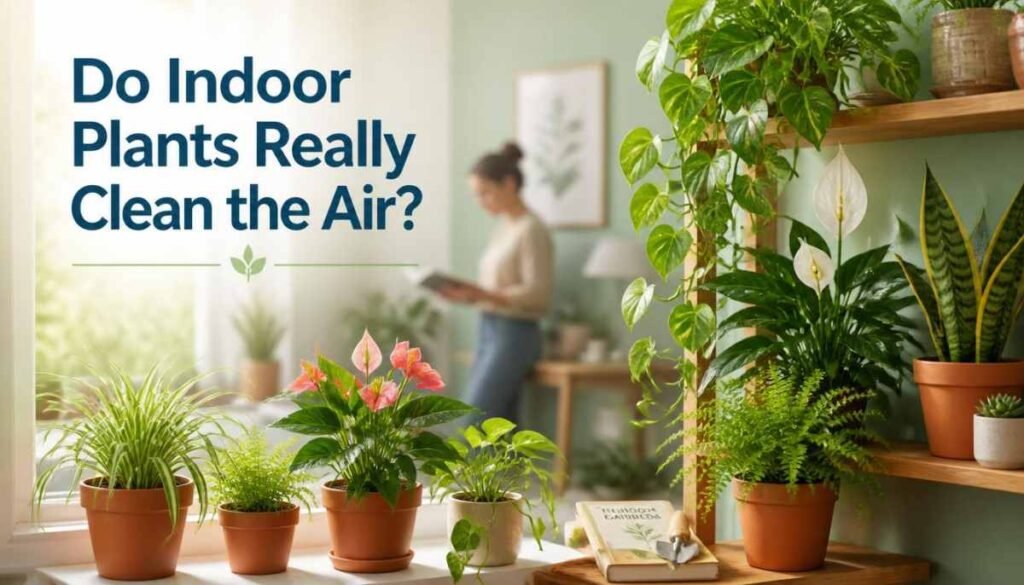
Yes, but with an honest caveat. The idea that indoor plants purify air gained widespread attention after NASA published its Clean Air Study, which showed that certain plants can absorb volatile organic compounds (VOCs) in controlled chamber conditions. In real-world homes, the effect is present but more modest than many articles suggest.
The practical takeaway is this: plants do filter toxins, improve humidity, and reduce carbon dioxide levels. However, a single plant in a large room will not transform air quality on its own. Placing multiple plants strategically around your home is where the real difference shows up.
What Pollutants Do Indoor Plants Remove?
Most air-purifying indoor plants target a specific group of VOCs that are common in homes due to furniture, paint, cleaning products, and building materials.
| Pollutant | Common Source | Plants That Target It |
| Formaldehyde | Furniture, flooring, adhesives | Spider plant, Boston fern, pothos |
| Benzene | Paints, plastics, tobacco smoke | Peace lily, snake plant, rubber plant |
| Xylene | Varnishes, adhesives, printers | Aloe vera, snake plant, spider plant |
| Ammonia | Cleaning products, fertilizers | Peace lily, chrysanthemum |
| Carbon monoxide | Gas appliances, traffic | Spider plant, pothos |
| Trichloroethylene | Adhesives, dry cleaning | Peace lily, dracaena |
Best Indoor Plants That Clean the Air
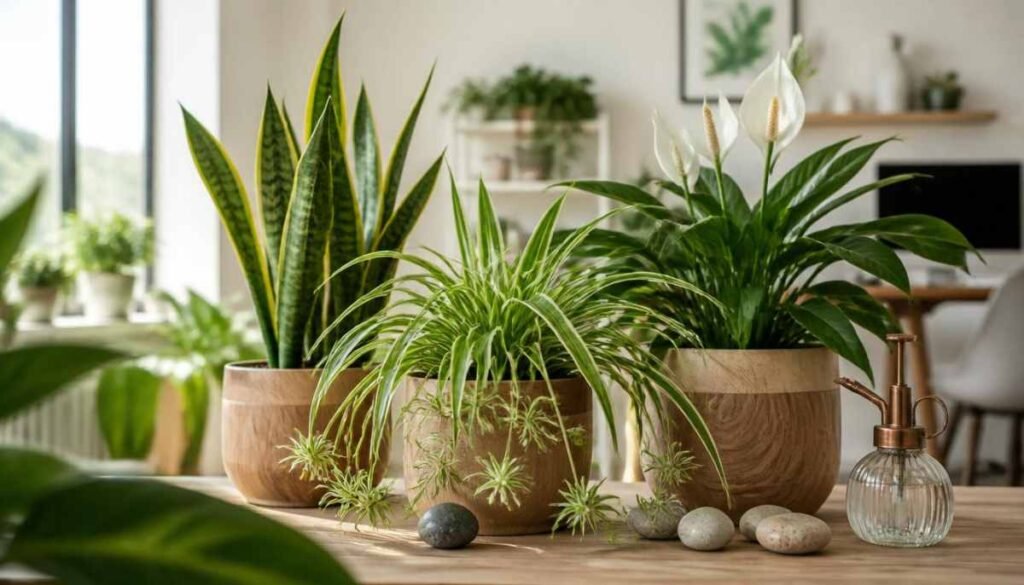
These are the most effective and widely available air-purifying houseplants. Each one is picked based on toxin absorption ability, ease of care, and suitability for typical indoor conditions.
Snake Plant (Sansevieria trifasciata)
The snake plant is one of the most recommended air-purifying plants for good reason. It absorbs benzene, formaldehyde, xylene, and trichloroethylene. What makes it especially useful is that it converts CO2 into oxygen at night, which is the opposite of most plants. This makes it ideal for bedrooms.
It tolerates low light and needs very little watering, which makes it a practical choice for beginners. One snake plant per medium-sized bedroom is a good starting point.
Peace Lily (Spathiphyllum)
Peace lilies consistently rank among the top performers for indoor air purification. They absorb benzene, formaldehyde, trichloroethylene, xylene, and ammonia. They also increase humidity slightly, which benefits respiratory health in dry climates.
One important note: peace lilies are toxic to cats and dogs. If you have pets, keep this plant out of reach or choose a pet-safe alternative like spider plants instead.
Spider Plant (Chlorophytum comosum)
Spider plants are among the safest and most effective air-purifying plants available. They are non-toxic to pets and children, which makes them an easy choice for family homes. They are particularly effective at absorbing formaldehyde and xylene.
Spider plants also produce offshoots called “spiderettes” that you can replant to grow more plants for free. A single mature spider plant can produce dozens of new plants over its lifetime.
Pothos (Epipremnum aureum)
Pothos, also called devil’s ivy, is one of the most forgiving houseplants you can own. It thrives in low light, tolerates irregular watering, and still absorbs formaldehyde, benzene, and carbon monoxide effectively.
In practice, pothos works particularly well in offices and living rooms where it can trail from a high shelf, covering a good amount of air space with minimal care effort.
Rubber Plant (Ficus elastica)
The rubber plant is a powerful air purifier with broad, waxy leaves that absorb large quantities of airborne toxins. It targets benzene, formaldehyde, and trichloroethylene. It grows well in moderate to bright indirect light and requires minimal watering once established.
Rubber plants are a good option for living rooms and hallways where you want a larger, statement plant that also contributes to air quality.
Boston Fern (Nephrolepis exaltata)
Boston ferns are among the best plants for removing formaldehyde and are also one of the most effective natural humidifiers. In dry homes or during winter months when heating strips moisture from the air, a Boston fern in the living room makes a noticeable difference.
They do require consistent moisture and indirect light, so they need slightly more attention than snake plants or pothos. A bathroom with natural light is often the best location for a Boston fern.
Aloe Vera
Aloe vera is best known for its skin benefits, but it is also a reliable air purifier. It absorbs benzene and formaldehyde effectively and, like the snake plant, releases oxygen at night. Aloe vera grows well on sunny windowsills with very little water.
Beyond air purification, the gel inside the leaves treats minor burns and skin irritation, making it one of the most practically useful plants to keep in a kitchen or bathroom.
Air-Purifying Indoor Plants Compared
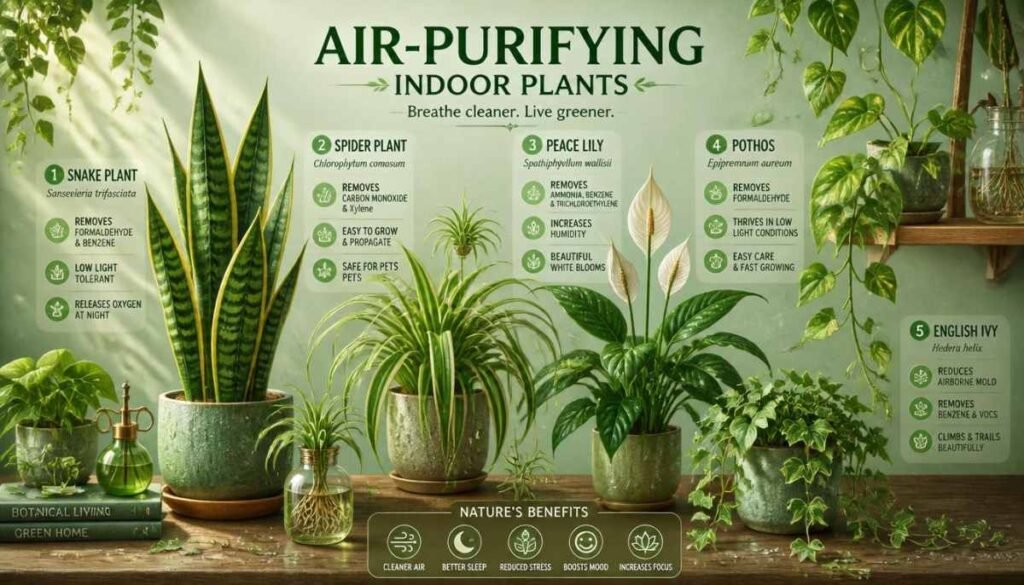
| Plant | Key Pollutants Removed | Light Needs | Care Level | Pet Safe? |
| Snake Plant | Benzene, formaldehyde, xylene | Low to bright indirect | Very easy | No |
| Peace Lily | Benzene, ammonia, formaldehyde | Low to medium | Easy | No |
| Spider Plant | Formaldehyde, xylene, CO | Low to bright indirect | Very easy | Yes |
| Pothos | Formaldehyde, benzene, CO | Low to medium | Very easy | No |
| Rubber Plant | Benzene, formaldehyde | Medium to bright indirect | Easy | No |
| Boston Fern | Formaldehyde, xylene | Indirect bright | Moderate | Yes |
| Aloe Vera | Benzene, formaldehyde | Bright direct | Very easy | No |
How Many Plants Do You Need to Clean a Room?
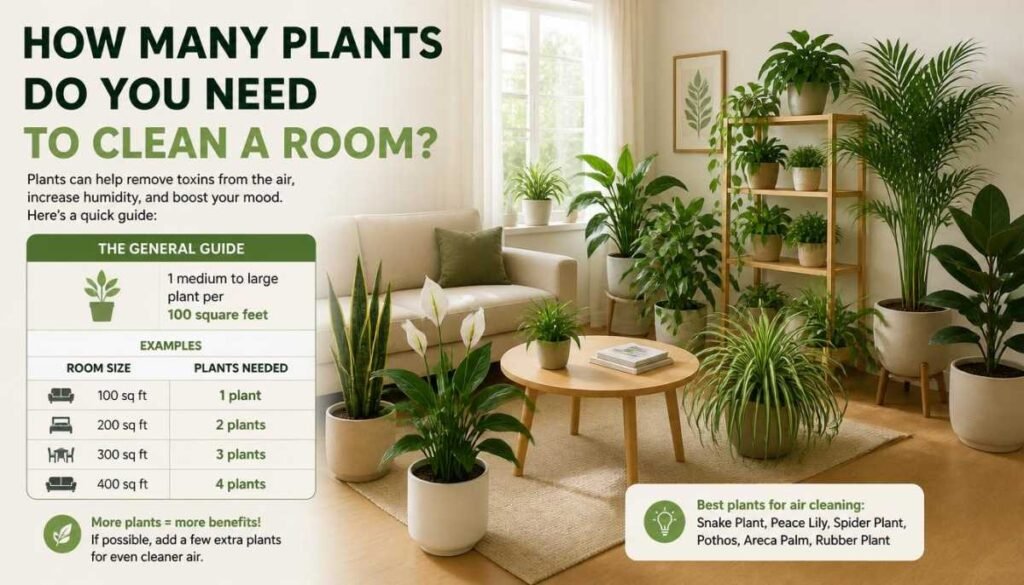
This is one of the most common questions about air-purifying plants, and the answer depends on room size. Based on horticultural guidance, a general rule is one medium-to-large plant per 10 square meters of floor space for a noticeable effect on air quality.
| Room Size | Recommended Number of Plants |
| Small room (under 15 sqm) | 2 plants |
| Medium room (15 to 25 sqm) | 3 to 4 plants |
| Large living room (25 to 40 sqm) | 5 to 6 plants |
| Open-plan space (40 sqm and above) | 7 or more plants |
Grouping plants together also creates a microclimate with higher humidity and better air exchange. Clustering three or four plants in one corner of a room often works better than spreading single plants throughout separate areas.
Where to Place Air-Purifying Plants in Your Home
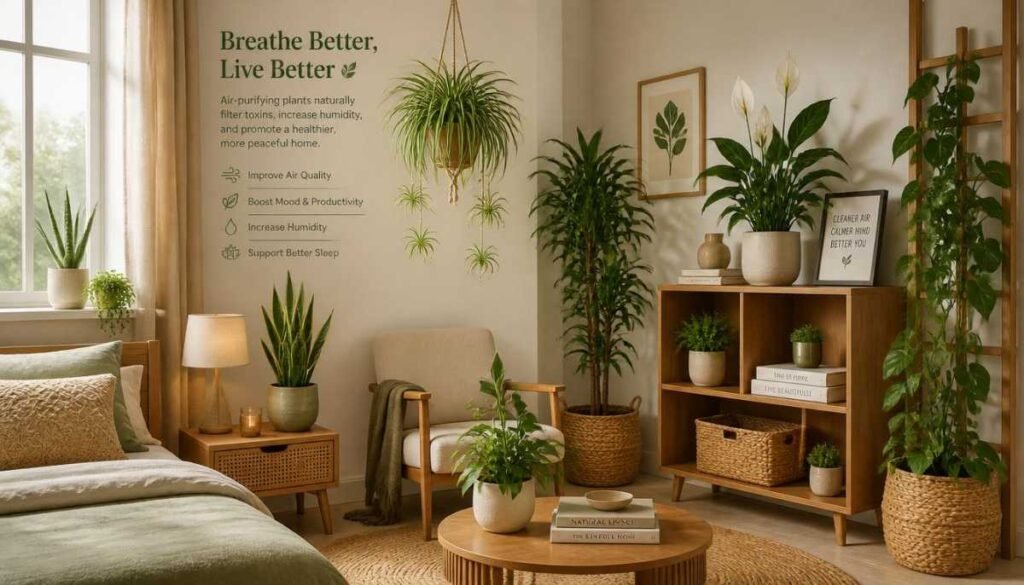
Placement matters as much as plant selection. Here is a simple room-by-room guide:
Bedroom
Snake plants and aloe vera are the best bedroom choices because both release oxygen at night rather than carbon dioxide. Place one on each side of the bed for balanced air coverage. Peace lilies work in bedrooms too, as long as pets cannot access them.
Living Room
Rubber plants, pothos, and spider plants all suit living rooms well. Pothos looks great trailing from a high shelf near a TV unit. Rubber plants work as floor-standing statement pieces near sofas. A spider plant in a hanging basket near a window handles the upper air layer effectively.
Bathroom
Boston ferns and peace lilies love the humidity of bathrooms. A bathroom with a window providing indirect light is ideal for both. These plants will absorb any residual cleaning product fumes while benefiting from the moist air around them.
Kitchen
Aloe vera belongs in the kitchen, where it pulls double duty as an air purifier and a first-aid plant for minor burns. Spider plants also do well in kitchens with moderate light. Avoid placing any sensitive plants directly above a cooking stove where heat and steam are concentrated.
Home Office
Pothos and snake plants are ideal for offices. They tolerate the artificial lighting conditions that most offices rely on and absorb VOCs from printers, adhesives, and synthetic furniture finishes. A snake plant on the desk and a pothos trailing from a shelf creates a simple, effective air-cleaning setup.
FAQ: Which Indoor Plant is Best for Cleaning Air?
Which indoor plant is best for cleaning air?
The snake plant is widely considered one of the best indoor plants for air purification. It helps remove toxins, releases oxygen at night, and grows well in low-light conditions with very little care.
Do indoor plants actually improve air quality?
Yes, indoor plants can improve air quality, but the effect depends on how many plants you have and the size of the room. A few plants in a large space may have a small impact, while multiple plants together can make a noticeable difference over time.
Which plant removes the most toxins from indoor air?
Peace lilies are known for filtering a wide range of toxins such as formaldehyde and benzene. However, they are toxic to pets, so they should be kept out of reach in homes with animals.
Are air-purifying plants safe for pets?
Not all indoor plants are pet-safe. Spider plants and Boston ferns are generally safe, but plants like snake plants and peace lilies can be harmful if pets eat them.
FAQ: Which Indoor Plant is Best for Cleaning Air?
Which indoor plant is best for cleaning air?
The snake plant is widely considered one of the best indoor plants for air purification. It helps remove toxins, releases oxygen at night, and grows well in low-light conditions with very little care.
Do indoor plants actually improve air quality?
Yes, indoor plants can improve air quality, but the effect depends on how many plants you have and the size of the room. A few plants in a large space may have a small impact, while multiple plants together can make a noticeable difference over time.
Which plant removes the most toxins from indoor air?
Peace lilies are known for filtering a wide range of toxins such as formaldehyde and benzene. However, they are toxic to pets, so they should be kept out of reach in homes with animals.
Are air-purifying plants safe for pets?
Not all indoor plants are pet-safe. Spider plants and Boston ferns are generally safe, but plants like snake plants and peace lilies can be harmful if pets eat them.

Jack Rivers is the founder of Plantsopedia, dedicated to making plant care simple, science-backed, and accessible for everyone. With a deep interest in botanical care and plant psychology, he specializes in rare tropical species and organic growth techniques, helping enthusiasts understand the soil, light, and biology behind every thriving plant. When he’s not experimenting with new propagation methods, Jack is busy turning complex horticultural science into practical, everyday advice for home gardeners