
Most gardeners grow cucumbers and hope for the best. They water regularly, check for pests, and wait. But one simple task separates a plant that produces a handful of cucumbers from one that produces dozens. That task is pruning.
Pruning cucumber plants takes less than ten minutes per week. Done correctly it improves airflow, reduces disease, directs energy into fruit production, and makes harvesting significantly easier. Done incorrectly, or skipped entirely, the plant turns into a tangled vine that produces less fruit and is far more prone to disease.
This guide explains exactly how to prune cucumber plants, what to cut, what to leave alone, and the mistakes that cost gardeners fruit every season.
Should Cucumber Plants Be Pruned
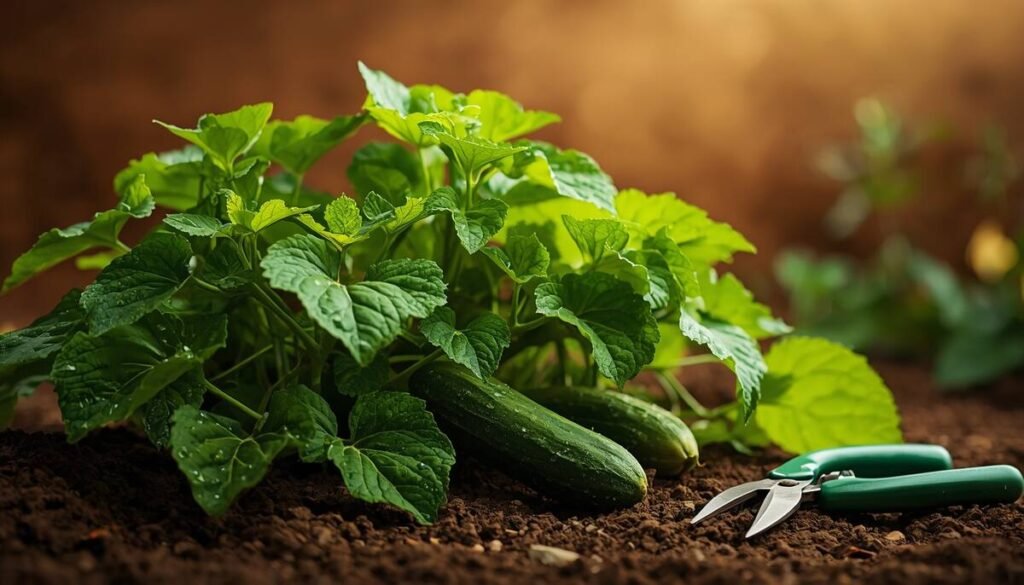
The answer depends on the variety you are growing.
Vining cucumber varieties, which send out long running stems and climb a trellis or spread across the ground, benefit strongly from regular pruning. These are the most commonly grown cucumbers in home gardens and include varieties like Marketmore, English Telegraph, and Sweet Success. Left unpruned they become dense, tangled masses that trap humidity, block light from reaching developing fruit, and create ideal conditions for fungal disease.
Bush cucumber varieties are compact and self-limiting in their growth. They do not send out long lateral runners in the same way and generally do not need pruning beyond removing damaged or diseased leaves. If you are growing a bush variety, light maintenance pruning is enough.
For the rest of this guide the focus is on vining cucumbers, which is what the majority of home gardeners grow.
Parts of a Cucumber Plant You Need to Know Before You Prune
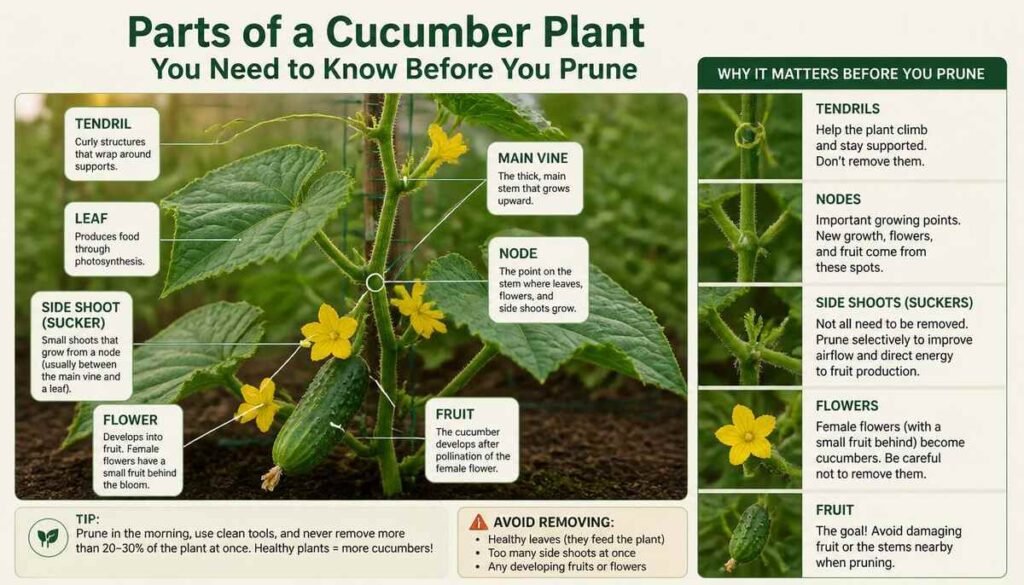
Before making any cuts it helps to know the parts of the plant and what each one does.
The main vine is the central stem that runs vertically up a trellis or along the ground. This is the backbone of the plant and should never be cut unless you are intentionally topping the plant, which is explained in a later section.
Lateral shoots, also called suckers or side shoots, grow out from the nodes along the main vine. Each node is the point where a leaf attaches to the stem. In the junction between the main stem and the leaf stalk, a small shoot emerges. This is the lateral shoot. Removing these is the core of cucumber pruning.
Tendrils are the thin, curling structures the plant uses to grip supports and climb. They do not harm the plant and generally do not need to be removed unless they are gripping the wrong surface or becoming tangled.
Leaves on the lower portion of the plant shade the soil, trap moisture against the stem, and are the first to show signs of disease.
Don’t prune your cucumber plants too aggressively! Cucumbers produce fruit on their side shoots (laterals). The male blossoms appear first to pollinate, followed by the female blossoms, which you can spot by the tiny miniature cucumber at the base of the flower. Cutting back too many side shoots means cutting away your future harvest.
When to Prune Cucumber Plants
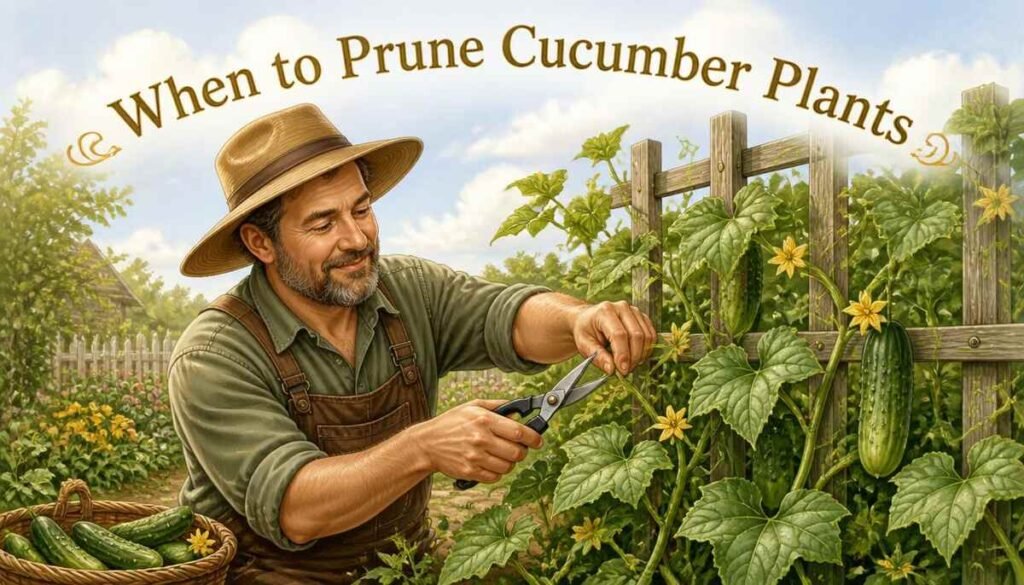
Pruning happens at three stages of the plant’s life and each stage has a different focus.
Seedling Stage
When your cucumber seedling has four to six true leaves and begins sending out its first lateral shoots, this is the right time to start. At this early stage the laterals are tiny, usually under two centimeters, and can be pinched off with clean fingers rather than tools. Removing them early redirects energy into building a strong main vine rather than spreading growth in too many directions at once. Keep the pruning very light at this stage. The plant is still establishing itself.
Active Growth Stage
Once the plant is climbing a trellis and producing flowers, the pruning focus shifts. This is when you remove the lower leaves on the main vine up to the first five to eight nodes from the ground. This zone of the plant receives the least light and airflow and is most vulnerable to soil-borne disease. Clearing it out creates better air circulation around the base of the plant.
During active growth continue removing lateral shoots that are growing in crowded areas or that are shading developing fruit. Do not remove every lateral because female flowers grow on these shoots. Focus on laterals in the lowest third of the plant and on any that are clearly overcrowding the vine.
Harvest Stage
Pruning and harvesting should go hand in hand throughout the growing season. Remove any yellow, brown, or damaged leaves as soon as they appear. These older leaves no longer contribute much to photosynthesis and can attract pests or encourage disease, reducing the plant’s overall health.
Harvest cucumbers as soon as they reach their ideal size instead of leaving them on the vine. Mature fruits signal the plant to slow down new production. By picking cucumbers regularly and removing unhealthy leaves at the same time, you encourage continuous growth and enjoy a longer, more productive harvest.
.
How to Prune Cucumber Plants Step by Step
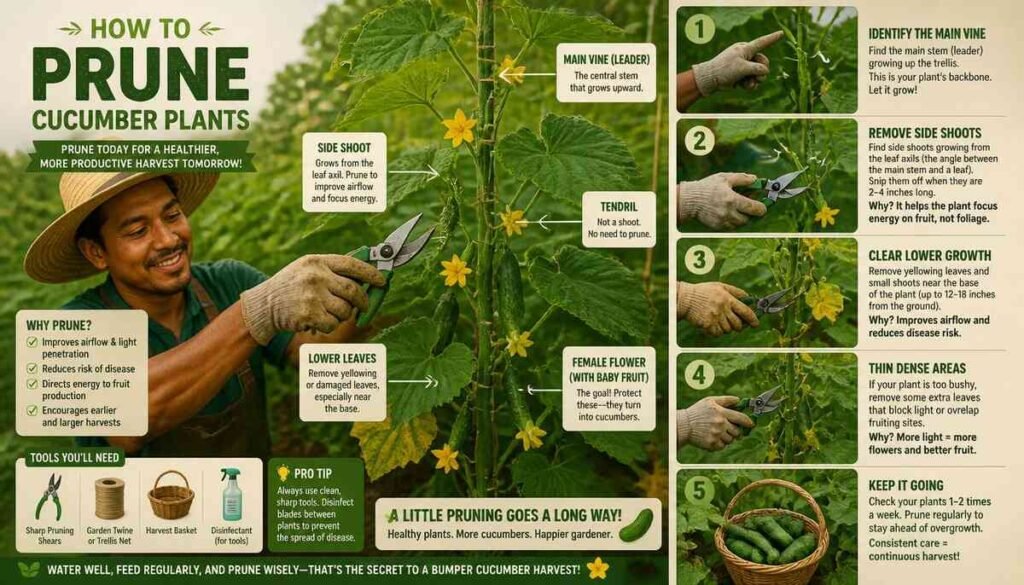
Step 1: Prepare Clean Tools
Use sharp scissors or bypass pruning shears. Dull blades crush stems rather than cutting them cleanly, which creates larger wounds that heal slowly and invite disease. Before you start wipe the blades with isopropyl alcohol or a diluted bleach solution. This prevents the transfer of disease from other plants in the garden.
Step 2: Identify the Main Vine
Find the central stem running vertically up your trellis or along the ground. This is what you are protecting. Every cut you make is to lateral growth, not to this main stem.
Step 3: Remove Lateral Shoots in the Lower Third
Look at the bottom third of the plant, from the soil up to roughly the first five to eight leaf nodes. Identify the lateral shoots emerging from the junctions between the main stem and each leaf. Clip these off close to the main stem. Do not leave a stub. A clean cut close to the stem heals faster and leaves less material for disease to enter.
Step 4: Remove Damaged and Yellow Leaves
Work up the plant removing any leaf that is yellow, brown, spotted, or clearly diseased. Remove leaves that are heavily shaded by other growth and are no longer receiving useful light.
Step 5: Thin Crowded Areas
In the middle and upper portions of the plant, look for areas where lateral growth has become very dense. If multiple laterals are growing close together and blocking airflow, remove the weakest ones and leave the ones that have flowers or developing fruit attached.
Step 6: Check Tendrils and Redirect if Needed
If tendrils have grabbed onto the wrong support or are wrapping around other parts of the plant, gently unwind them and redirect the vine. You can trim tendrils that are causing problems but in most cases they do not need to be removed.
Step 7: Clean Up
Remove all cut material from around the base of the plant. Diseased leaves left on the soil can reinfect the plant through soil splash during watering. Dispose of diseased material rather than composting it.
What Leaves to Cut Off Cucumber Plants
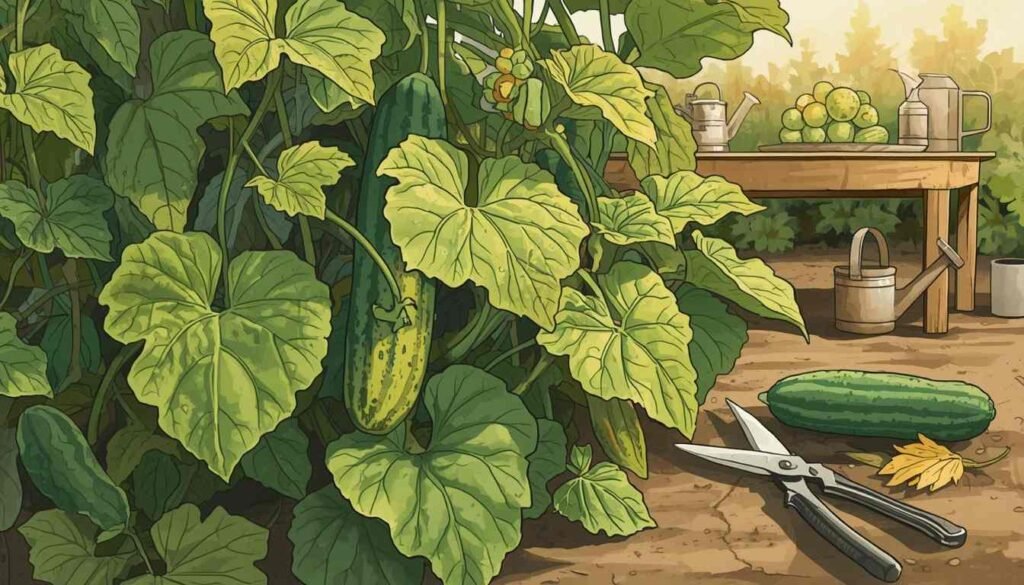
This is one of the most common questions for gardeners starting to prune for the first time.
Cut off leaves that are yellow or brown. A yellow leaf is no longer performing photosynthesis effectively and is drawing energy away from productive growth rather than contributing to it.
Cut off leaves that show spots, powdery coating, or other signs of disease. Removing them quickly prevents spread to healthy growth. This is one of the most important reasons to prune regularly and catch problems early.
Cut off leaves in the lowest five to eight nodes of the main vine. These leaves are closest to the soil, receive the least light, and are most vulnerable to disease from soil contact and poor airflow.
Cut off leaves that are heavily shaded by upper growth and are clearly not receiving useful light. These contribute little to the plant while still requiring resources to maintain.
Can You Cut the Top Off a Cucumber Plant

Yes, and this technique is called topping. It means cutting the main vine at the growing tip to stop upward growth and redirect the plant’s energy into lateral production and fruit development.
Topping is useful in specific situations. If your plant has reached the top of its trellis and you want to encourage more lateral growth below the top, cutting the tip stops upward extension and causes the plant to push energy into the side shoots. In a greenhouse or indoor growing setup where height is limited, topping is a practical management technique.
However, topping should be done carefully and at the right time. Do not top a young plant that has not yet established strong lateral growth. Do not top a plant that is already struggling with disease or poor root development. Top only when the plant is healthy, well-established, and has already produced strong laterals along the main vine.
When you do top a cucumber plant, make a clean cut just above a leaf node using sterilized shears. The plant will redirect its growth energy into the laterals below the cut and into the fruit already developing on those shoots.
When to Cut Cucumber Off a Plant
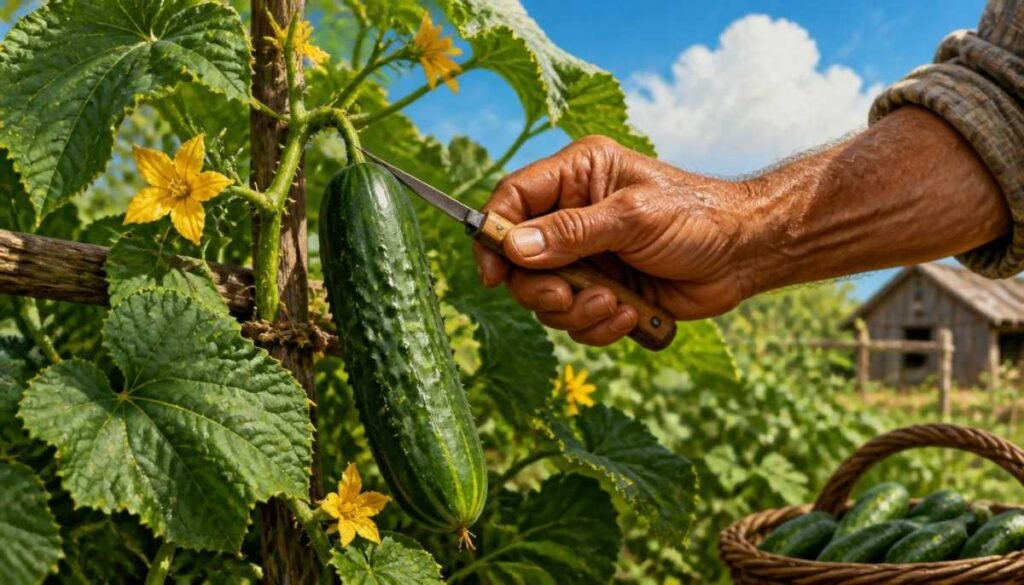
Knowing when to harvest is as important as knowing how to prune. Cucumbers left on the vine too long signal the plant to reduce or stop producing new fruit.
For slicing cucumbers, harvest when the fruit reaches six to nine inches in length, depending on the variety. The skin should be firm and uniformly green. A cucumber that has started to yellow is overripe and will taste bitter.
For pickling cucumbers, harvest smaller, usually two to four inches, when the skin is still firm and brightly colored.
Check plants every one to two days during peak production. Cucumbers grow very quickly and a fruit that was the right size yesterday can be overripe the next morning. Frequent harvesting, combined with consistent pruning, keeps the plant in active production mode for much longer than infrequent picking.
If you find a cucumber that has been missed and gone to seed, remove it immediately. A seeding cucumber sends a strong hormonal signal telling the plant its job is done and production slows significantly.
For more practical garden management guides including how to handle common pest problems that affect vegetable crops, visit the deer deterrent plants section at Plantsopedia.
Also Read : Watermelon Plant Care Guide: Grow Sweet & Juicy Fruits Fast
Common Cucumber Pruning Mistakes to Avoid
Pruning Too Aggressively
Removing too many leaves and laterals at once shocks the plant and reduces the number of sites where fruit can develop. Never remove more than one third of the plant’s leaf area in a single session. If the plant needs significant work, spread the pruning over two or three sessions a few days apart.
Cutting the Main Vine
The main vine is the foundation of the entire plant. Accidentally cutting it stops all upward growth permanently and the plant cannot recover. Always identify the main vine clearly before making any cuts and work around it carefully.
Using Dirty Tools
Transferring disease from plant to plant through unsterilized tools is one of the most common causes of preventable disease spread in home gardens. Wipe blades clean between plants and especially after cutting diseased material.
Removing Laterals With Female Flowers
Female flowers, identifiable by the small proto-cucumber at their base, are where your harvest comes from. Removing laterals that carry female flowers eliminates those cucumbers before they ever develop. Always check a lateral for flowers before cutting it.
Pruning in the Middle of the Day
Pruning in hot midday sun stresses the plant and leaves fresh cuts exposed to the most intense heat and UV, which slows healing. Prune in the early morning or late afternoon when temperatures are cooler and the plant is under less stress.
Not Pruning at All
For vining varieties, skipping pruning entirely is a mistake that compounds over the season. Dense unpruned growth traps humidity, blocks light, hides pests, and significantly reduces yield compared to well-maintained plants.
Also Read : Deer Deterrent Plants for a Safe and Healthy Garden
Final Thoughts
Pruning cucumber plants is one of those garden tasks that pays back far more than the time it takes. A few minutes every week removes disease pressure, improves airflow, keeps the plant directing energy into fruit rather than excess foliage, and makes harvesting easier from the first fruit to the last.
Start with the basics. Remove yellow and diseased leaves. Clear the lower nodes. Cut lateral shoots in the most crowded areas. Work through the plant calmly and do not over-prune in a single session. As you do it more often the process becomes faster and the results in the garden become clearly visible.
For more plant care guides covering everything from vegetable crops to indoor plants, explore the full collection at plantsopedia.com.
Frequently Asked Questions
Should cucumber plants be pruned?
Yes. Vining cucumber varieties benefit greatly from regular pruning throughout the growing season, while bush varieties usually require only light maintenance. Regular pruning improves airflow, reduces the risk of disease, and encourages the plant to produce more healthy cucumbers.
What leaves should you cut off cucumber plants?
Remove yellow, brown, damaged, spotted, or diseased leaves, along with the leaves growing on the lowest five to eight nodes of the main vine. Keep the healthy green leaves in the middle and upper parts of the plant because they provide the energy needed for continued growth and fruit production.
Can you cut the top off a cucumber plant?
Yes. Cutting the growing tip of the main vine, a technique known as topping, encourages the plant to redirect its energy into side shoots and fruit development. This method is most effective after the vine reaches the top of its trellis or other support.
When should you pick cucumbers from the plant?
Harvest slicing cucumbers when they are about six to nine inches long and pickling cucumbers when they reach two to four inches. Check the plants every one to two days during peak harvest season. If a cucumber turns yellow or becomes overripe, remove it immediately so the plant continues producing new fruit.

Jack Rivers is the founder of Plantsopedia, dedicated to making plant care simple, science-backed, and accessible for everyone. With a deep interest in botanical care and plant psychology, he specializes in rare tropical species and organic growth techniques, helping enthusiasts understand the soil, light, and biology behind every thriving plant. When he’s not experimenting with new propagation methods, Jack is busy turning complex horticultural science into practical, everyday advice for home gardeners