
To grow strawberries successfully, start with healthy starter plants and place them in nutrient-rich, well-drained soil so the roots can establish quickly. The key rule is to keep the crown at soil level, since planting it too deep can cause rot, while planting it too high can dry out the roots.
Strawberries are highly rewarding because they produce fruit quickly and can keep yielding for several seasons when planted correctly. Most beginners struggle not because strawberries are hard to grow, but because small planting mistakes affect root growth, spacing, and long-term plant health.
This guide breaks everything down in a simple, practical way so you understand what to do and why each step is important.
Quick Guide to Planting Strawberries (Step-by-Step Overview)
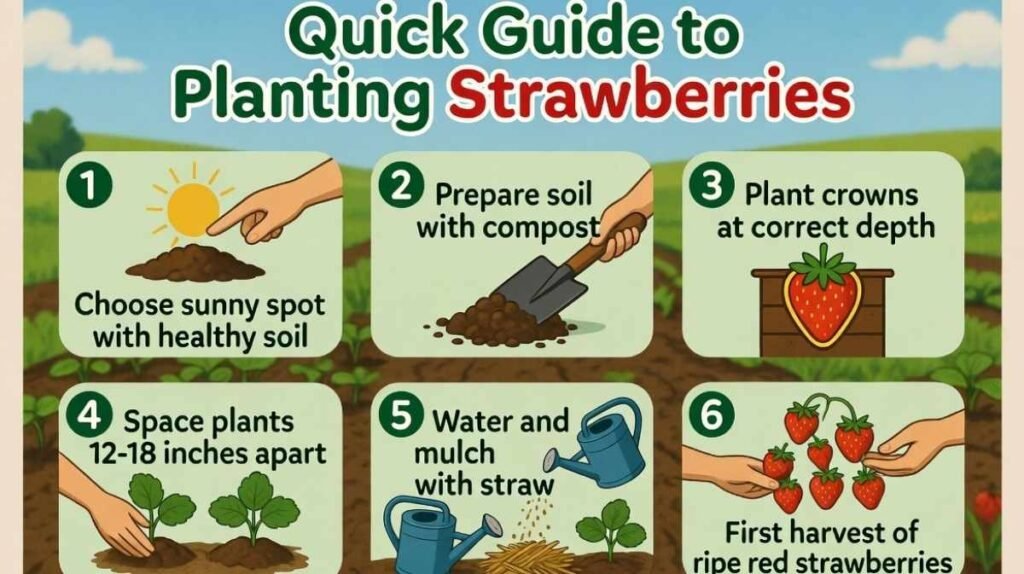
Planting strawberries starts with choosing healthy starter plants such as bare root or nursery-grown strawberries because they establish faster and produce fruit sooner than seeds. After selecting plants, the next step is preparing a sunny location since strawberries need strong sunlight for healthy growth and fruit production.
Once the location is ready, prepare soil that is loose, fertile, and well-draining. Dig small holes and place each plant carefully so the crown sits exactly at soil level. After planting, gently firm the soil, water thoroughly, and apply mulch to maintain moisture and control weeds. In the first few weeks, consistent care helps the roots establish properly, which directly affects future fruit yield.
Best Way to Plant Strawberries for Beginners
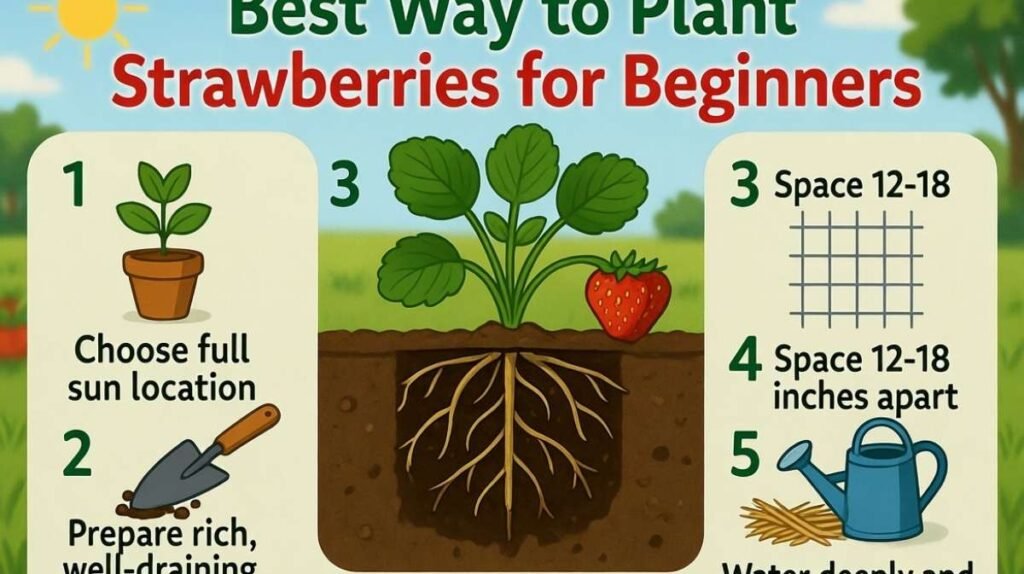
For beginners, the most reliable method is using bare root or plug plants because they are easier to establish and produce faster results compared to seeds. Bare root plants are especially popular because they adapt quickly once planted and are cost-effective for larger gardens. Plug plants are slightly more developed, making them easier to handle and less sensitive during transplanting.
Nursery-grown plants are the simplest option for beginners because they are already established and require less effort to grow successfully. However, they are usually more expensive. Seeds, while possible, take much longer to grow and are not ideal for beginners who want quick and consistent results.
Also Read : Mother of Pearl Plant Care Tips for Fast Healthy Growth
Preparing Soil for Strawberries (Why Soil Quality Matters)
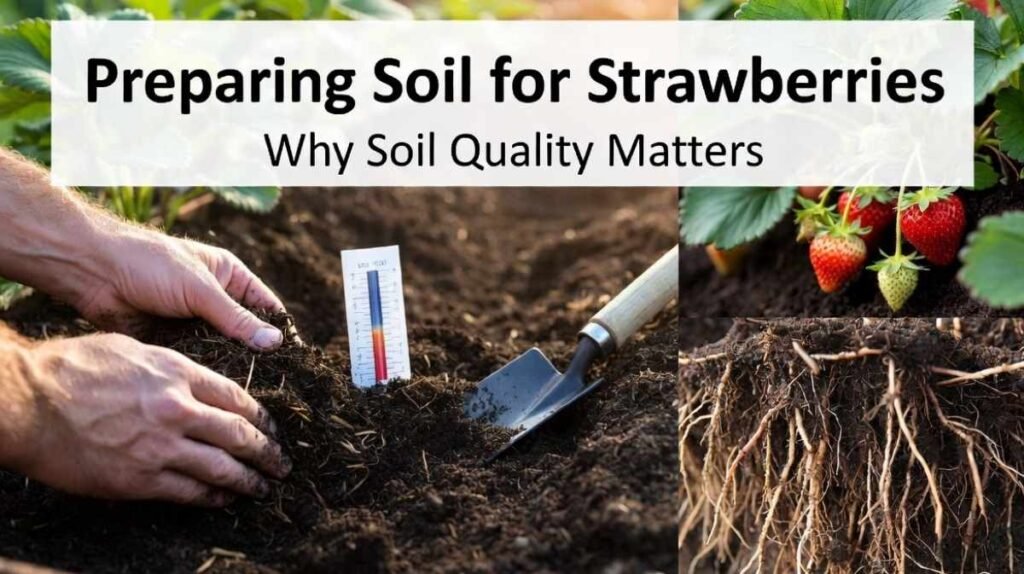
Strawberries grow best in soil that is slightly acidic, rich in organic matter, and well-draining. A pH range between 5.5 and 6.5 is ideal because it allows the plant to absorb nutrients efficiently. Loose soil helps roots spread easily, while good drainage prevents water from sitting around the roots, which can lead to rot.
In practice, adding compost before planting improves soil structure and fertility significantly. If the soil is heavy or clay-like, raised beds or containers are a better choice because they give better control over drainage and root health.
Choosing Strawberry Plants (Understanding Your Options)
Bare Root Strawberry Plants
Bare root strawberries are dormant plants without soil. Once planted, they quickly adapt and begin developing strong root systems, making them one of the most popular choices for home gardeners.
Strawberry Plugs
Strawberry plugs are young plants grown in small containers with established roots. They are easier to transplant and tend to establish faster than bare root plants, especially in less experienced hands.
Nursery-Grown Plants
Nursery-grown plants are fully started and already actively growing. These are the easiest for beginners because they require minimal adjustment after planting, although they tend to cost more than other options.
How Deep to Plant Strawberries (Critical Success Factor)
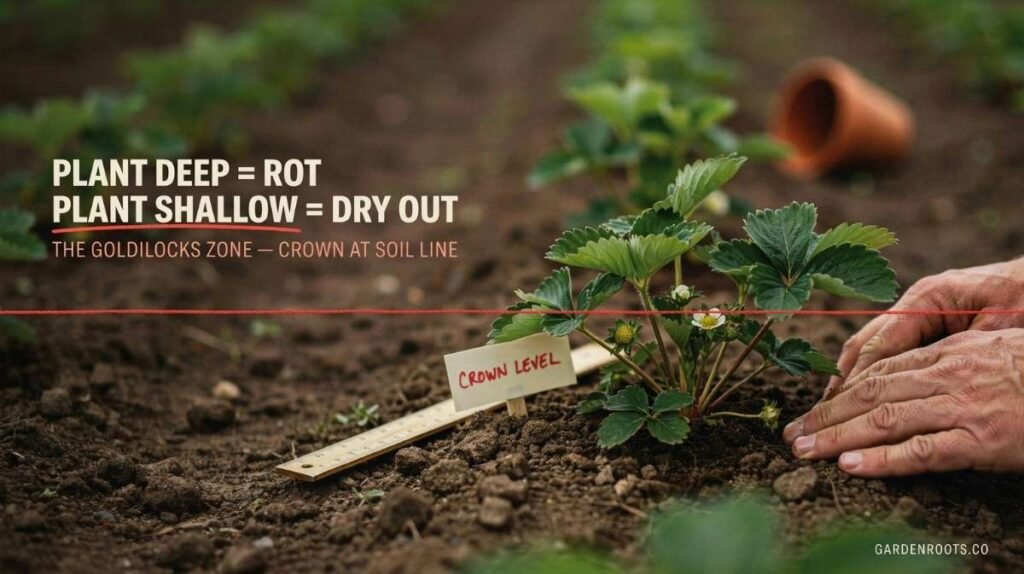
Correct planting depth is essential for healthy strawberry growth. The most important rule is that the crown of the plant must always remain exactly at soil level. The crown is the center point where the leaves and roots meet.
If the crown is planted too deep, it can trap moisture and begin to rot, which often kills the plant. If it is planted too high above the soil, the roots may dry out and fail to establish properly. In real gardening situations, this is one of the most common reasons strawberry plants do not survive the first season.
Strawberry Plant Spacing Methods (Why Spacing Matters)`
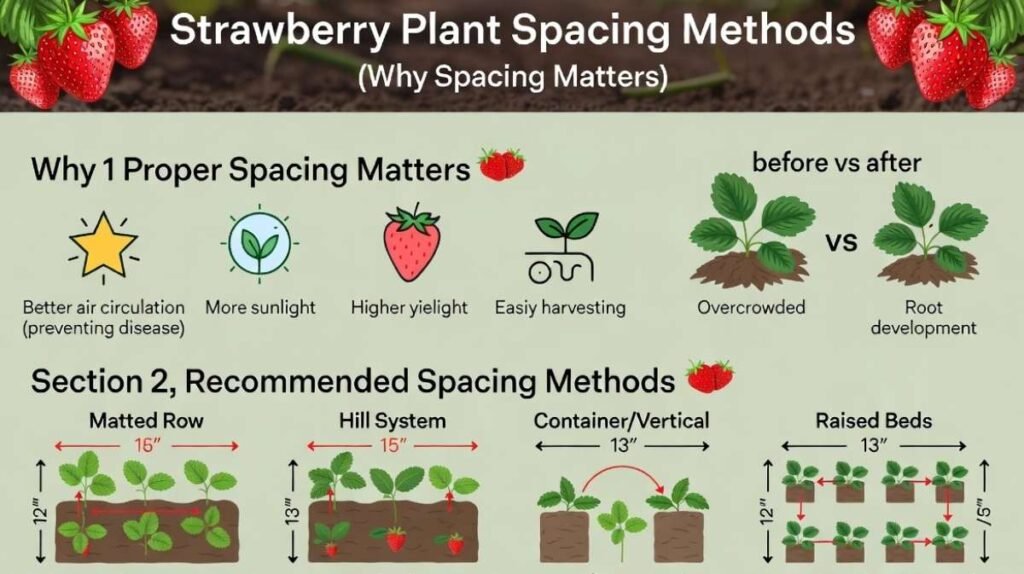
Spacing plays a direct role in how healthy strawberry plants grow and how much fruit they produce over time. When plants are spaced properly, they receive better airflow, which reduces the risk of fungal diseases and keeps leaves dry. It also ensures that each plant gets enough sunlight, which is essential for producing sweet and well-developed fruit. Proper spacing also allows runners to develop naturally and helps plants grow larger, healthier fruit instead of competing for nutrients and space.
Matted Row System
In the matted row system, strawberry plants are arranged in rows and allowed to spread naturally by producing runners over time.This method creates a dense planting bed and works well for gardeners who want a larger, spreading strawberry patch with minimal control over runner growth.
Hill System
In the hill system, each strawberry plant is grown separately, and any runners are removed as soon as they develop.This method forces the plant to focus its energy on producing larger, higher-quality fruit instead of spreading, making it ideal for smaller gardens or gardeners who want more controlled production.
Growing Strawberries in Pots vs Ground
Strawberries can be grown successfully both in pots and in garden soil, but each method serves different needs. Growing strawberries in pots is ideal for small spaces such as balconies or patios because it allows better control over soil, watering, and placement. However, container plants require more frequent watering because soil dries out faster.
On the other hand, growing strawberries in the ground allows plants to spread more naturally and produce higher yields over time. Ground planting is better for long-term growth and larger harvests, especially when runners are allowed to expand freely.
After Planting Care (How to Ensure Strong Growth)
After planting, strawberries need consistent but balanced care. The soil should be kept moist, but not waterlogged, because excess water can suffocate roots and reduce plant strength. Adding mulch helps maintain soil moisture, control weeds, and protect the root system from temperature changes.
During the early growth stage, it is often recommended to remove the first flowers so the plant can focus its energy on developing strong roots instead of producing fruit. Once the plant is fully established, it naturally starts producing runners that can be used to expand your strawberry patch over time.
Common Mistakes When Planting Strawberries (Avoid These)
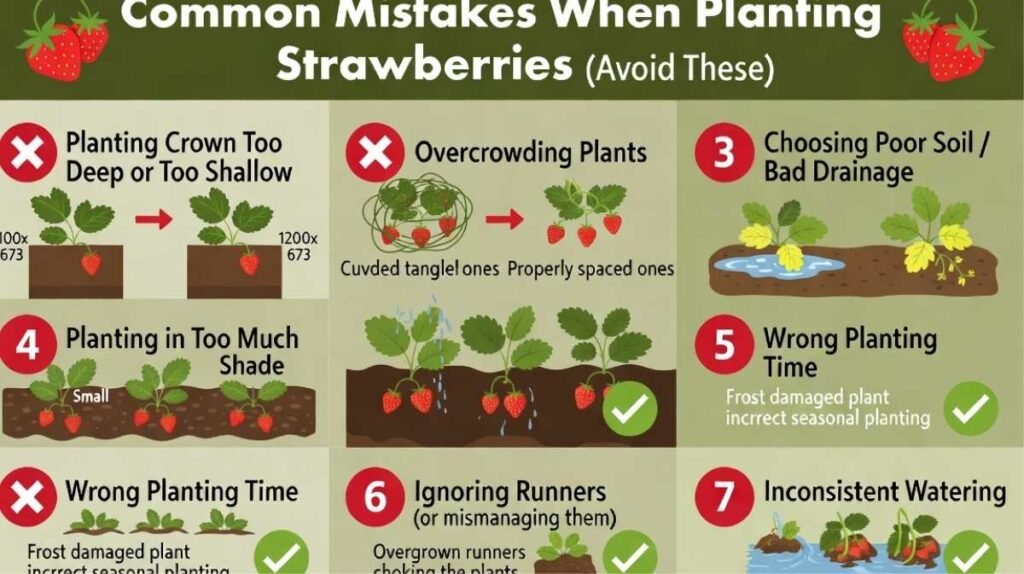
Most strawberry planting problems come from a few common mistakes that can affect plant survival and fruit production. One of the biggest issues is planting the crown too deep, which traps moisture and causes rot before the plant can establish properly. Another mistake is overcrowding, which reduces airflow and increases the risk of disease because leaves stay wet for longer.
Overwatering is also a serious problem, especially in heavy or poorly drained soil, as it can suffocate the roots and slow growth. Many beginners also choose weak or low-quality starter plants, which struggle to establish and often produce low yields even in good conditions. Avoiding these mistakes can greatly improve plant survival and long-term strawberry production.
Conclusion
Planting strawberries successfully depends on understanding a few key principles: correct planting depth, proper spacing, and good soil preparation. When these basics are done correctly, strawberries become a low-maintenance and highly productive crop that can produce fruit for multiple seasons. With the right approach, even beginners can achieve strong growth and consistent harvests.
FAQ Section
1. How do you plant strawberries for beginners?
Plant strawberries by placing healthy starter plants in well-drained soil. Keep the crown at soil level. Space them properly so they can grow without crowding.
2. What is the easiest way to grow strawberries?
The easiest way is using bare root or nursery-grown plants because they establish faster and require less effort compared to seeds.
3. Can strawberries grow in pots?
Yes, strawberries grow very well in pots as long as they receive enough sunlight and proper drainage.
4. How deep should strawberries be planted?
Strawberries should always be planted so the crown stays exactly at soil level to prevent rot and ensure healthy growth.
5. Why is spacing important for strawberries?
Proper spacing improves airflow, reduces disease risk, increases sunlight exposure, and helps plants produce larger fruit.

Jack Rivers is the founder of Plantsopedia, dedicated to making plant care simple, science-backed, and accessible for everyone. With a deep interest in botanical care and plant psychology, he specializes in rare tropical species and organic growth techniques, helping enthusiasts understand the soil, light, and biology behind every thriving plant. When he’s not experimenting with new propagation methods, Jack is busy turning complex horticultural science into practical, everyday advice for home gardeners