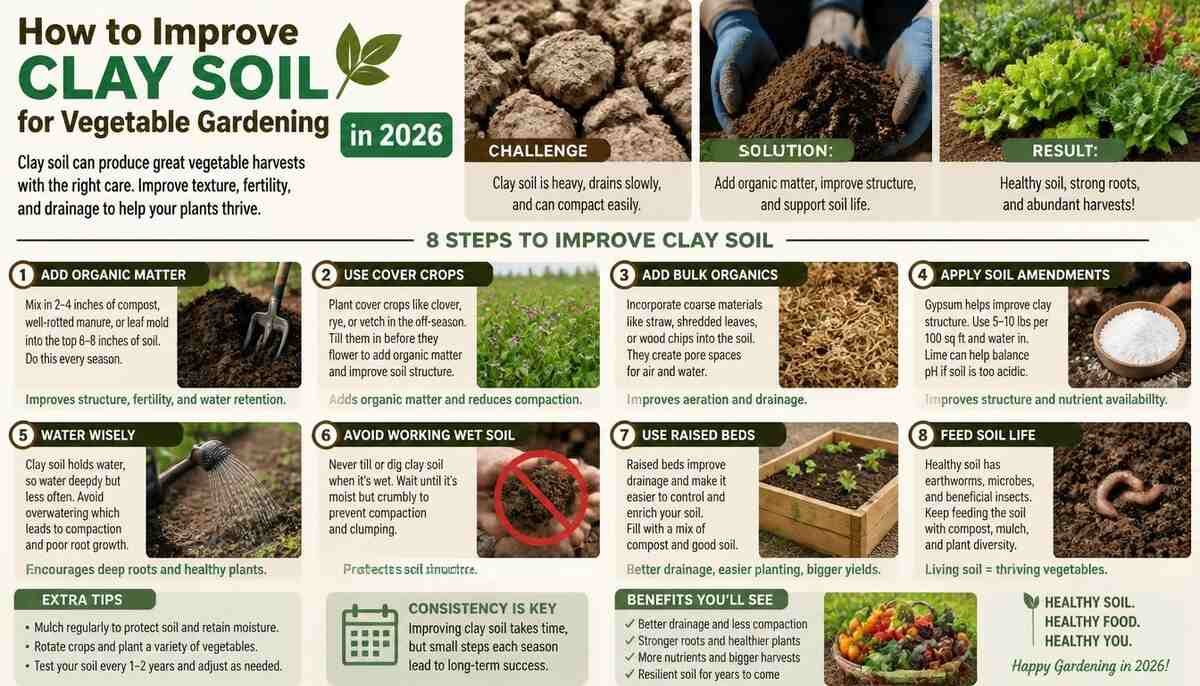
Clay soil can be frustrating when you are trying to grow vegetables. After rain, it may become sticky and difficult to dig. During dry weather, the same soil can turn hard, develop cracks, and make it difficult for young roots to spread. Water may also remain around plants for too long, leaving roots short of the oxygen they need.
The good news is that clay soil can become productive vegetable garden soil with the right approach. You do not necessarily need to remove it or replace your entire garden. Adding mature compost, preventing compaction, managing drainage, and choosing suitable vegetables can gradually improve the conditions in which your crops grow.
The key is to understand what your soil actually needs. Some clay gardens mainly need more organic matter, while others have serious drainage problems that require raised beds or a different planting location. Treating both situations in the same way can waste time and money.
Why Clay Soil Can Be Difficult for Vegetable Gardening
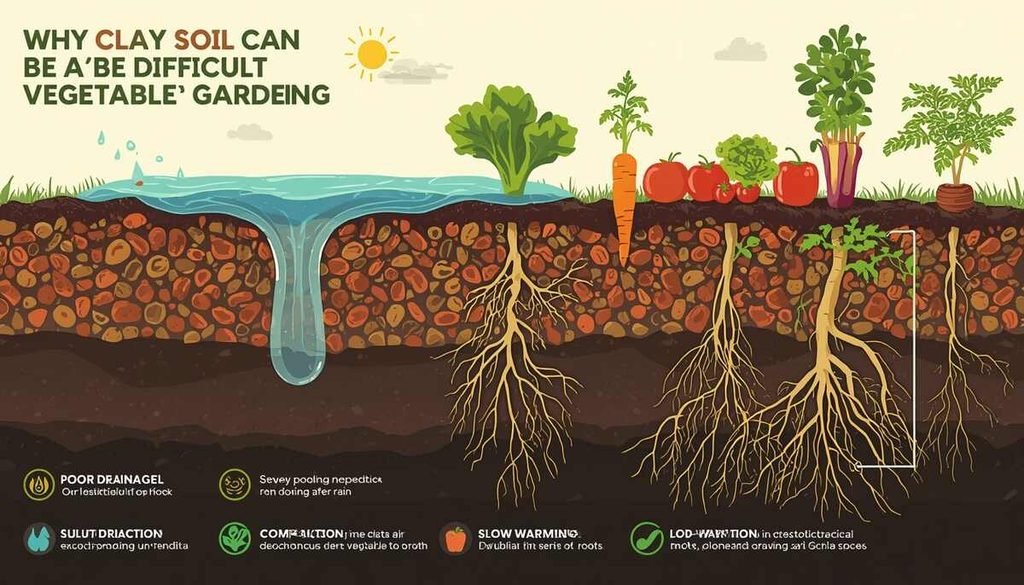
Clay soil contains very fine mineral particles that fit closely together. Compared with sandy soil, it often holds more water and nutrients, which can benefit vegetables when the soil is managed properly. However, its small pore spaces can limit the movement of water and air, especially when the soil becomes compacted.
This creates several challenges for vegetable gardeners.
Slow drainage: Water may remain in the root zone after rain or irrigation. Roots need oxygen as well as moisture, so prolonged waterlogging can damage them.
Compaction: Walking on wet clay or repeatedly working it with heavy tools can press soil particles together. Compacted soil becomes harder for roots to penetrate.
Hard soil when dry: Clay can become difficult to dig after it dries. A hard surface may also make it more difficult for water to soak in evenly.
Slow spring warming: Wet, heavy soil can take longer to warm up than lighter soil. This may delay planting in cooler climates.
Difficult root development: Vegetables such as carrots and parsnips can produce short, forked, or misshapen roots when they encounter dense soil or stones.
Clay soil is not automatically poor soil, though. It can retain nutrients and moisture well. The goal is not to remove every clay particle. It is to improve the soil structure, create enough space for air and water, and give vegetable roots a healthier environment.
How to Tell Whether Your Garden Has Clay Soil
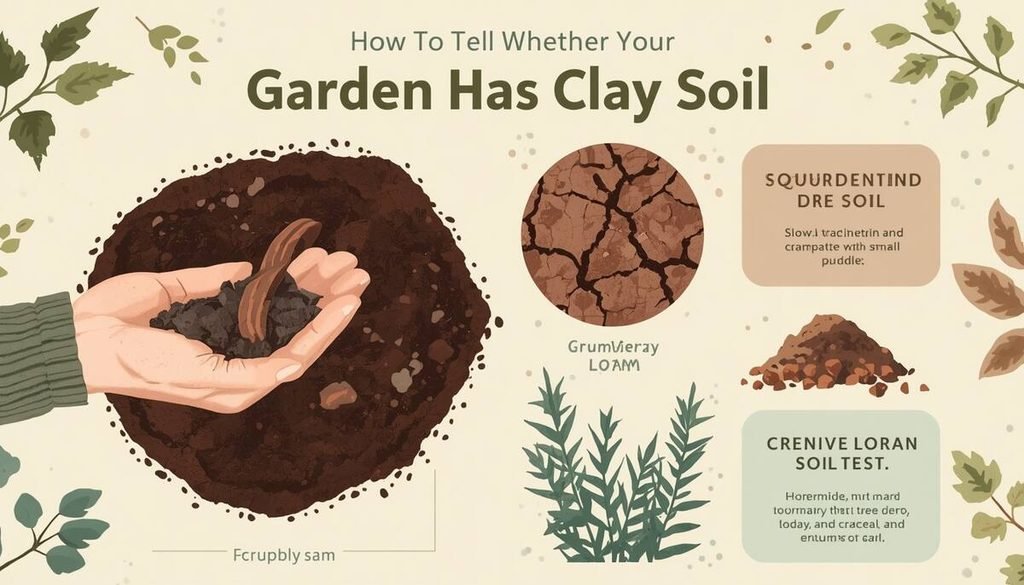
Before buying compost, soil amendments, or raised bed materials, check your existing soil. This helps you distinguish heavy clay from ordinary garden soil that has simply become compacted.
Try the Simple Soil Texture Test
Take a small handful of soil from the area where you plan to grow vegetables. Remove stones and add a little water until the soil is moist enough to handle.
Squeeze it between your fingers and try to roll it into a thin ribbon.
If the soil feels sticky, holds its shape easily, and forms a ribbon without crumbling quickly, it probably contains a substantial amount of clay. Sandy soil feels gritty and tends to fall apart, while loamy soil usually holds together but crumbles more easily.
This test gives you a useful indication, but it does not provide an exact measurement of clay content. A laboratory soil test can give you more reliable information about soil texture, pH, and nutrient levels.
Check How Quickly Water Drains
Observe your garden after rain or normal watering. Does water disappear within a reasonable time, or does it remain in puddles long after surrounding areas have drained?
Pay attention to low spots, compacted paths, and areas where the ground remains wet even when the surface looks dry.
Persistent standing water can indicate more than clay texture alone. Compaction, a shallow hard layer, a high water table, or the slope of the garden may also be responsible.
Test Soil pH and Nutrients
Vegetables need suitable soil acidity and balanced nutrients. Many common garden vegetables grow well in slightly acidic to near neutral soil, often around pH 6.0 to 7.0, although individual crops have different preferences.
A soil test can help you decide whether lime, sulfur, or fertilizer is needed. Do not assume that clay soil automatically needs lime or extra fertilizer. Clay can already contain substantial amounts of certain nutrients, and adding more without testing may create an imbalance.
7 Best Ways to Improve Clay Soil for Vegetable Gardening
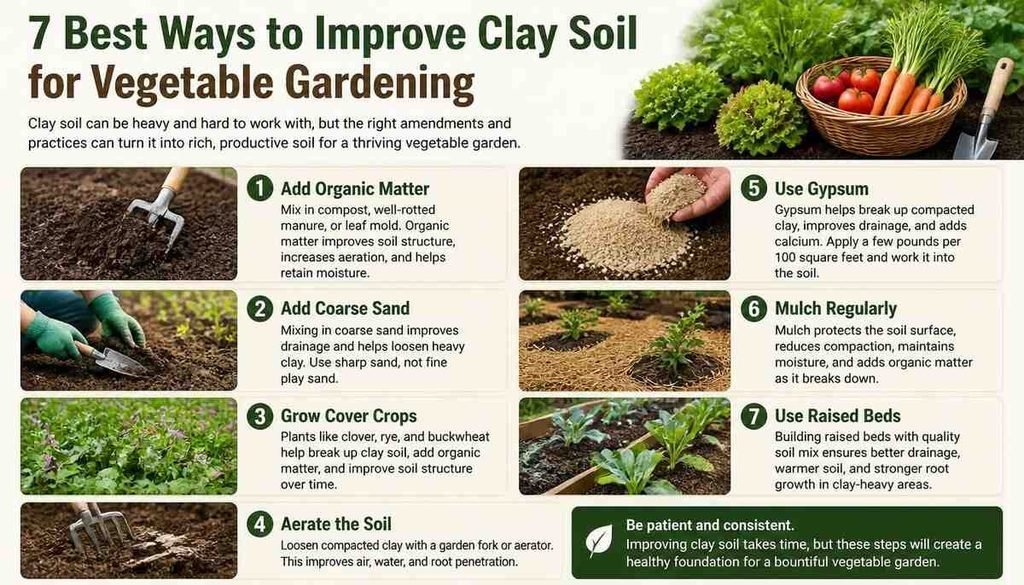
The most reliable approach combines organic matter, careful soil preparation, and good water management. You may not need every method below. Start with the problems you have identified in your garden.
1. Add Mature Compost to Improve Soil Structure
Mature compost is one of the most useful materials for improving clay soil. As organic matter breaks down, it supports soil organisms and helps clay particles form more stable aggregates. These aggregates create a better balance of spaces that hold water and spaces that allow air to move.
Compost can also add nutrients, depending on its ingredients and maturity. Its greatest long term value is that it helps build healthier soil structure rather than simply making the surface look loose for a few days.
Choose finished compost that has a dark, crumbly texture and an earthy smell. Avoid adding fresh manure directly to a vegetable bed just before planting because it may contain excessive nutrients, salts, or pathogens.
Spread compost evenly over the growing area. If you are preparing a new bed, you can gently incorporate it into the workable upper layer of soil. If you prefer a no dig approach, apply it as a surface layer and plant according to the requirements of your chosen crops.
For an established vegetable garden, repeat organic matter applications as needed rather than expecting one application to permanently change heavy clay.
2. Apply the Right Amount of Compost
The amount you need depends on the size of your bed, the depth of the compost layer, and the condition of your existing soil.
The following estimates help you plan how much material to purchase.
| Garden area | Compost layer | Approximate volume |
|---|---|---|
| 25 square feet | 1 inch | 2.1 cubic feet |
| 50 square feet | 1 inch | 4.2 cubic feet |
| 100 square feet | 1 inch | 8.3 cubic feet |
| 100 square feet | 2 inches | 16.7 cubic feet |
| 200 square feet | 1 inch | 16.7 cubic feet |
These figures describe the volume needed to cover the surface. They are not a universal application prescription. Follow local soil testing advice and the compost supplier’s guidance, particularly if the material contains manure or has a high salt content.
To calculate the approximate volume for your own garden, multiply its length by its width and then by the compost depth, using the same units.
For example, a bed measuring 10 feet long and 10 feet wide has an area of 100 square feet. A one inch compost layer requires about 8.3 cubic feet of material.
3. Avoid Digging Clay Soil When It Is Too Wet
Working wet clay is one of the easiest ways to make a soil problem worse. Digging, tilling, or walking repeatedly over saturated ground can squeeze the spaces between soil particles and create dense clods.
Before digging, take a small handful of soil and squeeze it gently. If it forms a sticky lump that smears across your fingers and refuses to crumble, wait for it to dry a little.
When the soil is workable, loosen it only as much as necessary. A garden fork can help open compacted areas without repeatedly pulverizing the soil. Avoid turning the entire bed over every season if it is not needed.
If you have a permanent vegetable bed, keep foot traffic on paths rather than walking across the growing area. This reduces compaction and protects the structure you are trying to build.
4. Use Organic Mulch to Protect the Soil
Mulch protects the surface from heavy rain, reduces evaporation, and helps suppress weeds. Organic materials such as clean straw, shredded leaves, or suitable compost can gradually contribute organic matter as they break down.
Spread a suitable layer over the soil surface after planting, leaving a little space around plant stems to reduce the risk of excess moisture and stem problems.
Mulch is particularly useful when clay soil forms a hard crust after rain. It cushions the impact of raindrops and helps the surface remain more stable.
Remember that mulch is not a substitute for solving serious drainage problems. If the soil remains waterlogged, you may also need to improve the planting area’s elevation or investigate where the excess water is coming from.
5. Consider Raised Beds for Poorly Drained Areas
Raised beds can be an effective solution when clay soil remains wet for long periods or when the ground is difficult to prepare. They raise the main root zone above the surrounding soil and let you create a growing medium with a more suitable structure.
A raised bed does not have to be made from expensive materials. Depending on your garden, it may be a simple mound of prepared soil or a framed bed filled with suitable topsoil and compost.
Before building one, check where rainwater will go. A raised bed sitting over a poorly drained site can still have problems if water becomes trapped underneath it.
Choose a location with sufficient sunlight for the vegetables you plan to grow. If possible, loosen the underlying soil when it is workable so that roots can eventually explore the ground below the bed.
Use a suitable soil mixture rather than filling the entire bed with pure compost. Compost is valuable, but it continues to decompose and may not provide the stable structure and nutrient balance needed as the only growing medium.
6. Grow Cover Crops When the Garden Is Empty
If your vegetable bed is not being used for a season, cover crops can help protect and improve the soil. Their roots explore the ground, while their leaves protect the surface from rain and erosion.
Depending on your climate and planting schedule, options may include suitable clovers, field peas, or other locally recommended cover crops. Some cover crops can contribute nitrogen, while others are mainly useful for biomass, soil cover, or root development.
Choose species suited to your region and terminate them at the right time before the next vegetable crop. Do not allow a cover crop to set seed if it could become difficult to control.
Cover crops work gradually. They are most useful as part of a repeated soil improvement plan rather than as an instant solution to compacted clay.
7. Correct Soil pH and Nutrient Problems Only When Needed
Improving soil texture does not automatically correct every fertility problem. Your garden may have good structure but still lack a particular nutrient, or it may have sufficient nutrients but an unsuitable pH.
A soil test helps identify what needs attention.
Lime is commonly used to raise soil pH when testing shows the soil is too acidic. Sulfur may be used in some situations to lower pH, but the appropriate material and quantity depend on the soil and local recommendations.
Gypsum supplies calcium and sulfur and can improve the structure of certain sodic soils. However, it does not reliably loosen every type of clay soil. Use it when a soil test or qualified local recommendation indicates that it is appropriate.
Do not add lime, gypsum, or fertilizer simply because the soil looks heavy. Address the specific problem rather than spending money on an amendment that may not help.
Should You Add Sand to Clay Soil?
Adding sand is a common suggestion for improving clay soil, but it is not a simple fix for most home vegetable gardens.
Clay particles are extremely small and have a strong influence on soil behavior. Adding a small amount of sand may not change the overall texture enough to improve drainage. Depending on the proportions and materials involved, the resulting soil can become dense and difficult to work.
Changing the texture of a large clay bed with sand can require substantial quantities of suitable material, careful mixing, and a clear understanding of the existing soil.
For most home gardeners, mature compost, organic mulch, reduced compaction, and raised beds are more practical starting points.
If you are considering a large scale soil amendment, get advice based on your soil test and local conditions before purchasing bulk materials.
Best Vegetables to Grow in Clay Soil
You do not have to wait until your soil becomes perfect before planting. Some vegetables can grow successfully in clay soil when it is fertile and adequately drained. Others need a looser growing medium, especially if their edible portion develops underground.
| Vegetable | Suitability for clay soil | What helps it grow |
|---|---|---|
| Cabbage | Often suitable | Good drainage and consistent moisture |
| Broccoli | Often suitable | Fertile soil and a well prepared root zone |
| Kale | Often suitable | Adequate drainage and suitable growing temperatures |
| Beans | Depends on the variety and soil condition | Avoid waterlogged soil and provide good root aeration |
| Tomatoes | Suitable when drainage is adequate | Consistent moisture and a well drained root zone |
| Carrots | More challenging in dense clay | Deep, loose, stone free soil |
| Parsnips | More challenging in dense clay | A deep, workable bed with minimal compaction |
| Lettuce | Can grow well in improved clay | Good drainage and moisture management |
These are general guidelines, not guarantees. Local climate, variety, planting season, soil pH, and drainage all affect performance.
If you are starting with very dense clay, leafy vegetables such as kale or cabbage may be easier to manage than long rooted crops. You can grow carrots and parsnips successfully in many gardens, but they usually benefit from a deeper, looser bed.
How to Prepare Clay Soil Before Planting Vegetables
Once you understand the soil condition and have chosen your crops, follow a simple preparation routine.
Step 1: Choose the growing area. Select a location with enough sunlight for your vegetables and avoid the lowest part of the garden if water regularly collects there.
Step 2: Check moisture and drainage. Observe the soil after rain and avoid digging when it is saturated. Identify any areas where water remains trapped.
Step 3: Remove weeds and unwanted growth. Clear the bed without unnecessarily disturbing the entire soil profile.
Step 4: Add mature compost. Spread an appropriate amount over the surface based on the bed’s size and the condition of the soil.
Step 5: Loosen the soil carefully. If incorporation is appropriate, use a fork or suitable garden tool when the clay is workable. Avoid excessive tilling.
Step 6: Create a suitable planting surface. Form a slightly raised bed if drainage is a concern. For root vegetables, prepare a sufficiently deep and loose growing zone.
Step 7: Plant and mulch. Plant at the recommended depth and spacing for each vegetable. Add mulch where appropriate without burying stems or seedlings.
Step 8: Monitor the soil throughout the season. Check moisture before watering, watch for standing water, and avoid walking on the growing bed when the soil is wet.
This approach gives you a manageable starting point without requiring you to rebuild the entire garden at once.
How to Water Vegetables Growing in Clay Soil
Clay soil often holds water longer than sandy soil, so a fixed watering schedule can cause problems. Watering every day may leave the root zone too wet, while allowing the surface to become extremely dry can make the soil difficult to rewet.
Check the soil below the surface rather than judging moisture by appearance alone. The top may look dry while the root zone remains damp.
When watering is needed, apply water slowly enough for it to soak in. If water starts running off or pooling, pause and allow it to infiltrate before continuing.
Newly planted seeds and seedlings need different moisture management from established plants. Follow the requirements of the crop and the weather conditions, and pay attention to how quickly your particular bed dries.
Mulch can help reduce evaporation, but it does not mean you can ignore the soil. Check moisture regularly and adjust your watering based on the plant’s needs.
Common Mistakes to Avoid When Improving Clay Soil
Expecting one compost application to fix everything. Organic matter improves soil over time, but heavily compacted or poorly drained ground may need additional changes.
Working the soil when it is saturated. Wet clay is particularly vulnerable to compaction and damage from tools and foot traffic.
Adding sand without a clear plan. Small quantities may not improve heavy clay, and unsuitable mixtures can make soil more difficult to manage.
Using lime without testing pH. Lime raises soil pH. If the soil is already alkaline, adding it may make nutrient availability worse.
Using fresh manure immediately before planting. Fresh manure can damage crops or introduce unwanted contaminants. Choose properly composted or well aged material and follow local food garden guidance.
Watering by the calendar. Clay may remain moist long after watering, so check the root zone before adding more.
Ignoring standing water. If water remains for long periods, investigate the underlying drainage problem rather than relying on compost alone.
How Long Does It Take to Improve Clay Soil?
The time required depends on how heavy the clay is, whether the garden is compacted, how much organic matter is added, and how water moves through the site.
You may notice that the surface becomes easier to work after the first suitable compost application. However, improving the deeper soil structure and maintaining that improvement can take multiple growing seasons.
Look for practical signs of progress. The soil should become easier to crumble when it is at a suitable moisture level, roots should be able to explore the bed more readily, and water should move through the planting area more evenly.
Do not judge improvement by whether the soil looks sandy or loose when dry. Healthy clay soil can still feel firm. What matters is whether it supports root growth, adequate drainage, moisture retention, and the vegetables you want to grow.
Continue adding organic matter when needed, protect the soil surface with mulch, and minimize compaction. These habits help preserve the progress you have made.
Frequently Asked Questions
What is the fastest way to improve clay soil for vegetable gardening?
For many home gardens, adding mature compost and preventing further compaction are practical first steps. If waterlogging is severe, a raised bed or a site specific drainage solution may be needed as well.
Is compost enough to improve heavy clay soil?
Compost can improve soil structure, but it may not solve every problem. Persistent waterlogging, a compacted subsoil layer, or an unsuitable site may require additional measures.
Can vegetables grow directly in clay soil?
Yes. Many vegetables can grow in clay soil when it has adequate drainage, suitable pH, and enough space for roots. Dense or waterlogged clay is more challenging, especially for root crops.
Is gypsum good for clay soil?
Gypsum can help certain soils affected by excess sodium, but it is not a universal treatment for heavy clay. A soil test can help determine whether it is appropriate.
Should I dig compost into clay soil or leave it on top?
Either method can be suitable depending on the bed and gardening approach. Incorporating compost into workable soil can help prepare a new bed, while surface application is useful in no dig systems. Never work saturated clay.
Can I improve clay soil without digging?
Yes. You can apply mature compost to the surface, use organic mulch, grow cover crops, and avoid compacting the bed. These methods build soil health gradually, although severe compaction or drainage problems may require additional work.
What is the best soil pH for vegetable gardening?
Many common vegetables grow well in slightly acidic to near neutral soil. The ideal range varies by crop, so use a soil test and follow recommendations suited to the vegetables you intend to grow.
Final Thoughts
Learning how to improve clay soil for vegetable gardening starts with understanding your garden rather than trying every soil amendment you hear about. Clay can hold useful moisture and nutrients, but compacted or waterlogged soil makes it harder for vegetable roots to grow.
Start by checking the soil texture, drainage, and pH. Add mature compost where appropriate, protect the surface with mulch, and avoid working or walking on wet clay. If water remains trapped around the roots, consider raised beds or a suitable drainage solution.
Choose vegetables that match your current conditions while you improve the soil over time. With careful preparation and consistent management, clay soil can become a productive foundation for a healthy vegetable garden.

Jack Rivers is the founder of Plantsopedia, dedicated to making plant care simple, science-backed, and accessible for everyone. With a deep interest in botanical care and plant psychology, he specializes in rare tropical species and organic growth techniques, helping enthusiasts understand the soil, light, and biology behind every thriving plant. When he’s not experimenting with new propagation methods, Jack is busy turning complex horticultural science into practical, everyday advice for home gardeners