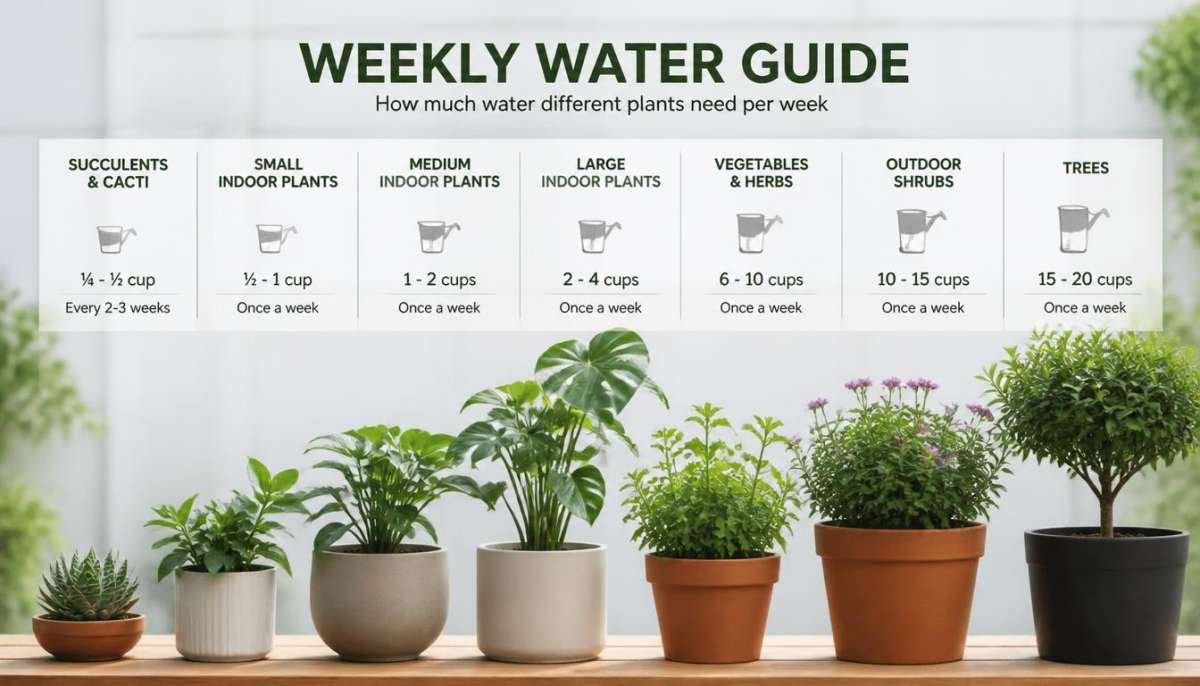
Plants need different amounts of water depending on their type, growing conditions, and the weather. Most established vegetable gardens need around 1 inch of water per week from rainfall and watering combined. Houseplants are different because their water needs depend on the soil, pot size, light, and temperature. Instead of following one fixed schedule, check the soil and adjust watering to suit each plant.
How Much Water Do Plants Need Per Week on Average?
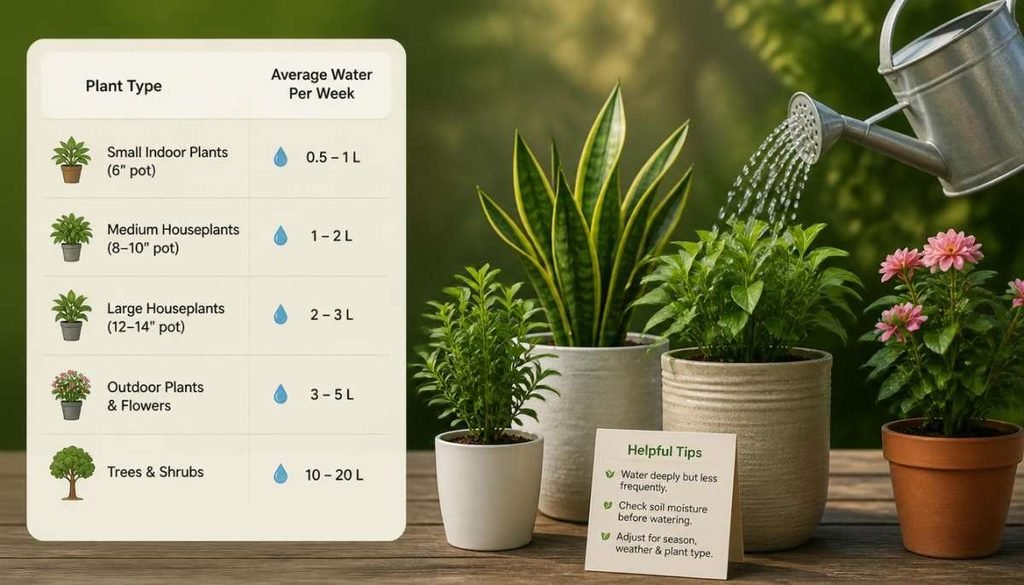
For many established garden plants, around 1 inch of water per week is a useful starting point. This includes rain, so you only need to provide extra water when rainfall does not supply enough moisture. During very hot or dry weather, some garden plants may need more.
Houseplants do not follow the same weekly rule. A small succulent may need water much less often than a leafy tropical plant. Large pots also tend to retain moisture longer than small pots, while terracotta pots can dry out faster than plastic ones.
Think of these amounts as starting points rather than strict rules. Your plant’s soil and growing conditions will tell you when it needs more or less water.
How Much Water Different Types of Plants Need
Vegetable Plants
Many established vegetable gardens need about 1 inch of water each week, including rainfall. Some vegetables need more during hot weather or important stages of growth. Water slowly enough for moisture to reach the root zone instead of running off the soil surface.
Flowers and Flowering Plants
Flowering plants have different water requirements. Plants growing in sunny beds may dry out faster than flowers in shaded areas. Check the soil regularly and water when the root area begins to dry, while avoiding constantly soggy soil.
Shrubs and Garden Bushes
Established shrubs often need less frequent watering than newly planted ones because their roots can reach a larger area of soil. Young shrubs need closer attention while their roots become established. Soil type and recent rainfall also affect how much water they need.
Newly Planted Trees
Newly planted trees need regular moisture while their roots settle into the surrounding soil. Water slowly around the root ball so the moisture can soak in. The amount needed depends on the tree’s size, soil, weather, and how recently it was planted.
Houseplants and Indoor Plants
Indoor plants do not have one universal weekly water requirement. Some prefer soil that dries partly between waterings, while others need more consistent moisture. Push your finger into the soil to check whether it is dry below the surface before watering.
Succulents and cacti usually need less frequent watering than many tropical houseplants. Always check the needs of your particular plant rather than assuming all indoor plants should be watered once a week.
How Often Should You Water Plants Each Week?
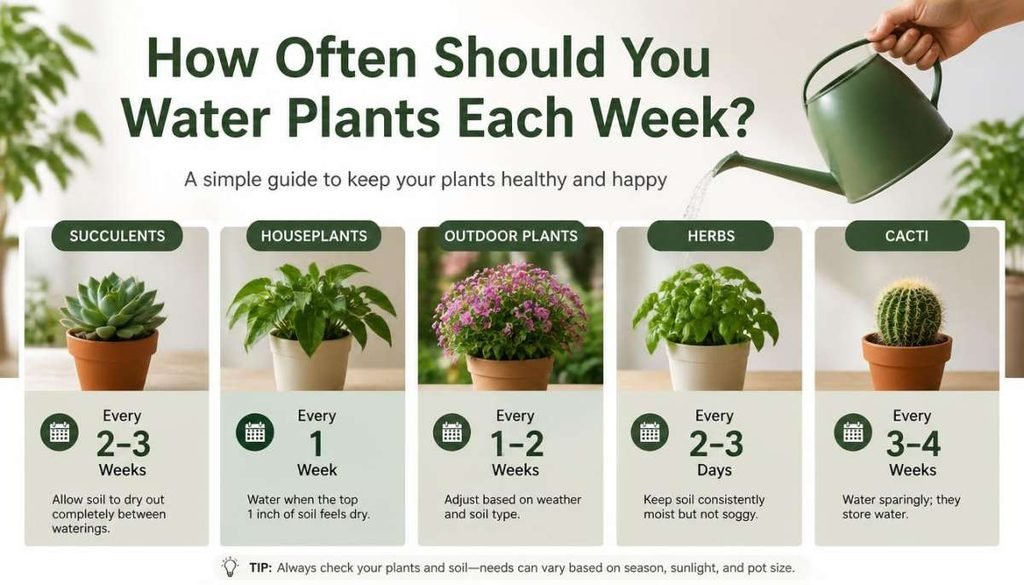
The right watering frequency depends on how quickly the soil loses moisture. A plant in a small pot near a sunny window may dry out quickly, while a plant in a large pot in a cool room may stay moist for much longer.
During warm weather, you may need to check your plants daily. That does not mean you should water every plant daily. Check the soil first and water only when the plant needs it.
In cooler months, many indoor plants grow more slowly and use less water. Reduce watering when the soil takes longer to dry, but do not let plants that need regular moisture become completely dry.
For outdoor garden beds, deeper watering at suitable intervals often works better than frequent, shallow sprinkling. The goal is to moisten the root zone without leaving the soil waterlogged.
If you like this article than also read How Much Water Do Plants Need? A Complete Watering Guide
What Affects How Much Water a Plant Needs?
Several conditions can change how much water your plants use each week.
Weather and Temperature
Hot, sunny, and windy conditions can dry soil more quickly. Plants may need additional water during a heatwave, while rainy or cool weather can reduce the need for watering.
Soil Type
Sandy soil drains quickly and may need more frequent watering. Clay soil holds moisture for longer, so watering too often can leave roots sitting in wet soil. Loamy soil generally offers a useful balance of drainage and moisture retention.
Pot Size and Drainage
Small containers usually dry out faster than large containers. Pots without proper drainage can hold excess water, increasing the risk of root problems. Choose containers with drainage holes and allow excess water to escape.
Plant Type and Growth Stage
Seedlings, newly planted specimens, and actively growing plants may need closer attention than established plants. Succulents and other drought tolerant plants generally need less frequent watering than plants that prefer consistently moist soil.
Sunlight and Indoor Conditions
Plants in bright, warm locations often use water faster than those in cooler, shaded spaces. Heating, air conditioning, and dry indoor air can also affect how quickly a pot dries out.
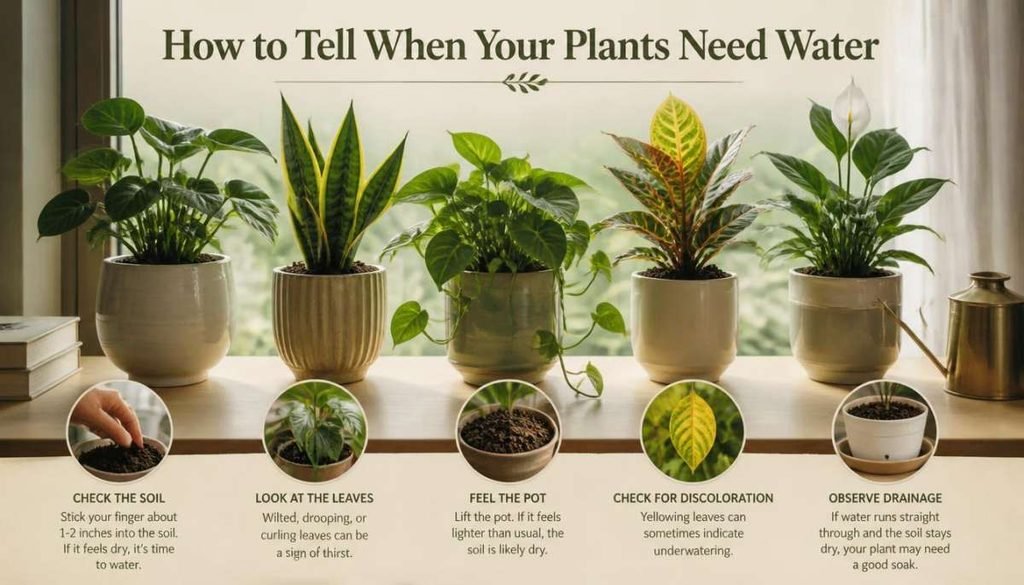
How to Tell When Your Plants Need Water
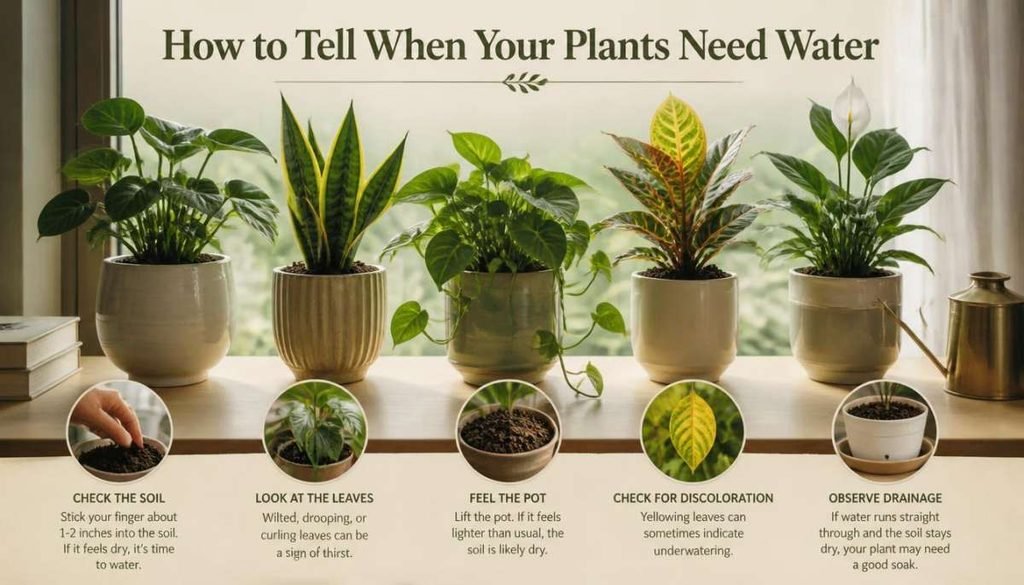
The easiest way to check is to feel the soil rather than relying only on a calendar.
For many houseplants, insert your finger about an inch into the soil. For larger pots, check a little deeper if needed. If the soil still feels moist, wait and check again later. If it feels dry and the plant’s care needs match that condition, water thoroughly.
For outdoor beds, check the soil several inches below the surface. The top layer may look dry while the root zone still has enough moisture.
Wilting can be a sign of underwatering, but it can also happen when roots are damaged by excess water. Yellow leaves and persistently wet soil can indicate that you are watering too often. Check the soil before adding more water.
Is 20 Minutes of Watering Enough?
Twenty minutes of watering may be enough for some plants, but the time alone does not tell you how much water the roots receive. A watering can, garden hose, sprinkler, and drip irrigation system all deliver water at different rates.
For a garden bed, check whether the water has soaked deeply into the root zone rather than just wetting the surface. For a potted plant, water the soil evenly until excess water drains from the bottom, then empty any standing water from the saucer.
If you use an automatic irrigation system, observe the soil after watering and adjust the duration to suit your plants and soil conditions.
How to Calculate the Water Your Garden Needs
If you grow vegetables, flowers, shrubs, or trees outdoors, estimating weekly water needs can help you build a more consistent watering routine. The calculation should take into account the type and size of the plants, soil conditions, and local climate.
You can use a plant watering calculator to estimate how much water your garden may need each week. Treat the result as a starting point, then adjust it according to rainfall, temperature, drainage, and the moisture around your plants’ roots.
For indoor plants, a calculator or fixed weekly amount cannot replace checking the soil because different houseplants can have very different needs.
Common Plant Watering Mistakes
One common mistake is watering every plant on the same day regardless of its condition. A fixed schedule can leave some plants too dry and others too wet.
Another mistake is giving plants small amounts of water that only dampen the surface. This may not provide enough moisture to the roots, especially in garden beds.
It is also easy to forget about rainfall when watering outdoor plants. Check the weather and soil before adding more water. Finally, make sure pots drain properly and avoid leaving roots in standing water.
Frequently Asked Questions
How often should I water my plants a week?
It depends on the plant and its growing conditions. Many garden plants need about 1 inch of water per week, including rainfall, while indoor plants should be watered when their soil and plant type indicate that moisture is needed.
Why is Gen Z obsessed with plants?
Houseplants appeal to many young adults because they can make living spaces feel more personal, provide a hobby, and offer a way to care for something at home. Social media has also helped popularize plant collecting and indoor gardening. This interest is not limited to one generation.
Is watering for 20 minutes enough?
It can be, but it depends on the water flow, irrigation method, soil, and plant. Check how deeply the soil becomes moist rather than relying only on the number of minutes.
How much water does a plant need daily?
There is no single daily amount that works for every plant. Many plants do not need watering every day. Check soil moisture, plant type, pot size, and weather to decide when to water.

Jack Rivers is the founder of Plantsopedia, dedicated to making plant care simple, science-backed, and accessible for everyone. With a deep interest in botanical care and plant psychology, he specializes in rare tropical species and organic growth techniques, helping enthusiasts understand the soil, light, and biology behind every thriving plant. When he’s not experimenting with new propagation methods, Jack is busy turning complex horticultural science into practical, everyday advice for home gardeners