
Finding room for houseplants can be difficult when you live in a small apartment, have a narrow hallway, or want to add greenery beside a desk without making the room feel crowded. A plant might look compact at the garden center but grow wider than expected once it settles into your home.
The good news is that you do not need a large room to build a beautiful indoor plant collection. The best indoor plants for narrow spaces are those that grow upward, keep their foliage relatively compact, or trail from a shelf instead of spreading across the floor. Choosing the right plant shape can make a small room feel more inviting without sacrificing useful space.
Before buying a plant, consider three things: how much light the location receives, how wide the plant will grow when mature, and how much care you can realistically provide. These details matter more than the plant’s appearance in a shop.
What Makes an Indoor Plant Suitable for a Narrow Space?
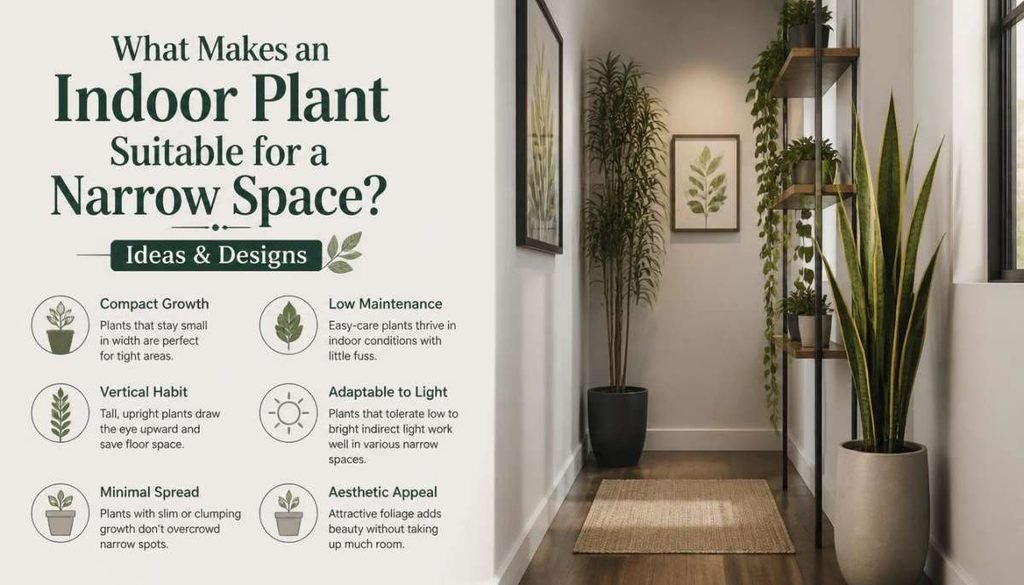
A plant is not automatically suitable for a small room just because it is sold in a small pot. Some fast growing plants spread outward, produce long branches, or need support as they mature. Others remain upright and take up very little floor space.
For tight areas, look for these characteristics.
Upright growth: Plants with vertical leaves or stems can add height without occupying a wide area. They work particularly well beside furniture, near a window, or in an unused corner.
Compact foliage: Plants with smaller leaves or a naturally contained shape are easier to position on desks, shelves, and narrow stands.
Manageable growth: Slow growing plants often need less frequent pruning and are easier to maintain in confined areas.
Suitable light requirements: A narrow hallway may have very different lighting from a small bedroom beside a sunny window. Choose a plant that matches the location rather than expecting every houseplant to adapt.
Practical care needs: If you have limited time, choose a plant that tolerates occasional missed watering better than one that needs consistently moist soil.
One more detail matters when space is tight: measure the area where the pot will sit, not just the available floor space. Include room for the plant’s leaves, access for watering, and enough clearance to move around comfortably.
12 Best Indoor Plants for Narrow Spaces
These plants offer different ways to bring greenery into a compact home. Some grow vertically, some fit on shelves, and others use hanging space instead of valuable floor area.
1. Snake Plant: Best for Tall, Narrow Corners
The snake plant, also called Dracaena trifasciata, is one of the most practical choices for a narrow room. Its stiff, upright leaves grow from the base and generally occupy less horizontal space than plants with spreading branches.
It works well beside a sofa, near a bedroom dresser, or in an unused corner where a wider plant would get in the way. Varieties with tall, narrow leaves are especially useful when you want greenery without creating a bulky arrangement.
Snake plants tolerate a range of indoor lighting conditions, although bright, indirect light generally supports better growth. They also store water in their thick leaves, so they do not need constantly moist soil.
How to care for it: Use a pot with drainage holes and a well draining potting mix. Allow the soil to dry substantially between waterings. In lower light, the soil may stay wet for longer, so check it before adding more water.
Best placement: A narrow floor space near a window, provided the plant receives suitable light.
Important: Snake plants are toxic to cats and dogs if chewed or swallowed. Choose another plant if your pets regularly nibble on foliage.
2. Dracaena Marginata: Best for Adding Height
Dracaena marginata, commonly called the Madagascar dragon tree, has slender stems and narrow leaves that form a fountain like crown near the top. Its naturally vertical structure makes it useful when you want a taller plant without a wide canopy.
A single plant can add height to a small living room or soften an empty corner. Its thin stems also create a lighter visual effect than a broad, bushy houseplant.
It usually grows well in bright, indirect light and can tolerate some lower light conditions. Growth may slow when light is limited, and a plant kept too far from a window may gradually become less full.
How to care for it: Water when the upper portion of the soil has dried, then allow excess water to drain away. Avoid leaving the pot sitting in water. Rotate it occasionally if growth begins leaning strongly toward one side.
Best placement: A corner where vertical height is more important than width.
Important: Dracaena marginata is toxic to cats and dogs.
3. ZZ Plant: Best for Busy People With Limited Space
The ZZ plant, Zamioculcas zamiifolia, has thick, upright stems covered with glossy leaflets. Its structured shape looks tidy on a small plant stand, beside a desk, or in a corner that needs a little greenery.
It is also a useful choice for people who do not want a plant that needs frequent attention. Its underground rhizomes store water, allowing it to tolerate periods between waterings.
Although the ZZ plant tolerates low light better than many houseplants, low light does not mean no light. It still needs a location with enough ambient or indirect light to support growth. Very dark corners are better served by artificial lighting suitable for plants.
How to care for it: Let the potting mix dry well between waterings. Use a well draining mix and avoid watering simply because a particular day of the week has arrived.
Best placement: A desk corner, compact bedroom, or small living area with indirect light.
Important: ZZ plants are toxic if chewed or swallowed, so keep them away from curious pets and children.
4. Cast Iron Plant: Best for Shady Indoor Areas
The cast iron plant, Aspidistra elatior, produces long, arching leaves from the base. It is not as vertically narrow as a snake plant, but it can be a dependable option for a spot with limited natural light.
Its broad leaves create a lush appearance without requiring the high light levels that many decorative foliage plants prefer. It is particularly useful in rooms where direct sunlight is limited.
However, the leaves do spread outward. Before choosing one for a very tight passage, check the mature width and make sure the foliage will not obstruct movement.
How to care for it: Use well draining soil and water when the upper layer begins to dry. Avoid placing it in harsh direct sunlight, which can scorch the leaves.
Best placement: A shaded corner, a small living room, or a spot beside furniture with enough clearance for its leaves.
5. Peperomia Obtusifolia: Best for Small Desks and Shelves
Peperomia obtusifolia, often called the baby rubber plant, has thick, rounded leaves and a naturally compact growth habit. It is an excellent option when a full sized floor plant would be too large.
Place it on a desk, narrow console, bookshelf, or windowsill where it can add greenery without dominating the surface. Its rounded foliage also provides a softer contrast to the upright shapes of snake plants and dracaenas.
Peperomia generally prefers bright, indirect light. It can tolerate some lower light, but growth may become slower and less compact. Too much direct sun can damage the leaves.
How to care for it: Allow the top portion of the potting mix to dry before watering again. A small pot with drainage is important because its fleshy leaves and stems can suffer when the roots remain wet.
Best placement: A desk, shelf, or windowsill with indirect light.
6. Pothos: Best for Using Vertical Space
Pothos, Epipremnum aureum, is especially useful when you have very little floor space but some room above your head. Its trailing stems can hang from a shelf, grow from a wall mounted planter, or climb a suitable support.
Instead of spreading several pots across a narrow table, you can position one pothos higher up and let its stems grow downward. This creates a green display while leaving the surface underneath available for everyday use.
Pothos grows in a range of indoor lighting conditions, although bright, indirect light usually supports stronger growth. Variegated varieties may lose some of their leaf pattern when light is too low.
How to care for it: Water when the upper part of the soil has dried, and make sure excess water can escape. Trim long stems when they begin reaching into walkways or becoming difficult to manage.
Best placement: A high shelf, hanging planter, or vertical plant support.
Important: Pothos is toxic to cats and dogs if chewed.
7. Heartleaf Philodendron: Best for Narrow Shelves
The heartleaf philodendron, Philodendron hederaceum, has slender trailing stems and heart shaped leaves. Like pothos, it can grow from a hanging planter or elevated shelf instead of taking up valuable floor space.
Its softer leaf shape works well in bedrooms, home offices, and small living rooms. You can also train it along a support if you prefer upward growth instead of hanging stems.
It usually prefers bright, indirect light but can tolerate moderate lower light. Growth tends to slow in dim locations, so avoid expecting a plant to produce long, full vines in a dark corner.
How to care for it: Let the upper layer of soil dry before watering. Trim the stems to keep the plant within its allotted space, and check the vines regularly so they do not tangle with curtains or nearby objects.
Best placement: A narrow shelf, hanging pot, or compact desk with room for trailing stems.
Important: Heartleaf philodendron is toxic to cats and dogs.
8. Parlor Palm: Best for a Soft, Tropical Look
The parlor palm, Chamaedorea elegans, offers delicate, arching fronds that make a room feel greener without the heavy appearance of a large broad leaved plant.
It is often a better fit for compact indoor spaces than large palm varieties. However, its fronds still spread outward, so it needs some breathing room rather than being squeezed tightly between furniture.
Parlor palms generally prefer indirect light and can adapt to lower light than many tropical palms. They grow relatively slowly, which helps keep their shape manageable.
How to care for it: Keep the soil lightly moist but not waterlogged. Let the surface begin to dry before watering again, and do not allow the pot to sit in standing water.
Best placement: A small living room corner or bedroom where the fronds can spread without blocking a walkway.
Pet safety: Parlor palms are generally considered non toxic to cats and dogs.
9. Chinese Evergreen: Best for Compact Foliage
Chinese evergreen, from the Aglaonema group, is popular for its patterned foliage and manageable growth. Many varieties form a relatively compact clump, making them useful for small plant stands or corners that need color as well as greenery.
Its leaves can feature different shades of green, silver, pink, or red, depending on the variety. This gives you an option when you want a decorative plant without introducing several pots into a limited space.
Most Chinese evergreens prefer indirect light. Green varieties often tolerate lower light better than varieties with more colorful foliage, which may need brighter conditions to maintain their patterns.
How to care for it: Water when the top layer of soil dries and use a pot with good drainage. Avoid keeping the roots continuously wet, especially in a cool room or a low light location.
Best placement: A compact plant stand, side table, or bedroom corner with indirect light.
Important: Chinese evergreen is toxic if chewed or swallowed by pets.
10. Spider Plant: Best for High Shelves and Hanging Pots
The spider plant, Chlorophytum comosum, produces narrow, arching leaves and can develop baby plantlets on long stems as it matures. These features make it a useful choice for hanging planters and elevated shelves.
It may not be the best option for a very narrow floor corner because its leaves spread outward. However, placing it above a desk or on a shelf allows the foliage to hang naturally without taking up floor space.
Spider plants generally grow well in bright, indirect light and can tolerate moderate lighting conditions. Strong direct sunlight may scorch the leaves.
How to care for it: Water when the upper layer of soil begins to dry. Trim damaged leaves and remove plantlets if they become too long for the available area. You can also root healthy plantlets in soil to grow additional plants.
Best placement: A hanging planter, high shelf, or bright windowsill with enough room for the leaves.
Pet safety: Spider plants are generally considered non toxic to cats and dogs, although eating large amounts of any plant material can upset a pet’s stomach.
11. Aloe Vera: Best for a Bright Windowsill
Aloe vera grows in a compact rosette of thick, fleshy leaves. It can be a good fit for a sunny windowsill, a small side table, or a bright kitchen area where a larger plant would be impractical.
Its growth is more horizontal than that of a snake plant, so choose a spot with enough width for the leaves. A young aloe may look very small, but mature plants can spread and produce offsets around the base.
Aloe needs plenty of bright light and usually does best near a sunny window. It is not a suitable choice for a dark hallway or a room with very little natural light.
How to care for it: Use a cactus or succulent potting mix and a container with drainage holes. Allow the soil to dry thoroughly before watering again. Waterlogged soil can quickly lead to root problems.
Best placement: A bright windowsill or sunny desk that has enough room for its leaves.
Important: Aloe vera is toxic to cats and dogs if ingested.
12. Miniature Rubber Plant: Best for a Small Statement Plant
Compact rubber plant varieties, including Ficus elastica cultivars sold in smaller sizes, can add glossy foliage to a narrow room without immediately requiring a large floor area.
A young rubber plant can sit on a small plant stand or beside a desk. Its leaves are broader than those of a snake plant, though, so its eventual width matters. It is best for a space where you can allow the plant to grow rather than one where every centimetre must remain clear.
Rubber plants prefer bright, indirect light. They may become leggy in very dim conditions, and sudden changes in light or placement can cause leaf drop.
How to care for it: Water when the upper layer of soil has dried, and provide good drainage. Wipe dust from the leaves occasionally so the foliage stays clean.
Best placement: A bright corner or compact plant stand with room for the leaves to expand.
Important: Rubber plants can irritate pets if chewed or swallowed.
Which Indoor Plant Is Best for Your Exact Space?
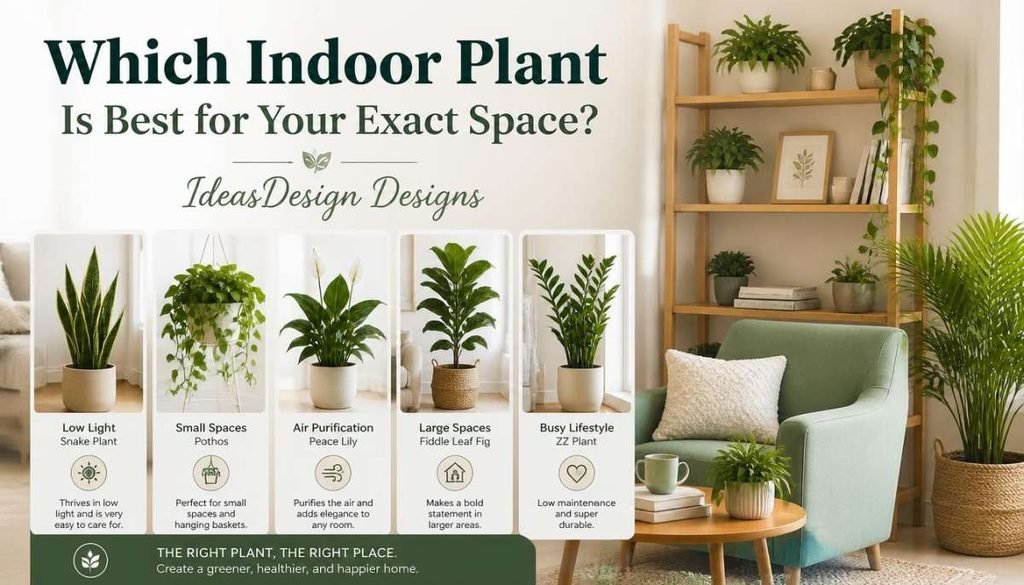
The best choice depends on what kind of space you have available. A plant that works beautifully in a bright bedroom may struggle in a windowless hallway, while a trailing plant can fit a shelf that cannot support a floor pot.
Best Plants for Narrow Corners
If the available floor area is limited, start with a snake plant or Dracaena marginata. Both have an upright growth habit that uses vertical space more efficiently than a broad, spreading plant.
Measure the mature width before buying. A plant that starts with three narrow leaves may eventually produce a much fuller cluster, and the pot itself also needs enough room for stable growth.
Best Plants for Small Bedrooms
For a bedside table or dresser, consider Peperomia obtusifolia or a compact Chinese evergreen. If you have a suitable corner with indirect light, a ZZ plant can also work well.
Keep plants away from places where leaves will be repeatedly brushed, crushed, or knocked over. If you share the room with a pet, check the plant’s toxicity before bringing it home.
Best Plants for Narrow Hallways
Hallways are often difficult because they have little natural light and need to remain clear for walking. A snake plant may work near a bright doorway or window, but a dark hallway is not automatically suitable for a low light tolerant plant.
If the space receives almost no natural light, consider a plant suitable for an adjacent brighter room or use an appropriate plant grow light. Avoid placing a wide pot where people can trip over it.
Best Plants for Shelves and Desks
Peperomia obtusifolia is a strong option for a small surface. Pothos and heartleaf philodendron work well when you can use vertical space and allow their stems to trail.
Before placing a trailing plant on a high shelf, decide how long you want the vines to become. Regular pruning helps maintain a tidy shape and prevents stems from reaching into work areas.
Best Plants for Low Light
ZZ plants, snake plants, cast iron plants, and many green Chinese evergreen varieties can tolerate lower light than sun loving succulents.
Still, there is a difference between low light and no usable light. A plant may survive for a while in a dim room but produce very little new growth. If the location is far from a window, assess the available light before choosing a plant.
How to Arrange Plants in a Small Room Without Making It Feel Crowded
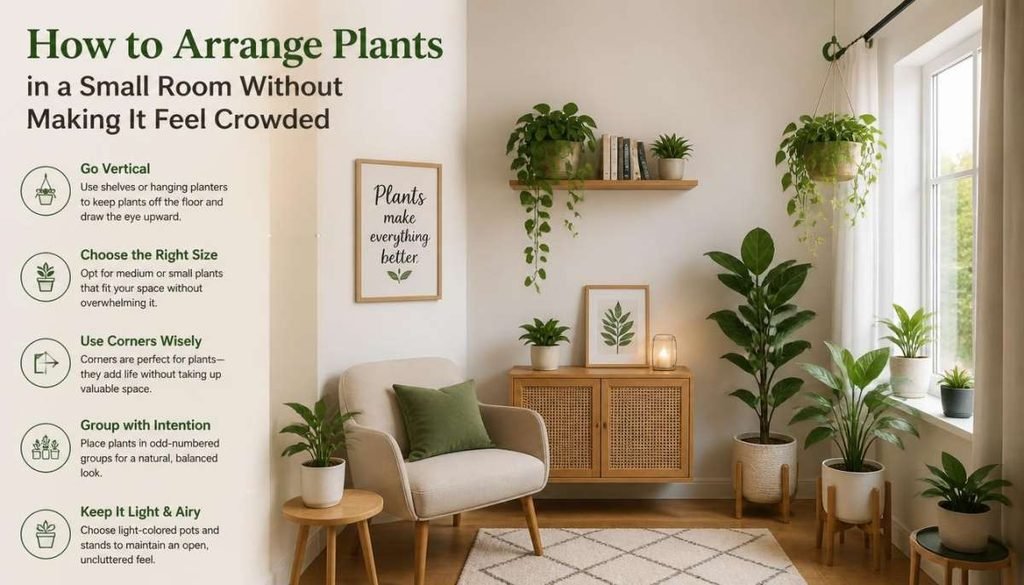
Choosing the right plant is only half the job. Placement can determine whether the room feels fresh and organized or cluttered with pots and leaves.
Use height instead of adding more pots. One upright plant can provide the visual effect of several smaller plants without taking up multiple floor spaces. A shelf mounted securely to the wall can also support suitable lightweight planters.
Keep walkways clear. Do not let a plant’s leaves extend into a narrow passage. This matters especially in hallways, beside doors, and near frequently used furniture.
Group plants by their care needs. Plants with similar light and watering requirements are easier to maintain together. Avoid grouping a thirsty tropical plant with an aloe simply because their pots look attractive next to each other.
Choose a pot that suits the plant. An oversized pot can hold moisture for too long, particularly when the plant has a small root system. A pot that is too small may restrict root growth or become unstable as the plant gets taller.
Leave room for maintenance. You should be able to reach the soil, rotate the pot when necessary, remove dead leaves, and check for pests. A plant that cannot be accessed easily is more likely to be neglected.
For a simple arrangement, use one upright plant in a corner, one compact plant on a surface, and one trailing plant on a shelf. This gives you different heights and textures without filling every available spot.
How to Care for Indoor Plants in Narrow Spaces
Small spaces can create specific plant care challenges. A plant placed tightly against a wall may receive uneven light, while one tucked behind furniture may be difficult to water or inspect.
Give Each Plant Enough Light
Check the light where the plant will actually sit. A room may feel bright to your eyes while the corner beside a cabinet receives very little usable light.
Bright, indirect light generally means a well lit location without strong direct sunlight hitting the foliage for long periods. Rotate the plant occasionally if it grows unevenly toward a window, and move it gradually if you need to adjust its light exposure.
Water According to Soil Moisture
Do not water every plant on the same weekly schedule. A small pot may dry quickly, while a larger pot in a dim corner can remain wet for much longer.
Check the soil before watering. When the plant’s watering needs indicate it is time, water thoroughly enough to moisten the root zone and let excess water drain away. Empty the saucer rather than leaving the roots sitting in water.
If you want to understand how different plants and conditions affect watering, use this guide to how much water plants need as a starting point.
Prune Before Growth Becomes a Problem
Trailing plants can quickly extend beyond their intended area, while some upright plants develop damaged or uneven leaves. Remove dead foliage and trim healthy growth when necessary, using clean tools.
Do not remove large amounts of healthy foliage just to force a plant to remain smaller. Choose a naturally compact species if the available space cannot accommodate the plant’s normal growth.
Check for Pests Regularly
Leaves pressed against walls or crowded together can be harder to inspect. When watering, look underneath leaves and around stems for webbing, sticky residue, unusual spots, or small insects.
Isolate a plant if you suspect a pest problem, and treat it appropriately before returning it to a group of houseplants.
Repot When the Plant Needs It
A narrow room does not mean a plant should remain in the same tiny pot forever. Roots growing through drainage holes, water passing straight through the root ball, or growth slowing despite suitable care can indicate that repotting is needed.
Move the plant into a pot only modestly larger than its existing root system. Choose a shape that fits the available location, but do not sacrifice drainage or root health just to save a little space.
Common Mistakes When Choosing Plants for Narrow Spaces
Choosing by appearance alone. A plant that looks compact in a shop may grow much wider at home. Check its expected mature size and growth habit before purchasing it.
Assuming every low light plant can live in darkness. Tolerating lower light does not mean a plant can grow indefinitely without useful light. Match the plant to the room or provide suitable grow lighting.
Using oversized pots. More soil does not automatically mean better growth. Excess soil can remain wet around a small root system and increase the risk of root rot.
Crowding several plants into one corner. Too many pots can block light, restrict airflow, and make watering difficult. One well chosen plant often looks better than several poorly placed ones.
Ignoring pet safety. Many common houseplants can be harmful if chewed or swallowed. Check toxicity before buying, particularly if cats or dogs can reach the foliage.
Watering by the calendar. Plant needs change with light, temperature, season, pot size, and growth. Check the soil instead of assuming every plant needs water on the same day.
Final Thoughts
The best indoor plants for narrow spaces are not necessarily the smallest plants you can buy. They are the ones whose mature shape, light requirements, and care needs fit comfortably into your home.
Choose a snake plant or Dracaena marginata for vertical growth, Peperomia obtusifolia for a small surface, or pothos for a shelf where its stems can trail. For darker rooms, consider plants that tolerate lower light, while remembering that every living plant still needs suitable conditions.
Start with one plant that matches your space, check how it grows over time, and add more only when you know where they will fit. A thoughtful choice can make even a small room feel greener without turning it into a crowded collection of pots.
Frequently Asked Questions
What is the best indoor plant for a very narrow space?
A snake plant is often one of the best options because its leaves grow mainly upward rather than spreading widely. Dracaena marginata is another option when you want height. Always check the mature size of the particular variety.
Which indoor plants take up the least floor space?
Compact plants such as Peperomia obtusifolia can fit on desks and shelves, while pothos and heartleaf philodendron can grow from hanging pots or elevated shelves. Using vertical space is often the easiest way to add greenery without adding more floor pots.
What is the best plant for a narrow hallway?
A snake plant can work in a hallway that receives enough usable light and has room for a stable pot. If the hallway is very dark, consider a different location or suitable grow lighting rather than expecting a plant to thrive without light.
Can indoor plants grow in small pots?
Yes, provided the pot is appropriate for the plant’s root system and has adequate drainage. Compact species often work well in smaller containers, but they may still need repotting as they grow.
Which narrow space plants are safe for cats?
Parlor palms and spider plants are generally considered non toxic to cats. However, always confirm the identity of the plant before purchasing it, since common names can refer to different species. Even non toxic foliage can cause stomach upset if a cat eats a large amount.
How do I keep indoor plants small?
Choose a species or variety with a naturally compact growth habit, provide appropriate light, and prune selectively when necessary. Avoid trying to keep a naturally large plant permanently tiny by restricting its roots or depriving it of light.
Are artificial plants better for dark corners?
Artificial plants can be a practical decorative choice for spaces without enough light to support living plants. If you prefer a real plant, place it where its basic light and watering needs can be met instead of choosing a location based only on appearance.

Jack Rivers is the founder of Plantsopedia, dedicated to making plant care simple, science-backed, and accessible for everyone. With a deep interest in botanical care and plant psychology, he specializes in rare tropical species and organic growth techniques, helping enthusiasts understand the soil, light, and biology behind every thriving plant. When he’s not experimenting with new propagation methods, Jack is busy turning complex horticultural science into practical, everyday advice for home gardeners