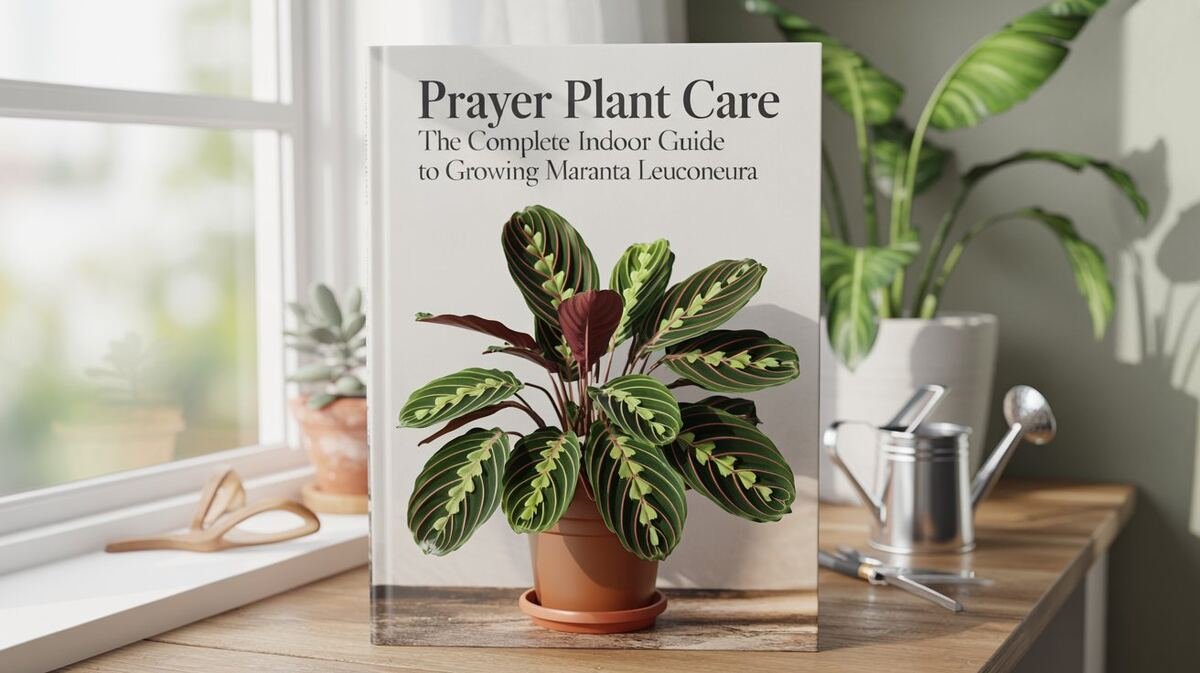
The prayer plant is one of those rare houseplants that does something genuinely remarkable every single night, its leaves fold upward like hands clasped in prayer, then open again with the morning light. That movement alone makes it one of the most captivating plants you can keep indoors. And unlike a lot of visually striking plants, it’s actually manageable for most people as long as you understand what it needs.
Native to the tropical rainforests of Brazil, Maranta leuconeura grows on the forest floor in warm, humid, low-light conditions. Replicate that environment indoors and it rewards you with some of the most richly patterned foliage of any houseplant you’ll own.
What Is a Prayer Plant?
Maranta leuconeura is a low-growing tropical perennial in the Marantaceae family the same family as Calathea, Stromanthe, and Ctenanthe. Native to the rainforests of Brazil, it grows naturally on the forest floor, sheltered from harsh sun by the dense canopy above.
What makes it genuinely fascinating is nyctinasty its leaves rise and fold inward every evening, then open flat again at dawn. Research suggests this helps the plant conserve moisture and protect itself from nocturnal insects. A 2024 study also found it actively reduces indoor CO₂ levels, giving it real air-purifying credentials.
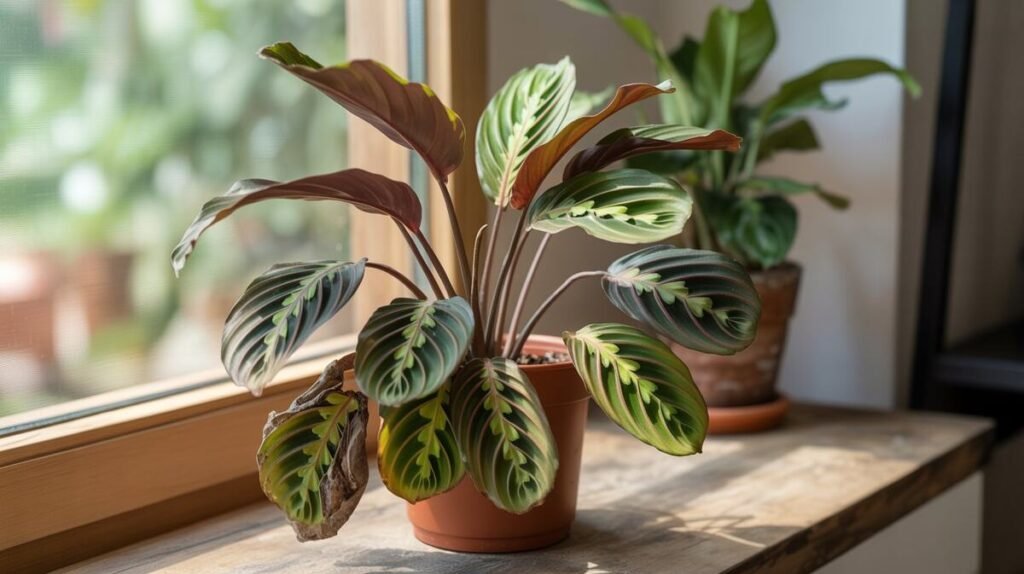
It grows to around 12 inches tall with oval, hand-painted-looking leaves — intricate patterns of light and dark green, red veins, and deep purple undersides.
Prayer Plant Maranta leuconeura Quick Care Guide
| Care Factor | What Your Prayer Plant Needs |
| Botanical Name | Maranta leuconeura |
| Light | Bright indirect light — no direct sun |
| Watering | Keep soil consistently moist, never waterlogged |
| Humidity | 50 to 60% preferred |
| Temperature | 65°F to 80°F (18°C to 27°C) |
| Soil | Well-draining mix with added perlite or peat |
| Fertilizer | Apply once monthly during spring and summer, using a solution diluted to half strength. |
| Toxicity | Non-toxic to pets and humans |
Types of Prayer Plants
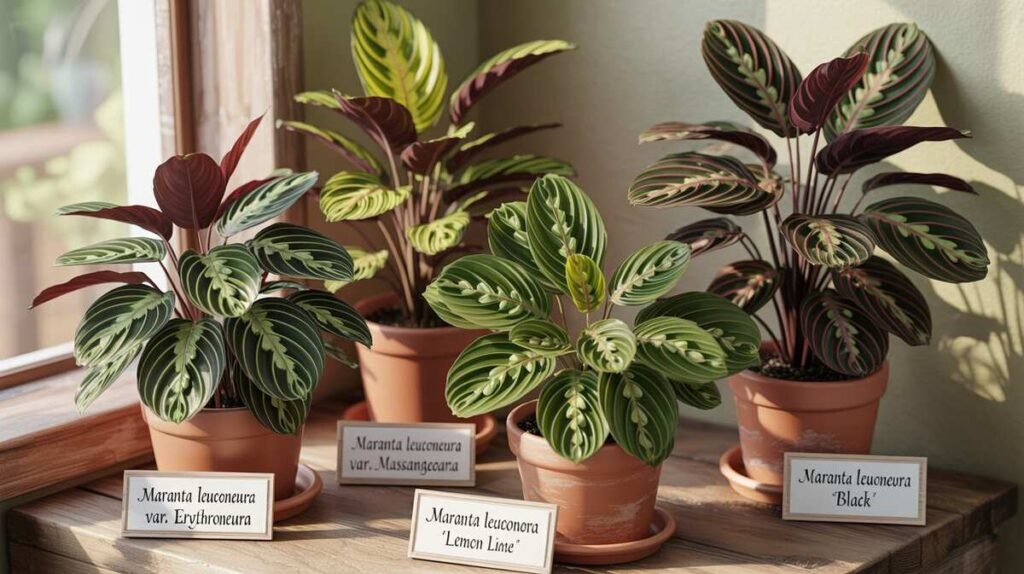
All Maranta varieties share the same care requirements. The difference is purely visual and there’s a variety for every aesthetic.
Maranta leuconeura ‘Erythroneura Herringbone Plant
The most widely recognised variety. Bold red veins run through dark and light green leaves with deep purple undersides. Dramatic, striking, and the one you’ll most commonly find at garden centres.
Maranta leuconeura ‘Kerchoveana’ Rabbit Tracks
Blue-green leaves with dark brown splotches that resemble small animal footprints. More subtle than the Erythroneura but equally beautiful. Particularly adaptable in lower light conditions.
Maranta leuconeura ‘Fascinator Tricolor’
A three-toned variety with green, yellow-green, and red markings across the leaf surface. One of the most colourful options in the genus genuinely eye-catching in any room.
Maranta leuconeura ‘Bambino’
A compact variety with the same beautiful patterning as its larger relatives but in a smaller, more desk-friendly size. Ideal for tight spaces and shelves.
Prayer Plant Care
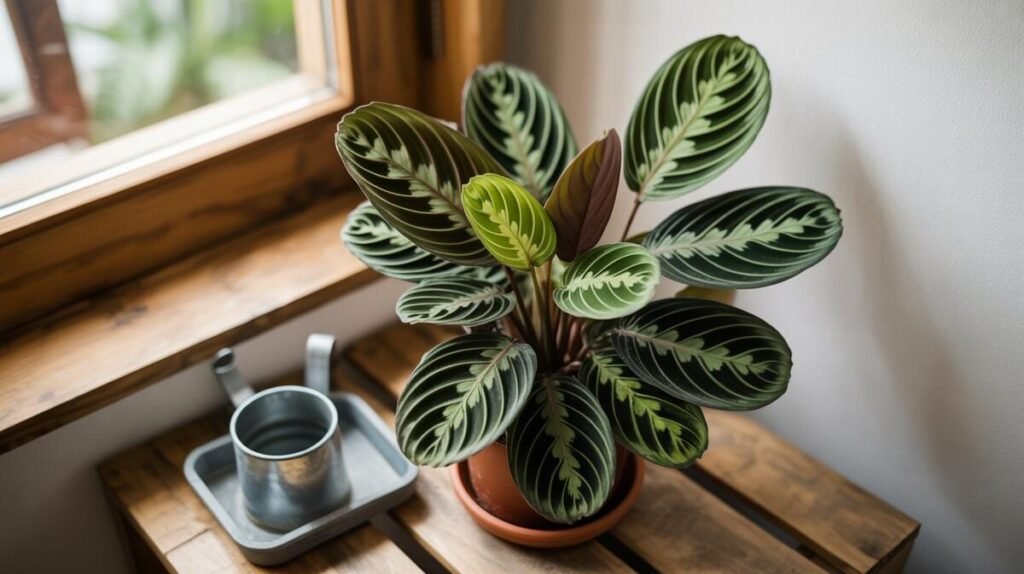
Prayer plant care comes down to mimicking the warm, humid, filtered-light conditions of a Brazilian rainforest floor. It’s not complicated but it is specific. Here’s what each element requires.
Light
Prayer plants thrive in bright, indirect light. Direct sun scorches the leaves and causes the vibrant patterns to fade sometimes permanently. A north or east-facing window is ideal. If you only have a south or west-facing window, move the plant a few feet back from the glass or use a sheer curtain to diffuse the light.
One advantage over many houseplants: prayer plants also grow well under fluorescent light, making them one of the better options for offices and rooms with limited natural light.
Soil
Use a well-draining potting mix that still retains some moisture a standard houseplant compost with added perlite or peat works well. The soil needs to hold enough moisture to stay consistently damp between waterings, but never become compacted or waterlogged.
A slightly acidic pH of 6.0 to 7.0 is ideal. Always use a pot with drainage holes without them, excess water has nowhere to go and root rot follows quickly.
Water
Keep the soil consistently moist from spring through summer water when the top inch feels dry, roughly every 1 to 2 weeks depending on your conditions. In winter, let the soil dry out slightly more between waterings but never completely.
Prayer plants are sensitive to chemicals in tap water, particularly fluoride and chlorine, which cause brown leaf tips over time. Use distilled, filtered, or rainwater where possible or leave tap water in an open container overnight before using it.
Always water at room temperature and flush the soil every few months to clear any accumulated mineral salts.
Temperature and Humidity
Prayer plants prefer temperatures between 65°F and 80°F (18°C to 27°C). They’re sensitive to cold anything below 60°F slows growth and increases disease susceptibility, and temperatures below 55°F can cause irreversible leaf damage.
Keep them away from cold drafts, air conditioning vents, and radiators. On humidity, aim for 50 to 60%. Dry air is one of the most common triggers for brown leaf tips.
A pebble tray, regular misting (from a distance never soak the leaves directly, as wet foliage invites fungal issues), or a nearby humidifier all work well to maintain adequate moisture in the air around the plant.
Fertilizer
Feed once a month during spring and summer with a balanced liquid fertilizer diluted to half strength. A 10-10-10 or 20-20-20 NPK ratio works well. Stop feeding completely in autumn and winter when the plant enters its rest phase overfertilizing during dormancy builds up salt in the soil which burns the roots and causes leaf discolouration.
Every few months, flush the soil thoroughly with water to clear any residual mineral build-up, especially if you use a chemical fertilizer.
Also Read : Care for Maidenhair Fern Plants The Honest, Expert Guide
Why Your Prayer Plant Has Brown Leaves
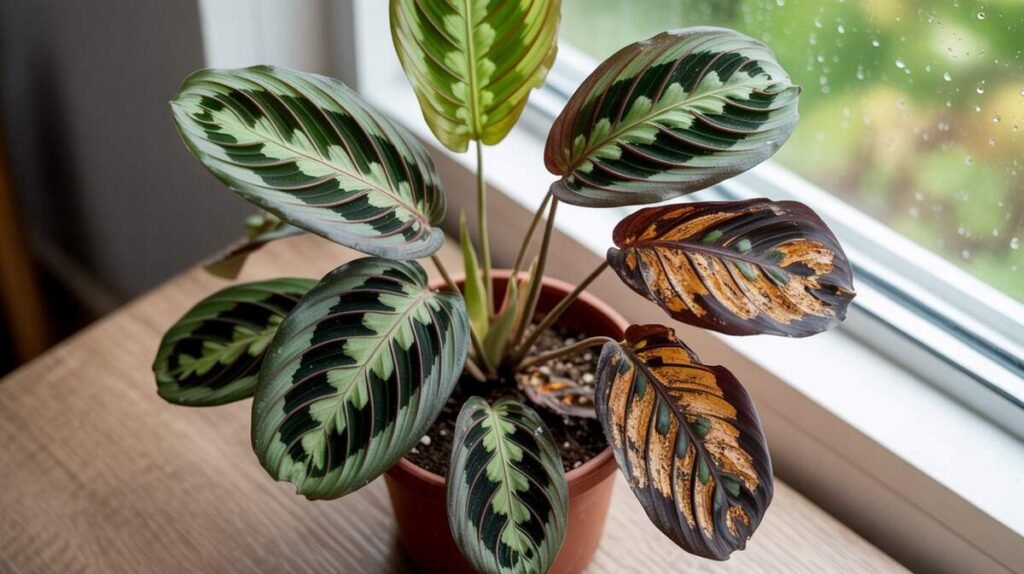
Brown leaves are the most common complaint with prayer plants and there are several distinct causes, each with a different fix.
Brown Leaf Tips
Almost always caused by low humidity or by fluoride and chlorine in tap water. Use filtered or rainwater instead, and raise the humidity levels around the plant.tips that appear alongside faded patterns usually point to too much direct light as well.
Brown Patches or Spots
Direct sunlight hitting the leaves causes brown scorched patches — move the plant away from the window or add a sheer curtain. Brown spots with yellow rings around them can indicate a fungal issue, usually triggered by water sitting on the leaves — always mist from a distance and ensure good air circulation.
Widespread Browning
If large portions of the plant are browning all at once, check for root rot from overwatering, salt build-up from over-fertilizing, or sudden cold exposure. Remove affected leaves, address the root cause, and the plant will typically recover with fresh growth within a few weeks.
Common Problems With Prayer Plants
Yellow Leaves
Yellow leaves usually mean overwatering or poor drainage. Let the soil dry out more between waterings and check that the pot is draining properly. Occasionally, yellowing is caused by underwatering or significant temperature fluctuations work through each possibility systematically.
Dropping Leaves
Sudden leaf drop is almost always a stress response usually caused by cold air, a dramatic change in conditions, or the plant being moved to a new location. Stabilise the environment, maintain consistent moisture, and new growth will emerge once the plant settles.
Leaves Not Folding at Night
If your prayer plant stops its evening leaf movement, it’s usually getting too much artificial light after dark try switching off lights near the plant in the evening. Stress from poor care conditions can also suppress nyctinasty.
Common Pests
Spider mites are the most common pest look for fine webbing on the undersides of leaves and a stippled, dull appearance to the foliage.
They thrive in dry air, which is another reason humidity matters. Mealybugs appear as white cottony masses in leaf joints. Treat both with neem oil or insecticidal soap and isolate the plant immediately to prevent spread.
Pruning Prayer Plants
Autumn is the best time to prune. Use clean, sharp scissors to cut away older or leggy stems just above a leaf node. This encourages the plant to produce fresh, bushy new growth rather than continuing to extend existing stems.
Remove any yellowed or damaged leaves as they appear throughout the year leaving them on the plant wastes energy that could go toward healthy new growth.
Propagating Prayer Plants
Division during repotting is the easiest and most reliable method. Gently remove the plant from its pot, shake off excess soil, and separate the root clump into smaller sections each one needs a healthy mass of roots and at least a few stems. Pot each division separately, keep warm and consistently moist, and new growth will appear within a few weeks.
Spring and summer are the best times, when the plant is in active growth. Stem cuttings taken just below a leaf node and rooted in water also work well place in bright indirect light and transplant to soil once roots are 2 to 3 inches long.
Is the Prayer Plant Right for You?

The prayer plant is a genuinely good choice for most indoor gardeners. It’s not as demanding as a maidenhair fern, not as finicky as a Calathea, and it rewards consistent basic care with lush, patterned growth and that extraordinary daily leaf movement.
It’s non-toxic to pets and humans, adapts to a range of light conditions including artificial light, and fits comfortably on shelves, desks, and windowsills.
If you can water it regularly, keep the humidity reasonable, and give it a spot away from direct sun this plant will thrive for years and remain one of the most interesting things in your home.
Frequently Asked Questions
How often should I water a prayer plant?
Water when the top inch of soil is dry — roughly every 1 to 2 weeks in spring and summer. Reduce slightly in winter but never let the soil dry out completely. Use filtered or room-temperature water to avoid tip browning.
Why is my prayer plant not praying?
Most likely too much artificial light after dark — the plant needs a period of darkness to trigger its leaf-folding movement. Stress from poor care conditions can also suppress nyctinasty. Try switching off lights near the plant in the evening.
Are prayer plants toxic to cats and dogs?
No Maranta leuconeura is completely non-toxic to cats, dogs, and humans. It’s one of the safest popular houseplants you can own.
Why does my prayer plant have brown tips?
Usually low humidity or tap water chemicals fluoride and chlorine cause tip browning in sensitive plants. Switch to filtered or rainwater and increase humidity around the plant.
How much light does a prayer plant need?
Bright, indirect light near a north or east-facing window is ideal. It tolerates lower light better than most patterned-leaf houseplants and grows well under fluorescent lighting.
How often should I repot a prayer plant?
Every 2 to 3 years, or when roots push through the drainage holes. Spring is the best time. Choose a pot only 1 to 2 inches larger than the current one and use fresh well-draining compost.

Jack Rivers is the founder of Plantsopedia, dedicated to making plant care simple, science-backed, and accessible for everyone. With a deep interest in botanical care and plant psychology, he specializes in rare tropical species and organic growth techniques, helping enthusiasts understand the soil, light, and biology behind every thriving plant. When he’s not experimenting with new propagation methods, Jack is busy turning complex horticultural science into practical, everyday advice for home gardeners