Indoor tropical plants can completely change the feel of a room. Their large leaves, rich green color, and relaxed shapes bring a natural look to spaces that might otherwise feel plain or overly formal.
But bringing tropical plants indoors is not just about picking the prettiest one. Some need bright indirect light, while others handle lower-light corners. Some prefer consistently moist soil, while others need the soil to dry slightly between waterings.
The easiest way to choose the right plant is to start with your home’s conditions. Think about the amount of natural light, available space, humidity, and how often you realistically want to water and care for your plants.
Here are some of the best indoor tropical plants, along with simple ways to keep them healthy and use them around your home.
What Are Indoor Tropical Plants?
Indoor tropical plants are plants that naturally come from warm, humid regions but can be grown inside when their basic environmental needs are met.
Many are known for broad leaves, interesting shapes, fast or moderate growth, and lush foliage. Popular examples include monstera, bird of paradise, philodendrons, rubber plants, peace lilies, and calatheas.
What Makes a Plant Tropical?
Tropical plants generally come from warm climates where temperatures remain relatively mild throughout the year. Many grow naturally beneath tree canopies, which means they can be adapted to filtered or indirect light rather than harsh midday sun.
Their natural environments can also have higher humidity and regular rainfall, although individual species have different needs.
Can Tropical Plants Grow Well Indoors?
Yes. Many tropical species grow successfully indoors when they receive suitable light, water, drainage, and temperatures.
The biggest mistake is assuming that every tropical plant needs the same treatment.
A plant that thrives beside a bright window may struggle in a dark hallway, while a more shade-tolerant variety could do perfectly well in the same general home.
What Do Tropical Plants Need to Thrive?
Most indoor tropical plants benefit from:
- Suitable natural or supplemental light
- Well-draining soil
- A pot with drainage holes
- Appropriate watering
- Stable indoor temperatures
- Reasonable humidity
- Occasional feeding during active growth
- Enough room for their roots and leaves
The exact requirements depend on the species, so always check the care needs of the plant you choose.
Best Indoor Tropical Plants for Your Home
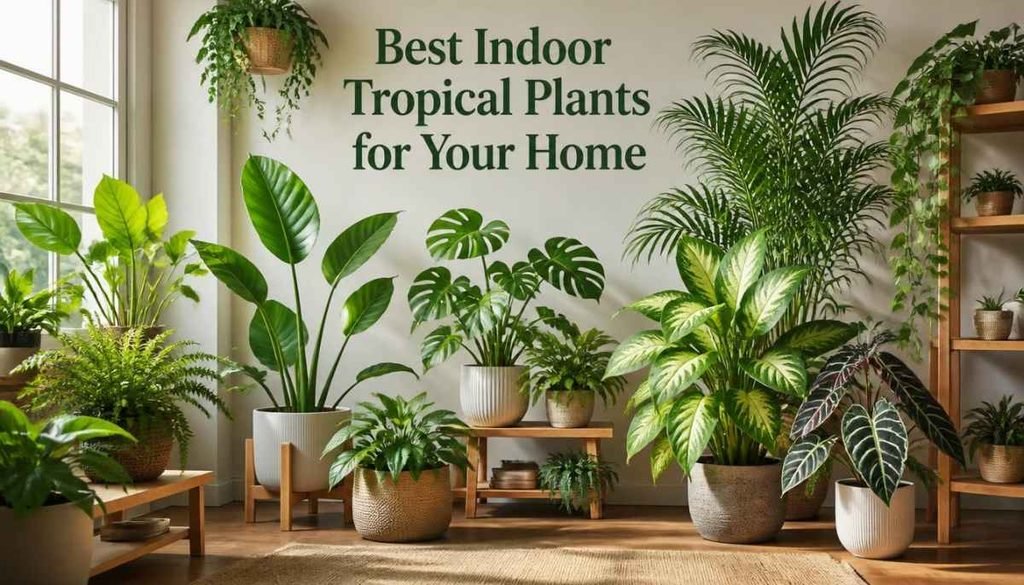
There are plenty of tropical houseplants to choose from, but some stand out because they combine attractive foliage with manageable indoor care.
Monstera Deliciosa
Monstera deliciosa is one of the easiest ways to create a lush tropical look indoors.
Its large green leaves develop natural splits as the plant matures, giving it a dramatic appearance without requiring complicated styling.
Place it near bright, indirect light and give it a sturdy container with good drainage. Allow the upper part of the soil to dry somewhat before watering again rather than keeping the soil constantly saturated.
Bird of Paradise
Bird of paradise is a good choice when you want a tall statement plant.
Its large leaves can give an empty corner a more finished look, especially in a spacious living room or bright sunroom.
It generally prefers plenty of bright light. Give it enough space because mature plants can become much larger than they appear when first purchased.
Fiddle Leaf Fig
Fiddle leaf fig has large, violin-shaped leaves that can make a room feel more sophisticated and architectural.
It generally prefers bright, filtered light and a consistent care routine.
Avoid constantly moving it from one location to another. Sudden changes in light or conditions can make it harder for the plant to adjust.
Rubber Plant
Rubber plants have thick, glossy leaves and can grow into attractive indoor trees when given the right conditions.
They work particularly well beside a bright window where the light is filtered rather than harsh.
Let the soil dry somewhat between waterings and make sure excess water can drain away.
Philodendron
Philodendrons are available in many forms, making them useful for both small and large spaces.
Some varieties have trailing growth that works beautifully on shelves, while others grow more upright.
They are a practical option when you want tropical-looking foliage without committing to a very large plant.
Peace Lily
Peace lilies have deep green foliage and distinctive flowers.
They can tolerate lower light than many tropical plants, although low light can affect flowering.
Keep the soil appropriately moist without leaving the roots sitting in excess water, and pay attention to drooping leaves as a sign that the plant needs attention.
Anthurium
Anthuriums are known for their glossy leaves and colorful, long-lasting flowers.
They can add a brighter tropical accent to a room that already has plenty of green foliage.
Give them good indirect light, well-draining soil, and a warm indoor environment.
Areca Palm
An areca palm can bring a softer, more relaxed tropical feeling to a room.
Its narrow fronds work especially well in open corners where a fuller plant would look natural.
Give it suitable bright or filtered light and avoid allowing the roots to remain constantly waterlogged.
Boston Fern
Boston ferns have delicate, arching fronds that create a softer look than plants with large, rigid leaves.
They generally appreciate humidity and consistent moisture, making them particularly interesting for homes where the air isn’t excessively dry.
They can work beautifully in hanging baskets or on plant stands.
Calathea
Calatheas are popular for their patterned foliage and decorative leaves.
They can be more sensitive to inconsistent watering and dry indoor conditions than some beginner-friendly houseplants, so they’re better suited to people who don’t mind giving their plants a little extra attention.
Indoor Tropical Plants for Different Light Conditions
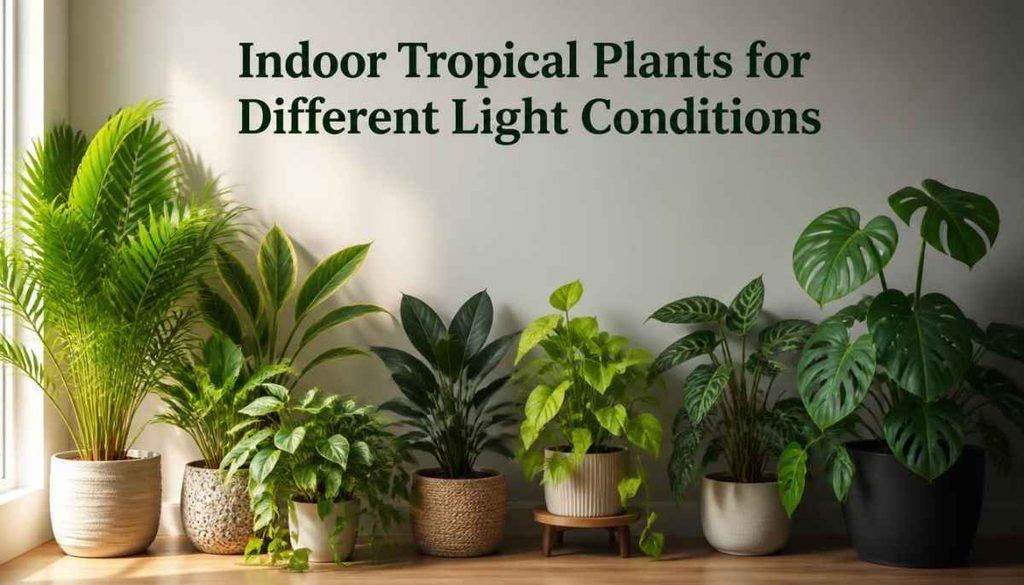
Light is one of the first things you should consider before buying a plant.
A beautiful tropical plant won’t perform well if its new location doesn’t provide the conditions it needs.
Best Tropical Plants for Bright Indirect Light
Bright indirect light works well for many tropical houseplants.
You can place suitable plants near a bright window while protecting sensitive foliage from intense direct sunlight.
Monstera, rubber plants, bird of paradise, and fiddle leaf figs can all be good options depending on the exact variety and conditions.
Tropical Plants for Medium Light
If your room has good natural light but isn’t particularly bright, consider plants that are more adaptable.
Philodendrons and peace lilies can work well in many medium-light indoor spaces.
Remember that medium light doesn’t mean complete darkness. Plants still need enough light to photosynthesize and maintain healthy growth.
Tropical Plants for Low-Light Rooms
Some tropical houseplants tolerate lower-light conditions better than others.
Peace lily and certain philodendron varieties can be options for rooms with less natural light.
However, a room described as “low light” should still have some usable ambient light. A windowless room may require artificial grow lighting for long-term plant health.
What to Do If Your Room Gets Very Little Natural Light
If your favorite plant needs more light than your room provides, you don’t necessarily have to give up on it.
A suitable grow light can supplement natural light.
Choose a setup appropriate for the plant and follow the manufacturer’s instructions for distance and duration rather than placing an extremely bright light directly against the leaves.
How to Care for Indoor Tropical Plants
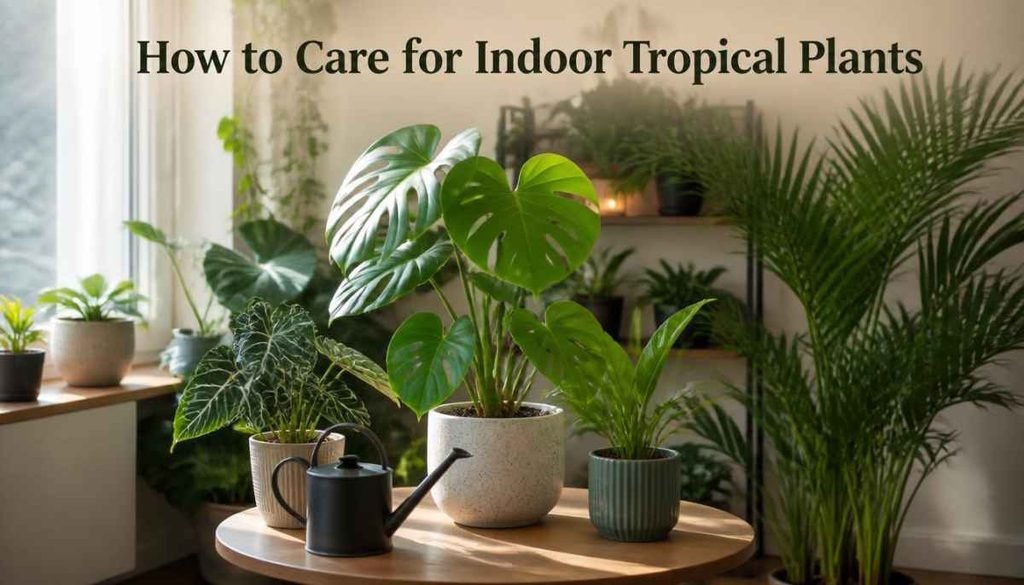
Once you bring a tropical plant home, the goal isn’t to recreate a rainforest. It’s to provide stable conditions that suit that particular species.
Give Them the Right Amount of Light
Place the plant according to its specific light requirements.
Bright indirect light generally means the room is bright but the leaves aren’t exposed to intense direct sunlight for long periods.
Watch the plant over time. Weak growth, pale foliage, or excessive stretching can indicate that it isn’t receiving enough usable light.
Water Based on the Soil, Not a Fixed Schedule
Avoid automatically watering every tropical plant on the same day each week.
Check the soil first.
Some plants prefer the upper layer to dry before watering, while others prefer more consistent moisture.
Water thoroughly when appropriate, then allow excess water to drain from the pot.
Keep Humidity at a Comfortable Level
Many tropical plants naturally grow in humid environments, but different species have different tolerance levels indoors.
If your home has very dry air, you can consider grouping compatible plants together, using a humidifier, or placing plants in naturally more humid areas.
Avoid keeping foliage constantly wet just to increase humidity, as prolonged moisture on leaves can contribute to other problems.
Use Well-Draining Potting Soil
Dense soil that holds excessive water can create problems for many indoor tropical plants.
A suitable indoor potting mix should provide enough structure for roots while allowing excess moisture to drain.
The ideal mix depends on the plant. Some tropical plants prefer a more airy, chunky growing medium than others.
Choose Pots With Drainage Holes
Drainage is one of the easiest things to overlook when buying decorative planters.
A beautiful pot without proper drainage can allow excess water to collect around the roots.
If you want to use a decorative outer planter, keep the plant in a suitable nursery pot with drainage and empty excess water rather than letting it sit in a pool.
Feed Plants During Active Growth
Indoor tropical plants can benefit from fertilizer during periods of active growth.
Use a fertilizer suitable for the specific plant and follow the product instructions.
More fertilizer isn’t automatically better. Overfeeding can damage roots and create unnecessary salt buildup in the growing medium.
Rotate Plants for Even Growth
Plants naturally grow toward available light.
Rotating the pot occasionally can help encourage more balanced growth, especially when light comes mainly from one direction.
Don’t rotate constantly. Give the plant time to adjust and grow.
How to Create an Indoor Tropical Jungle
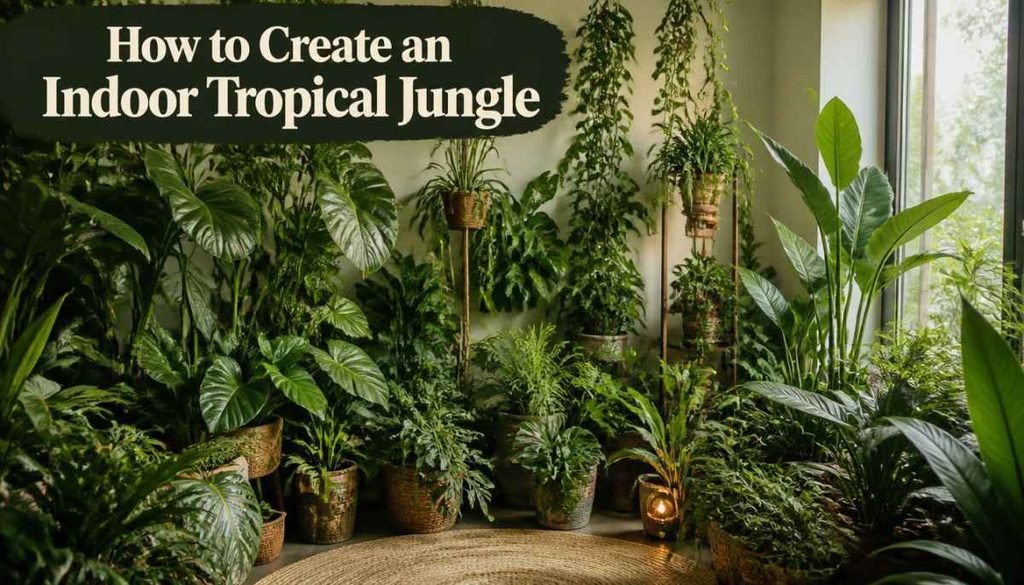
You don’t need dozens of plants to create a tropical feeling.
The key is to combine different heights, leaf shapes, textures, and containers so the arrangement looks intentional.
Group Plants at Different Heights
Place tall plants on the floor, medium plants on stands, and smaller varieties on shelves or tables.
This creates layers rather than making every plant sit at the same level.
Use Large Plants as Focal Points
A large monstera, bird of paradise, or similar statement plant can fill an empty corner and become part of the room’s overall design.
Instead of spreading large plants randomly throughout the house, use one as a visual anchor.
Add Trailing Plants to Shelves
Trailing philodendrons and other suitable plants can soften shelves, bookcases, and cabinets.
Let some foliage hang naturally rather than arranging every leaf.
Use Hanging Planters
Hanging plants can add greenery without taking up valuable floor or table space.
They’re especially useful in smaller rooms where every surface already has a purpose.
Fill Empty Corners With Tall Plants
A tall plant can make an unused corner feel intentional.
Choose a plant whose mature size fits the room rather than buying solely based on how small it looks at the store.
Mix Different Leaf Shapes and Textures
Combine large leaves with smaller foliage and trailing growth.
For example, a large-leaf monstera can look more interesting beside a plant with narrow leaves or softer foliage.
Choose Natural-Looking Plant Pots
Ceramic, terracotta, woven, stone-look, and other natural finishes can complement tropical greenery.
You don’t need every pot to match. A small amount of variation can make a plant collection feel more collected and relaxed.
Best Indoor Tropical Plants for Every Room
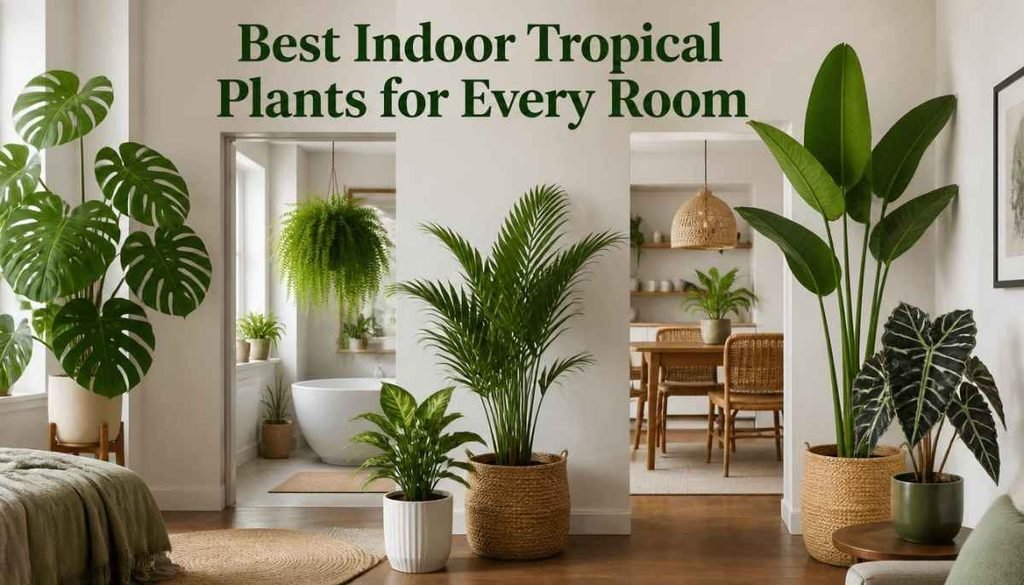
The best plant for your home isn’t necessarily the most popular one. The room itself should help determine your choice.
Tropical Plants for the Living Room
Living rooms often provide more floor space and natural light than other areas.
Large plants such as bird of paradise, monstera, and rubber plants can work well as focal pieces, while smaller philodendrons can fill shelves or side tables.
Tropical Plants for the Bedroom
Choose plants that fit the available light and don’t overcrowd the room.
A medium-sized peace lily or smaller foliage plant can add greenery without making the bedroom feel packed.
Tropical Plants for the Bathroom
Bathrooms can provide higher humidity, but light still matters.
If your bathroom has a window with usable natural light, certain tropical plants can thrive there. A dark bathroom may require supplemental lighting.
Tropical Plants for the Home Office
A small philodendron, peace lily, or other compact tropical plant can soften a desk or shelf.
Keep enough workspace available so the plant doesn’t interfere with your computer, documents, or daily routine.
Tropical Plants for a Bright Sunroom
A bright sunroom gives you more options, but direct sunlight can still be intense.
Use sheer curtains or appropriate placement when necessary, and choose species that match the actual light levels rather than assuming every tropical plant loves direct sun.
Tropical Plants for Small Apartments
Small spaces benefit from plants that use vertical space.
Try hanging planters, narrow plant stands, shelves, and compact varieties rather than filling the floor with large pots.
Easy Indoor Tropical Plants for Beginners
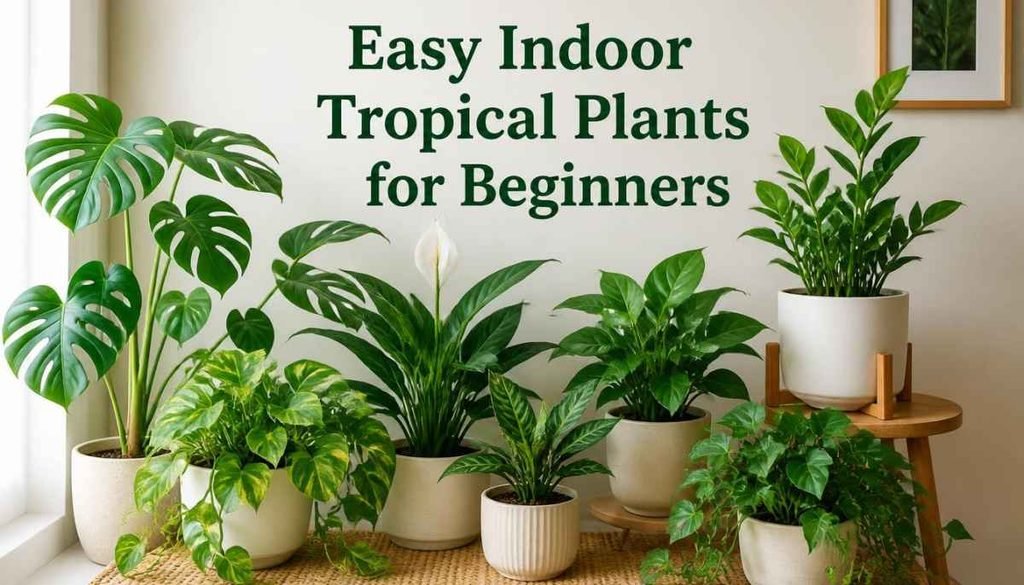
If you’re new to houseplants, start with varieties that are reasonably forgiving rather than choosing the most demanding plant simply because it looks beautiful.
Snake Plant
Snake plants aren’t traditionally what most people picture when they hear “tropical jungle,” but they can add strong vertical greenery and are known for tolerating a range of indoor conditions.
They also prefer that the soil dry between waterings.
ZZ Plant
ZZ plants have glossy foliage and can tolerate lower light and periods of neglect better than many tropical-looking houseplants.
They’re useful for beginners who are still developing a consistent watering routine.
Pothos
Pothos is popular for its trailing growth and adaptability.
Place it on a shelf, cabinet, or hanging planter where its vines can fall naturally.
Philodendron
Many philodendrons are easy to work into indoor plant collections.
Their different growth habits make them useful for shelves, stands, and larger spaces.
Cast Iron Plant
Cast iron plants are known for their tolerance of lower-light indoor conditions and less-than-perfect care.
They’re a useful option for darker areas where more light-demanding tropical plants might struggle.
Peace Lily
Peace lilies can be rewarding for beginners because their foliage visibly responds when they need water.
However, don’t use drooping as a reason to repeatedly let the plant become severely dry. Aim for consistent care based on the plant’s needs.
Common Problems With Indoor Tropical Plants
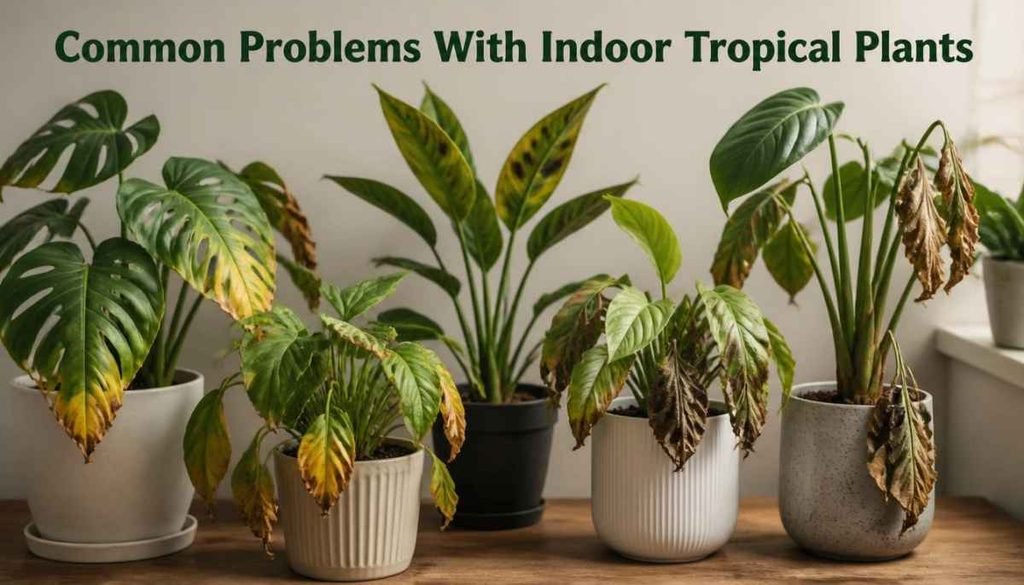
Even a healthy plant can develop problems after moving indoors.
The trick is to look at the symptoms alongside the growing conditions.
Brown Leaf Tips
Brown tips can have several causes, including inconsistent watering, dry air, fertilizer buildup, or other environmental stress.
Don’t assume humidity is always the answer. Check the complete care routine first.
Yellow Leaves
An occasional older yellow leaf can be normal.
Several yellow leaves appearing together can indicate problems such as excessive moisture, poor drainage, insufficient light, or other stress.
Drooping Leaves
Drooping can happen when a plant needs water, but it isn’t always caused by underwatering.
Root problems from excessive moisture can also affect the plant’s ability to take up water.
Check the soil before watering again.
Root Rot
Root rot is often associated with persistently wet growing conditions and poor drainage.
A pot without drainage, heavy soil, and frequent watering can all contribute to the problem.
Slow Growth
Slow growth isn’t automatically a sign that something is wrong.
Indoor plants often grow more slowly during periods of lower light or cooler conditions.
If growth has stopped unexpectedly, check light, watering, temperature, roots, and nutrition.
Pests on Leaves
Spider mites, scale, mealybugs, and other pests can affect indoor plants.
Inspect new plants before bringing them near your existing collection and check leaves regularly for unusual spots, webbing, insects, or sticky residue.
Leaves Losing Their Color
Changes in leaf color can result from several factors, including light exposure, watering problems, nutrient issues, or natural aging.
Look at the overall condition of the plant rather than diagnosing the problem from one leaf.
How to Keep Indoor Tropical Plants Healthy Year-Round
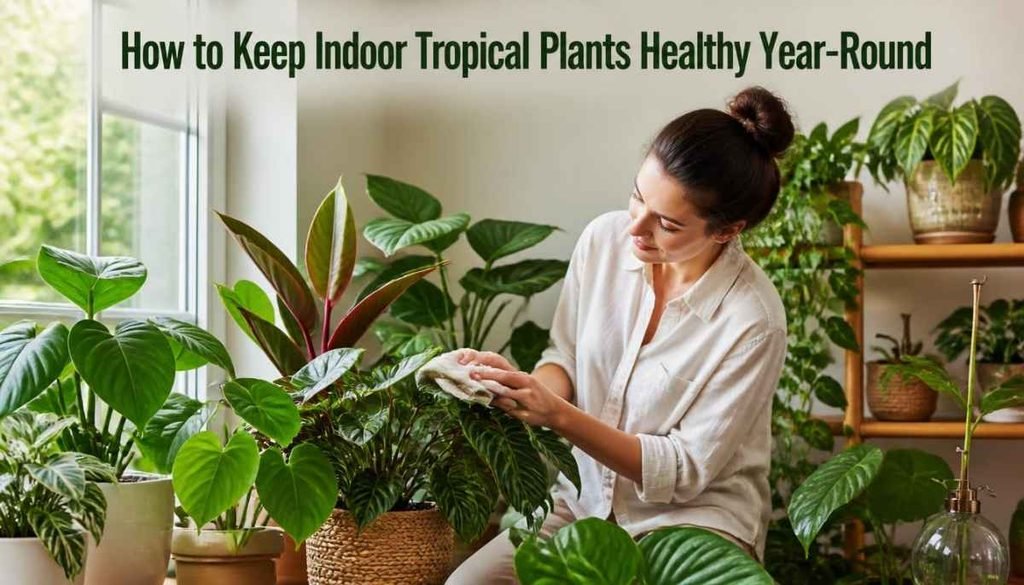
Indoor conditions change throughout the year, even when the temperature inside feels fairly stable.
Adjust Watering With the Seasons
Plants may use water differently as light levels and growth rates change.
Instead of following the same watering schedule all year, check the soil and plant condition regularly.
Protect Plants From Cold Drafts
Keep sensitive tropical plants away from very cold windows, exterior doors, and strong drafts during colder weather.
Sudden temperature changes can stress tropical foliage.
Keep Them Away From Harsh Direct Sun
A bright window can be excellent for many plants, but intense direct sunlight through glass can scorch sensitive leaves.
Use filtered light or move the plant farther from the window when necessary.
Clean Dust From Large Leaves
Large tropical leaves collect dust easily.
Gently wiping suitable leaves with a clean, damp cloth can help keep the foliage looking fresh and allow you to spot pests or leaf problems more easily.
Watch for Pests
Make plant inspection part of your normal routine.
Check the undersides of leaves, stems, and new growth, particularly after bringing a new plant into your home.
Repot When the Plant Outgrows Its Container
A plant doesn’t need a new pot simply because you’ve had it for a certain amount of time.
Look for signs such as roots becoming severely crowded, water passing through unusually quickly, or the plant becoming unstable.
When repotting, choose a container only modestly larger than the current root system rather than moving a small plant into an enormous pot.
Common Mistakes When Growing Tropical Plants Indoors
Watering Too Often
More water doesn’t mean faster growth.
If the soil stays wet for too long, roots can suffer. Check the plant’s actual moisture needs before watering.
Putting Every Plant in Direct Sun
Tropical doesn’t automatically mean full sun.
Many tropical plants naturally grow beneath larger vegetation and are accustomed to filtered light.
Ignoring Humidity
Very dry indoor air can be stressful for some tropical plants.
If you’re growing humidity-sensitive varieties, monitor the environment instead of assuming regular watering will solve every problem.
Using Pots Without Drainage
Decorative containers are attractive, but poor drainage can create serious root problems.
Always make sure excess water has somewhere to go.
Choosing a Plant Before Checking the Light
This is one of the easiest mistakes to avoid.
Look at the room first. Then choose a plant that fits those conditions.
Keeping Plants Too Close Together
A crowded collection can restrict airflow and make it harder to inspect leaves for pests or disease.
Leave enough space for the plants to grow and for you to care for them.
Moving Plants Around Too Often
It’s tempting to keep searching for the perfect spot.
Instead, make a thoughtful placement based on light and temperature, then give the plant time to adjust before moving it again.
FAQs About Indoor Tropical Plants
What are the best indoor tropical plants?
Some popular choices include monstera, bird of paradise, rubber plants, philodendrons, peace lilies, anthuriums, areca palms, Boston ferns, and calatheas. The best choice depends on the light and conditions in your home.
What tropical plants are easiest to grow indoors?
Pothos, many philodendrons, peace lilies, and some other adaptable houseplants can be good starting points. Snake plants and ZZ plants are also beginner-friendly options when you want durable greenery.
Do indoor tropical plants need direct sunlight?
Not necessarily. Many tropical houseplants prefer bright indirect or filtered light. Some tolerate lower light, while others need much brighter conditions.
How often should you water tropical plants indoors?
There isn’t one watering schedule that works for every tropical plant. Check the soil and follow the specific needs of the species. Avoid watering simply because a certain number of days has passed.
Do tropical plants need high humidity?
Some tropical plants appreciate higher humidity, but their requirements vary. Plants with more humidity-sensitive foliage can benefit from a humidifier or a naturally humid location.
Bring Tropical Greenery Into Your Home
Indoor tropical plants don’t have to turn your home into a full jungle overnight. Start with one or two plants that suit the light and space you already have, then build your collection gradually.
A large plant can anchor an empty corner, a trailing variety can soften a shelf, and a few different leaf shapes can make even a simple room feel more alive. Once you match each plant with the right conditions and develop a consistent care routine, tropical greenery becomes much easier to enjoy.

Jack Rivers is the founder of Plantsopedia, dedicated to making plant care simple, science-backed, and accessible for everyone. With a deep interest in botanical care and plant psychology, he specializes in rare tropical species and organic growth techniques, helping enthusiasts understand the soil, light, and biology behind every thriving plant. When he’s not experimenting with new propagation methods, Jack is busy turning complex horticultural science into practical, everyday advice for home gardeners