Some houseplants attract attention with colorful flowers, while others make an impression through their shape and structure. The yucca plant belongs to the second group. Its sturdy woody stem and long, pointed leaves give it a distinctive appearance that can make an ordinary room feel more connected to nature.
Beyond its decorative appeal, a yucca plant offers several practical advantages for indoor gardeners. It does not demand constant watering, handles the relatively dry atmosphere found in many homes, and can grow into an impressive feature when given enough light and space.
If you are considering adding one to your home, understanding the yucca plant benefits indoors can help you decide whether it suits your room, lifestyle, and plant care routine. Here are seven reasons this striking plant deserves a place in your indoor collection, along with a few important things to know before bringing one home.
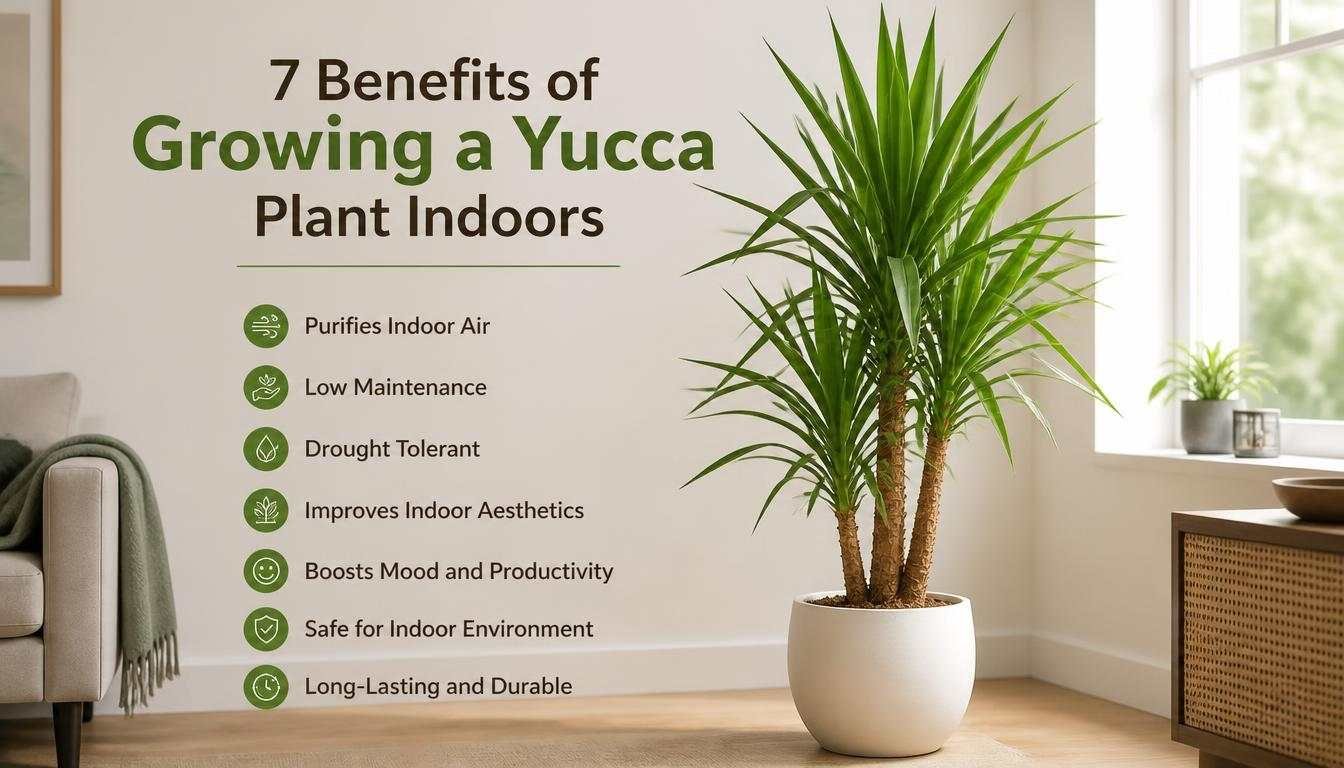
7 Benefits of Growing a Yucca Plant Indoors
1. Gives Your Room a Strong Natural Focal Point
A yucca plant has a shape that is difficult to overlook. Its upright trunk and crown of narrow leaves create height without spreading across the floor like many bushy houseplants. This makes it a useful choice when you want to introduce greenery without filling every available corner.
A mature indoor yucca can work particularly well beside a sofa, near an empty wall, or in an unused corner of a living room. Its bold outline also contrasts nicely with softer furniture, simple curtains, and neutral colored walls.
You do not need several plants to make an impression. A single healthy yucca in an attractive container can provide enough visual interest to change the appearance of a space.
2. Requires Less Frequent Watering
One of the most convenient advantages of a yucca is its ability to tolerate periods of dry soil. Unlike houseplants that prefer consistently moist growing conditions, a yucca is better suited to a watering routine that allows the potting mix to dry substantially between sessions.
This makes it appealing to people who have busy schedules or occasionally forget to water their plants.
However, low watering needs do not mean that the plant can survive indefinitely without attention. Its roots still need occasional moisture to support healthy growth. The important part is avoiding repeated watering while the soil remains damp.
Before adding water, check the moisture several inches below the surface. If the growing mix is still wet, wait longer. A pot with proper drainage also helps prevent excess moisture from collecting around the roots.
3. Handles the Dry Air Found in Many Homes
Some indoor plants struggle when room air becomes dry, especially during periods of heating or when air conditioning runs frequently. Yucca is generally more comfortable in ordinary household humidity than many moisture loving tropical plants.
You usually do not need a humidifier, frequent misting, or a special humidity tray to keep a healthy indoor yucca comfortable.
This can make it a convenient option for living rooms, home offices, and other spaces where humidity is not particularly high.
Remember that tolerance for dry air does not mean the plant enjoys extreme heat or sudden temperature changes. Keep it away from direct blasts of heating or cooling equipment, and avoid placing it against a cold window during winter.
4. Can Grow Into an Impressive Indoor Feature
A yucca does not have to remain a small tabletop plant. The common indoor cane variety can develop a taller trunk and a larger crown of leaves as it matures.
This gradual growth gives you an opportunity to use the plant as part of your home’s longer term interior design. A young specimen may fit beside a desk, while a larger one can become a statement plant in a spacious living area.
Growth depends on light, available root space, the plant’s age, and general growing conditions. Do not expect every indoor yucca to reach the same height or grow at the same speed.
Choose a location where its leaves have enough room to extend naturally. A stable, appropriately sized pot is also useful because a tall plant can become top heavy.
5. Does Not Need Constant Pruning
Many fast growing houseplants need regular trimming to control their shape. A yucca generally grows at a slower pace indoors, so it usually requires less frequent shaping.
Most routine maintenance involves removing completely dry or damaged lower leaves and checking the plant for signs of trouble.
If the trunk becomes too tall for its location, more substantial pruning may be possible, depending on the plant’s condition and the season. However, major cuts should not be made casually. Learn how to handle the cane properly before attempting to shorten it.
For everyday care, occasional leaf cleanup and a quick inspection are often enough to keep the plant looking tidy.
6. Fits Several Interior Design Styles
The appearance of a yucca makes it surprisingly versatile. Its upright form can complement modern, minimalist, rustic, and natural interior styles.
In a bright living room, it can soften a space filled with straight furniture lines. In a home office, it can add a natural element without requiring a large collection of decorative objects. It can also work in a hallway or near an entrance when there is sufficient light and walking space.
The container you choose can change its overall appearance. A simple ceramic pot gives the plant a clean look, while a textured planter can make it feel more relaxed and organic.
If you enjoy arranging greenery throughout your home, you can also explore other indoor plants for smaller spaces to find options that complement your available room.
7. Offers a Manageable Choice for Beginner Plant Owners
A yucca can be a rewarding plant for someone who is still learning the basics of indoor gardening. Its care routine is relatively straightforward once you understand its preference for strong light and less frequent watering.
You do not need to create a complicated daily schedule. Instead, learn to recognize the condition of the soil, inspect the leaves, and make sure the container drains properly.
The plant also provides useful lessons about how different houseplants have different needs. A watering routine that works for a moisture loving plant may be unsuitable for a yucca.
It is not completely maintenance free, but its uncomplicated routine can make it a practical addition to a beginner’s collection.
Does a Yucca Plant Purify Indoor Air?

You may have seen claims that yucca plants remove harmful chemicals from household air. This idea is often connected to laboratory research involving indoor plants and their ability to absorb certain airborne compounds.
However, laboratory results should not be treated as proof that one potted plant can noticeably clean the air in an ordinary living room.
A typical home has much more air volume and continuous air exchange than a small laboratory chamber. Research reviews have found that the number of potted plants needed to make a meaningful difference through this process would be impractical for most indoor spaces.
You can still enjoy a yucca for its greenery, appearance, and connection to nature. Just do not rely on it as a replacement for ventilation, proper cleaning, or an air filtration system.
Where Should You Place a Yucca Plant Indoors?

The location of your yucca has a major influence on how well it grows. Although it can tolerate some variation in indoor conditions, it generally performs best when it receives plenty of natural light.
A bright position near a suitable window is often a good starting point. An east or west facing window can work well, while a sunny south facing window may provide even stronger light. If the plant has been growing in a darker location, introduce stronger sunlight gradually to reduce the chance of leaf damage.
Consider these placement ideas:
Living room: A bright corner with enough space around the leaves can turn a yucca into a decorative focal point.
Home office: Place it near a naturally bright window where it will not interfere with your desk or walking area.
Hallway: Use this location only if it receives enough daylight. A dark hallway may not provide the light needed for healthy growth.
Bedroom: A bright bedroom can also accommodate a yucca, provided there is enough room and the plant is kept away from pets.
Avoid placing the plant in a permanently dark corner simply because its shape looks attractive there. Insufficient light can lead to weak, stretched growth and a less attractive crown.
How to Care for an Indoor Yucca Plant`
A suitable location and a few consistent care habits will help your yucca stay healthy. The following guidelines are useful for the common cane type usually sold as an indoor yucca.
Give It Plenty of Bright Light
Light is one of the most important factors in growing a healthy yucca indoors. Place it near a bright window where it can receive strong natural light.
Some direct sunlight is usually beneficial, especially when the plant has gradually adjusted to it. If the leaves have always grown in filtered light, avoid suddenly moving the plant into intense afternoon sunshine.
Rotate the pot occasionally if one side receives much more light than the other. This can help the crown develop more evenly.
Water According to Soil Moisture
Do not water your yucca simply because a certain number of days has passed. The right interval changes with the season, room temperature, light, pot size, and growing mix.
Check the soil before watering. When much of the root zone has dried, water thoroughly and allow excess moisture to escape through the drainage holes.
During cooler months, growth often slows and the plant may need water less frequently.
Never leave the pot standing in collected water. Constantly wet soil can damage the roots and eventually cause the trunk to become soft.
Choose a Pot With Proper Drainage
A drainage hole is essential for preventing water from remaining around the roots.
Choose a container that is stable enough to support the plant’s weight. Tall yucca specimens can become top heavy, especially when their trunks and crowns grow larger.
Avoid moving a small plant into an excessively large container. A much bigger volume of soil can remain wet longer than the roots can comfortably handle.
Use a Fast Draining Potting Mix
Yucca roots do not benefit from dense growing media that hold excessive moisture.
A suitable cactus or succulent potting mix can provide a useful starting point. You can also improve an ordinary indoor potting mix by incorporating an appropriate amount of perlite or another drainage improving material.
The goal is to create a growing medium that retains some moisture while allowing extra water to move away from the roots.
Remove Dead Leaves Carefully
Older lower leaves may gradually turn yellow, dry out, and fall away as the plant develops its woody trunk. This is not necessarily a sign of poor health.
Remove leaves that are completely dry or damaged using clean pruning tools. Avoid cutting into healthy green growth without a reason.
Check the plant regularly for insects, unusual leaf changes, and signs of moisture problems.
If you are learning to manage different houseplant watering needs, our guide to how much water plants need can help you understand why each plant needs a different routine.
Common Indoor Yucca Plant Problems
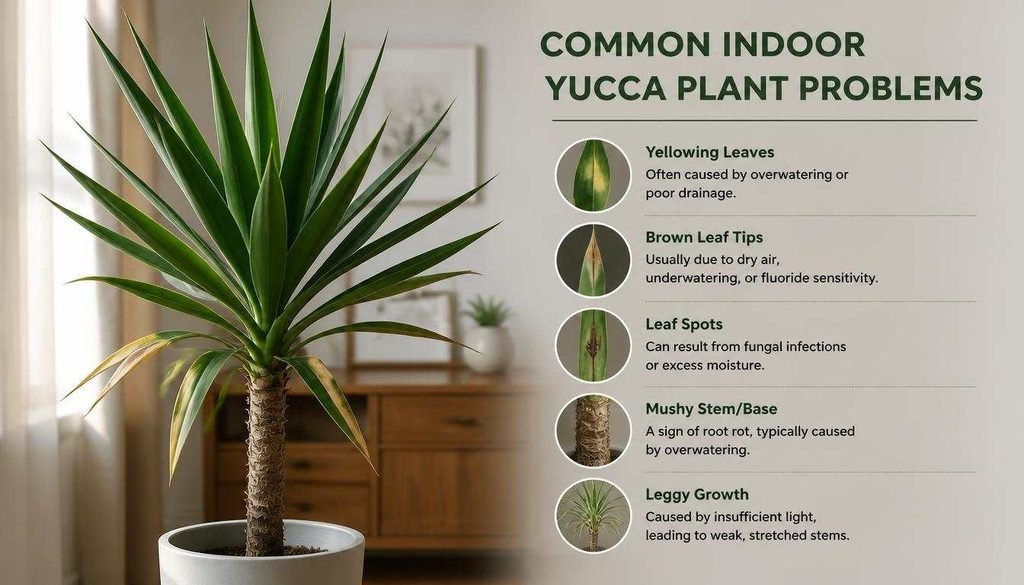
Even a relatively easy houseplant can develop problems when its growing conditions are unsuitable. Paying attention to changes in the leaves and trunk can help you identify issues before they become serious.
Yellow Leaves
A few older leaves turning yellow near the bottom of the plant may be part of normal growth. However, several yellow leaves appearing together can indicate a problem.
Excessive watering is a common cause, particularly when the soil stays wet for long periods. Check the drainage, inspect the growing mix, and allow it to dry appropriately before watering again.
Brown Leaf Tips
Brown tips may develop because of inconsistent watering, accumulated salts, physical damage, or other environmental stress.
Trim only the damaged portion if you prefer a tidier appearance. Keep the cut close to the natural shape of the leaf rather than removing large amounts of healthy tissue.
Soft or Weak Trunk
A healthy yucca cane should feel firm. If the trunk becomes soft, dark, or unstable near the soil line, root or stem rot may be developing.
Stop watering until you can inspect the plant and growing medium. Severely affected roots or trunk sections may not recover, so prompt attention is important.
Long, Weak Growth
A yucca kept in insufficient light may produce weaker or stretched growth. Its leaves may also become less upright.
Move it gradually toward a brighter position and monitor how it responds. Avoid trying to correct a long period of poor lighting with an abrupt change to intense direct sunlight.
Is an Indoor Yucca Plant Safe for Cats and Dogs?
This is an important point to consider before placing a yucca in your home.
Yucca plants contain saponins, compounds that can cause illness if parts of the plant are eaten. The ASPCA lists yucca as toxic to cats and dogs. Possible symptoms include vomiting and other digestive problems.
If you have pets that chew houseplants, keep the yucca somewhere they cannot reach. Remember that placing it on a low table may not be enough for an active cat or a curious dog.
If you suspect your pet has eaten part of the plant, contact a veterinarian for advice rather than waiting for symptoms to appear.
Households with young children should also choose a location where the pointed leaves are not likely to cause accidental contact.
Frequently Asked Questions About Indoor Yucca Plants
Is a Yucca Plant Good for Indoors?
Yes. The common indoor yucca is suitable for bright homes because it offers an attractive upright shape and generally needs less frequent watering than many tropical houseplants. It does best when given plenty of light and a well draining pot.
How Often Should You Water an Indoor Yucca Plant?
There is no fixed watering schedule that works for every yucca. Check the soil and water when much of the growing mix has dried. The plant generally needs less water during cooler periods when growth slows.
Does a Yucca Plant Need Direct Sunlight?
Yucca generally prefers strong light and can benefit from some direct sunlight. A bright window is usually a good location. If the plant has been kept in filtered light, increase its exposure gradually.
Can a Yucca Plant Survive in a Low Light Room?
It may remain alive for some time in a lower light room, but this is not ideal for long term growth. Insufficient light can cause weak stems and stretched leaves. A brighter position is usually better.
Why Are My Indoor Yucca Leaves Turning Yellow?
Yellow leaves can result from excessive moisture, poor drainage, or natural aging of older lower leaves. Check whether the soil is staying wet and inspect the trunk for softness before deciding what action to take.
How Big Does an Indoor Yucca Plant Get?
Indoor size depends on the variety, growing conditions, and age of the plant. The common cane type can become quite tall over time, so allow enough vertical and horizontal space when choosing its location.
Are Yucca Plants Toxic to Pets?
Yes. Yucca is listed as toxic to cats and dogs. Chewing or swallowing the plant can cause digestive symptoms, including vomiting. Keep it away from pets that tend to eat houseplants.
Is a Yucca Plant the Right Choice for Your Home?
A yucca can be an excellent addition to a home if you want a tall, distinctive plant without committing to a demanding watering routine. Its strong shape creates visual interest, while its ability to tolerate relatively dry indoor conditions makes everyday care more manageable.
The key is to give it enough light, avoid keeping its roots constantly wet, and choose a stable pot with proper drainage. It is also important to consider its toxicity if you share your home with cats or dogs.
If those conditions suit your space, a yucca can become a long lasting part of your indoor plant collection. Choose a healthy specimen, find a bright location, and let it grow at its own pace.

Jack Rivers is the founder of Plantsopedia, dedicated to making plant care simple, science-backed, and accessible for everyone. With a deep interest in botanical care and plant psychology, he specializes in rare tropical species and organic growth techniques, helping enthusiasts understand the soil, light, and biology behind every thriving plant. When he’s not experimenting with new propagation methods, Jack is busy turning complex horticultural science into practical, everyday advice for home gardeners