
Noticing brown spots on your outdoor plants can be frustrating, especially when the leaves looked perfectly healthy a few days ago. Sometimes the spots appear as tiny dark dots, while other times they spread into large, dry patches that make entire leaves look damaged.
So, why do my outdoor plants have brown spots? The most common causes include fungal and bacterial leaf diseases, excessive sunlight, improper watering, fertilizer burn, and insect damage. Rain, humidity, crowded planting, and changing weather conditions can also make the problem worse.
The good news is that brown spots do not always mean your plant is dying. By looking closely at the size, shape, color, and texture of the damaged areas, you can often narrow down the cause and choose the right solution.
Why Do My Outdoor Plants Have Brown Spots?
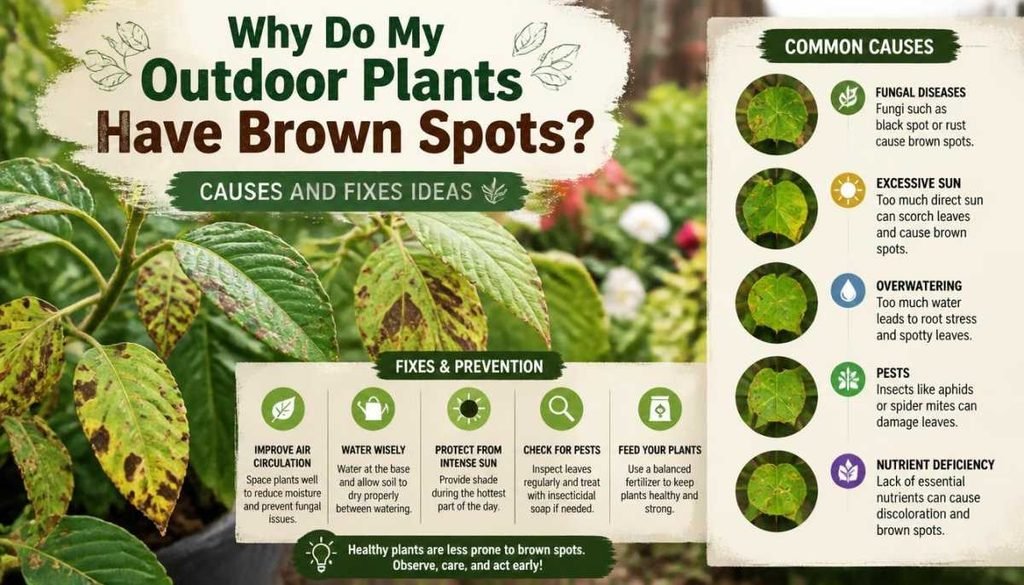
Outdoor plants develop brown spots when their leaf tissue becomes damaged. This damage may result from an infection, insects feeding on the leaves, or environmental conditions that prevent the plant from maintaining healthy growth.
For example, round brown spots with yellow edges may indicate a leaf spot disease. Dry, pale patches on the sun-facing side of a plant may point to sunburn, while tiny speckles can be a sign of insect activity.
Before treating the plant, check whether the spots are dry, crispy, soft, wet, or raised. Also look at the undersides of the leaves and inspect the soil, stems, and surrounding plants. These details can help you avoid treating the wrong problem.
1. Fungal Leaf Spot Diseases
Fungal leaf spot is one of the common reasons outdoor plants develop brown marks and its spores can spread through rain splashes, wind, infected plant debris, and contaminated gardening tools.
These problems often become noticeable during periods of warm, humid, or rainy weather. When leaves remain wet for extended periods, some fungi have favorable conditions to grow and infect plant tissue.
What fungal leaf spots look like
Depending on the fungus and plant species, you may notice:
- Small, round brown or black spots.
- Spots surrounded by yellow halos.
- Circular marks with darker edges or lighter centers.
- Several spots that gradually merge into larger damaged areas.
- Premature yellowing and falling leaves when an infection becomes severe.
Some fungal diseases also produce visible growth or spores on affected leaves. However, not every brown spot is caused by a fungus, so appearance alone cannot always confirm the diagnosis.
How to treat fungal leaf spot
Start by removing heavily affected leaves, especially those that are falling or badly damaged. Place infected plant material in the trash rather than leaving it around the base of the plant.
Water directly at the soil level instead of spraying the foliage. Give plants enough space for air to circulate, and remove fallen leaves that may carry fungal spores.
If the problem continues, identify the plant and likely disease before choosing a fungicide. A product labeled for that plant and disease may help manage certain fungal infections, but it will not repair existing brown spots.
2. Bacterial Leaf Spot
Bacterial leaf spot can look similar to fungal damage, but the early symptoms are often different. It commonly begins as small, water-soaked or greasy-looking marks that gradually turn brown, dark brown, or black.
Unlike many fungal spots, bacterial lesions are often angular because leaf veins limit how far the damage spreads. Some spots may also develop yellow borders or cause sections of the leaf to dry out.
Signs of bacterial leaf spot
Look for these symptoms:
- Dark, water-soaked patches.
- Angular spots restricted by leaf veins.
- Brown or black areas that become larger over time.
- Yellowing around damaged tissue.
- Leaves that become dry or drop as the infection progresses.
Bacteria can spread through splashing water, handling infected plants, and contaminated tools. Warm, wet conditions can make some bacterial diseases more difficult to control.
What to do about bacterial leaf spot
Remove affected leaves when practical, and avoid handling healthy plants immediately after working with infected ones without cleaning your hands and tools.
Keep foliage as dry as possible by watering near the soil. Avoid overhead watering, particularly late in the day when leaves may remain wet overnight.
There is no universal cure for bacterial leaf spot. Copper-based products are labeled for certain bacterial plant diseases, but they do not work against every infection. Check the product label and identify the likely disease before applying any treatment.
3. Sunburn and Leaf Scorch
Sometimes the answer to why do my outdoor plants have brown spots is simply too much direct sunlight. Plants that receive more intense sunlight than they can tolerate may develop sunburn or leaf scorch.
This is especially common when a plant is moved suddenly from a shaded location into full sun. Young plants and plants that prefer partial shade can also struggle during hot afternoons.
How to recognize sunburn
Sunburn usually produces dry, papery, pale brown, tan, or bleached patches. These areas often appear on the upper leaves or the side of the plant that receives the strongest sunlight.
Unlike many infectious leaf spots, sunburn usually does not create small circular marks that continue spreading across the leaf. The damaged tissue may feel dry and brittle.
How to protect outdoor plants from sun damage
Check the sunlight requirements of your particular plant. If it prefers partial shade, move it to a more suitable location or provide temporary shade during the hottest part of the day.
When moving plants outdoors or into stronger sunlight, increase their exposure gradually. This process, called hardening off, gives leaves time to adjust to brighter conditions.
Also check soil moisture during hot weather. A plant experiencing heat stress and dry soil may suffer more leaf damage.
4. Overwatering and Underwatering
Watering problems can also cause brown spots, although they often affect leaves differently from infectious diseases.
Too little water can prevent roots from supplying enough moisture to the foliage. Too much water can reduce the oxygen available to roots, causing root stress and making it harder for the plant to absorb water properly.
Brown spots caused by underwatering
When a plant does not receive enough water, its leaves may develop:
- Dry, crispy brown edges.
- Brown tips that gradually become larger.
- Curling or drooping leaves.
- Dry patches during hot or windy weather.
The soil may feel dry several inches below the surface, depending on the plant and growing conditions.
Brown spots caused by overwatering
Overwatering can produce a different set of symptoms:
- Soft or dark brown patches.
- Yellowing leaves.
- Drooping despite wet soil.
- Slow growth and generally unhealthy foliage.
- Root damage when the soil remains waterlogged.
Check the soil before watering again. If it is consistently wet, improve drainage and make sure containers have working drainage holes.
How to correct watering problems
Avoid following a fixed watering schedule without checking the soil. Water requirements change with plant type, pot size, soil conditions, rainfall, temperature, and season.
Water deeply when the plant needs it, then allow the soil to drain appropriately. Some plants prefer consistently moist soil, while others need the soil to dry between waterings.
5. Fertilizer Burn and Salt Buildup
Fertilizer helps outdoor plants grow, but using too much can damage their roots and leaves. Excess fertilizer can increase the concentration of salts in the soil, making it harder for roots to absorb water.
This stress may appear as brown leaf tips, crispy edges, or larger areas of damaged tissue.
Signs of fertilizer burn
Watch for:
- Brown tips and leaf margins.
- Dry, crispy edges.
- Yellow or discolored areas near damaged tissue.
- White crusty deposits on the soil surface or around containers.
- Symptoms appearing after heavy or frequent fertilizing.
Fertilizer damage can resemble underwatering, so consider whether you recently applied fertilizer or increased the amount.
How to fix fertilizer-related damage
Stop fertilizing temporarily and review the product’s recommended application rate. If the plant is growing in a container with good drainage, watering thoroughly may help flush excess soluble salts from the potting mix.
Avoid flushing poorly drained garden soil or containers that remain waterlogged. In those situations, drainage should be addressed first.
Once the plant begins producing healthy new growth, resume feeding only if needed and follow the recommended dosage.
6. Pests That Cause Brown Spots on Leaves
Not every brown mark comes from a plant disease. Small insects and mites can damage leaf tissue while feeding, leaving tiny spots, pale patches, streaks, or winding trails.
Outdoor plants may attract different pests depending on the season, surrounding vegetation, and growing conditions. Inspecting the underside of leaves is particularly useful because many pests hide there.
Spider mites
Spider mites are tiny pests that feed on plant cells. Their feeding often creates fine yellow or pale speckles that can eventually turn brown as damaged tissue dries.
A heavy infestation may also produce fine webbing around leaves and stems. Look closely at the undersides of leaves, where mites and their eggs may be present.
Thrips
Thrips are slender insects that scrape plant surfaces and feed on the contents of plant cells. Their damage may appear as silvery streaks, pale patches, tiny dark marks, or brown speckles.
You may also notice distorted young leaves or small black droppings. Gently shake a leaf over a white sheet of paper to check for tiny moving insects.
Leafminers
Leafminers are the larvae of certain insects that feed inside leaf tissue. They create winding tunnels between the upper and lower surfaces of leaves.
The damage often looks like thin, squiggly lines or irregular brown trails. Unlike ordinary surface spots, these marks follow the path made by the larvae inside the leaf.
How to manage pest damage
Remove badly infested
Remove badly infested leaves when appropriate and inspect nearby plants for similar symptoms. For smaller infestations, washing foliage with water may help dislodge some pests.
Insecticidal soap or horticultural oil may help control certain pests when the product is labeled for the plant and pest involved. Follow the directions carefully, and avoid spraying during intense heat or when pollinators are actively visiting flowers.
If you like this article than also read What Causes Fungus on Outdoor Plants? Causes, Signs & Easy Fixes
How to Identify the Cause of Brown Spots on Plant Leaves
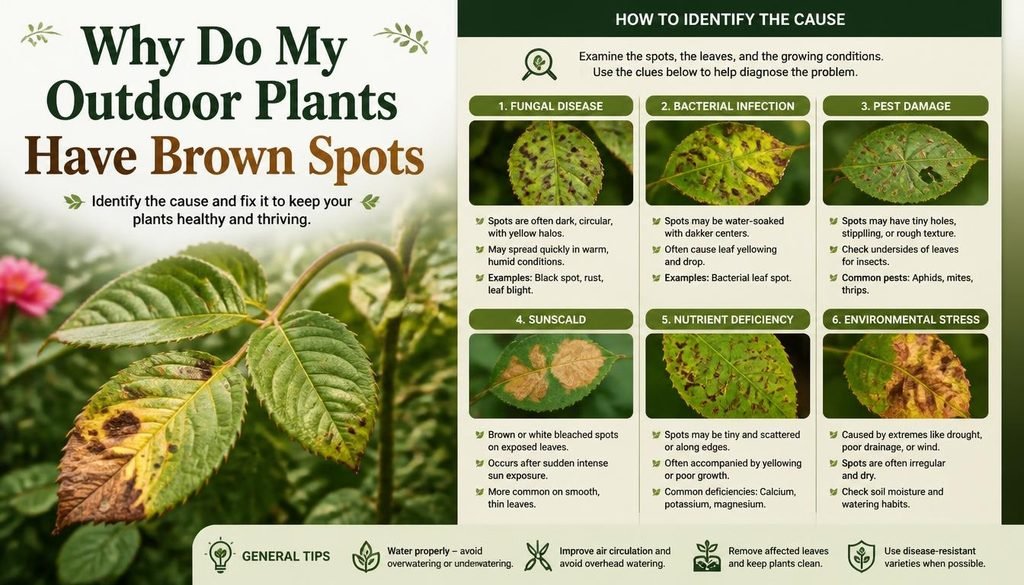
Looking at the spots closely can help you decide what to investigate first. Pay attention to their shape, texture, location, and whether the damage is spreading.
The following table provides a starting point for identifying common causes.
| What you notice | Possible cause |
|---|---|
| Round brown spots with yellow halos | Fungal leaf spot |
| Dark, water-soaked or angular patches | Bacterial leaf spot |
| Dry, pale brown patches on sun-facing leaves | Sunburn or leaf scorch |
| Crispy brown tips and edges | Underwatering or fertilizer stress |
| Soft, dark patches with wet soil | Overwatering or root stress |
| Fine yellow or brown speckles | Spider mites or other feeding pests |
| Silvery streaks and small dark marks | Thrips |
| Winding trails inside leaves | Leafminers |
Remember that these symptoms can overlap. For example, brown edges may result from underwatering, fertilizer buildup, or environmental stress. If the damage continues despite correcting basic care, a closer inspection or a plant disease diagnosis may be necessary.
How to Treat Brown Spots on Outdoor Plants
Once you have a reasonable idea of what is causing the damage, focus on preventing additional harm. The best treatment depends on whether the problem is infectious, environmental, or related to pests.
Here are practical steps you can follow.
Remove Severely Affected Leaves
Cut away leaves that are heavily spotted, dead, or badly damaged. Use clean pruning shears and avoid removing too much healthy foliage at once.
If you suspect an infectious disease, clean your tools between cuts and between plants. This reduces the chance of transferring contaminated plant material.
Water at the Base of the Plant
Avoid repeatedly wetting leaves when watering is not necessary. Direct water toward the soil so the roots receive moisture while the foliage has a chance to remain dry.
Morning is generally a good time to water because any accidentally wet leaves have more time to dry during the day.
Improve Air Circulation
Crowded plants can trap moisture around their leaves, creating favorable conditions for certain fungal and bacterial diseases.
Prune carefully where appropriate, remove weeds, and give plants enough room to grow. Avoid cutting away large amounts of foliage simply to increase airflow.
Adjust Sunlight Exposure
If the brown patches appear after strong sunlight or a sudden change in location, review the plant’s light requirements.
Move shade-loving container plants away from intense afternoon sun when possible. For garden plants, temporary shade may help reduce further stress during unusually hot weather.
Check Soil and Fertilizer Conditions
Check whether the soil drains properly and whether the plant is receiving the right amount of water. If you recently applied fertilizer, review the dosage and frequency.
Do not add more fertilizer in an attempt to repair brown leaves. Damaged tissue will not become healthy again simply because the plant receives additional nutrients.
Use Plant Treatments Carefully
Fungicides, insecticidal soaps, and horticultural oils have different purposes. A fungicide will not control spider mites, and an insecticide will not cure a fungal infection.
Identify the likely problem first. Then choose a product labeled for the affected plant and target pest or disease, following all application and safety instructions.
How to Prevent Brown Spots on Outdoor Plant Leaves
Preventing brown spots is easier than dealing with a widespread problem. Healthy growing conditions can reduce stress and make plants less vulnerable to many common leaf issues.
A few regular gardening habits can make a meaningful difference.
- Water according to plant needs: Check soil moisture rather than watering every plant on the same schedule.
- Avoid unnecessary overhead watering: Wet foliage can encourage some leaf diseases, especially when it stays damp for long periods.
- Give plants enough space: Proper spacing allows air to move between leaves and helps foliage dry.
- Inspect leaves regularly: Check both sides of leaves for early signs of disease or pests.
- Remove fallen leaves: Clear away damaged plant material that could harbor pests or disease organisms.
- Use fertilizer carefully: Follow the recommended dosage and avoid frequent feeding when the plant does not need it.
- Choose suitable planting locations: Match each plant’s sunlight, soil, and drainage requirements to its growing environment.
- Keep gardening tools clean: Clean pruning equipment after working with plants that show signs of infection.
You do not need to follow a complicated routine. A quick inspection while watering or pruning can help you notice changes before they become widespread.
Can Brown Spots on Plant Leaves Spread to Other Plants?

Yes, some causes of brown spots can spread to nearby plants, but others cannot.
Fungal and bacterial leaf diseases may spread through wind, rain splashes, contaminated tools, or infected plant debris. Certain pests, including spider mites and thrips, can also move between plants.
However, brown spots caused by sunburn, underwatering, overwatering, or fertilizer burn are not contagious. They result from growing conditions rather than an infectious organism.
If you suspect a disease or pest infestation, inspect nearby plants and avoid moving between affected and healthy plants without cleaning your hands and tools. You may also temporarily separate an affected container plant to make monitoring easier.
When Should You Worry About Brown Spots on Outdoor Plants?
A few isolated brown spots on older leaves are not always a serious problem. Some leaf damage is normal as plants age, and environmental stress can affect individual leaves without threatening the entire plant.
However, pay closer attention when you notice:
- Brown spots spreading quickly across several leaves.
- New leaves developing similar damage.
- Large sections of foliage turning yellow or brown.
- Leaves dropping earlier than expected.
- Stems becoming discolored, soft, or damaged.
- The plant wilting even when the soil has adequate moisture.
- Several nearby plants developing similar symptoms.
These signs may indicate a spreading disease, significant pest activity, or a more serious root or environmental problem.
If the plant continues declining, identify its species and examine the affected leaves, stems, and roots. A local nursery, horticulturist, or plant disease diagnostic service may help confirm the cause.
Frequently Asked Questions
Why do my outdoor plants have brown spots all of a sudden?
Sudden brown spots may appear after heavy rain, intense sunlight, a watering mistake, or a pest infestation. Fungal and bacterial diseases can also become noticeable quickly under favorable weather conditions. Check the leaves and soil before deciding how to treat the problem.
Why do my outdoor plants have brown spots during summer?
High temperatures, intense sunlight, dry soil, and heat stress can damage outdoor leaves during summer. Some pests also become more active in warm conditions. Check soil moisture and sunlight exposure, and look for signs of insects underneath the leaves.
Are brown spots on plant leaves a sign of overwatering?
They can be. Overwatering may cause root stress, yellowing, and soft or dark leaf damage, particularly when soil remains waterlogged. However, brown spots can have many other causes, so check the soil and inspect the leaves before changing your watering routine.
Can plants recover from brown leaf spots?
Yes, many plants can recover when the underlying problem is corrected. Existing brown areas usually will not turn green again, but healthy roots and growing conditions can support new leaf growth.
Should I cut off leaves with brown spots?
Remove leaves that are heavily damaged, dead, or affected by a suspected spreading infection. If a leaf has only a small amount of damage, you may leave it in place while monitoring the plant. Always use clean pruning tools.
Are brown spots on leaves contagious to other plants?
Brown spots themselves are not contagious, but certain causes are. Fungal and bacterial diseases, as well as pests such as spider mites and thrips, can spread to nearby plants. Environmental damage such as sunburn and fertilizer burn does not spread.
What do large brown spots on plant leaves mean?
Large brown patches may result from sunburn, leaf scorch, advanced leaf spot disease, or significant environmental stress. Look at whether the patches are dry, wet, circular, or irregular, and check whether they appear mainly on sun-exposed leaves.
How do I treat tiny brown spots on plant leaves?
Start by checking the undersides of leaves for spider mites, thrips, and other pests. Also look for small fungal or bacterial lesions, especially if the spots have yellow edges or appear after wet weather. The correct treatment depends on what is causing the spots.
Help Your Outdoor Plants Grow Healthy Again
Brown spots can make outdoor plants look unhealthy, but they do not always indicate a serious problem. The key is to identify what is damaging the leaves rather than immediately applying fertilizer, pesticides, or other treatments.
Check the shape and texture of the spots, review your watering and sunlight conditions, and inspect the plant for pests or signs of disease. Once you understand the likely cause, you can make the right changes and give your plant a better chance to produce healthy new growth.

Jack Rivers is the founder of Plantsopedia, dedicated to making plant care simple, science-backed, and accessible for everyone. With a deep interest in botanical care and plant psychology, he specializes in rare tropical species and organic growth techniques, helping enthusiasts understand the soil, light, and biology behind every thriving plant. When he’s not experimenting with new propagation methods, Jack is busy turning complex horticultural science into practical, everyday advice for home gardeners