
Introduction
The Rainbow Rose Plant represents a unique floral marvel where petals display multiple vibrant colors on a single bloom. Most gardeners achieve this striking look through specialized dyeing techniques rather than natural growth, as standard rose bushes do not produce multicolored petals on their own. These plants serve as a stunning centerpiece in any landscape by combining every shade of the spectrum into one flower head.
Imagine walking into a garden that feels like a living kaleidoscope of bright pinks, deep blues, and sunny yellows. These flowers stop visitors in their tracks and instantly transform a plain backyard into a magical, high-energy retreat. If you want a landscape that truly breaks the mold and sparks constant conversation, adding these multicolored gems provides the ultimate visual punch.
You can incorporate these roses into your outdoor space through various creative layouts and pairing strategies. Successful designs often place these vivid flowers against neutral backgrounds or evergreen hedges to make the colors pop. This guide explores practical ways to arrange your roses to ensure they harmonize with your existing plants and garden structures.
Rainbow Rose Plant Facts: Real or Fake
Many people wonder if a bush can actually grow flowers with every color of the rainbow on its own. The short answer is no, because nature does not produce these multicolored petals naturally through seeds or soil. Florists create this look by splitting the stem of a white rose and placing each part into different colored water. The plant drinks up the dye, and the colors eventually spread throughout the petals to create that famous rainbow effect.
You might see online shops selling “Rainbow Rose seeds,” but these usually lead to disappointment for hopeful gardeners. If you plant those seeds, they will likely grow into standard red or white roses instead of the bright colors shown in the photos. While the physical flower is real once it has been dyed, a naturally occurring plant that grows rainbow blooms simply does not exist. You can still enjoy them as beautiful cut flowers or try the DIY dyeing process at home for a fun project.
How Rainbow Rose Plant Is Made
Creating a rainbow rose starts with a fresh, long-stemmed white rose. You carefully split the bottom of the stem into several thin sections using a sharp blade. Each of these sections then sits in a separate container filled with water and high-quality food coloring. The rose acts like a straw and pulls the tinted water all the way up to the flower head. As the petals absorb the different dyes, they change color right before your eyes.
The process requires patience and the right timing to get the best results. Within a few hours, the edges of the petals begin to show vibrant streaks of blue, purple, yellow, and red. After about a day, the entire flower displays a full spectrum of colors. This technique allows you to customize the look of your garden display for special events or home decor. While the plant does not grow this way in the dirt, this simple method turns a plain white flower into a stunning piece of living art.
Can You Grow Rainbow Rose Plant?
You can certainly grow the bushes that people use to make these colorful flowers. Most gardeners start by planting healthy white rose varieties like ‘Vendela’ in their garden beds. These plants need plenty of sunlight, well-drained soil, and regular pruning to produce the large, clear petals required for the coloring process. Once your bush produces a beautiful white bloom, you can harvest it and start the transformation yourself.
You should know that you cannot grow a rose that naturally sprouts multicolored petals from a seed. Many sellers offer “rainbow seeds” online, but these claims usually mislead buyers. If you plant those seeds, you will end up with a single-colored rose rather than a rainbow one. To get the look you want, you must grow a white rose first and then apply the split-stem dyeing method to the cut flower.
Rainbow Rose Plant Meaning Guide
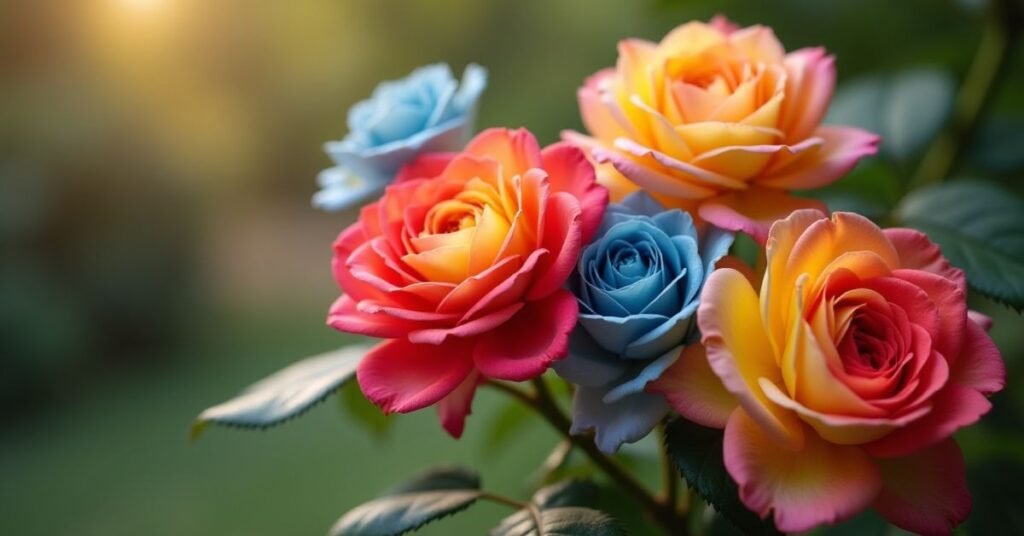
The rainbow rose carries a powerful message of pure joy and limitless possibilities. Because it contains every color of the spectrum, it represents the coming together of different emotions and ideas in perfect harmony. Many people choose these flowers to celebrate new beginnings or to show someone that they bring color into a dull world. Giving this flower suggests that you value a person for all their unique traits and diverse qualities.
These vibrant blooms also symbolize deep friendship and the celebration of life’s most cheerful moments. They work perfectly for birthdays, graduations, or any event where you want to boost the energy in the room. Unlike a red rose which mainly means romance, the rainbow rose speaks a language of fun and lighthearted happiness. You can use these flowers to brighten a space or to tell a friend that their presence makes everything better.
- Diversity and Inclusion: The mix of colors shows that every individual piece creates a beautiful whole.
- Happiness: The bright tones instantly lift the mood and spread positive vibes.
- Creative Spirit: These roses represent out-of-the-box thinking and unique artistic expression.
- Hope: The rainbow often serves as a symbol of peace and better days ahead after a storm.
Rainbow Rose Plant Care Tips
You must care for the white rose bush properly to ensure you get the best blooms for dyeing. These plants thrive when you place them in a spot that receives at least six hours of direct sunlight every day. You should water the base of the plant regularly to keep the soil moist but never soggy. Healthy soil with plenty of organic matter helps the bush grow strong stems and large, vibrant white petals that will absorb colors easily.
Pruning plays a huge role in keeping your rose bush productive and energetic throughout the season. You should remove dead or diseased wood in early spring to encourage fresh new growth. During the flowering months, cutting off faded blooms helps the plant focus its energy on creating new buds. If you follow a consistent care routine, your garden will provide a steady supply of perfect white roses for your creative projects.
- Check the Soil: Test the dirt to ensure it drains well and contains rich nutrients.
- Water Early: Pour water at the roots in the morning to prevent leaf diseases.
- Feed the Plant: Apply a balanced rose fertilizer every few weeks during the growing season.
- Monitor for Pests: Look under the leaves for any insects that might damage the petals.
- Harvest Correctly: Cut your white roses in the early morning when they are most hydrated for the best dyeing results.
Is Rainbow Rose Plant Natural?
The rainbow rose does not exist as a natural species in the wild or in traditional gardens. Nature produces roses in many solid colors like red, pink, and yellow, but it never grows a single bloom with every color of the rainbow on its own. You will not find any seeds or bushes that naturally sprout these multicolored petals through biological growth. The stunning look you see in photos comes from human creativity rather than a natural miracle of the earth.
Scientists and botanists have not yet found a way to breed a plant that creates this specific multi-tone pattern. While some roses have “variegated” petals with two colors, they never display the full spectrum seen in a true rainbow rose. Every rainbow rose you encounter started as a plain white rose before a person manually added the colors. This makes the flower a unique blend of natural beauty and clever artistic intervention.
Rainbow Rose vs Natural Roses
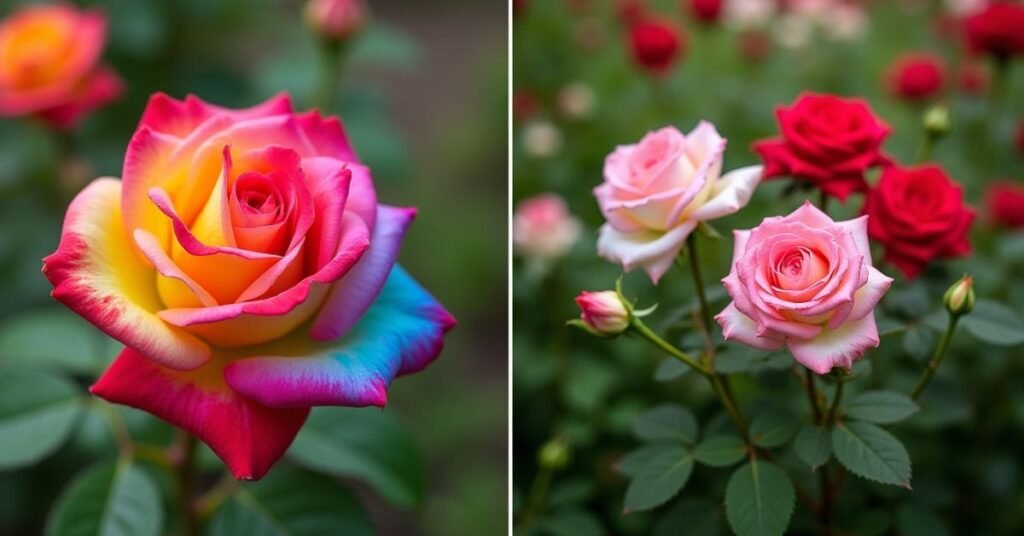
Rainbow roses stand out because they display a man-made explosion of color on every single petal. While natural roses grow their colors through genetics and soil nutrients, the rainbow variety relies on human skill and floral dyes. Natural roses offer a classic beauty and often carry a strong, sweet scent that fills a room. In contrast, the rainbow rose focuses entirely on visual impact and serves as a unique piece of art for modern displays.
You will find that natural roses are much easier to maintain in a garden over many years. They grow from seeds or cuttings and return each season with their familiar solid or blended tones. Rainbow roses exist only as cut flowers and lose their vibrant look once the bloom fades. Choosing between them depends on whether you want the timeless elegance of a living plant or the bold, temporary flair of a creative floral project.
| Feature | Rainbow Roses | Natural Roses |
| Origin | Man-made through dyeing | Naturally grown from soil |
| Color Variety | Multiple colors on one head | Solid, striped, or gradient tones |
| Fragrance | Very light or no scent | Often have strong, sweet aromas |
| Lifespan | Short-term (cut flowers only) | Long-term (living garden bushes) |
| Availability | Mostly found in specialty shops | Available in nurseries and wild |
| Maintenance | Requires manual stem splitting | Needs sun, water, and pruning |
| Cost | Usually more expensive | Varies from budget to premium |
| Symbolism | Joy, fun, and uniqueness | Love, passion, and friendship |
| Seeds | Cannot grow from seeds | Easily grow from seeds or bulbs |
Myths About Rainbow Rose Plant
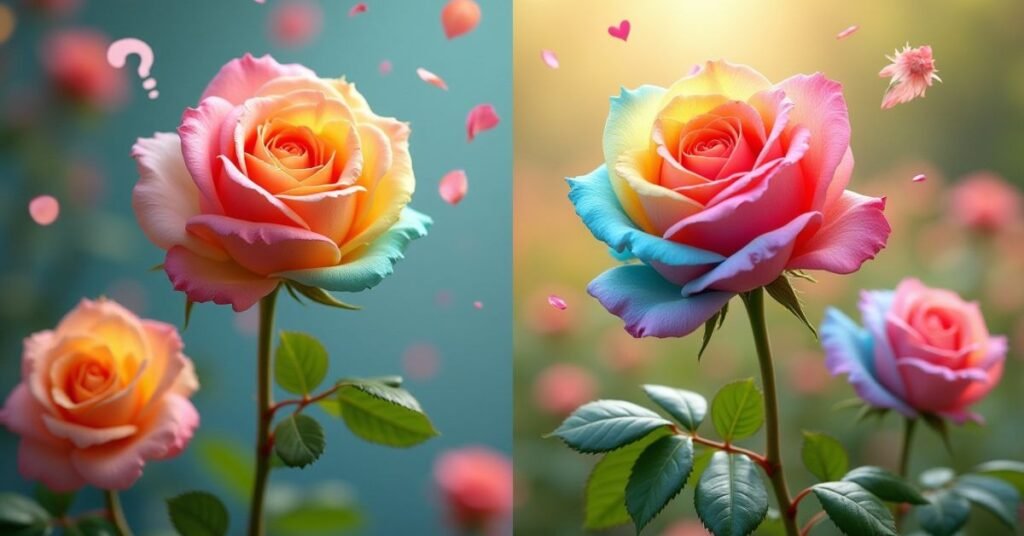
Many people mistakenly believe that they can buy seeds to grow a multicolored rose bush in their backyard. You will often see bright packets of “rainbow seeds” for sale on the internet with beautiful photos. Unfortunately, these seeds only grow into regular, single-colored roses like white or red. No amount of special soil or magic fertilizer will make a seed sprout a flower with every color of the rainbow.
Another common myth suggests that these flowers are a result of genetic engineering or complex lab work. In reality, the process is much simpler and involves basic physics rather than changing the plant’s DNA. People also think the colors are sprayed onto the petals, which would make the flower look dull and waxy. The truth is that the plant drinks the color from the inside, which keeps the petals soft and looking like a natural part of the bloom.
- The Seed Myth: You cannot grow rainbow petals directly from a seed or a bulb.
- The “Natural Species” Myth: There is no wild rose species that naturally produces a rainbow pattern.
- The Permanent Color Myth: The colors only last as long as the cut flower stays fresh in a vase.
- The Soil Myth: Adding food coloring to the soil of a living bush will not turn the flowers into rainbows.
Read More Information | https://plantsopedia.com/deer-deterrent-plants/
How Florists Make Rainbow Roses
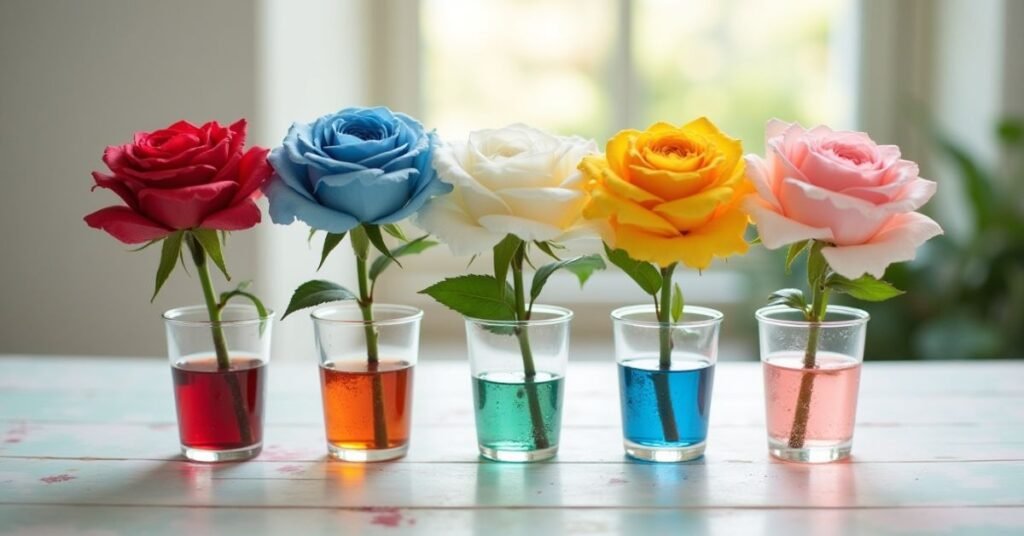
Professional florists follow a very specific method to ensure every petal looks bright and clean. They start with high-quality white roses that are just beginning to open their buds. By using a very sharp knife, they carefully divide the stem into four or more equal vertical sections. This delicate work allows each part of the stem to act as an individual straw for the flower.
The florist then places each stem section into a different container of specialized floral dye. These dyes move through the plant much better than standard food coloring and create more vivid tones. As the rose sits in the light, it pulls the liquid upward through its natural tubes. Within twenty-four hours, the white petals transform into a perfectly balanced rainbow of colors.
- Select the Flower: Pick a sturdy white rose with a thick, healthy stem.
- Split the Stem: Use a blade to cut the bottom few inches of the stem into segments.
- Prepare the Dyes: Fill small tubes or cups with different vibrant floral colors.
- Submerge the Sections: Place one stem segment into each colored container.
- Wait for Absorption: Leave the rose in a cool spot for a full day to let the colors climb.
- Reassemble and Trim: Remove the rose from the dyes and trim the ends before placing it in fresh water.
Is Rainbow Rose Plant Real or Not?
The rainbow rose is real as a physical object that you can hold and see, but it does not grow that way in nature. You are looking at a real white rose that has undergone a clever color transformation. People create these beautiful flowers by letting the plant drink dyed water through its stem. So, while the flower itself is a living thing, its multicolored appearance is an artistic creation rather than a natural miracle.
You should not expect to find a “rainbow rose” species in any forest or garden center. If you see seeds or bushes for sale that claim to grow these colors naturally, those claims are not true. These plants only exist because humans use a special technique to change their look after the flower blooms. The rainbow rose remains a wonderful example of how we can combine nature with a bit of human imagination to make something spectacular.
FAQs
Q1. Is the rainbow rose plant real?
Yes, it is real, but florists create it by dyeing white roses with special colors.
Q2. Can you grow a rainbow rose plant naturally?
No, you cannot grow it naturally because no rose produces rainbow colors on its own.
Q3. How do rainbow roses get their colors?
Growers split the stem and place it in different colored dyes, which the petals absorb.
Q4. How long do rainbow roses last?
They last about the same as regular roses, usually 5–7 days with proper care.
Q5. Are rainbow rose plants safe for gardens?
Yes, they are safe, but they are usually made for decoration, not long-term gardening.
Conclusion
The rainbow rose stands as a brilliant example of how we can combine nature with a little bit of human creativity. While these multicolored flowers do not grow naturally from the ground, they still bring a massive amount of joy and wonder to any setting. You can enjoy them as a fun DIY project or use them as a bold centerpiece to spark conversation. Understanding the truth behind these blooms helps you appreciate the skill and imagination required to create such a unique piece of floral art.
Whether you decide to grow white roses for your own experiments or simply buy a finished bouquet, these flowers offer something truly special. They remind us that even a simple white rose can transform into something extraordinary with the right technique. Focus on the happiness they bring and the vibrant energy they add to your home or garden design. Embrace the magic of the rainbow rose and let its bright colors inspire your own creative journey in the world of plants.

Jack Rivers is the founder of Plantsopedia, dedicated to making plant care simple, science-backed, and accessible for everyone. With a deep interest in botanical care and plant psychology, he specializes in rare tropical species and organic growth techniques, helping enthusiasts understand the soil, light, and biology behind every thriving plant. When he’s not experimenting with new propagation methods, Jack is busy turning complex horticultural science into practical, everyday advice for home gardeners