Introduction
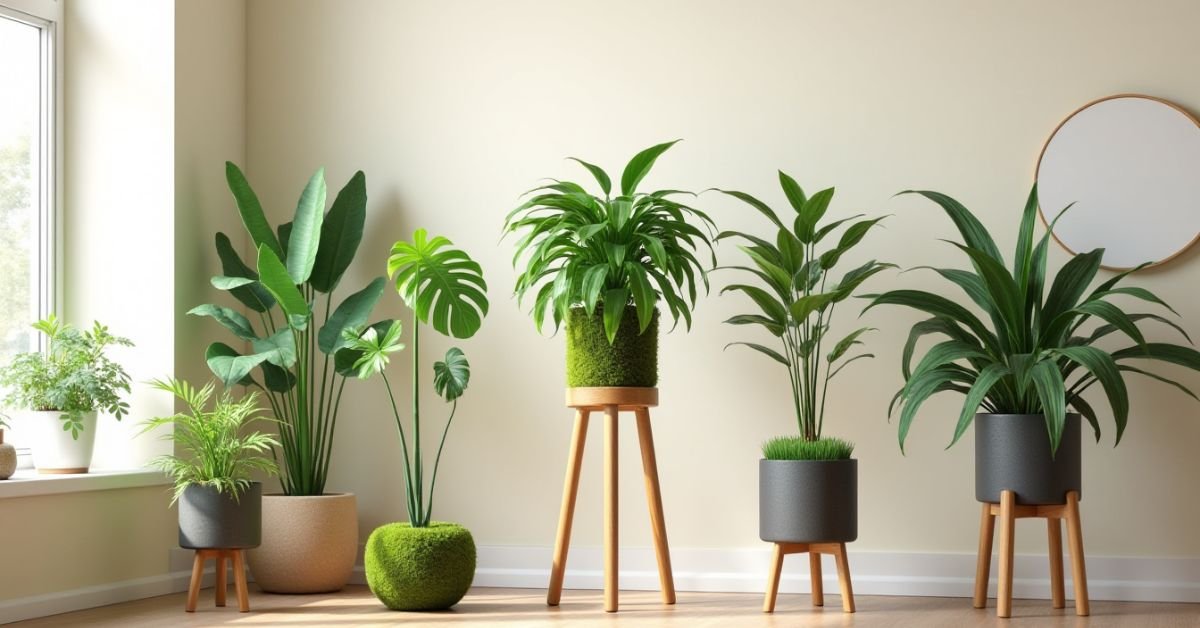
A Moss Pole for Plants is a sturdy stick covered in organic material like dried sphagnum moss or coconut fiber. It acts as a vertical support system for indoor climbing plants. By mimicking the bark of a tree, it gives your greenery something to latch onto as it grows upward.
Ever wonder why your Monstera or Pothos is trailing across the floor instead of looking like a lush jungle masterpiece? Without a vertical structure, these “climbers” lose their way and grow smaller leaves. Adding a moss pole is the secret to transforming a messy vine into a towering, healthy statement piece.
In this guide, we will break down the different materials available, from classic coco coir to DIY mesh poles. You’ll also learn exactly how these supports boost plant health and what to look for before you buy one.
Moss Pole for Plants: What Is It?
A moss pole is a vertical stake covered in soft, organic material such as coco coir or moss. It serves as a “fake tree” for your indoor plants to climb. Most climbing plants have aerial roots that naturally want to grab onto something sturdy and damp.
Think of it as a trellis with a pulse. It mimics the moist bark found in a tropical rainforest. When your plant attaches to the pole, it feels secure and starts to grow much larger leaves. It’s the easiest way to turn a floppy vine into a tall, upright pillar of green.
Types of Moss Pole for Plants
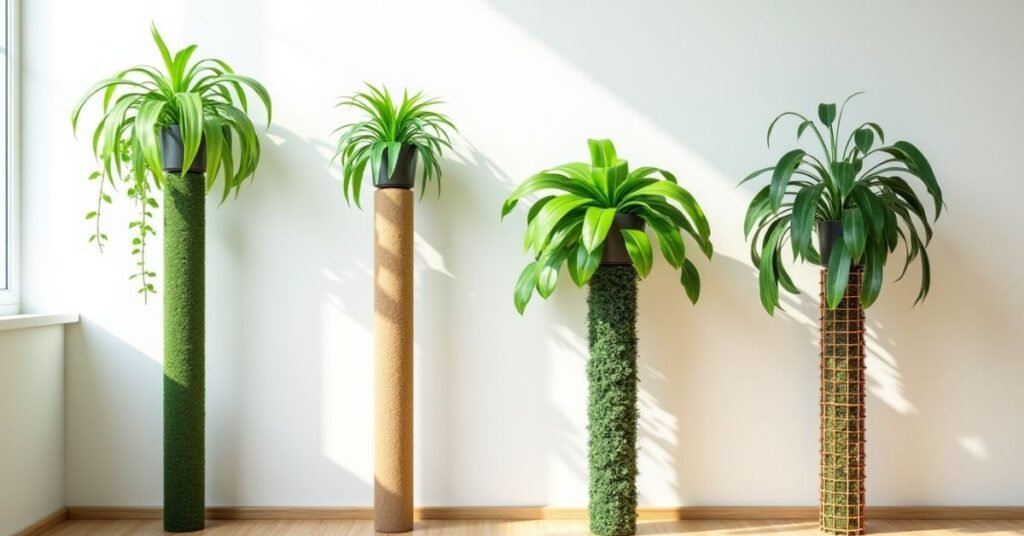
Not all supports are created equal, and the “best” one usually depends on how much effort you want to put into plant care. Most plant parents choose between pre-made poles that are easy to set up or DIY versions that hold more moisture.
Here are the most common types you’ll find:
- Coco Coir Poles: These are sturdy and very common in shops. They use coconut fibers wrapped around a PVC or wood pipe. They are great for support but don’t hold much water.
- Sphagnum Moss Poles: These usually feature a plastic mesh filled with real moss. They stay damp longer, which encourages roots to actually grow inside the pole.
- Bendable Poles: Made with a flexible core, these allow you to shape your plant into arches or spirals for a unique look.
- Plastic or Resin Stakes: These often have a honeycomb pattern. They are easy to clean and can be stacked as your plant gets taller.
Choosing the right type depends on your plant’s personality. If you have a thirsty Monstera, a real sphagnum pole is a dream. If you just want to keep a Pothos from falling off the shelf, a simple coco coir pole does the trick perfectly.
Benefits of Moss Pole for Plants
Using a moss pole is like giving your plant a shot of confidence. In the wild, climbing plants feel “safe” when they touch a vertical surface. When you provide that support at home, the plant stops putting energy into searching for a home and starts putting it into growth.
Here are the main reasons your plants will love one:
- Larger Leaves: As the plant climbs higher, it feels more mature. This often leads to bigger leaves and those beautiful natural holes (fenestrations).
- Vertical Space: Instead of taking up your whole floor or shelf, your plant grows up. This saves space and makes your room look like an indoor jungle.
- Extra Hydration: If you keep the pole damp, the aerial roots drink directly from it. This keeps the plant hydrated even if the soil gets a bit dry.
- Better Airflow: Lifting the vines off the ground prevents leaves from overlapping too much. This helps stop pests and mold from hiding in the dark corners of the foliage.
Adding a pole doesn’t just help the plant; it makes your home look better too. It turns a messy, drooping vine into a tidy and impressive focal point. Your greenery will look more like a professional display and less like a wild tangle of stems.
Moss Pole for Plants vs Coco Pole
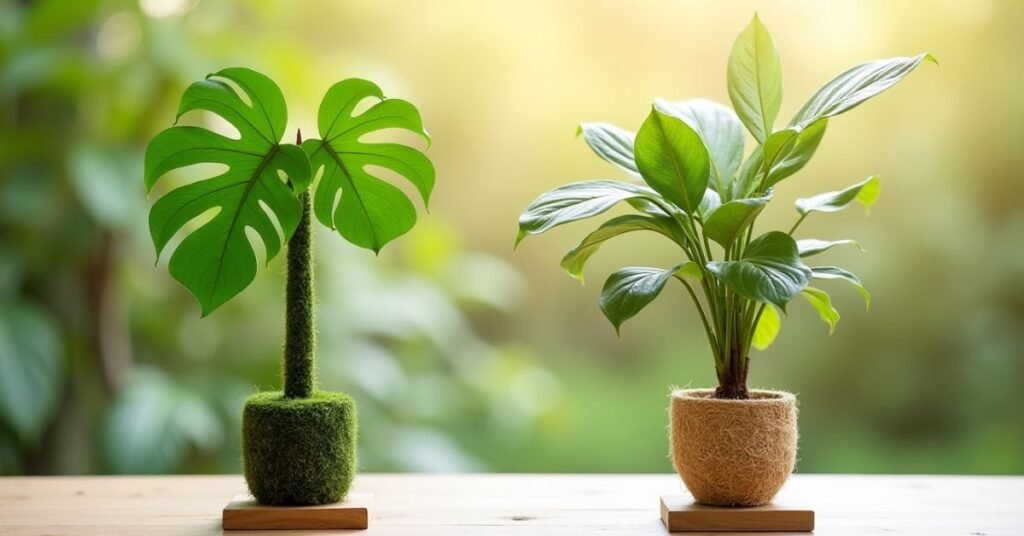
Choosing between a moss pole and a coco pole depends on your plant’s goals. A real moss pole is filled with dried sphagnum moss that holds a lot of water. This creates a humid environment that encourages roots to grow deep into the pole itself. It is the best choice if you want your plant to grow massive, “mature” leaves.
On the other hand, coco poles are made from shredded coconut husks wrapped around a stick. These are much sturdier and easier to find at local garden centers. While they don’t hold as much moisture, they provide excellent physical support for heavy vines. They are perfect for beginners who want a tidy look without the constant misting.
Comparison at a Glance
| Feature | Sphagnum Moss Pole | Coco Coir Pole |
| Material | Loose, long-fiber moss | Pressed coconut fiber |
| Water Retention | Very High (stays damp) | Low (dries quickly) |
| Root Attachment | Roots grow inside the moss | Roots grip the outside surface |
| Maintenance | Needs regular misting/watering | Low maintenance; stays dry |
| Best For | Monstera Albo, Philodendrons | Pothos, Ivy, Hoya |
| Durability | Can break down over years | Very tough and long-lasting |
| Price | Usually more expensive/DIY | Affordable and widely available |
How to Install Moss Pole for Plants
Installing a moss pole is easiest when you are already repotting your plant. This way, you can place the pole at the very bottom of the pot before adding soil. It ensures the pole is steady and won’t tip over as the plant grows heavy. If you try to poke it into an existing pot, you might accidentally damage the roots.
Make sure the pole is centered or placed toward the back of the pot. Once it is secure, you can gently arrange your plant’s vines against it. Use soft ties to help the plant get started. Over time, the aerial roots will find the pole and start to grip it on their own.
Simple Steps to Install Your Pole
- Soak the Pole: If using a real moss pole, soak it in water first so it is nice and damp.
- Position the Pole: Place the pole in the empty pot first. Hold it steady while you add a layer of potting soil around the base.
- Add the Plant: Place your plant next to the pole. Ensure the “back” of the stem (where the little root bumps are) is touching the moss.
- Fill with Soil: Add the rest of your soil and press down firmly to lock both the plant and the pole in place.
- Secure the Vines: Use garden twine, Velcro strips, or soft plant clips to loosely tie the stems to the pole.
- Mist the Moss: Give the pole a good spray of water to welcome the new roots.
DIY Moss Pole for Plants (Easy Method)
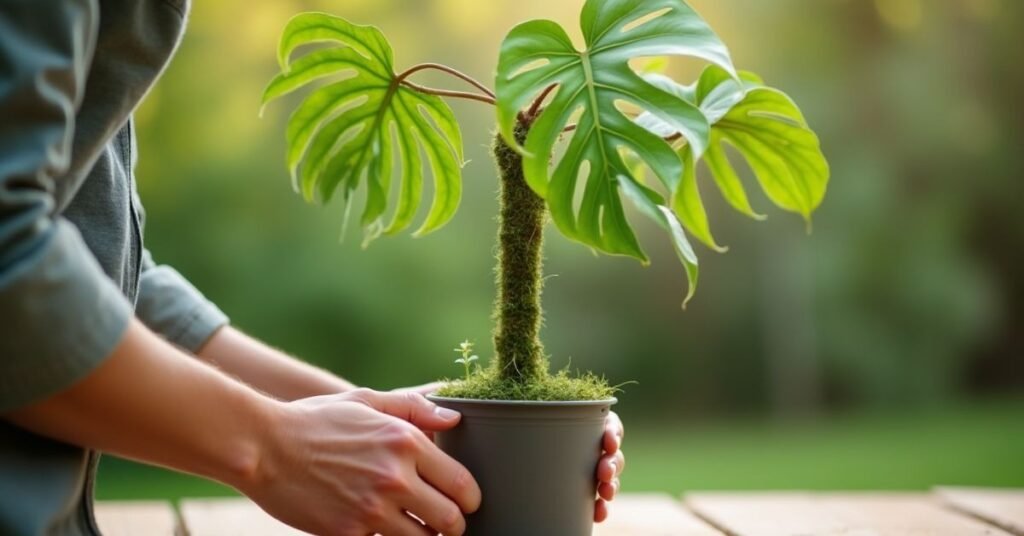
Making your own moss pole is a fun weekend project that saves money. It also lets you customize the height and thickness for your specific plant. Most store-bought poles are a set size, but a DIY version can be as tall as your ceiling if you have a giant Monstera.
You only need a few basic supplies from a hardware or garden store. Once you have your materials, the process is like rolling a burrito. You lay out your mesh, fill it with moss, and zip it shut. It’s simple, satisfying, and your plants will love the fresh, damp moss.
What You’ll Need
- Plastic Mesh or Chicken Wire: This creates the outer “cage” for the moss.
- Sphagnum Moss: Soak this in water for 20 minutes before you start.
- Zip Ties: These hold the mesh together in a sturdy tube shape.
- A PVC Pipe or Wooden Stake: This goes inside the moss to act as a “spine” for extra strength.
- Scissors: To trim the mesh and the ends of the zip ties.
How to Build It
- Lay Out the Mesh: Cut a piece of mesh to your desired height and width.
- Add the Moss: Spread a thick layer of damp moss across the mesh, leaving a little room at the edges.
- Insert the Support: Place your PVC pipe or wooden stake in the middle of the moss.
- Roll and Zip: Roll the mesh into a tube around the pipe and secure it with zip ties every few inches.
- Trim the Excess: Snip off the long tails of the zip ties for a clean, professional look.
Best Moss Pole for Plants (Buying Guide)
Choosing the right support depends on your plant’s personality and your schedule. If you are a busy plant parent, look for a sturdy coco coir pole that doesn’t need constant watering. If you want to grow massive leaves, a fillable plastic mesh pole is the way to go. It keeps the moss damp for much longer than a wooden stake.
Always check the base of the pole before you hit the checkout button. A good pole should have a long, solid spike at the bottom to stay upright in the soil. You don’t want your beautiful Monstera tipping over because the pole is too top-heavy. Think about how much room you have and how tall you want your plant to eventually get.
Quick Buying Tips
- Check for Stackability: Buy poles that can “plug” into each other so you can add height as your plant grows.
- Pick the Right Material: Choose sphagnum moss for fast growth or coco coir for a low-maintenance, classic look.
- Look for Durability: Ensure the inner stake is made of PVC or treated wood so it won’t rot inside the damp soil.
- Consider the Size: Match the pole’s diameter to your plant’s stem size; thicker stems need a wider, more stable pole.
- Bonus Kits: Look for sets that include “plant ties” or Velcro strips to save yourself an extra trip to the store.
Common Problems with Moss Pole for Plants
The biggest challenge with a moss pole is keeping it wet. If the moss dries out completely, it becomes hard and actually repels water. When this happens, your plant’s aerial roots won’t be able to dig in. You might find yourself misting it every single day just to keep it slightly damp.
Another common issue is stability as the plant grows taller. Top-heavy plants like a large Monstera can easily pull a thin pole right out of the soil. If the base of the pole starts to rot from sitting in wet dirt, the whole structure might lean or collapse. It is important to check the “sturdiness” of your setup every few months to avoid a messy plant accident.
Moss Pole for Plants: Care & Maintenance
Taking care of your moss pole is just as important as watering your plant. If the pole stays bone-dry, your plant won’t be able to climb it effectively. You want to keep the moss slightly damp so the aerial roots feel invited to grow inside. A well-maintained pole acts like a vertical garden that feeds your plant from the top down.
You also need to check the “fit” of your plant every few weeks. As the stems grow thicker, the old ties might become too tight and choke the plant. It only takes a few minutes of maintenance to keep everything looking neat and healthy. Just a little bit of attention goes a long way in keeping your indoor jungle thriving.
Easy Care Tips
- Keep it Damp: Use a spray bottle to mist the pole every few days, or slowly pour water down the top of the pole.
- Check the Ties: Loosen or move any garden tape that looks like it is cutting into the plant’s stem.
- Watch for Pests: Occasionally check the moss for tiny bugs like spider mites that love to hide in the fibers.
- Rotate the Pot: Turn your plant every week so all sides of the pole and leaves get equal sunlight.
- Extend as Needed: If your plant reaches the top, add an extension right away so the new growth doesn’t start to flop over.
Conclusion
Adding a moss pole is one of the best gifts you can give to your climbing plants. It turns a simple indoor pot into a lush, vertical focal point that mimics the natural jungle. Whether you choose a pre-made coco pole or build your own with moss, your greenery will thank you with bigger leaves and faster growth.
It’s okay if you don’t get it perfect the first time. Indoor gardening is all about learning what your specific plants love the most. Start small, keep the pole damp, and watch as your favorite vines reach for the ceiling. It’s an easy and rewarding way to bring a little more nature into your daily life.
FAQs
1. How do I know if my plant needs a moss pole?
If your plant has “aerial roots” (little brown bumps on the stem) or starts to flop over and crawl along the floor, it’s ready for a pole.
2. Do I have to keep the moss pole wet all the time?
It is best to keep it damp so the roots can grow into it, but your plant will still get physical support even if the pole is dry.
3. Can I add a moss pole to a plant that is already large?
Yes, but be very careful not to snap the stiff stems while tying them, and try to place the pole without digging through the main root ball.
4. How do I attach the plant to the pole without hurting it?
Use stretchy garden tape, soft Velcro strips, or loose twine. Never tie it so tight that the stem cannot expand as it grows.
5. How long does a moss pole last before it rots?
A high-quality PVC or plastic-core pole can last for many years, while untreated wooden stakes inside the moss might need replacing after two or three years.

Jack Rivers is the founder of Plantsopedia, dedicated to making plant care simple, science-backed, and accessible for everyone. With a deep interest in botanical care and plant psychology, he specializes in rare tropical species and organic growth techniques, helping enthusiasts understand the soil, light, and biology behind every thriving plant. When he’s not experimenting with new propagation methods, Jack is busy turning complex horticultural science into practical, everyday advice for home gardeners