
Introduction
The Persian lilac plant is a small flowering shrub. Its scientific name is Syringa x persica. It produces soft purple flowers with a light sweet smell. It grows well in home gardens and stays compact in size.
This plant brings beauty and fragrance to any space. Many gardeners choose it because it grows easily and does not take too much care. It also fits well in small gardens and backyard spaces.
In this guide, you will learn how to grow and care for the Persian lilac plant. You will also learn about soil needs, pruning, and common problems like Powdery mildew. This will help you grow a healthy and beautiful shrub in your garden.
How to Spot a True Syringa x Persian Lilac Plant
The true Persian lilac plant (Syringa x persica) looks small and neat. It grows as a compact shrub, not a large tree. Its branches stay thin, and it does not spread too widely. The leaves look simple and smooth, and the plant keeps a balanced shape in the garden.
You can also identify it by its flowers. It produces small, light purple blooms in dense clusters. The smell is soft but pleasant. This plant also grows well in well-drained, slightly alkaline soil. It often fits nicely in small gardens because it does not grow too tall or wide.
What Makes Persian Lilac Plant Different?
Persian lilac grows smaller than many lilac types. It produces thin branches, light purple flowers, and a strong fragrance.
Key Features
- Grows as a compact shrub
- Produces small, dense flower clusters (panicles)
- Shows a mild suckering habit
- Prefers alkaline soil conditions
- Works well in small gardens
Persian Lilac Plant vs French Lilac
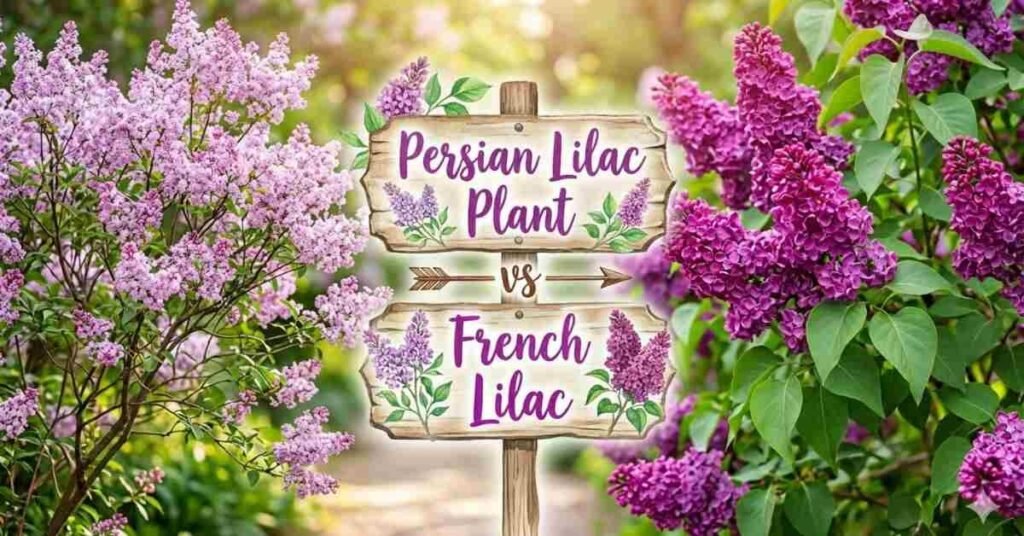
The Persian lilac plant (Syringa x persica) is smaller and more compact than the French lilac. It grows as a neat shrub and fits well in small gardens. Its flowers are light purple and slightly less dense. It also needs less space to grow properly.
The French lilac grows much larger and taller. It produces bigger flower clusters with a stronger smell. It needs more space and care than Persian lilac. Both plants look beautiful, but gardeners choose Persian lilac for small areas and French lilac for bigger landscapes.
| Feature | Persian Lilac (Syringa x persica) | French Lilac |
| Height | 4–8 feet | 8–15 feet |
| Growth Habit | Compact shrub | Large spreading shrub |
| Flower Size | Smaller clusters | Larger, dense clusters |
| Fragrance | Moderate | Strong |
| Garden Use | Small gardens, hedges | Large landscapes |
Persian Lilac Plant for Success: Soil, Sun, and Spacing
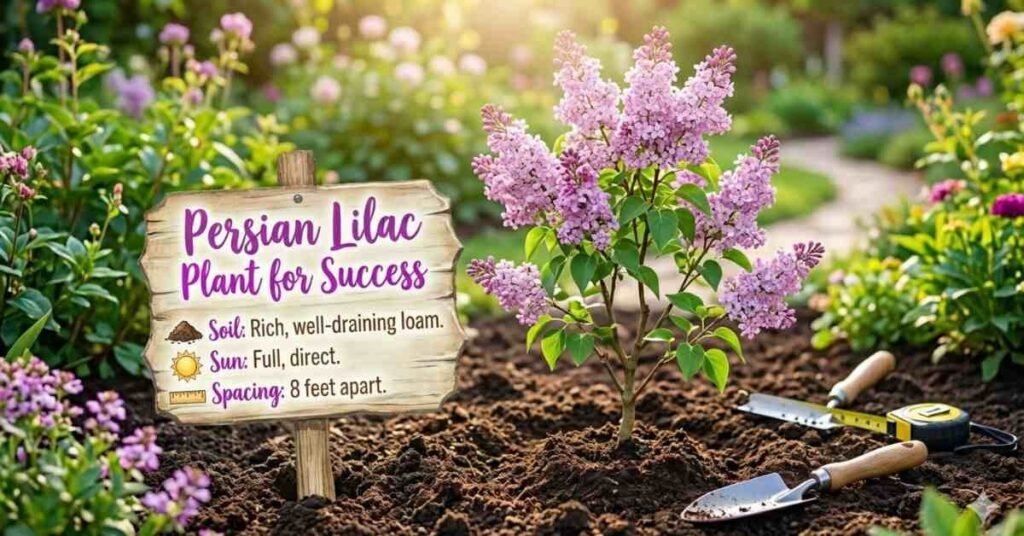
The Persian lilac plant (Syringa x persica) grows best in full sunlight. A minimum of six hours of direct sun per day is required. Sunlight helps the plant produce more flowers and keeps it healthy. You should avoid planting it in deep shade.
This plant prefers well-drained and slightly alkaline soil. It does not like heavy or waterlogged soil. You should keep enough space between plants for good air flow. Proper spacing helps prevent problems like Powdery mildew and supports strong growth.
Best Growing Conditions
The Persian lilac plant (Syringa x persica) grows best when you give it the right environment. It likes warm sunlight and open space. Good growing conditions help it produce healthy leaves and strong flowers. You should always choose a bright and airy spot in your garden.
Here are the best conditions for healthy growth:
- Full sunlight for at least 6 hours daily
- Well-drained soil that does not stay wet
- Slightly alkaline soil for better blooms
- Good air circulation around the plant
Soil Requirements
- Well-draining soil
- Slightly alkaline pH
- Avoid heavy clay soil
Spacing Guide
| Purpose | Spacing |
| Single plant | 4–6 feet apart |
| Hedge planting | 3–4 feet apart |
| Mixed border | 5–6 feet apart |
Persian Lilac Plant Care Guide
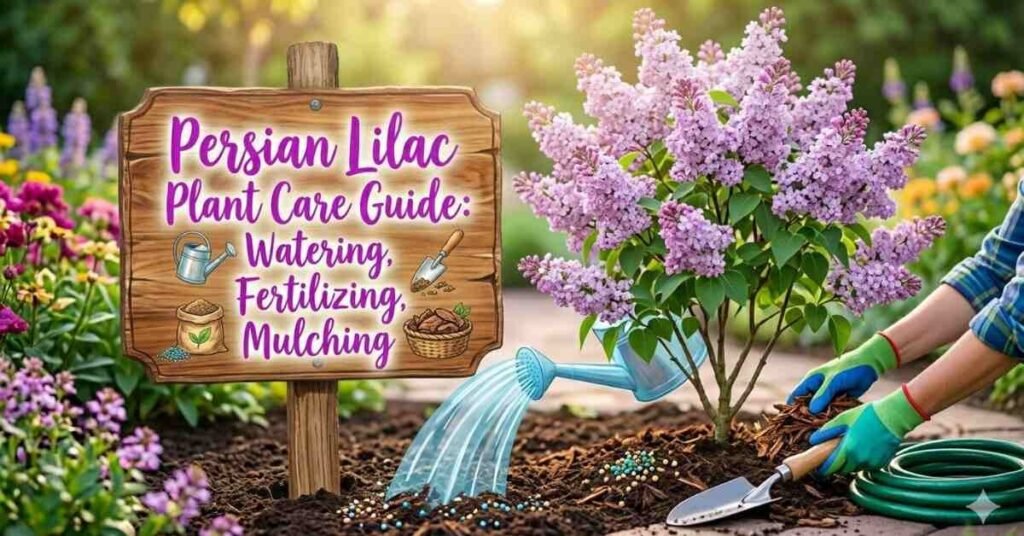
The Persian lilac plant (Syringa x persica) is easy to care for when you follow simple steps. It needs regular sunlight and well-drained soil to stay healthy. You should water it lightly and avoid overwatering. This helps the roots grow strong and healthy.
You should also prune the plant after it finishes flowering. This keeps its shape neat and encourages new blooms. Feeding it with a balanced fertilizer in spring also helps. Good care reduces the risk of problems like Powdery mildew and keeps the plant strong all year.
Watering
The Persian lilac plant (Syringa x persica) does not need too much water. It grows best when the soil stays slightly moist but never soggy. Overwatering can damage the roots and slow down growth. It is always a good idea to check the soil before adding water.
Here are simple watering tips:
- Water young plants regularly
- Reduce watering for mature plants
- Let the top soil dry before watering again
- Avoid standing water around roots
Fertilizing
The Persian lilac plant (Syringa x persica) needs light feeding to grow well. You should use fertilizer in early spring. This helps the plant produce strong leaves and healthy flowers. Do not over-fertilize, as it can reduce blooming.
Here are simple fertilizing tips:
- Use balanced fertilizer in spring
- Feed once or twice a year only
- Avoid high nitrogen fertilizers
- Mix compost for natural nutrients
Mulching
The Persian lilac plant (Syringa x persica) grows better when you use mulch around it. Mulch helps keep the soil moist and cool. It also protects the roots from heat and cold. You should spread mulch in a clean and even layer around the base.
Here are simple mulching tips:
- Use wood chips or dry leaves
- Keep mulch 2–3 inches thick
- Do not place mulch directly on the stem
- Refresh mulch once or twice a year
Mulching also helps stop weeds and reduces stress on the plant. This lowers the risk of problems like Powdery mildew and supports healthy growth.
The Seasonal Care Calendar Persian Lilac Plant

Spring brings the first signs of life to your Persian Lilac. Watch for tiny green buds as the weather warms up. This is the best time to add a layer of compost around the base. Once the flowers fade, grab your shears for pruning. Cutting back old blooms helps the plant grow stronger for next year. Always remove dead wood to keep the shrub healthy and airy.
Summer and fall require a different approach to maintenance. Water your plant deeply during dry spells to keep the leaves from wilting. Persian Lilacs hate “wet feet,” so ensure the soil drains well. In the fall, rake away any fallen leaves to prevent pests from hiding over the winter. This simple cleanup stops diseases like mildew from spreading. Your lilac will rest during the cold months and prepare for a beautiful spring show.
| Season | Care Tasks |
| Spring | Fertilize and remove dead branches |
| Summer | Water during dry spells |
| Fall | Clean fallen leaves |
| Winter | Protect roots in very cold zones |
Persian Lilac Plant Fragrance Profile Field Study
The Persian lilac plant (Syringa x persica) gives a soft and sweet smell. The fragrance changes during the day. It feels stronger in cool weather and lighter in hot sun. This makes it a special plant for home gardens.
You can notice different fragrance levels at different times. Morning and evening usually give the strongest scent. Humidity also helps the smell travel farther. A healthy plant produces a better fragrance, especially when it grows in good soil and avoids stress from problems like Powdery mildew.
| Time of Day | Fragrance Strength (1–10) | Notes |
| Dawn | 8 | Cool air carries scent strongly |
| Noon | 5 | Heat reduces scent intensity |
| Evening | 9 | Humidity boosts fragrance |
Humidity increases fragrance travel, so evenings feel more aromatic.
Multi-Year Growth Case Study
The Persian lilac plant (Syringa x persica) grows slowly but steadily over the years. In the first year, it stays small and focuses on root development. In the second and third years, it starts to grow taller and produces more branches. By the fourth or fifth year, it reaches full size and gives strong flowering.
This plant shows clear growth stages over time. A young plant may start from a small nursery pot and slowly turn into a healthy shrub. Good sunlight, proper watering, and well-drained soil help it grow faster. Healthy plants also avoid stress and reduce risks like Powdery mildew, which can slow down growth and reduce flowering.
| Year | Height | Spread | Flower Density |
| Year 1 | 1–2 ft | 1 ft | Low |
| Year 2 | 2–3 ft | 2 ft | Medium |
| Year 3 | 4–5 ft | 3–4 ft | High |
| Year 5+ | 6–8 ft | 5–6 ft | Full bloom |
The Alkalinity Experiment
Persian lilac grows better in alkaline soil. You can improve soil conditions using garden lime.
Before Treatment
- Pale flowers
- Slow growth
- Weak blooming
After Lime Application
- Brighter purple flowers
- Faster growth
- Strong bloom clusters
Soil pH improvement directly increases flower quality.
Advanced Troubleshooting: Beyond Powdery Mildew
Common Problems
Powdery Mildew (Powdery mildew)
- Appears as white coating on leaves
- Happens in humid, crowded areas
Poor Blooming
- Caused by too much shade
- Over-fertilizing with nitrogen
Root Rot
- Occurs in poor drainage soil
- Prevent it with raised beds
Design Ideas: Using Persian Lilac Plant in Modern Landscapes

The Persian lilac plant (Syringa x persica) fits well in modern garden designs. It works great as a small hedge or border plant. You can place it near walkways, patios, or garden corners. Its soft purple flowers add a calm and natural look.
You can also combine it with other plants for better design balance. It looks beautiful with roses, lavender, and green shrubs. This plant adds color without taking too much space. Good placement also helps the plant stay healthy and reduces stress from issues like Powdery mildew.
Garden Uses
- Small privacy hedge
- Accent plant near patios
- Mixed flower borders
Companion Plants
- Lavender
- Salvia
- Peonies
- Roses
These plants enhance color contrast and fragrance balance.
Read More Information : https://plantsopedia.com/moneywort-plant/
Propagation: How to Grow Persian Lilac Plant from Cuttings
The Persian lilac plant (Syringa x persica) grows well from cuttings. You can take a healthy stem from a mature plant. The best time is early summer when the plant is actively growing. This method helps you grow new plants easily at home.
First, cut a soft green stem and remove the lower leaves. Dip the cut end in rooting powder for better growth. Then plant it in moist, well-drained soil. Keep it in a warm and bright place but away from strong direct sun. Water it lightly until roots develop and the new plant starts growing.
Steps
- Cut a healthy green stem
- Remove lower leaves
- Dip in rooting hormone
- Plant in moist soil
- Keep in indirect sunlight
Expert Author Bio
Usama Ijaz is a horticulturist with over 10 years of experience specializing in temperate flowering shrubs. He manages a 2-acre test garden where he has successfully cultivated and trialed three different cultivars of Syringa x persica. He holds a degree in Botany and frequently contributes to the International Lilac Society. His hands-on pruning workshops help hundreds of home gardeners master seasonal maintenance.
FAQs
1. How fast does Persian Lilac Plant grow?
It grows 1–2 feet per year under good conditions.
2. Why is myPersian Lilac Plant not blooming?
It may lack sunlight, or you may have over-pruned it.
3. Can I grow Persian Lilac Plant in pots?
Yes, but you must use a large container with good drainage.
4. What is the best pruning season?
You should prune right after flowering ends.
5. Is Persian Lilac Plant drought-tolerant?
Yes, mature plants handle dry conditions well.
Conclusion
The Persian lilac plant (Syringa x persica) is a beautiful and easy shrub for any garden. It gives soft flowers and a sweet smell. It grows well in many climates when you give it sunlight, good soil, and simple care.
You can enjoy this plant for many years with basic maintenance. Regular watering, light pruning, and proper spacing help it stay healthy. Good care also protects it from problems like Powdery mildew. This plant rewards you with strong growth and lovely blooms every season.

Jack Rivers is the founder of Plantsopedia, dedicated to making plant care simple, science-backed, and accessible for everyone. With a deep interest in botanical care and plant psychology, he specializes in rare tropical species and organic growth techniques, helping enthusiasts understand the soil, light, and biology behind every thriving plant. When he’s not experimenting with new propagation methods, Jack is busy turning complex horticultural science into practical, everyday advice for home gardeners