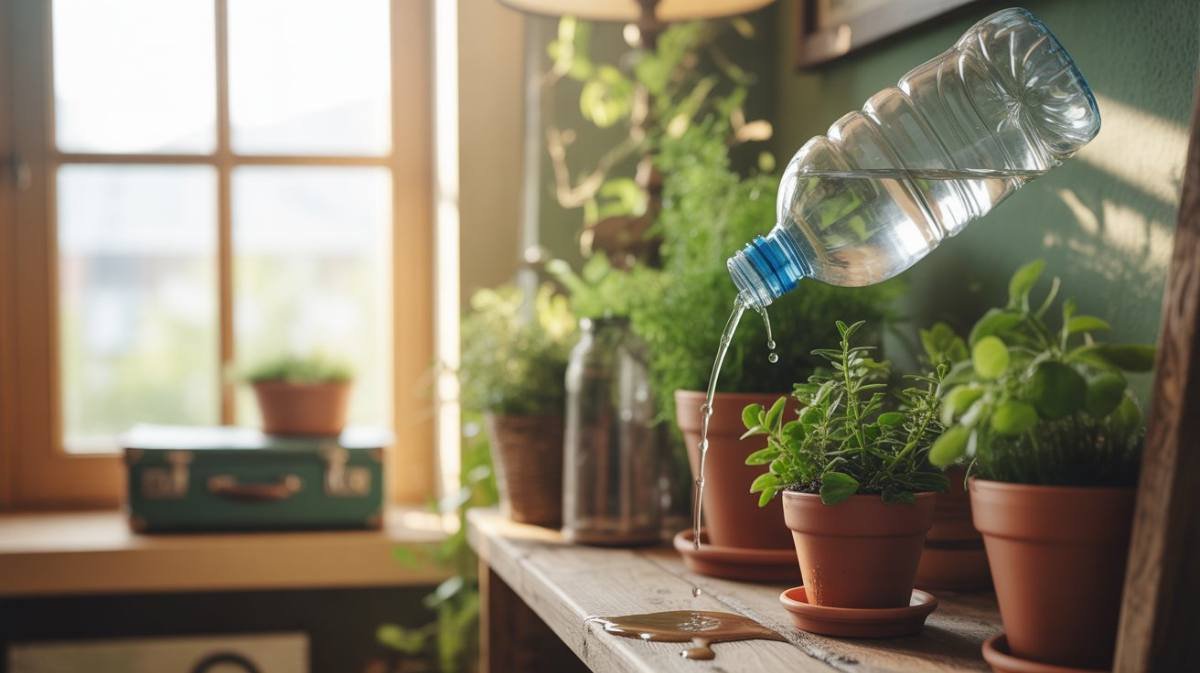
You spent months taking care of your plants. You watched them grow, nursed them through rough patches, and finally you have a trip coming up. And now you’re standing in your living room staring at your beloved pothos thinking: who is going to water these while I’m gone?
It’s one of the most common worries every plant parent has before a trip. The good news? You don’t need to cancel your vacation or beg your neighbor every time. There are genuinely smart, proven methods to keep your plants alive whether you’re away for a weekend, two weeks, or even a full month.
The best ways to water plants while on vacation include the plastic bottle drip method, cotton wick watering, the bathtub towel trick, self-watering spikes, and grouping plants together in a shaded spot. For trips longer than two weeks, a drip irrigation timer or a trusted plant sitter gives you the best results.
Let’s go through everything matched to exactly how long you’ll be away.
Before You Leave: 3 Things Every Plant Owner Must Do
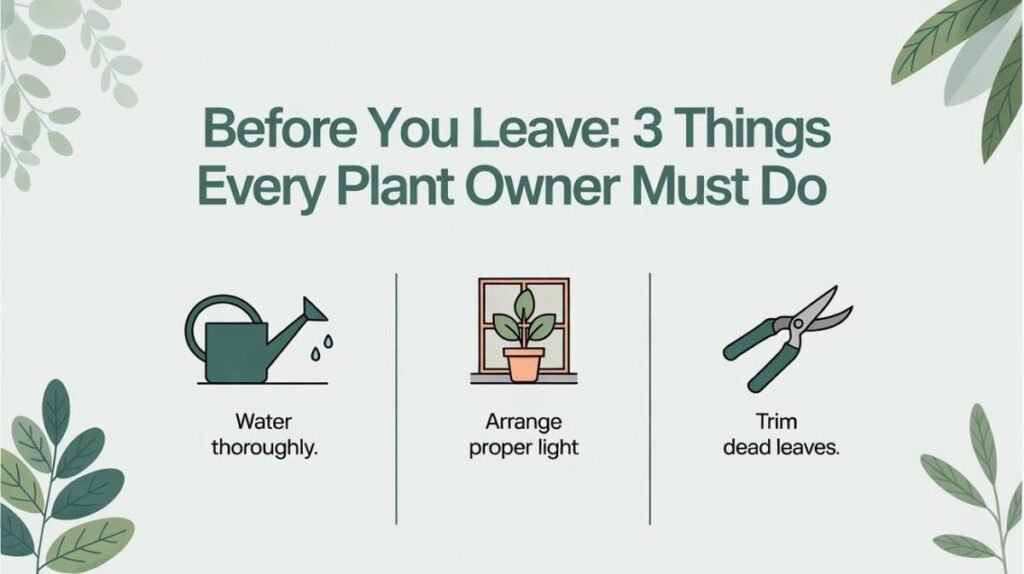
Before you even think about which watering method to use, there are three things you should do in the 24 hours before your trip. Skip these and even the best method might not be enough.
First, water deeply but not right before you leave. Water your plants thoroughly about 24 hours before departure. This gives the soil time to absorb moisture properly all the way down to the roots. Watering right before you walk out the door usually just sits on the surface and evaporates fast.
Second, move plants away from direct sunlight. A plant sitting in a hot sunny window loses water dramatically faster than one sitting in indirect light. Before you leave, shift your plants to a cooler, shadier spot. This one change alone can double how long your soil stays moist.
Third, remove dead leaves, wilting flowers, and any dying growth. Plants burn energy trying to revive leaves that are already gone. Cleaning up your plants before leaving lets them focus their remaining water on staying alive rather than fighting a losing battle.
Once these three things are done, you’re ready to choose your method. For detailed guides on how different plant types handle drought, check out the Care Guides section on Plantsopedia.
How Long Are You Away? Match Your Method to Your Trip
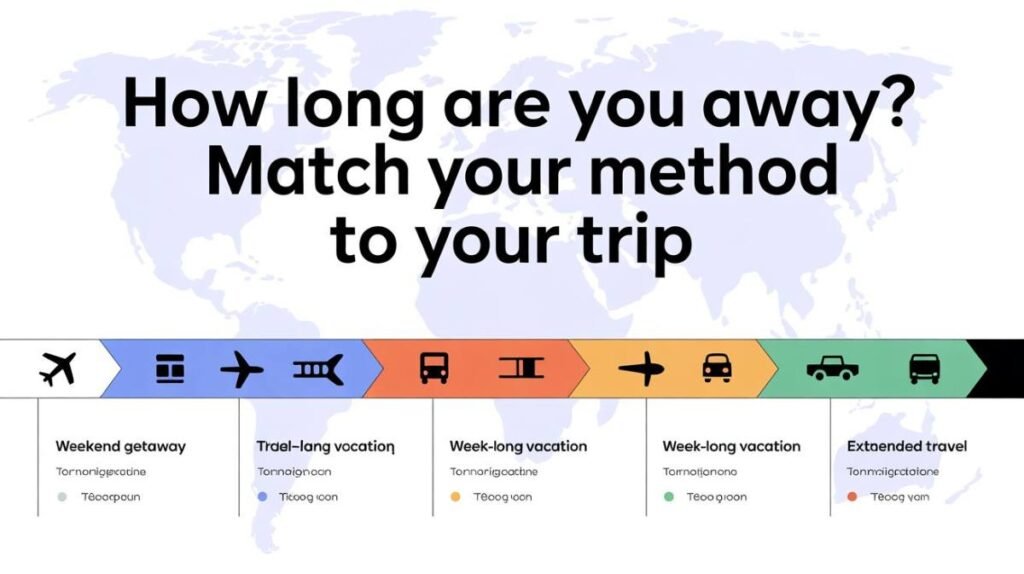
This is the key thing most articles get wrong they give you a random list of methods without telling you which ones actually work for different trip lengths. Here’s the breakdown that matters.
Going Away for 1 Week? These 3 Methods Work Perfectly
A week is actually the easiest absence to plan for. Most healthy indoor plants can handle 5-7 days with minimal intervention if you set things up right before you go.
Method 1: The Plastic Water Bottle Drip Trick
This is the most popular DIY method for a reason it costs nothing and works surprisingly well. Take any plastic bottle, fill it completely with water, and poke 2 to 3 tiny holes in the cap using a pin or needle.
Flip the bottle upside down and push the cap end into your plant’s soil. The water drips out slowly as the soil dries, giving your plant a steady supply for 5 to 7 days. The smaller the holes, the slower the drip so test it once before you leave to make sure the flow rate is right for your plant.
According to Homes and Gardens, using wine bottles with ceramic stakes attached is an even more controlled version of this same principle.
Method 2: The Bathtub Towel Method
This one sounds unusual but it genuinely works for a week away. Lay old towels flat in your bathtub and pour about two inches of water over them. Then place your potted plants directly on top of the wet towels. The plants absorb water upward through their drainage holes using a process called capillary action the same way a paper towel soaks up a spill from the bottom. The University of Florida’s gardening resource center recommends this method specifically for short trips because it requires zero setup cost and works for almost any indoor plant with drainage holes.
Method 3: Group Your Plants Together
This method works best when combined with either of the two above. Move all your indoor plants close together in a shaded area away from direct sun and heating vents.
Plants naturally release moisture through their leaves, and when grouped together, that moisture gets trapped in the air between them, creating a small humidity bubble.
This can reduce how quickly the soil dries out by 30 to 40 percent. It sounds simple but it genuinely extends how long your plants stay hydrated. For tropical plants and humidity-loving varieties, explore more care tips in the Indoor Plants section.
Away for 2 Weeks? The Wicking Method Is Your Best Friend
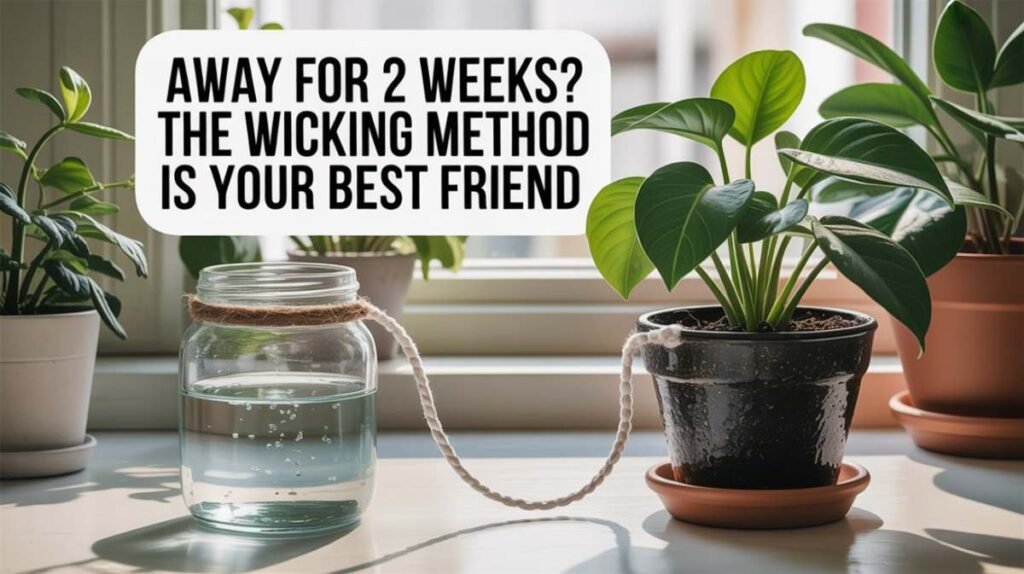
Two weeks is where free DIY methods really need to be smarter. The water bottle trick won’t last that long on its own. These three methods are specifically suited for 10 to 14 day absences.
Method 4: Cotton Wick Watering
This is one of the most reliable methods for two-week trips, and it relies on basic science. Fill a large bucket, pot, or bowl with water and place it next to your plants slightly elevated works best, like on a small stool or chair.
Take a thick cotton rope, an old cotton shoelace, or even strips of a cotton t-shirt and run one end into the water and push the other end several inches into your plant’s soil.
Through capillary action the same physical process that pulls liquid through fibrous materials water travels from the container, through the rope, and into the soil at a slow, steady rate. One large container can feed two or three plants at a time if you run separate wicks to each pot.
Done correctly, this system easily lasts 10 to 14 days without any intervention. For creative DIY planting ideas, the DIY Plants section has plenty of inspiration.
Method 5: Wine Bottle or Glass Bottle Inversion
Fill a wine bottle, large glass bottle, or any narrow-necked bottle completely with water — no air gaps. Quickly flip it upside down and push the neck several inches into your plant’s soil at roughly a 45 degree angle.
As the soil dries and pulls moisture away from the bottle neck, air enters slowly and releases water in its place. The bottle essentially self-regulates based on how thirsty your plant is
A standard 750ml wine bottle typically lasts around 7 to 10 days for a medium-sized pot. Two bottles per large pot can extend that to the full two weeks. This is an especially elegant solution because it adapts to each plant’s actual water demand rather than releasing at a fixed rate regardless.
Method 6: The Plastic Bag Mini Greenhouse
Push four wooden skewers or sticks into the corners of your pot so they stand taller than your plant. Slip a large clear plastic bag over the entire plant and seal it loosely at the base with a rubber band or tape. What you’ve created is a sealed mini greenhouse.
Moisture that evaporates from the soil and leaves condenses on the inside of the bag and drips back down into the pot, essentially recycling the same water over and over. This method works best for tropical plants, ferns, and pothos anything that enjoys humidity.
Succulents and cacti should not be bagged this way as they prefer dry conditions. Browse care requirements for humidity-loving plants in the Indoor Plants section before trying this method.
Away for a Month or More? These Are Your Most Reliable Options
A month is a significant absence. The free DIY tricks simply won’t last this long without intervention. At this point you need either an investment in the right equipment or a person you can trust.
Method 7: Terracotta Watering Spikes
Terracotta spikes are inexpensive ceramic devices that screw onto the neck of a wine or water bottle. You fill the bottle, attach the spike, and push the whole thing into your plant’s soil. Water seeps through the porous terracotta at an extremely slow, controlled rate that’s far more gradual than a plastic bottle with pin holes
A standard setup lasts anywhere from two to four weeks depending on the spike size and pot size. They’re widely available online and are genuinely worth the small investment if you travel regularly. Homes and Gardens recommends terracotta spikes as the single best gadget option for vacations under a month.
Method 8: Drip Irrigation Timer
For anyone with a large plant collection or who travels frequently, a drip irrigation timer is the most complete solution. You connect it to your tap, set a watering schedule typically every two to three days and the system runs on its own indefinitely
Gardener’s Supply notes that programmable multi-zone timers let you set different schedules for different types of plants, which is ideal if you have a mix of succulents and tropical plants with very different needs. The upfront cost pays for itself quickly if you’re someone who travels even two or three times a year.
Method 9: Self-Watering Pots
Self-watering pots have a built-in reservoir at the base separated from the soil by a platform. Roots grow down toward the water and absorb exactly as much as they need through osmosis no guessing, no drip rate to calibrate.
Fill the reservoir completely before you leave and it will typically last three to four weeks depending on the plant and the pot size. If you’re a frequent traveler and you haven’t switched your most sensitive plants to self-watering pots, it’s genuinely one of the most worthwhile gardening investments you can make.
For eco-friendly and sustainable planting approaches, the Sustainable Hacks section covers smart long-term plant care strategies.
Method 10: A Plant Sitter
Sometimes the most reliable answer is the simplest one a person you trust. Ask a neighbor, friend, or family member to check in every few days. The key to making this work smoothly is preparation on your end, not theirs. Group all your plants together in one room before you leave so your plant sitter isn’t walking around the whole house.
Write simple notes not a complicated care manual that specify which plants need water every few days versus once a week. The Quora gardening community consistently recommends grouping plants by watering frequency so a helper doesn’t need to memorize individual plant needs.
What About Outdoor Plants While on Vacation?
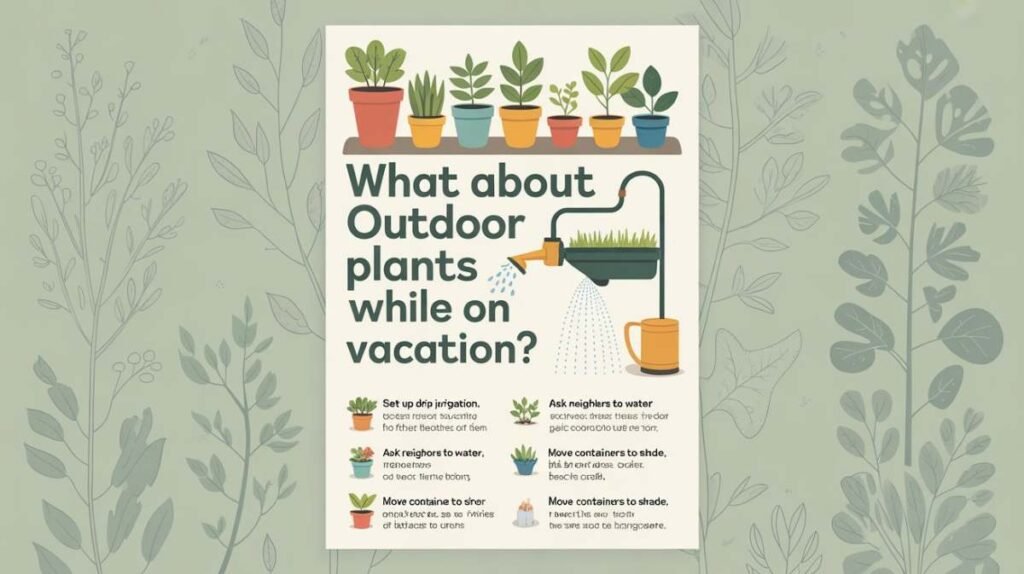
Outdoor plants face a much harder challenge than indoor ones. Wind, direct sun, and open air combine to pull moisture from soil dramatically faster. The same methods that last a week indoors might only last two or three days outside.
The most important step for outdoor plants is a deep, thorough watering 24 hours before you leave soaking the soil to at least 6 to 8 inches deep so moisture reaches the root zone fully. Then apply a 3 to 4 inch layer of mulch bark chips, straw, or coconut coir all work well across the soil surface. Mulch dramatically slows evaporation and can keep soil moist for days longer than bare soil in the same conditions.
Move any outdoor potted plants to a shaded spot before you leave. Pots in direct afternoon sun can dry out completely in a single day during summer. Shade alone can make a meaningful difference in how long they hold moisture.
For longer outdoor absences, a sprinkler connected to a programmable timer is the most dependable solution. New plants and freshly planted seedlings need the most protection since their shallow roots dry out far faster than established plants. Explore mulching and moisture retention strategies further in the Gardening and Sustainable Hacks sections.
Which Plants Survive Longest Without You?
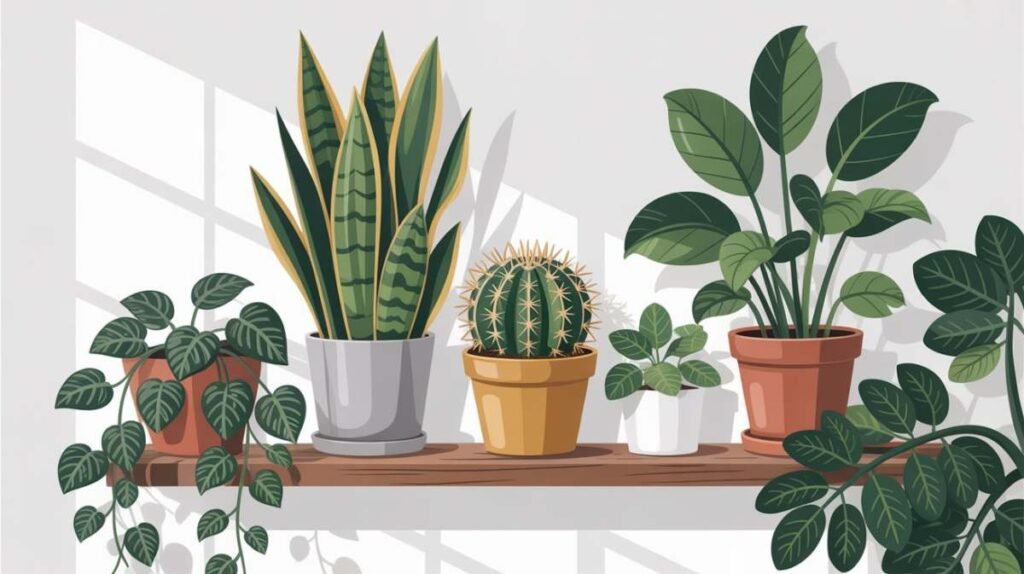
Not all plants panic equally when you leave. Knowing which plants are genuinely drought-tolerant helps you prioritize where to focus your preparation efforts.
Plants that handle two to three weeks without water comfortably with minimal preparation include snake plants, ZZ plants, cacti, succulents, cast iron plants, and pothos. These plants store water in their leaves, stems, or root systems and are naturally adapted to dry periods. A thorough watering before you leave and moving them away from direct sun is often all they need for a two-week trip.
Plants that struggle even after just one week away include peace lilies, ferns, orchids, calathea, and any freshly planted seedlings. These plants have constant moisture requirements and will show signs of stress quickly. If you have any of these in your collection, they should be your first priority when setting up your vacation watering plan. For comprehensive care requirements on these more demanding plants, visit the Care Guides section.
Quick Comparison: Which Method Should You Choose?
| Method | Best For | How Long It Lasts | Cost |
| Plastic water bottle drip | 1 week, small to medium pots | 5 to 7 days | Free |
| Bathtub towel method | 1 week, indoor plants with drainage | 5 to 7 days | Free |
| Grouping plants together | Any length, best combined with others | Extends all methods | Free |
| Cotton wick watering | 2 weeks, multiple plants | 10 to 14 days | Free |
| Wine bottle inversion | 2 weeks, medium pots | 7 to 14 days | Free |
| Plastic bag greenhouse | 2 weeks, tropical plants and ferns | 10 to 14 days | Free |
| Terracotta watering spikes | Up to 1 month | 2 to 4 weeks | Low |
| Drip irrigation timer | Long trips, large collections | Unlimited | Medium |
| Self-watering pots | Frequent travelers | 2 to 4 weeks per fill | Medium |
| Plant sitter | Any trip length | Unlimited | Free to low |
Frequently Asked Questions
How do I water my plants while on vacation for 2 weeks?
The cotton wick method is your most reliable option for two weeks. Place a bucket of water nearby, run a thick cotton rope from the water into each pot’s soil, and the plants absorb what they need through capillary action. Combine this with grouping plants in a shaded area for best results.
How do I water plants while away for a month?
For a month-long absence, terracotta watering spikes, a drip irrigation timer connected to your tap, or self-watering pots are your three strongest options. If none of those are available, a neighbor with simple written care notes is still the most reliable backup.
Can I use a plastic bag to water my plants on vacation?
Yes, and it works well for tropical plants. Push four wooden stakes into the pot corners, cover the plant with a clear plastic bag, and seal it at the base. Moisture recycles inside the bag, keeping the plant hydrated without any external water source. Avoid this method for succulents and cacti.
How do I water outdoor plants while on vacation?
Water deeply 24 hours before leaving, apply a thick mulch layer to slow evaporation, and move potted plants to shade. For trips longer than a week, a programmable sprinkler timer is the most dependable outdoor solution available.

Jack Rivers is the founder of Plantsopedia, dedicated to making plant care simple, science-backed, and accessible for everyone. With a deep interest in botanical care and plant psychology, he specializes in rare tropical species and organic growth techniques, helping enthusiasts understand the soil, light, and biology behind every thriving plant. When he’s not experimenting with new propagation methods, Jack is busy turning complex horticultural science into practical, everyday advice for home gardeners