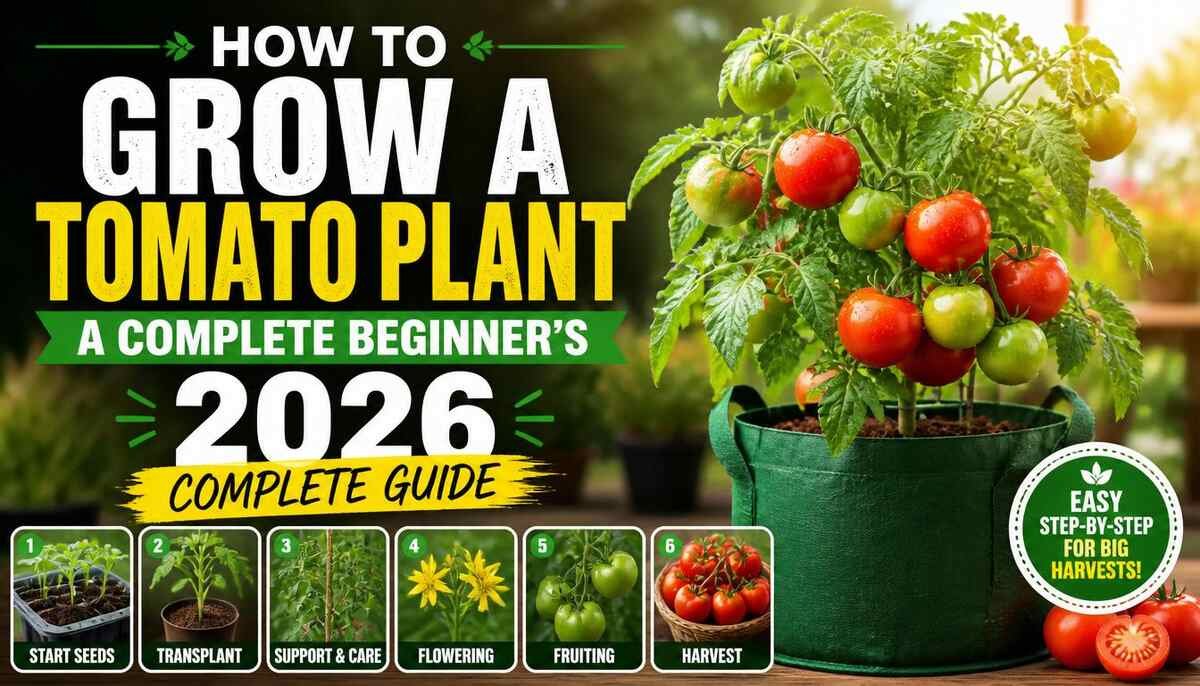
If you’ve ever bitten into a store-bought tomato and wondered why it tasted like watery cardboard, you already know why so many people end up growing their own. A home-grown tomato, warm off the vine, tastes like a completely different vegetable sweeter, richer, and somehow more “tomato” than anything you’ll find wrapped in plastic.
The good news is that tomatoes are one of the most forgiving crops a beginner can plant. They don’t need a greenhouse, a green thumb passed down through generations, or a huge backyard.
What they do need is a bit of understanding about light, soil, water, and timing and that’s exactly what this guide walks you through, from picking the right variety to pulling your first ripe fruit off the vine.
Should You Start Tomatoes from Seeds or Seedlings?
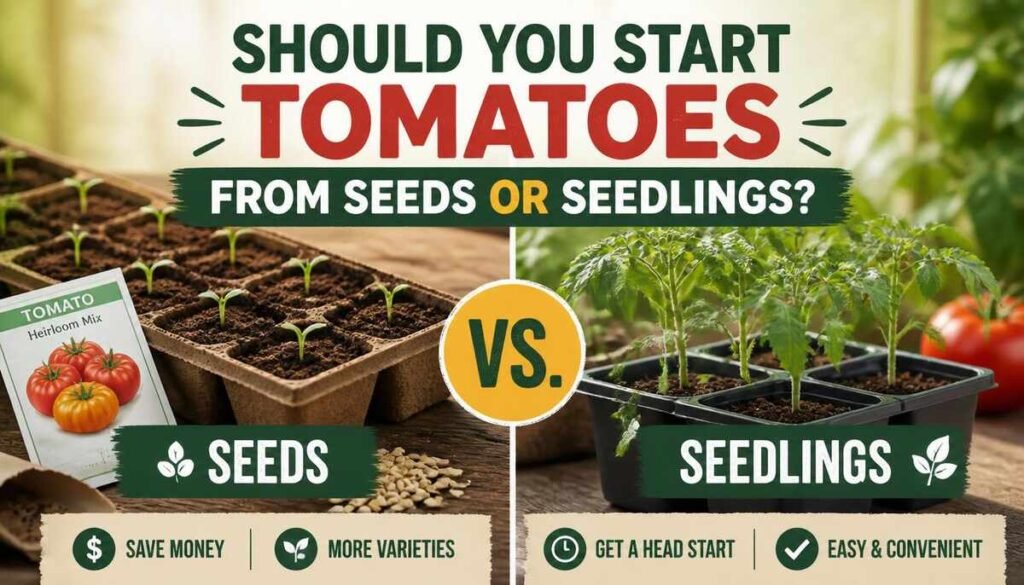
This is usually the first fork in the road for anyone learning how to plant tomatoes, and honestly, there’s no wrong answer just different trade-offs.
Growing Tomatoes from Seedlings
Buying seedlings (sometimes called starts) from a nursery is the fastest route to a producing plant. You skip the six-to-eight weeks of indoor germination and go straight to transplanting. This is the better option if you’re short on time, don’t have a bright windowsill or grow light, or you’re planting later in the season and want to catch up. The trade-off is a smaller selection of varieties compared to what you’d find in a seed catalog, and a slightly higher upfront cost per plant.
Growing Tomatoes from Seed
Starting from seed gives you access to hundreds of heirloom and specialty varieties you’ll never find as seedlings striped, purple, tiny currant tomatoes, giant beefsteaks, you name it. It’s also considerably cheaper if you want more than a couple of plants. The catch is timing: seeds typically need to go indoors six to eight weeks before your area’s last frost date, under a grow light or in a very sunny window, so this route takes planning ahead rather than a same-week trip to the garden center.
Also Read : Apple Plant Care: Grow Healthy Trees at Home
Planting Tomatoes for Beginners
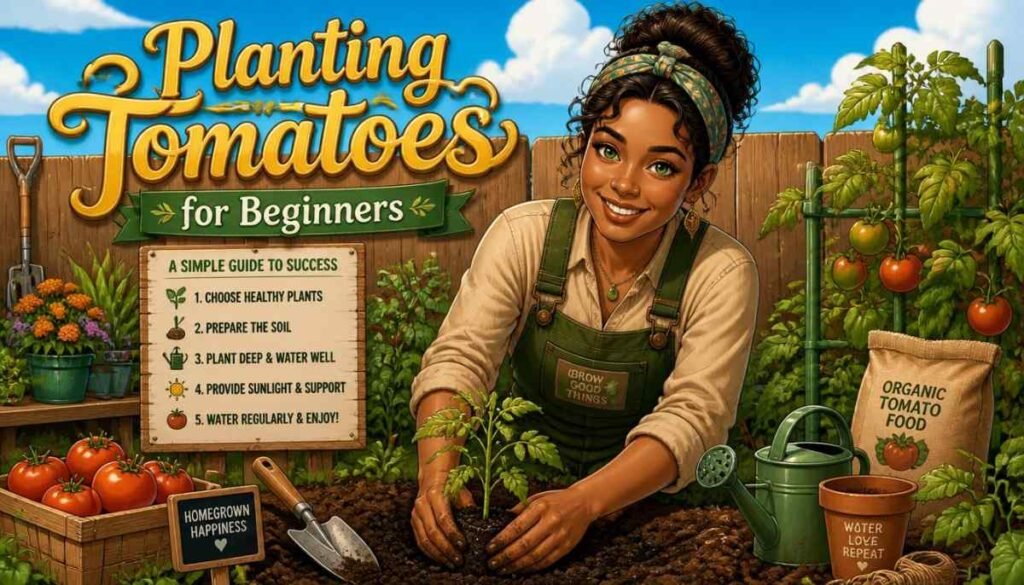
Once you’ve got a seedling whether store-bought or homegrown the next few decisions have an outsized effect on how the plant performs all summer.
Best Time to Plant Tomatoes
Tomatoes are tropical natives at heart, which means they hate the cold. Don’t move them outdoors until nighttime temperatures are reliably staying above 50°F (10°C) and all danger of frost has passed. Planting too early doesn’t actually save you time — a chilled tomato seedling often just sits there sulking while a properly timed one, planted a week or two later, catches up and overtakes it within a month.
Buying and Selecting Seedlings
If you’re buying rather than starting from seed, resist the urge to pick the tallest, most flower-covered plant on the shelf. Look instead for a stocky stem, dark green leaves, and no visible flowers or fruit yet — a plant that’s already flowering in a small pot has often been stressed and will struggle to establish once it’s transplanted.
Where to Plant Tomatoes
Tomatoes are sun worshippers. You want a spot that gets at least six to eight hours of direct sunlight a day, in soil that drains well rather than staying soggy. If you’re not sure which corner of your yard gets the most light, it’s worth spending a single day tracking the sun across a few likely spots — check in the morning, midday, and late afternoon, and note where the shade falls. That one day of observation can save you a whole season of disappointing yields.
How to Plant Tomatoes in the Ground
This is where tomatoes reward a technique that most other vegetables don’t need: planting deep. Tomato stems are covered in tiny hair-like structures that turn into roots the moment they’re buried in soil. Strip off the lower leaves from your seedling and bury up to two-thirds of the stem either straight down in a deep hole or sideways in a shallow trench if your soil is heavy clay. That buried stem develops an entire extra root system, which translates into a sturdier plant that handles wind, drought, and heavy fruit loads far better than one planted shallow.
Spacing matters more than most beginners expect. It’s tempting to squeeze plants close together to fit more in, but research consistently shows that tighter spacing actually reduces total yield per plant the roots compete for water and nutrients, and the leaves shade each other out, leading to weaker, leggier growth. Give each plant 18 to 24 inches of breathing room, and you’ll get bigger harvests from fewer plants, not more tomatoes crammed into less space.
The Soil Detail Most Guides Skip: Checking Your pH
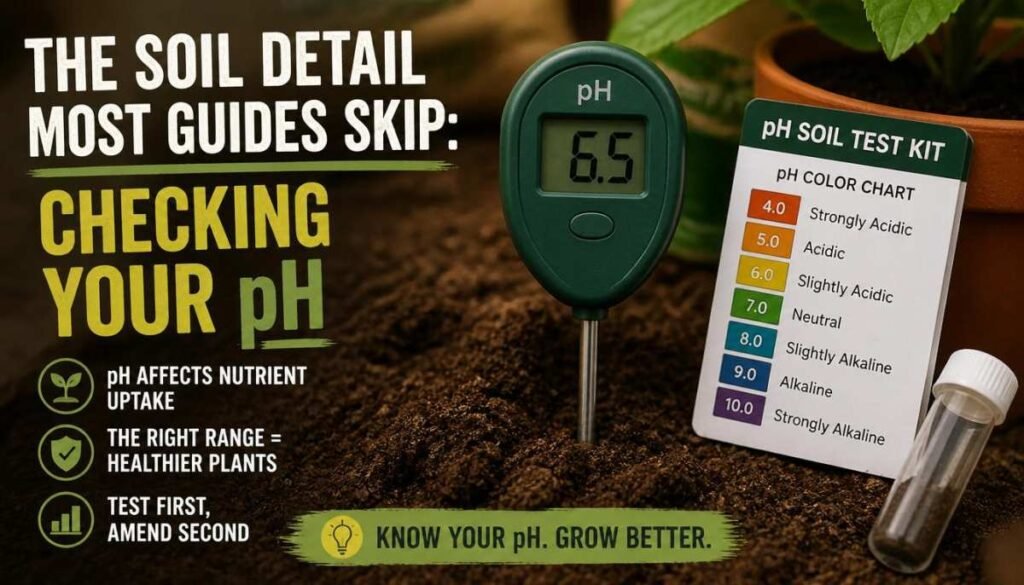
Almost every beginner guide talks about sunlight and watering, but very few mention soil pH and it quietly wrecks more harvests than people realize. Tomatoes want slightly acidic soil, roughly 6.2 to 6.8 on the pH scale. Outside that range, the plant can be sitting in soil that technically has enough nutrients, yet can’t actually absorb them, which shows up as stunted growth or pale leaves that no amount of extra fertilizer seems to fix.
A basic soil test kit costs very little and takes minutes to use. If your soil comes back too alkaline, working in a bit of garden sulfur or compost brings it down; if it’s too acidic, a small amount of garden lime raises it back up.
Testing before you plant not after your tomatoes start struggling is the difference between guessing and actually knowing what your plant needs.
Basic Tips for Tomato Plant Care
Once your tomatoes are in the ground, care comes down to a handful of habits repeated consistently through the season.
Watering Tomatoes
Consistency beats quantity. Aim for one to two inches of water a week, delivered slowly and directly at the soil around the base of the plant rather than over the leaves. Wet foliage is an open invitation for fungal diseases like blight, so a soaker hose or drip line at ground level will do far more for plant health than an overhead sprinkler ever will. A layer of mulch around the base helps lock that moisture in and keeps the soil temperature more even between waterings.
Fertilizing Tomatoes
Tomatoes are heavy feeders, but more fertilizer isn’t automatically better in fact, it’s one of the sneakier mistakes beginners make. Piling on a nitrogen-heavy feed produces gorgeous, bushy green foliage but surprisingly little fruit, because the plant channels its energy into leaves instead of flowers. Choose a balanced, tomato-specific fertilizer and start feeding once the first fruits appear, roughly the size of a marble, then again as harvest begins.
Pruning & Training Tomatoes
If you’re growing an indeterminate (vining) variety, keep an eye out for suckers the small shoots that sprout in the crook between the main stem and a branch. Pinching these off redirects the plant’s energy into the fruit that’s already forming, and as a bonus, it improves airflow through the plant, which further reduces disease risk. Here’s a trick most guides skip entirely: those pinched-off suckers aren’t waste. Stick a five-inch sucker into a glass of water or straight into soil, and within a week it will root and grow into a brand-new tomato plant essentially a free clone of whichever variety you like best.
How to Avoid Tomato Diseases & Pests
Most tomato problems trace back to two things: wet leaves and cramped spacing, both of which we’ve already addressed. Beyond that, crop rotation matters more than people realize — avoid planting tomatoes where potatoes or peppers grew in the previous two years, since they share vulnerabilities to the same soil-borne diseases. It’s also worth thinking about who your tomatoes are planted next to. Basil and marigolds are genuinely useful neighbors, helping deter common pests and, some gardeners swear, improving flavor. Sunflowers and fennel, on the other hand, release compounds that can quietly suppress tomato growth, so it’s best to keep them at a distance.
Harvesting Tomatoes
Pick tomatoes once they’ve reached full color but are still slightly firm — a tomato left to over-ripen on the vine is an open invitation to birds, squirrels, and splitting after a heavy rain. If pests are a persistent problem in your area, you can harvest at around 50% color and let the fruit finish ripening indoors on a sunny windowsill; the flavor difference between vine-ripened and windowsill-finished is far smaller than most people expect.
The One Thing Most Guides Never Mention
Here’s the detail that separates a decent tomato harvest from a great one, and it rarely makes it into beginner articles: the biggest yield differences usually come down to what happens in the first two weeks after transplanting, not decisions made mid-season.
A seedling that’s watered deeply and left slightly on the dry side right after planting rather than kept constantly damp is forced to send roots downward searching for moisture, building a deeper, more resilient root system before it ever puts energy into leaves or flowers.
Gardeners who baby their seedlings with frequent light watering in those early weeks often end up with shallow-rooted plants that struggle the moment a hot, dry stretch hits in July. A little controlled stress early on pays off all summer long.
Frequently Asked Questions
How long does it take to grow a tomato plant?
From seed, tomatoes take about 60 to 85 days from transplanting to first harvest, plus the 6–8 weeks needed to grow the seedling indoors beforehand. From a purchased seedling, expect ripe fruit in roughly 60 to 80 days after planting, depending on the variety.
How often should you water tomato plants?
Water tomatoes deeply 2–3 times a week rather than lightly every day, aiming for about 1–2 inches of water total per week delivered at the base of the plant, not on the leaves.
Why are my tomato leaves turning yellow?
Yellow leaves are most often caused by inconsistent watering, nitrogen deficiency, or early blight; check that your soil moisture is even and your soil pH sits between 6.2 and 6.8 before assuming it’s disease.
Can you grow tomatoes in a pot or container?
Yes — determinate (bush) varieties grow well in containers at least 18–24 inches wide with drainage holes, while indeterminate (vining) varieties need a much larger pot and sturdy staking to support their size.

Jack Rivers is the founder of Plantsopedia, dedicated to making plant care simple, science-backed, and accessible for everyone. With a deep interest in botanical care and plant psychology, he specializes in rare tropical species and organic growth techniques, helping enthusiasts understand the soil, light, and biology behind every thriving plant. When he’s not experimenting with new propagation methods, Jack is busy turning complex horticultural science into practical, everyday advice for home gardeners