Creating a lush, green indoor sanctuary doesn’t mean you have to compromise the health of your feline companion. Many plant lovers face a constant dilemma: how to satisfy their passion for interior landscaping while ensuring their home remains entirely safe for their cats.
This comprehensive guide to cat-safe plants identifies truly non-toxic alternatives, explains plant toxicity levels, dives deep into expert care instructions, and offers strategic advice for creating a beautiful, cat-friendly indoor garden.
Why Do Cats Eat Houseplants?
Before diving into the safe species, it is crucial to understand why your cat treats your houseplants like a salad bar. Understanding this behavior helps in managing your indoor garden more effectively.
- Nutritional Instincts: In the wild, felines ingest grass and plants to introduce roughage into their diet. This fiber helps them pass hairballs and aids overall digestion.
- Boredom and Play: The movement of a dangling trailing leaf (like a Pothos or Spider Plant) mimics the movement of prey. Cats bite and swat at leaves out of pure curiosity and playfulness.
- Texture Craving: Many cats enjoy the unique, crinkly texture of specific leaves under their teeth.
Because you cannot completely train away a cat’s instinct to chew, choosing verified non-toxic flora is your only definitive line of defense.
Why Cat-Safe Plants Matter
Choosing cat-safe plants is not an aesthetic preference; it is an essential safety measure for pet owners. Even a momentary nibble on a toxic leaf can trigger acute systemic poisoning, irreversible organ damage, or sudden death.
- True Lilies (Lilium and Hemerocallis): These are the most dangerous plants for cat owners. Ingesting even a single grain of lily pollen, chewing a leaf, or licking water from a vase containing lilies can cause acute, irreversible kidney failure within 24 to 48 hours.
- Pothos, Monstera, & Philodendrons: These trendy plants contain microscopic, needle-sharp insoluble calcium oxalate crystals. When bitten, they shoot into the soft tissues of the cat’s mouth, causing immediate oral pain, violent drooling, and dangerous swelling of the throat.
- Snake Plants & Cycads: Snake plants contain chemical compounds called saponins, which severely irritate the gastrointestinal system. Sago Palms (cycads) contain cycasin, a deadly toxin where a single seed can destroy a cat’s liver within days.
The Look-Alike Trap: Many toxic houseplants look almost identical to completely safe varieties. Pet owners frequently purchase dangerous plants by mistake because they confuse them with trendy, non-toxic options.
Houseplant Look-Alikes: Safe vs. Toxic Comparison
Use this definitive cross-reference table to avoid dangerous purchasing mistakes. It highlights popular toxic plants alongside their visually similar, cat-safe counterparts:
| Toxic Houseplant | Toxic Compound & Health Effect | Safe Alternative | Why It’s a Great Match |
| True Lily (Lilium) | DEADLY – Causes acute kidney failure within 24–48 hours. | Moth Orchid (Phalaenopsis) | Offers elegant, long-lasting blooms; completely non-toxic to felines. |
| Pothos (Epipremnum) | Calcium oxalate crystals – causes oral burns, swelling, and vomiting. | Spider Plant (Chlorophytum comosum) | Provides a gorgeous trailing vine aesthetic and exceptional air purification. |
| Snake Plant (Sansevieria) | Saponins – causes severe nausea, vomiting, and diarrhea. | Parlor Palm (Chamaedorea elegans) | Matches the upright structure; highly tolerant of low-light conditions. |
| Aloe Vera | Anthraquinones – causes vomiting, diarrhea, lethargy, and tremors. | Haworthia (Zebra Cactus) | Perfect succulent rosette shape featuring striking, bold white stripes. |
| Monstera Deliciosa | Calcium oxalate – causes intense mouth pain, foaming, and drooling. | Areca Palm (Dypsis lutescens) | Delivers a dramatic, oversized tropical statement with feathery fronds. |
| Philodendron | Calcium oxalate – causes oral swelling and severe airway irritation. | Peperomia (Radiator Plant) | Features thick, rounded, glossy leaves on a highly compact frame. |
Top 10 Cat-Safe Plants
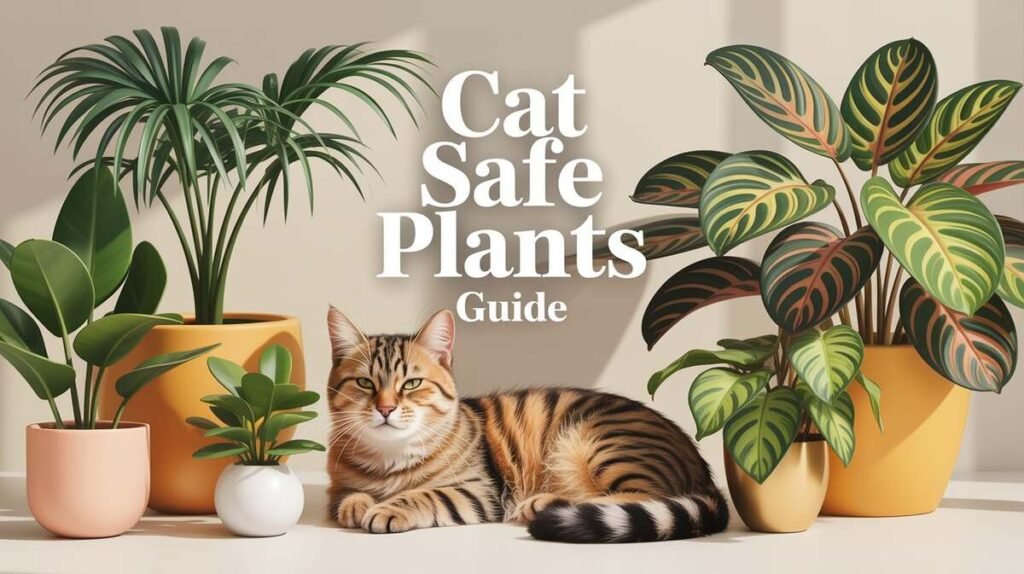
The following plants have been rigorously verified by the ASPCA as entirely non-toxic to cats. Incorporating these into your home allows you to garden with total peace of mind.
1. Spider Plant (Chlorophytum comosum)
- Why it’s safe: Completely non-toxic with zero harmful compounds. If a cat eats the leaves, it will cause no systemic organ damage.
- Aesthetic Appeal: Features long, arching, ribbon-like green leaves variegated with cream stripes. It naturally produces cascading baby plantlets (spiderettes).
- Light Requirements: Thrives in bright, indirect sunlight. Can tolerate dim corners, but growth will slow down.
- Watering Schedule: Allow the top 2 inches of soil to dry out completely before watering (weekly in summer, every 10–14 days in winter).
- The “Catnip” Effect: Spider plants contain mild hallucinogenic properties specific to felines. Cats love them because they get a mild, safe “buzz” from chewing them, so keep them hanging high!
2. Boston Fern (Nephrolepis exaltata)
- Why it’s safe: 100% non-toxic to cats, dogs, and humans alike. Its delicate fronds present no chemical danger.
- Aesthetic Appeal: Dense, bushy clusters of arching, vibrant green fronds that create a classic, textured, retro look.
- Light Requirements: Loves bright, filtered, indirect light. Never place it in direct afternoon sun, which will instantly scorch its foliage.
- Humidity & Moisture: High humidity is non-negotiable. Mist your fern daily, use a water-filled pebble tray, or keep it in a humid bathroom.
- Watering Schedule: Keep the potting soil consistently and slightly moist to the touch, but never waterlogged. Water roughly 2–3 times per week.
3. Areca Palm (Dypsis lutescens)
- Why it’s safe: Non-toxic and formally recognized by NASA as one of the world’s best indoor air-purifying plants.
- Aesthetic Appeal: A magnificent, tall palm featuring feathery, golden-green fronds. It can grow up to 6 or 7 feet tall indoors.
- Light Requirements: Prefers bright, indirect sunlight. It can easily tolerate a few hours of gentle morning sun.
- Watering Schedule: Water deeply only when the top inch of soil feels dry. Ensure your pot has excellent drainage holes to prevent root rot.
- Temperature Care: Keep this tropical specimen in stable temperatures between 65°F and 75°F. Avoid freezing drafts.
4. Parlor Palm (Chamaedorea elegans)
- Why it’s safe: Graceful, completely non-toxic, and incredibly resilient against occasional pet swatting.
- Aesthetic Appeal: A compact, slow-growing palm that maxes out at 3 to 4 feet indoors. Features delicate, deep-green pinnate leaves.
- Light Requirements: Adapts beautifully to low to moderate indirect light. This makes it ideal for dim office spaces or north-facing rooms.
- Watering Schedule: Water when the top 1 to 2 inches of soil feel dry—usually once every 7 to 10 days.
- Maintenance: Requires almost zero upkeep. Simply snip off the occasional lower leaf when it turns brown with age.
5. Calathea (The Prayer Plant Family)
- Why it’s safe: Safe, non-toxic, and visually mesmerizing. It adds a premium designer look to any room without endangering your pets.
- Aesthetic Appeal: Famed for its bold, oval leaves painted with intricate geometric patterns. The leaves naturally fold upward at night, resembling praying hands.
- Light Requirements: Prefers medium to bright indirect light. Direct sunlight will permanently wash out and burn the leaf patterns.
- Humidity & Water Quality: Requires high humidity (above 50%). Water them exclusively with distilled, filtered, or rainwater to prevent crispy brown edges.
6–10. Additional Cat-Safe Varieties for Quick Reference
- 6. Haworthia (Zebra Succulent):
A tiny succulent with distinctive white stripes. Needs bright indirect light and watering only once every 3 weeks.
- 7. Peperomia:
Features thick, rubbery, semi-succulent leaves. Prefers moderate light; water only when the soil dries out completely.
- 8. Polka Dot Plant (Hypoestes phyllostachya):
Offers bright splashes of pink, red, or white dots. Thrives in moderate light with consistently moist soil.
- 9. Money Tree (Pachira aquatica):
Features a unique braided woody trunk and star-shaped glossy leaves. Prefers bright indirect light and deep weekly watering.
- 10. Cat Grass (Oat, Wheat, or Barley):
Grown intentionally for felines. It satisfies their natural chewing instincts and successfully distracts them from your other plants.
Highly Toxic Plants to Absolute Avoid
If you own a cat, you should completely remove or bar entry to these highly dangerous houseplants:
- True Lilies (Lilium / Hemerocallis): CRITICAL DANGER. All components cause sudden, fatal kidney failure.
- Sago Palm (Cycas revoluta): Every part is deadly. Ingestion causes severe liver failure, neurological tremors, and death.
- Pothos & Philodendron: Cause acute oral burning, excessive drooling, mouth pawing, and swelling of the throat.
- Snake Plant & Aloe Vera: Contain saponins and anthraquinones that cause gastrointestinal inflammation, vomiting, severe diarrhea, and lethargy.
- Monstera & ZZ Plant: Pack sharp oxalate crystals that induce immediate oral pain, making it difficult for the cat to swallow.
Proactive Strategies for a Cat-Friendly Indoor Jungle
Beyond choosing non-toxic species, you can employ smart design choices to protect both your plants and your pets:
- The Power of Distraction: Always keep a fresh tray of Cat Grass at floor level. When cats have access to their own delicious grass, their interest in your other houseplants drops to zero.
- Upgrade Your Pots: Ditch lightweight plastic pots. Invest in heavy ceramic, terracotta, or concrete planters with wide, stable bases to prevent your cat from knocking them over.
- Go Vertical: Utilize floating wall shelves, ceiling hooks, wall-mounted planters, and high macramé hangers to display your trailing plants safely out of reach.
- Watch Your Potting Soil Additives: Avoid fertilizers that contain blood meal, bone meal, or fish emulsion, as these smell like food to a cat, encouraging them to dig. Switch to pet-safe, organic liquid fertilizers.
Conclusion
Creating a vibrant, stunning indoor garden doesn’t require you to choose between your passion for botany and your love for your cat. By making conscious, educated choices and swapping out dangerous staples like Pothos and Lilies for breathtaking, pet-safe alternatives like Spider Plants, Moth Orchids, and luxurious palms, you can easily build a harmonious home.
Remember, proactive design—such as using heavy pots, utilizing vertical space, and providing dedicated Cat Grass—goes a long way in managing your pet’s natural curiosity. Always keep the ASPCA database handy, verify the scientific name of every plant before purchase, and enjoy the physical and mental rewards of a lush, beautiful, and completely cat-safe indoor jungle.
FAQS
1:My cat is chewing on my Spider Plant. Should I be worried?
No. Spider plants are completely non-toxic. However, excessive chewing can cause mild temporary stomach upset, so move the plant out of reach and offer Cat Grass instead.
2:Can I keep a Pothos plant if I place it on a very high shelf?
No. Cats are exceptional climbers, and dangling vines can still be reached. Since Pothos causes severe oral pain and swelling, it is not worth the risk.
3:My cat knocked over a plant and ate some soil. What should I do?
Identify the plant immediately. If the plant is non-toxic, monitor for mild stomach upset. If the plant is toxic or the soil contains chemical fertilizers, contact your vet immediately.
4:Are all succulents safe for cats?
No. While Haworthia and Echeveria are safe, common succulents like Aloe Vera, Jade Plants, and Kalanchoe are highly toxic to cats. Always verify the specific species.
5:What are the immediate signs that my cat ate a toxic plant?
Immediate signs include heavy drooling, foaming, pawing at the mouth, vomiting, and lethargy. For deadly True Lilies, internal damage occurs silently before symptoms appear—seek emergency care immediately.
6:How can I verify if a plant is safe before buying it at a nursery?
Find the plant’s scientific (Latin) name on the tag and search it directly on the official ASPCA Toxic and Non-Toxic Plants Database before purchasing.

Jack Rivers is the founder of Plantsopedia, dedicated to making plant care simple, science-backed, and accessible for everyone. With a deep interest in botanical care and plant psychology, he specializes in rare tropical species and organic growth techniques, helping enthusiasts understand the soil, light, and biology behind every thriving plant. When he’s not experimenting with new propagation methods, Jack is busy turning complex horticultural science into practical, everyday advice for home gardeners