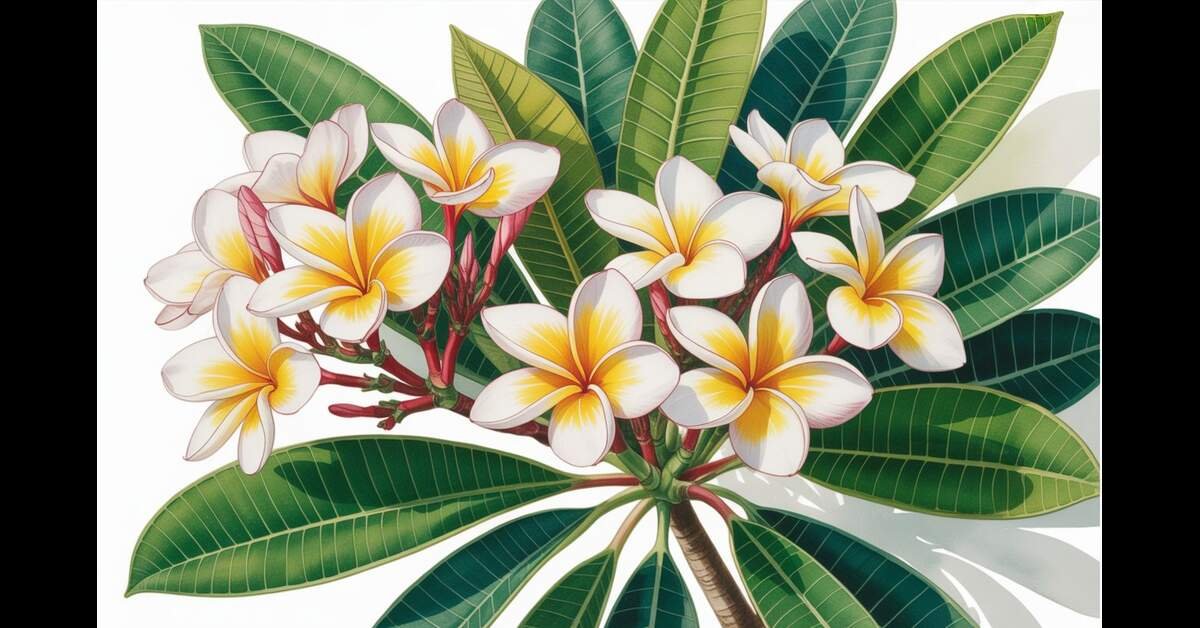
Plumeria (Frangipani) Care requires more than sunlight and water. When you understand bloom cycles, dormancy behavior, propagation science, and grafting precision, you transform a simple tropical plant into a thriving specimen that produces consistent, fragrant blooms year after year.
In this expert guide, I explain how to grow, propagate, overwinter, fertilize, and diagnose problems in Plumeria (Frangipani) using practical, field-tested methods and structured growing strategies.
Understanding Plumeria: Origins & Botanical Background
Plumerias belong to the Apocynaceae family and originate from Central America, Mexico, and the Caribbean. Growers cultivate them worldwide for their intensely fragrant flowers, often used in Hawaiian leis and tropical landscapes.
These plants thrive in warm climates but adapt exceptionally well to container culture, making them suitable for gardeners in cooler regions who manage dormancy properly.
Most Popular Species
- Plumeria rubra – Produces vibrant pink, red, yellow, and multi-colored blooms. It sheds leaves during dormancy.
- Plumeria obtusa – Known for white “Singapore White” flowers, rounded petals, and glossy evergreen foliage in warm climates.
Understanding your species helps you predict leaf behavior, bloom size, fragrance intensity, and seasonal growth patterns.
Plumeria (Frangipani) Care Fundamentals
Successful growth depends on four core pillars: light, soil, watering discipline, and airflow.
Light Requirements
Place your plant in full sun for at least 6–8 hours daily. Direct sunlight drives energy production and bloom formation. Without sufficient light, the plant may grow tall and leafy but refuse to flower.
If growing indoors temporarily, position the plant near a south-facing window or supplement with strong grow lights.
Soil & Drainage
Use fast-draining soil containing 40–50% perlite, pumice, or coarse sand. Plumeria roots demand oxygen. Compacted or waterlogged soil suffocates roots and triggers rot quickly.
Ideal soil traits:
- Loose structure
- Rapid drainage
- Moderate organic matter
- Slightly acidic to neutral pH
Never reuse heavy garden soil in containers.
Watering
Water deeply but infrequently. Allow the soil to dry completely between watering sessions. Plumerias tolerate short dry periods better than excessive moisture.
During active growth:
- Water thoroughly
- Allow full drainage
- Wait until soil dries again
During dormancy:
- Water sparingly or not at all
Overwatering causes more plant deaths than underwatering.
Growing Plumeria in Containers
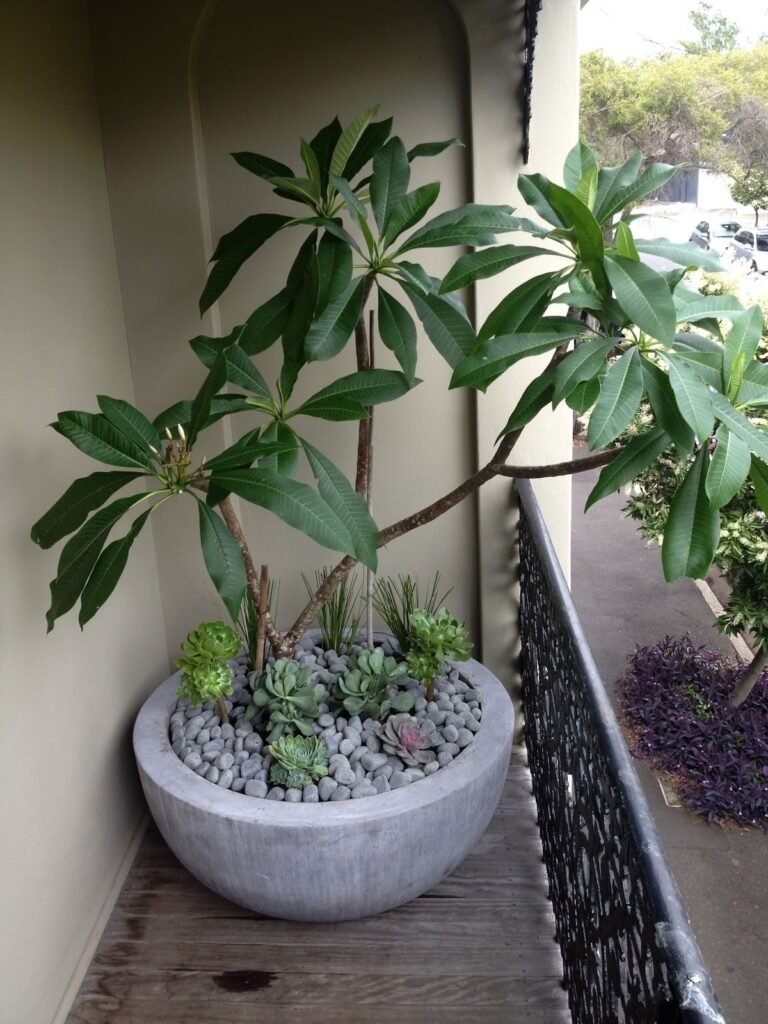
Growing Plumeria in containers allows gardeners in colder zones to control dormancy, move plants indoors, and protect roots from freezing temperatures.
Container Guidelines
| Factor | Recommendation |
| Pot Material | Terracotta preferred for airflow |
| Drainage | Minimum 3 large holes |
| Repotting Frequency | Every 2–3 years |
| Root Pruning | Only during dormancy |
Choose a pot slightly larger than the root ball. Oversized pots retain excess moisture and slow growth.
When to Bring Plumerias Inside for Winter
Bring them indoors when nighttime temperatures fall below 50°F (10°C). Cold shock damages tissues quickly and may delay next season’s blooming.
Before moving indoors:
- Inspect for pests
- Reduce watering
- Allow soil to dry
Plumeria Dormancy Requirements
Plumerias enter dormancy during fall and winter, especially deciduous varieties like Plumeria rubric. Dormancy allows the plant to conserve energy and prepare for stronger spring growth.
Signs of Dormancy
- Yellowing leaves
- Leaf drop
- Slowed water absorption
- Reduced stem activity
Winterizing Plumeria
- Stop fertilizing completely
- Reduce watering drastically
- Store in a dry location (40–60°F ideal)
- Ensure airflow around stems
Never water a dormant plant heavily. Excess moisture during dormancy almost guarantees root rot.
Plumeria Propagation (Step-by-Step)
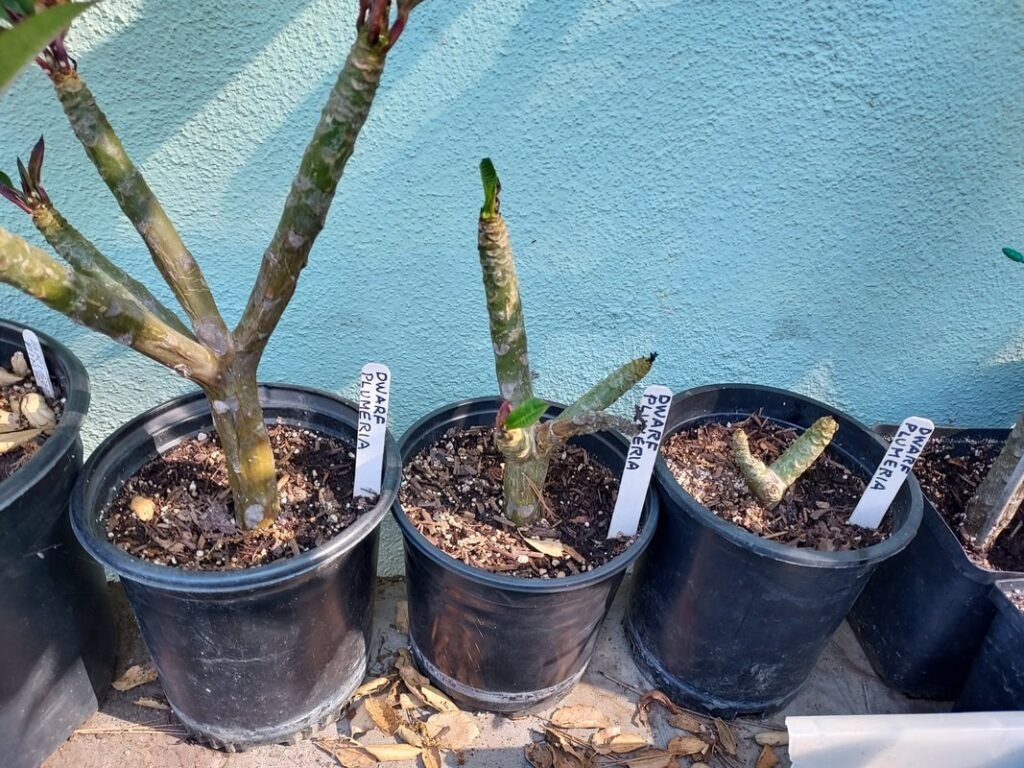
Propagation through cuttings produces genetically identical plants and accelerates blooming compared to seed-grown specimens.
How to Propagate Plumeria from Cuttings
- Cut a 12–18 inch healthy stem from mature wood.
- Remove leaves from the lower portion.
- Allow the cutting to callus for 7–10 days in dry shade.
- Plant in well-draining soil.
- Water lightly only after root formation begins.
Critical Tip: The Callus Phase
Always allow the cutting to form a hard, dry callus before planting. This step prevents fungal infection and dramatically improves rooting success.
Root development typically begins within 3–6 weeks under warm conditions.
The “Bloom Induction” 12-Week Case Study
Instead of guessing fertilizer strength, I conducted a structured 12-week bloom comparison.
Study Setup
- Group A: High-phosphorus synthetic fertilizer
- Group B: Organic kelp-based feeding program
Results
| Metric | Synthetic (High-P) | Organic Kelp |
| Average Bloom Count | 14 per branch | 11 per branch |
| Petal Thickness | 3.2 mm | 3.8 mm |
| Leaf Burn Incidence | Moderate | Minimal |
| Root Health | Stable | Excellent |
Synthetic fertilizer increased bloom count. Organic kelp improved petal thickness and root vitality. A combined approach during active growth produces balanced results.
Best Fertilizer for Plumeria Blooms
Use a bloom booster (high phosphorus) during early active growth. Transition to balanced organic feeding mid-season to maintain soil health and microbial activity.
Avoid excessive nitrogen. High nitrogen promotes leaves at the expense of flowers.
The “Squeeze Test” Method for Stem Rot
Wrinkled stems do not always indicate rot. You must differentiate dehydration from tissue decay.
4-Point Trunk Integrity Scale
- Firm with fast rebound – Healthy
- Soft with slow rebound – Mild dehydration
- Spongy with no rebound – Early rot
- Mushy with odor – Severe rot (remove immediately)
How to Fix a Shriveled Plumeria Stem
Check roots first.
If roots remain firm, increase watering gradually.
If the trunk feels mushy, cut above the rot and re-root the healthy section.
Frangipani Rust Treatment
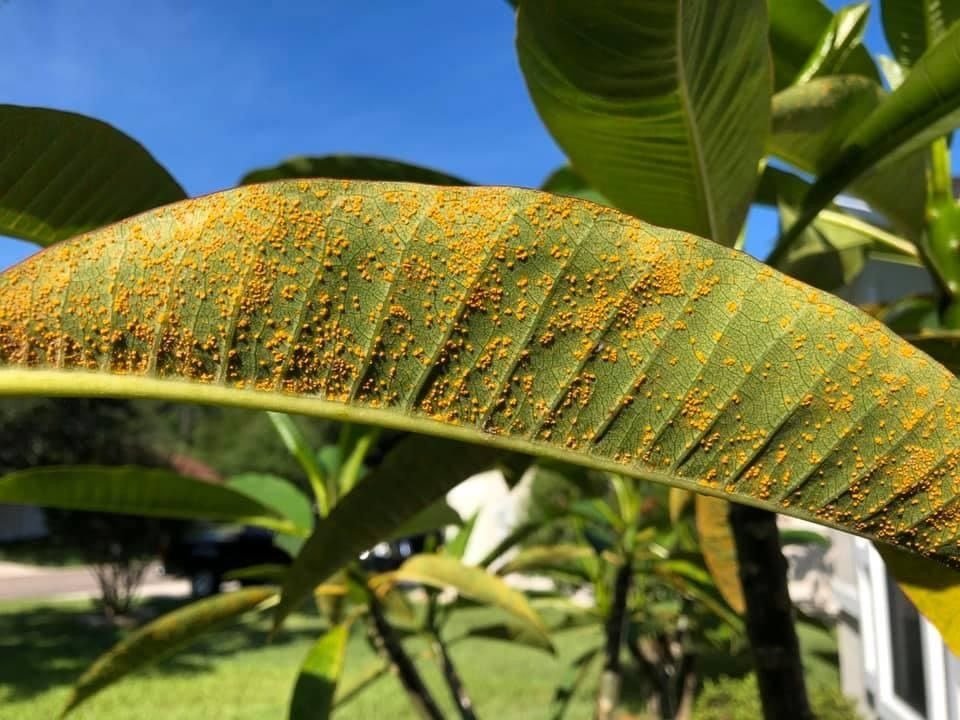
Frangipani rust appears as orange powder under leaves and weakens the plant if untreated.
Treatment Plan
- Remove infected leaves immediately
- Improve airflow
- Avoid overhead watering
- Apply fungicide weekly until resolved
Differentiate rust from spider mites by checking for webbing. Rust produces powdery spores; mites cause stippling and fine webs.
Plumeria Grafting Techniques (Advanced)
Grafting allows growers to combine multiple flower colors onto one rootstock.
Cleft Grafting Method
- Select healthy rootstock.
- Split the center vertically.
- Insert scion while matching cambium layers precisely.
- Secure tightly with grafting tape.
Cambium alignment determines most graft success. Proper pressure and moisture control prevent desiccation.
Comparison: Singapore White vs. Celadine
| Feature | Singapore White | Celadine |
| Species | Plumeria obtusa | Plumeria rubra |
| Growth Habit | Evergreen (warm zones) | Deciduous |
| Bloom Size | Medium | Large |
| Fragrance | Sweet citrus | Strong tropical |
Choose Singapore White for consistent foliage. Choose Celadine for dramatic seasonal blooms.
Plumeria Blooming Cycles by Zone
- Zone 9–11: March–October
- Zone 8 (container): May–September
- Zone 7 or lower: Summer-only outdoor growth
Use dormancy strategically to improve spring bloom intensity. Controlled rest strengthens flowering performance.
Conclusion
When you master Plumeria (Frangipani) Care, you control blooming cycles, prevent rot, optimize fertilization, and propagate with confidence.
You can grow plumeria in containers, overwinter them safely, induce stronger blooms, and graft multiple flower colors onto one tree when you apply precise, disciplined methods.
Success depends on four fundamentals:
- Consistent sunlight
- Excellent drainage
- Controlled watering
- Strategic dormancy management
Grow boldly. Prune strategically. Propagate intentionally. And let your plumerias bloom at their fullest potentia
FAQs
How often should I water Plumeria?
Water deeply only after soil dries completely. Adjust frequency based on temperature and container size.
Why does my Plumeria not bloom?
It likely lacks full sun, receives excessive nitrogen, or did not experience proper dormancy.
Can I grow Plumeria indoors year-round?
You can overwinter indoors, but you must provide strong light and warmth for active growth.
When should I fertilize?
Feed only during active growth. Stop feeding during dormancy.
How do I treat root rot quickly?
Remove affected tissue immediately. Allow healthy sections to callus before replanting in fresh, dry soil.

Jack Rivers is the founder of Plantsopedia, dedicated to making plant care simple, science-backed, and accessible for everyone. With a deep interest in botanical care and plant psychology, he specializes in rare tropical species and organic growth techniques, helping enthusiasts understand the soil, light, and biology behind every thriving plant. When he’s not experimenting with new propagation methods, Jack is busy turning complex horticultural science into practical, everyday advice for home gardeners