Introduction
Propagate snake plant propagation is the process of growing new plants from a single parent. You can do this by using leaf cuttings or by dividing the roots. It is a simple way to turn one indoor plant into a whole collection for your home.
Are you tired of waiting months for a tiny pup to appear? Many gardeners get frustrated because snake plants are famous for growing very slowly. Luckily, there are a few “insider” tricks that can cut your waiting time in half and ensure your cuttings don’t rot.
In this guide, we will explore the exact methods experts use to speed up growth. We’ll cover the best time of year to start and the specific water-to-soil ratios that trigger roots. These small changes make a massive difference in how quickly your greenery multiplies.
Propagate Snake Plant Guide
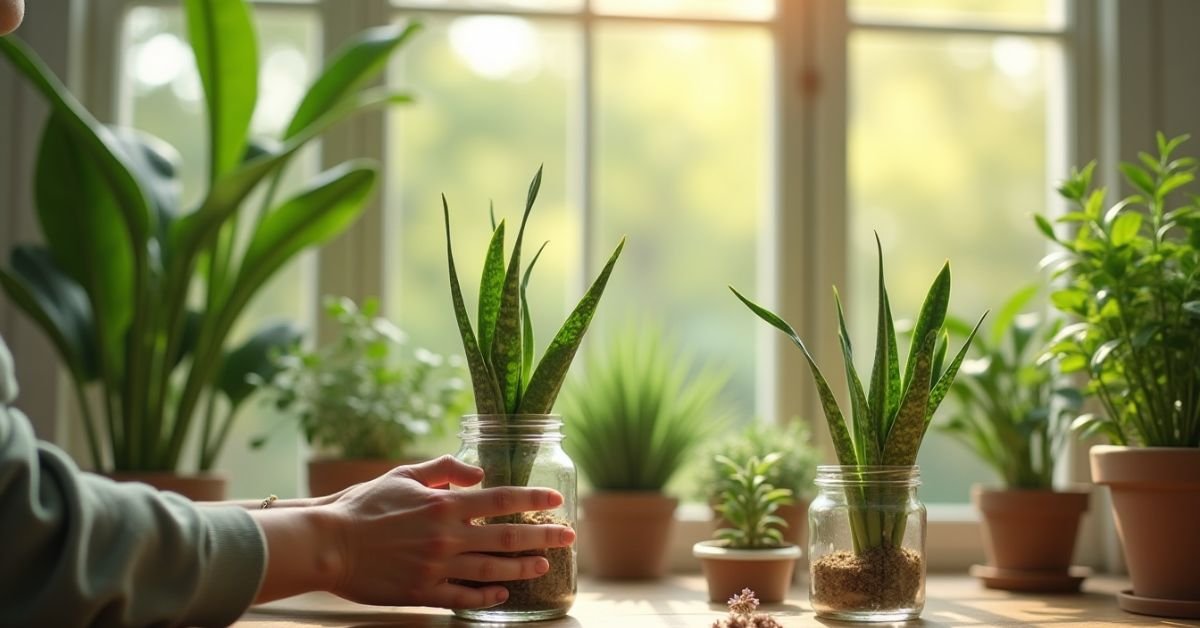
Propagating a snake plant is a fun and easy way to get more plants for free. You start by taking a healthy leaf cutting or dividing the plant at the roots. Over time, these small pieces grow their own roots and become brand-new plants. It is the perfect project for any plant lover who wants to fill their home with greenery.
To get the best results, always use a sharp, clean knife or scissors. This prevents disease and helps the plant heal quickly. You can choose to grow your cuttings in a jar of water or directly in well-draining soil. Be patient, keep them in indirect light, and you will see new growth before you know it.
Best Propagation Methods
The two most popular ways to grow new snake plants are water propagation and soil propagation. Water propagation is great because you can actually see the roots growing through the glass. Soil propagation is often more stable and allows the plant to adjust to its permanent home right away. Both methods work well if you give them enough time and light.
Each method has its own set of benefits depending on your goals. For your reference, here are the main differences between the two:
- Water Method: Easy to monitor, looks beautiful in jars, but roots can be fragile.
- Soil Method: Stronger root systems, less risk of shock, but harder to tell if it’s working.
- Division: The fastest way to get a full-sized plant by splitting the root clump.
Propagate Snake Plant in Water Step-by-Step
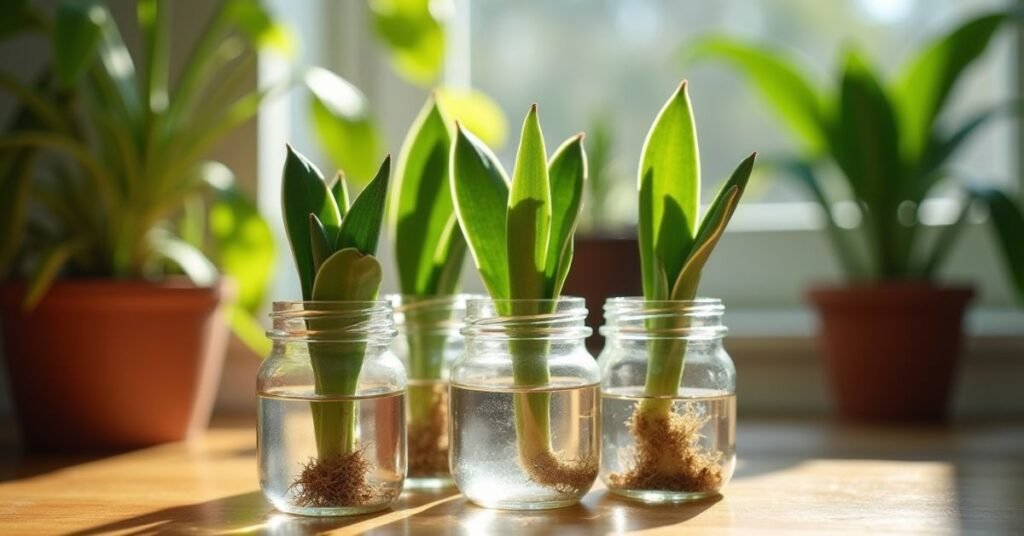
First, choose a healthy leaf from your plant and cut it near the base. Use a clean pair of scissors to make a sharp, straight cut. Let the leaf sit out for a day or two so the bottom can dry and form a callous. This simple step is very important because it prevents the leaf from rotting when you put it in water.
Once the cut is dry, place the leaf in a clean glass jar with enough water to cover the bottom inch. Change the water every few days to keep it fresh and clear. Put the jar in a spot with bright, indirect sunlight but avoid direct hot sun. In a few weeks, you will see tiny white roots starting to sprout from the bottom of the leaf.
How to Propagate Snake Plant in Soil Easily
To start, cut a healthy leaf into several pieces that are about four inches long. Make sure you remember which end was the bottom so you don’t plant them upside down. Let these pieces dry for a few days until the cut ends feel firm and calloused. This protects the plant from soil bacteria and helps ensure your success.
Next, poke the calloused ends into a pot filled with fresh succulent or cactus mix. Water the soil lightly so it is damp but not soaking wet. Place the pot in a warm room with plenty of indirect light. Within a few months, your cuttings will grow strong roots and start producing tiny new baby plants.
Leaf Cutting Method to Propagate Snake Plant
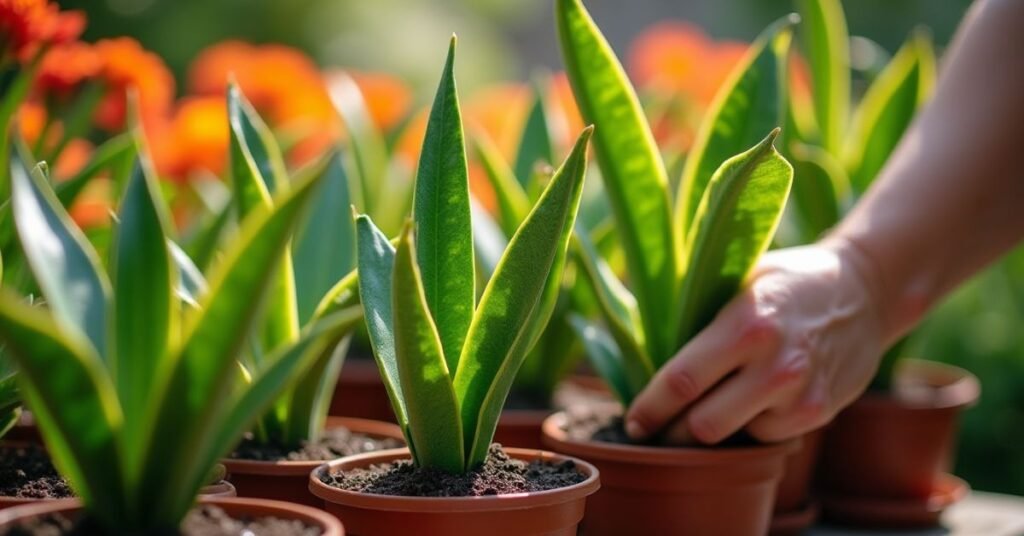
The leaf cutting method is a very common way to multiply your plants. You simply take one long leaf and cut it into several smaller sections. This allows you to grow many new plants from just a single parent leaf. It is a slow process, but it is very rewarding to see new life sprout from a simple cutting.
This method works best if you follow a few basic rules to keep the cuttings healthy. If you do it correctly, you can fill your entire home with new greenery. Here are the key things to remember:
- Cut Direction: Always plant the bottom end of the leaf into the soil.
- Callous Time: Let the cuts dry for two days before planting to avoid rot.
- Leaf Choice: Pick a firm, green leaf that has no spots or damage.
Divide Roots to Propagate Snake Plant Quickly
Dividing the roots is the fastest way to get a full-sized snake plant. This method involves taking the plant out of its pot and gently pulling the root clump apart. You look for natural sections called rhizomes that connect the different parts of the plant. By cutting these sections, you turn one large, crowded plant into two or three separate ones.
Once you have your separate sections, simply plant them into their own pots with fresh soil. Since these new plants already have established roots, they will grow much faster than leaf cuttings. Water them lightly and place them in a spot with good light to help them settle. This is the best trick for gardeners who want an instant forest of snake plants in their home.
Water vs Soil: Propagate Snake Plant Comparison

Choosing between water and soil depends on how much you like to watch the process. Water propagation is very popular because the glass jars look beautiful on a windowsill. You can see the roots grow day by day, which is very exciting. However, these roots can be a bit weak when you finally move them into the dirt.
Soil propagation is a more direct and natural way to grow your plant. It takes longer to see any progress because the magic happens underground. The big benefit is that the roots grow strong and tough from the very start. This means the plant usually grows faster once it finally sprouts its first baby leaves.
Comparison Table: Water vs. Soil
| Feature | Water Propagation | Soil Propagation |
| Visibility | Easy to see roots growing | Roots are hidden in the dirt |
| Maintenance | Change water every few days | Water only when soil is dry |
| Success Rate | High, but leaves can rot | Good, if soil stays damp |
| Root Strength | Fragile and thin roots | Strong and thick roots |
| Tools Needed | Glass jar and clean water | Pot and cactus soil mix |
| Risk of Rot | High if water is dirty | Low if soil drains well |
| Transplant Shock | High when moving to soil | Very low or none |
| Best For | Beginners and visual learners | Patient gardeners |
Common Mistakes When You Propagate Snake Plant
Many people fail at propagation because they are too eager to start. They put a fresh cutting directly into water or soil without letting it dry first. This usually leads to rot because the open wound is exposed to bacteria and too much moisture. You must give the cut end time to form a hard callous to protect the plant.
Another frequent error is using the wrong type of light or container. If you put your cuttings in a dark corner, they will not have enough energy to grow new roots. At the same time, direct hot sun can scorch the leaves before they even start to grow. Finding the right balance is the key to a healthy new plant.
- Wrong Direction: Planting the leaf upside down prevents any root growth.
- Overwatering: Keeping the soil too wet will make the cuttings turn mushy.
- Dirty Tools: Using rusty or dirty scissors can spread diseases to your plant.
- Too Much Water: Filling a jar too high in water propagation can cause the whole leaf to rot.
How Long It Takes to Propagate Snake Plant
Patience is the most important part of growing a snake plant from a cutting. It usually takes about four to eight weeks just to see the first tiny roots appear. If you are using the leaf cutting method, it can take even longer for a new baby plant to sprout. Some gardeners wait three to six months before they see any green growth popping out of the soil.
The total time depends a lot on the season and the warmth of your home. Cuttings grow much faster during the spring and summer when there is more natural light. If you try to propagate in the winter, the process might slow down or even stop for a while. As long as the leaf stays firm and green, it is still working on building a strong root system underground.
Best Tips to Propagate Snake Plant Successfully

The best way to ensure success is to start with a very healthy parent plant. Choose leaves that are thick, firm, and have a bright color. If the leaf is floppy or has yellow spots, it might not have enough energy to grow new roots. Using high-quality cuttings gives you a much better chance of seeing new growth quickly.
Environment also plays a huge role in how well your cuttings do. Keep your pots or jars in a warm spot where the temperature stays steady. Avoid placing them near cold drafts or air conditioning vents, as cold can shock the plant. Here are a few expert tips to help your snake plants thrive:
- Use Rainwater: If possible, use rainwater or filtered water to avoid harsh chemicals.
- Warmth is Key: Roots grow much faster when the room is warm and cozy.
- Don’t Move Them: Try not to pull the cuttings out of the soil to check for roots.
- Cinnamon Trick: Dust the cut ends with a little cinnamon to help prevent fungus.
Best Cutting Care Tips
Taking care of your cuttings is just as important as the first cut. You need to keep them in a stable environment so they don’t get stressed. Avoid moving the cuttings around too much while they are trying to grow roots. Consistency helps the plant focus its energy on building a strong root system.
Light and air are also vital for your new plant’s health. Make sure the room has good airflow so that moisture does not sit on the leaves for too long. If you notice any dust, gently wipe the leaves with a damp cloth so they can breathe. Here are the best ways to keep your cuttings happy:
- Bright Light: Give them plenty of indirect sunlight but keep them out of the direct sun.
- Fresh Air: Ensure the room is not too stuffy to prevent mold from growing.
- Clean Water: If you use the water method, refresh the jar every few days.
- Check for Rot: Look at the base of the leaf weekly to make sure it stays firm.
Boost Root Growth Faster
Getting your snake plant to grow roots quickly requires a little extra warmth and the right light. Most gardeners find that placing the cuttings in a warm spot, like on top of a refrigerator or near a sunny window, speeds up the process. Heat acts like a signal to the plant that it is time to grow. If the air is too cold, the cutting might go dormant and take much longer to sprout.
You can also use natural growth boosters to give your cuttings an edge. Small changes in how you treat the water or soil can lead to much faster results. If you follow these simple tricks, you will see tiny white roots much sooner than usual:
- Use a Heating Mat: A seedling heat mat keeps the soil at the perfect temperature for roots.
- Add Honey or Cinnamon: These act as natural rooting agents and protect against bacteria.
- Try Rooting Hormone: A small amount of powder can trigger roots to grow in half the time.
- Keep Light Indirect: Bright, filtered light provides the energy needed for new growth.
Conclusion
Propagating a snake plant is a slow but rewarding journey. It is a great way to save money and share your favorite plants with friends. Even if you don’t have a green thumb, these hardy plants are very forgiving. Just remember to be patient and keep an eye on those tiny new roots as they grow.
With the right light and a little bit of care, your small cuttings will soon become full plants. You can choose the method that works best for your home and your schedule. Before you know it, you will have a beautiful collection of greenery in every room. Enjoy the process and celebrate every new leaf that sprouts.
FAQs
1. Can I use a variegated snake plant for leaf cuttings?
Yes, but the new baby plant will usually lose its yellow stripes and turn solid green. To keep the stripes, you should use the root division method instead.
2. How often should I change the water for my cuttings?
You should change the water every 4 to 7 days to keep it fresh. This prevents bacteria from growing and helps your roots stay healthy and white.
3. During what time of year is it best to propagate?
The best time is during the spring and summer when the weather is warm. The extra natural light helps the plant grow roots much faster than in the winter.
4. Why is my snake plant cutting turning soft and mushy?
This is a sign of rot, usually caused by too much water or not letting the cut dry first. If this happens, cut off the mushy part, let it dry for two days, and try again.
5. How long should the roots be before I plant them in soil?
Wait until the roots are at least two inches long before moving them to a pot. Longer roots help the plant adjust better to the soil and prevent transplant shock.

Jack Rivers is the founder of Plantsopedia, dedicated to making plant care simple, science-backed, and accessible for everyone. With a deep interest in botanical care and plant psychology, he specializes in rare tropical species and organic growth techniques, helping enthusiasts understand the soil, light, and biology behind every thriving plant. When he’s not experimenting with new propagation methods, Jack is busy turning complex horticultural science into practical, everyday advice for home gardeners